Your sales team wastes hours on manual outreach, chasing cold leads, and logging fragmented CRM notes while deals slip away. AI-powered sales enablement addresses this by automating prospecting, personalizing messaging, and surfacing high-value opportunities through predictive analytics. Want to scale revenue faster with less manual effort and greater precision? This guide to top AI agents for go-to-market strategies identifies the best AI sales agents, lead scoring models, conversational assistants, account-based marketing tools, and campaign orchestration systems to deploy and automate every aspect of your go-to-market strategy.
To make that work in practice, AI Acquisition offers AI automation software that helps you discover, test, and deploy the top AI agents for go-to-market strategies with simple workflows, measurable results, and seamless CRM integration.
Table of Contents
Summary

Agentic GTM tools automate research, qualification, messaging, and routing across the funnel, and 60% of companies report improved decision-making after adopting modern agentic GTM tools.
Multi-agent collaboration reduces response friction and maintains consistent messaging across channels, with 70% of businesses reporting a significant increase in lead conversion after implementing agent-based GTM tools.
Closed-loop, online learning means agents tune behavior after each micro-experiment, and vendor evidence shows 4- 7x higher conversions in some deployments when continuous experimentation is applied.
Autonomous outreach and routing can substantially reduce operating costs, with some platform comparisons highlighting up to 70% cost savings compared to traditional SDR teams.
The most significant gains require governance and narrow scopes, not broad autonomy, and AI-powered GTM platforms can increase sales productivity by up to 30% when paired with clear escalation paths and explainability.
Practical adoption favors phased pilots and focused agent sets, for example, a one-person growth scenario that deploys five specialized agents to scout, enrich, outreach, sequence, and schedule, allowing human time to shift toward closing.
This is where AI Acquisition's AI automation software fits in, addressing these needs with no-code multi-agent orchestration, CRM-native integrations, and measurable pilot workflows that compress launch time while preserving auditability and escalation paths.
What are the Key Capabilities of Modern Agentic GTM Tools?

Agentic GTM tools stand apart because they do more than schedule tasks or surface reports; without waiting on a human to sign off, they act:
They research markets
Qualify leads
Write and test messages
Run follow-up sequences
That ability to take coordinated, outcome-oriented actions across channels, while learning from each interaction in real time, is what turns automation into a reliable revenue engine.
How Do These Tools Execute The Whole Funnel Autonomously?
Agentic systems combine specialized micro-agents that own clear operational roles, then coordinate toward a shared goal. One agent will map industry signals and compile a target account list from intent data and recent hiring or funding events.
Another instantly:
Enriches and scores those accounts
Checking tech stacks
Company size
Buyer behavior
A content agent drafts bespoke outreach and landing pages tied to the account profile, while a campaign agent runs A/B tests and reallocates spend based on live conversion signals.
The net result, in practice, is leads being researched, pitched, and routed within hours instead of days, with each step producing metadata that future runs use to improve precision.
Why Does Multi-Agent Collaboration Matter Compared With Old-School Automation?
Think of the agents like a high-performance pit crew. Each person has a role, but they practice handoffs until the sequence is seamless. Single-script automation can run an email blast, but it cannot negotiate follow-up, re-prioritize accounts after a competitor announcement, or request human assistance when a deal requires engineering.
Multi-agent setups allow one agent to:
Pause for a human escalation
Another to adjust messaging
A third to modify ad spend
This is all while maintaining a typical customer profile. That emergent coordination reduces response friction and maintains consistent messaging across channels.
How Do These Systems Actually Get Better Over Time?
They close the loop. Every outreach, page view, demo, and churned customer feeds model update informs agents, enabling them to learn which signals predict intent, which creatives are most effective, and which sequences shorten sales cycles. This continuous learning is not slow batch retraining; it is online feedback: models tune parameters after each micro-experiment and redeploy optimized behavior the same day.
The practical effect is measurable; according to ThirdEye Data, 60% of companies report improved decision-making capabilities after adopting modern agentic GTM tools. That 2025 finding shows decision quality shifts from periodic guesswork to ongoing, measurable improvement.
What Happens To Conversion And Velocity When Agents Run The Engine?
Agents remove the human lag in follow-up and personalization, which amplifies conversion. When messaging is tailored to the moment, and routing is near-instant, outcomes change materially, as seen in the field: the Agentic AI In-Depth Report 2025, 70% of businesses reported a significant increase in lead conversion rates after implementing agentic GTM tools.
The 2025 result reflects not just one-off wins, but sustained conversion lifts that follow teams' adoption of closed-loop experimentation and dynamic routing.
AI for Handoffs: Compressing Time from Days to Hours
When we worked with early-stage agencies scaling multiple client funnels, a consistent pattern emerged: fragmented tech stacks and unclear handoffs caused the worst damage, not lack of leads. Marketing would generate interest, but sales would wait for context that never arrived, and prospects would cool while teams argued about attribution. That friction looks small on a spreadsheet, but it costs deals.
Teams find that platforms like AI Acquisition break that cycle by syncing profiles across tools, automating routing, and launching prebuilt agents such as LinkedIn Growth or Cold Email Campaign Agent, compressing handoffs from days to hours while preserving audit trails and contextual briefs.
What Are The Real Failure Modes To Watch For?
Agentic setups succeed when they are purpose-built and tightly scoped. Generic agents that promise everything tend to fail because they cannot own domain expertise or operational rules. The usual failure path is deploying broad agents without governance, then watching them drift into unsafe or irrelevant behavior.
Address this issue by:
Assigning clear objectives
Strong reward signals
Explicit escalation paths
Also, expect diminishing returns if you only automate the easy tasks; the real benefit arrives when agents' own decision points that used to require human judgment.
How Should Entrepreneurs And Small Agencies Think About Tradeoffs When Adopting Agents?
If speed to market matters most, pick no-code agents that launch quickly and tie into your CRM and analytics. If accuracy and brand voice matter more, invest an extra sprint to fine-tune the content agent and set tighter safety rules.
For many small teams, the sensible path is phased:
Start with a lead qualification and routing agent
Prove conversion lift
Add content generation and campaign optimization
That sequence preserves control while unlocking growth.
A Short Concrete Scenario
Imagine a one-person growth shop deploying five agents:
Market scout
Profile enricher
LinkedIn outreach
Cold email sequencer
Demo scheduler
The scout flags accounts after a funding event, the enricher scores fit and intent, outreach agents create personalized content, and the scheduler books demos automatically when intent exceeds the threshold. Human time shifts from researching and chasing to closing and designing offers, while revenue activities run continuously.
The Reliability Tax: Governance and Iteration Discipline for Agent Trust
That solution sounds comprehensive, but what most teams underestimate is the governance and iteration discipline required to keep agents reliable, which is where the next section focuses.
The surprising part? What comes next will make you rethink which agents you actually need.
Related Reading
24 Top AI Agents for Go-to-market Strategies
I’ll provide you with concise, consistent mini-profiles for each AI agent, allowing you to quickly compare their fit, features, and real-world outcomes. Each entry lists who it is best for, what it does differently, key capabilities, direct benefits for GTM teams, and a one-sentence example use case.
1. AI Acquisition
Best For
Entrepreneurs and small agencies that need an all-in-one, no-code multi-agent GTM system to launch revenue fast.
What It Does
AI Acquisition is an all-in-one multi-agent growth operating system that automates lead generation, outreach, qualification, scheduling, and ops without hiring large teams. It packages prebuilt agents for LinkedIn growth, content, cold email campaigns, and account management so small teams can move from idea to live campaigns with Shopify-level simplicity.
Key Features
Turnkey agent library, ready-to-launch plays for common GTM motions.
No-code visual builder for customizing agent workflows.
Built-in contact database and campaign feed to cut launch time.
CRM and calendar integrations, automatic activity logging.
Deliverability and domain warm-up tools for outbound scale.
Benefits For GTM Teams
Launch campaigns in hours, not weeks, freeing founders to test offers faster.
Replace time-consuming manual prospecting with continuous, audited outreach.
Reduce headcount needs while keeping human-quality personalization.
Maintain consistent messaging across channels and audit trails for compliance.
Example Use Case
A one-person agency sets targeting, picks a Cold Email Campaign Agent and LinkedIn Growth play, then watches the platform generate qualified meetings. At the same time, the founder focuses on proposal follow-up.
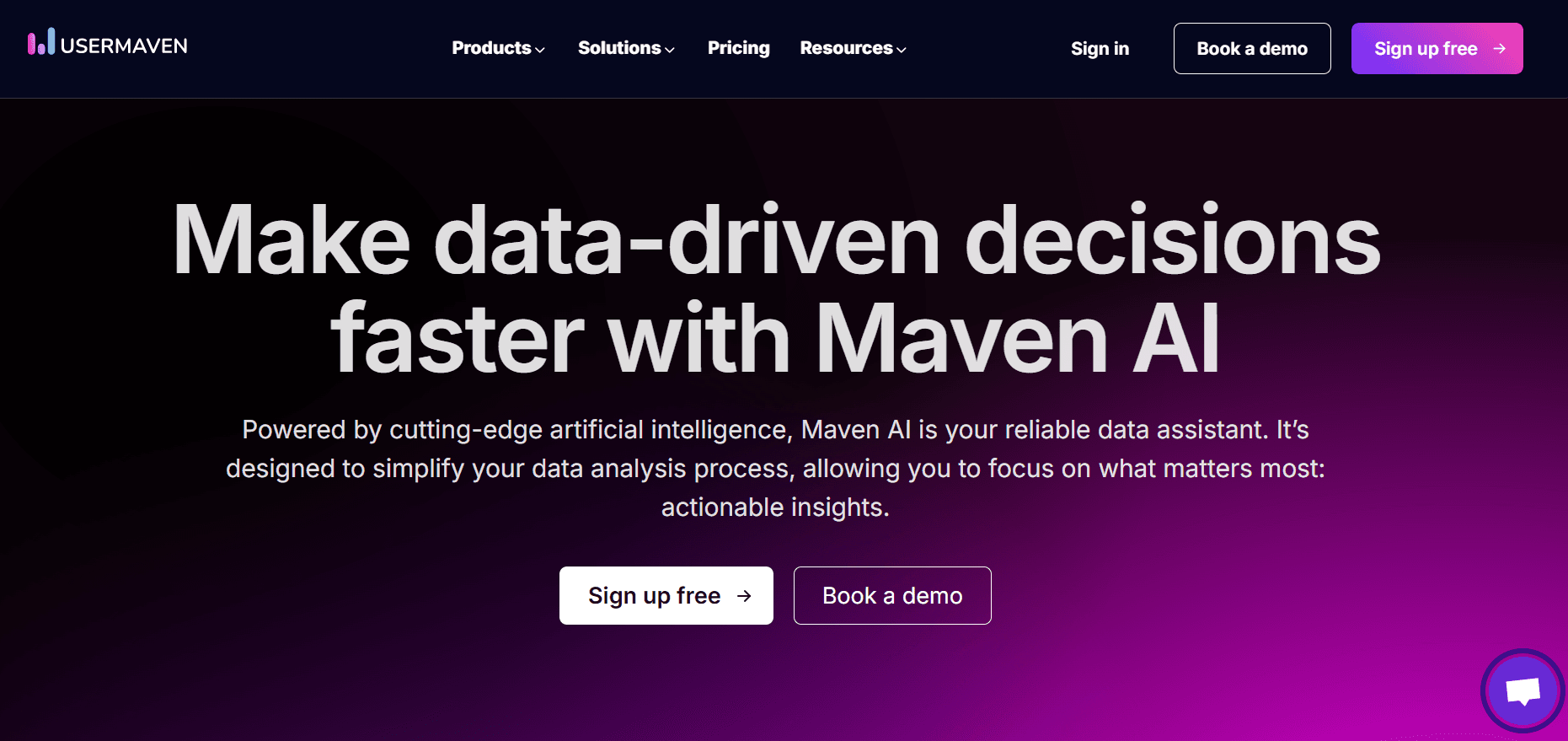
2. Maven AI by Usermaven
Best For
GTM teams that want instant, reliable answers from unified web analytics without relying on analysts.
What It Does
Built into Usermaven, Maven AI turns unified analytics into natural-language reporting so product, marketing, and sales leaders can get immediate, accurate answers about funnels, attribution, and trial conversion.
Key Features
Natural language queries against unified event and first-party data.
Custom dashboards tuned for sales, marketing, and product metrics.
Anomaly detection that flags sudden drops or spikes.
Native integration with Usermaven’s cleaned data model.
Benefits For GTM Teams
Eliminates reporting bottlenecks and reduces time to insight.
Aligns teams on the same attribution and funnel definitions.
Detects retention or conversion issues before they compound.
Makes experiment results accessible to non-analysts.
Example Use Case
A growth lead asks Maven AI, “What changed in trial-to-paid conversion after the new onboarding flow?” and receives an immediate, visual answer with the affected cohorts highlighted.
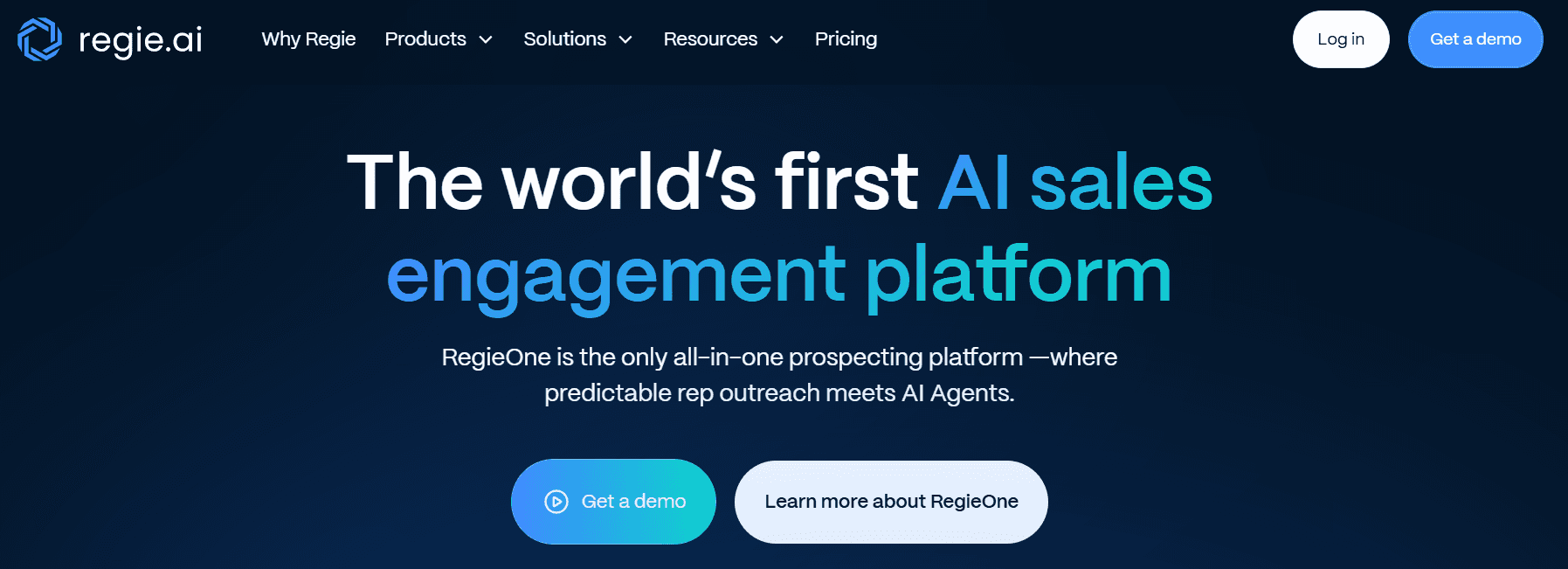
3. Regie.ai
Best For
SDR and marketing teams that need fast, scalable, persona-driven outbound messaging.
What It Does
Regie.ai automates the creation and optimization of multi-touch outbound sequences, producing consistent, persona-aware messages and iterating based on performance signals.
Key Features
AI-generated multi-touch sequences tailored to buyer personas.
Personalization rules by role, company size, and vertical.
Library of vertical-specific templates and A/B testing.
Integrations with Salesforce, Outreach, and HubSpot to close the loop.
Benefits For GTM Teams
Saves SDRs hours per week on copywriting and sequence design.
Improves open and reply rates through iterative optimization.
Keeps sales and marketing messaging aligned at scale.
Frees reps to work on conversations rather than craft them.
Example Use Case
A regional sales manager builds a persona campaign in Regie.ai, then launches hundreds of personalized outbound sequences and measures which template variants drive demos.
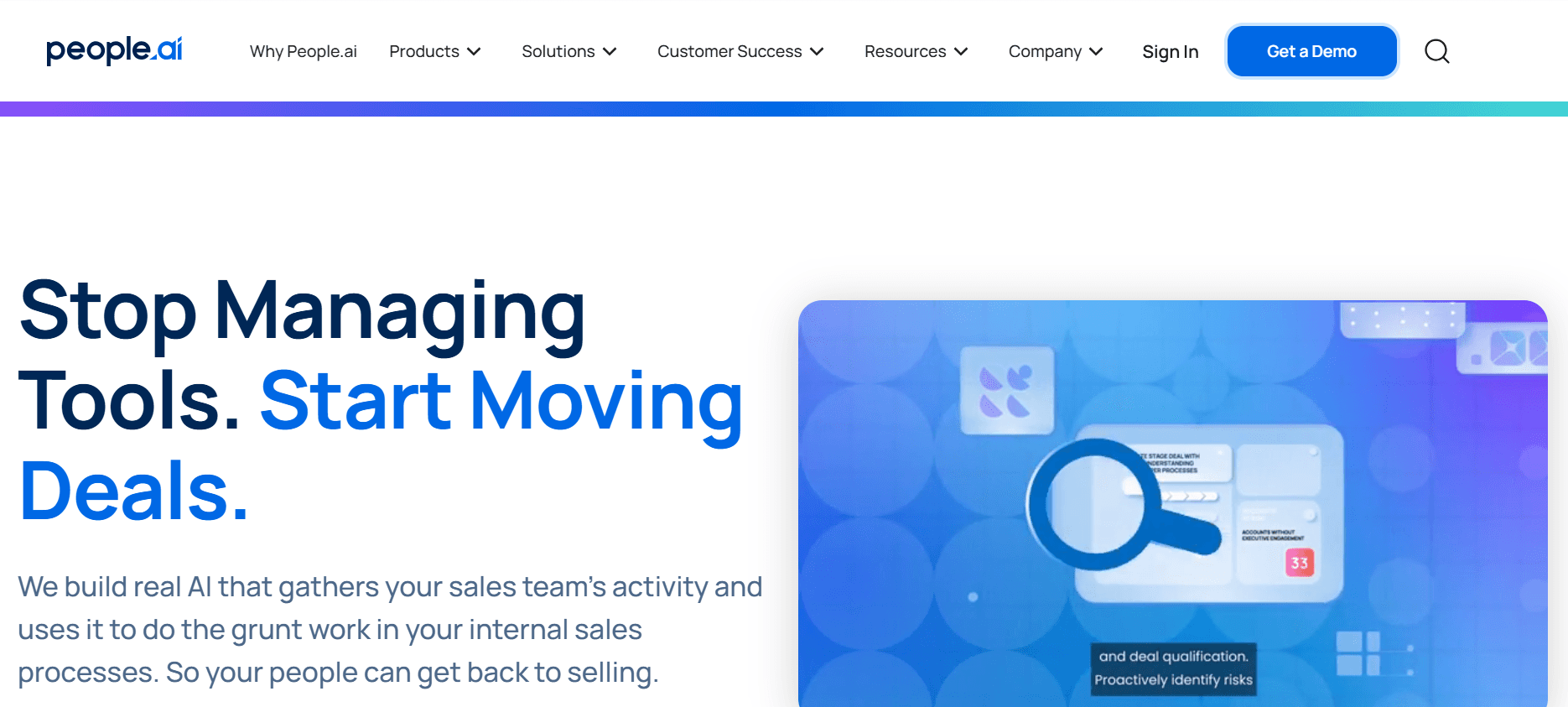
4. People.ai
Best For
Revenue teams that need accurate activity capture and opportunity health without manual CRM logging.
What It Does
People.ai passively captures sales activity across email, calls, and meetings, translating behavior into pipeline signals and account engagement maps that feed forecasting and coaching.
Key Features
Automated logging of emails, calls, and meeting notes.
Opportunity health scoring and at-risk deal alerts.
Visual account engagement maps across teams.
Deep CRM integrations for synced pipeline state.
Benefits For GTM Teams
Restores CRM data integrity and reduces missed activity.
Improves forecast accuracy with behavior-linked signals.
Makes coaching actionable with visibility into rep activity patterns.
Helps prioritize accounts needing attention.
Example Use Case
A VP of sales uses People.ai to spot enterprise accounts with low cross-functional engagement, then routes them to a specialist to recover the opportunity.
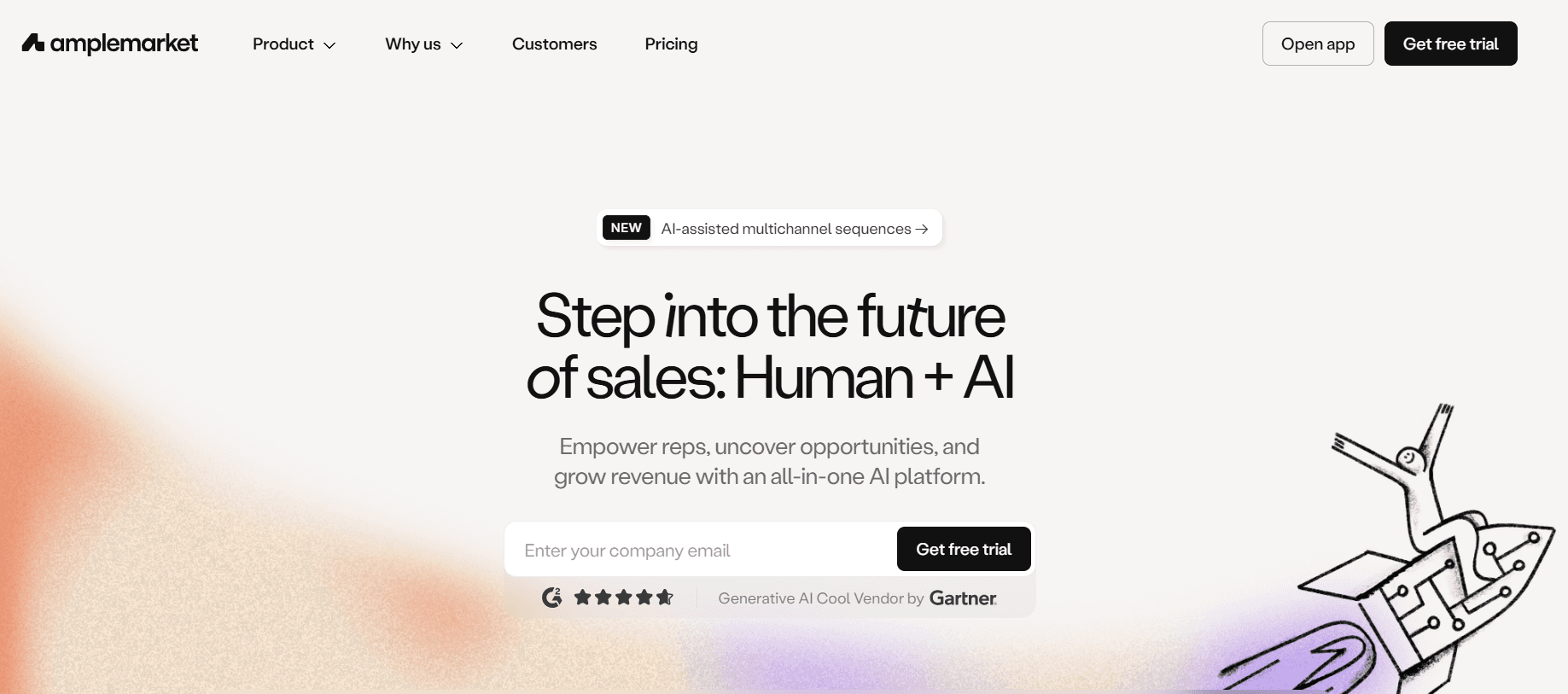
5. Amplemarket AI agent
Best For
Startups that want an autonomous prospecting engine to find and outreach ICP-fit leads across channels.
What It Does
Amplemarket finds prospects that match your ICP, enriches contacts, and executes multi-channel outreach sequences with automated follow-ups and performance tracking.
Key Features
AI-driven ICP discovery and list building.
Contact enrichment with firmographic and technographic details.
Coordinated email, LinkedIn, and call sequences.
Automated follow-ups and campaign performance dashboards.
Benefits For GTM Teams
Cuts research time and increases lead quality.
Keeps reps focused on demoing and closing rather than list building.
Provides a predictable pipeline through steady prospect flow.
Improves personalization with enriched data points.
Example Use Case
A startup entering a new vertical uses Amplemarket to build an enriched target list, then runs multi-channel sequences that consistently fill their demo calendar.
6. Drift AI
Best For
B2B websites that need live conversational qualification and meeting booking for inbound visitors.
What It Does
Drift AI runs intelligent chatbots that qualify leads through conversation, answer common questions, and schedule meetings directly on rep calendars in real time.
Key Features
AI chat that understands intent and qualifies leads.
Routing and calendar booking integrations for immediate handoffs.
Bot training from knowledge bases and past conversations.
CRM sync for consistent lead records.
Benefits For GTM Teams
Increases demo bookings by capturing intent at the moment of interest.
Prevents lead drop-off with instant responses.
Reduces repetitive inbound questions handled by humans.
Scales conversational engagement across many pages simultaneously.
Example Use Case
A SaaS company places Drift AI on its pricing and feature pages to qualify visitors and automatically book time with the right account executive.
7. Outreach Kaia
Best For
Field and inside sales teams that want live call guidance and automated follow-up hygiene.
What It Does
Kaia listens on sales calls, offers real-time coaching prompts, captures meeting notes, and suggests next steps while updating the CRM automatically.
Key Features
Live call coaching with suggested phrasing.
Automatic meeting transcription and key point extraction.
Next-step recommendations and automatic CRM updates.
Integration with Outreach workflow engine.
Benefits For GTM Teams
Raises rep performance through in-call guidance.
Saves hours on note-taking and post-call admin.
Ensures consistent follow-up actions and reduces slip-throughs.
Helps junior reps ramp faster with contextual prompts.
Example Use Case
A sales representative receives Kaia’s suggested objection-handling lines during a complex demo and then uses the auto-generated summary to email a clean follow-up to the prospect.
8. Clari Copilot
Best For
Large enterprises with complex territories and multi-product revenue teams requiring unified forecasting.
What It Does
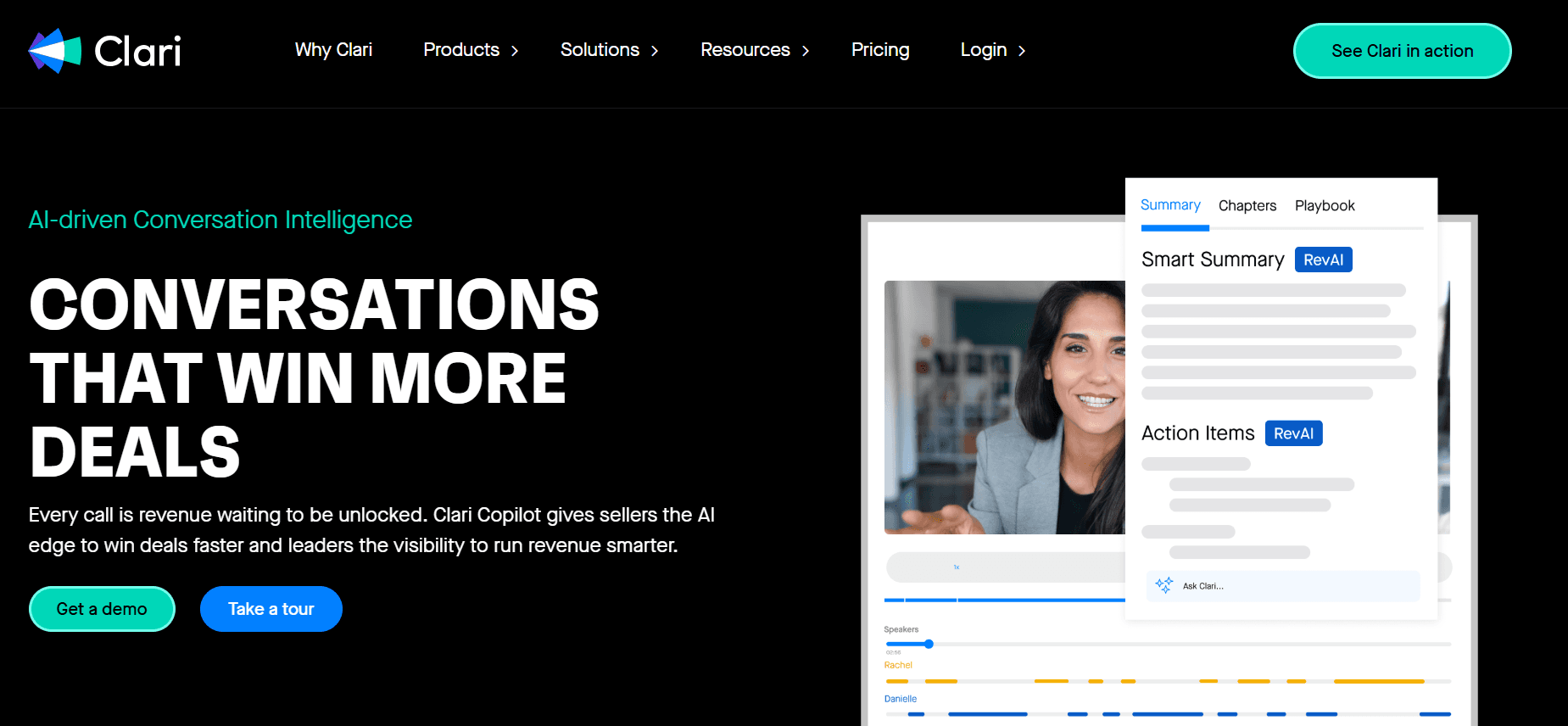
Clari Copilot overlays AI-powered revenue context onto enterprise pipelines, improving forecasting, surfacing risky deals, and aligning sales, finance, and marketing around a single source of truth.
Key Features
AI forecasting that accounts for activity and historical outcomes.
Deal with inspection and risk scoring with recommended actions.
Call transcription and coaching for rep development.
Native integrations across RevOps toolchains.
Benefits For GTM Teams
Increases forecasting confidence for executives and boards.
Reduces revenue slippage by surfacing at-risk opportunities early.
Aligns cross-functional teams on the same revenue view.
Drives targeted coaching with call-level insights.
Example Use Case
A RevOps director reviews Copilot’s risk list before a quarter close and reallocates resources to prevent predictable slippage.
9. Lavender AI
Best For
SDR-heavy teams that rely on high-volume cold email and want better reply rates.
What It Does
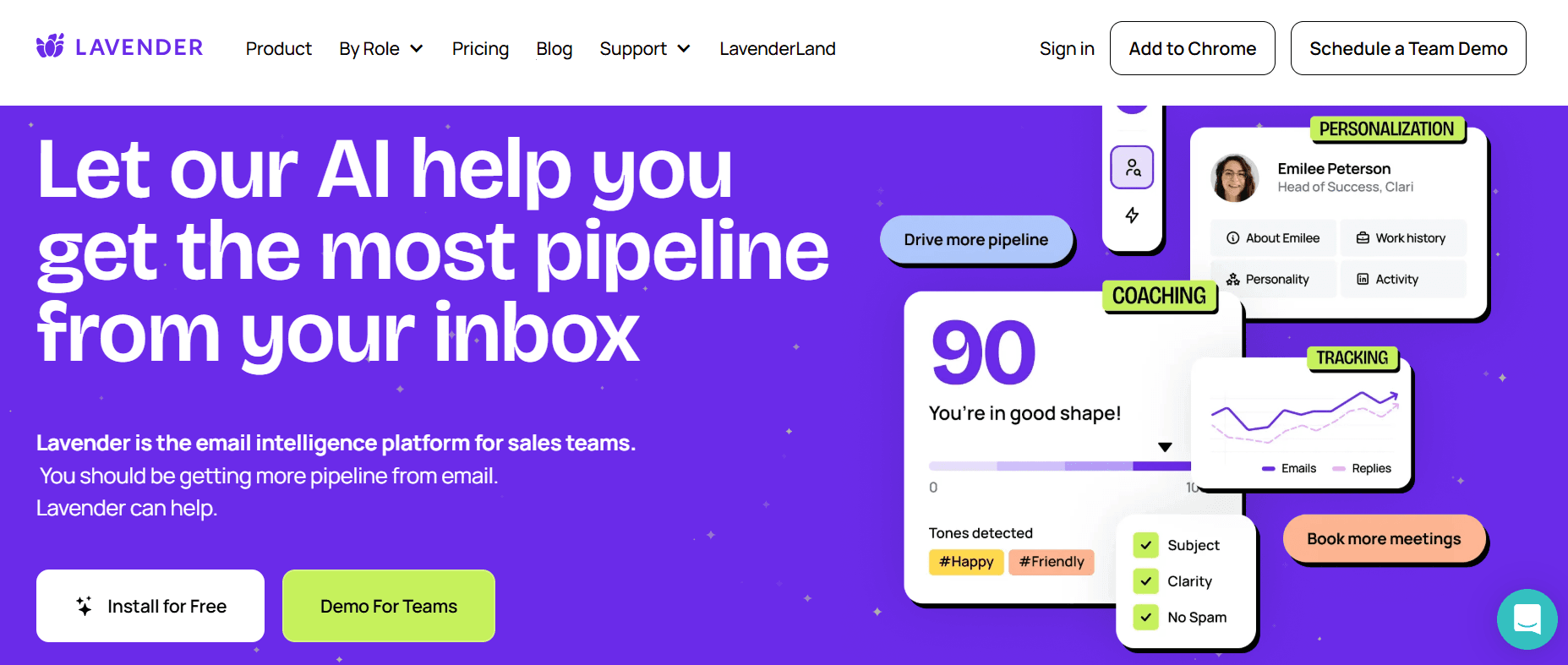
Lavender scores and optimizes cold emails in real time, suggesting subject lines, personalization cues, and structural edits to improve open and reply performance.
Key Features
Real-time email scoring and improvement suggestions.
Subject line and tone optimization tuned to recipients.
CRM and inbox integrations for seamless editing.
Templates and analytics to track improvements.
Benefits For GTM Teams
Raises cold email effectiveness without lengthy A/B tests.
Saves SDRs time by surfacing the best phrasing quickly.
Helps maintain relevance and reduce spammy language.
Builds confidence with measurable email performance boosts.
Example Use Case
An SDR uses Lavender before hitting send on a high-value prospect, refining language to increase the chance of a reply and secure a discovery call.
10. HockeyStack
Best For
B2B revenue teams that want a single platform for attribution, predictive analytics, and automation from insight to action.
What It Does
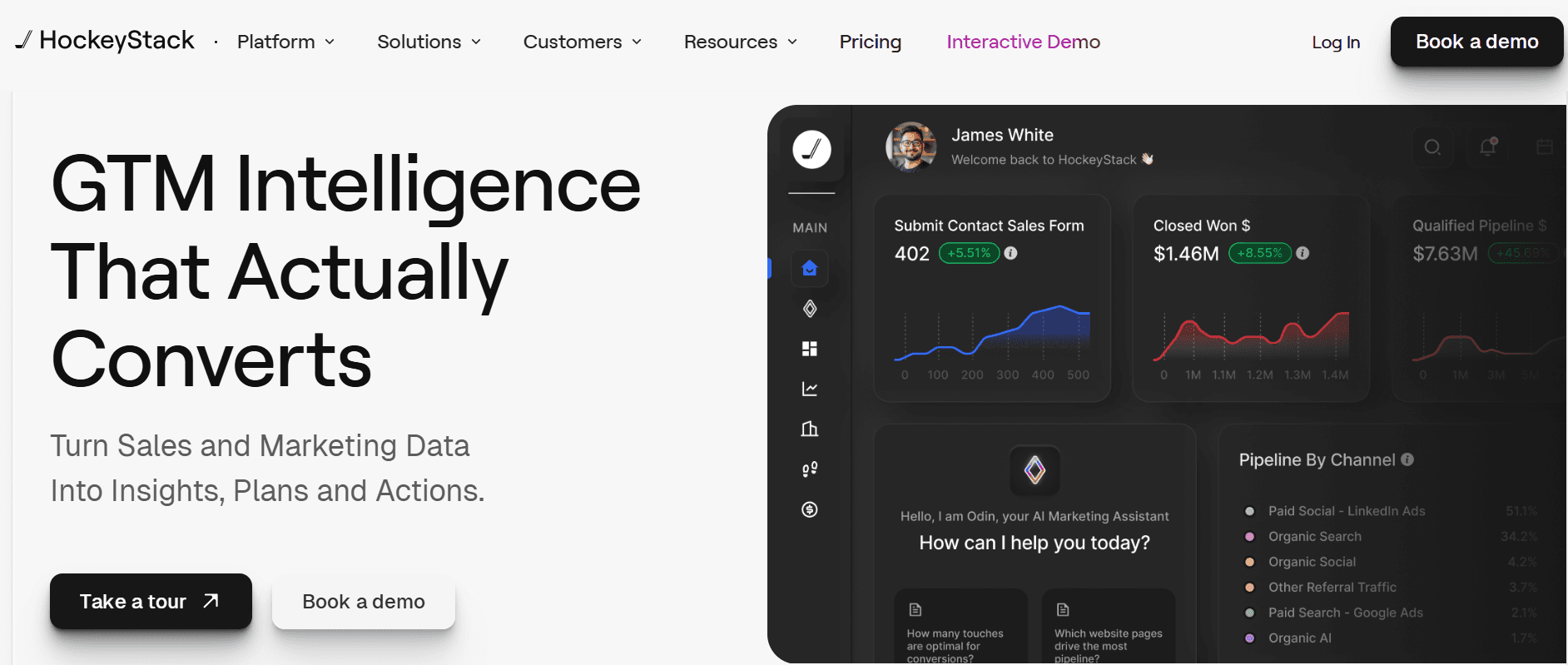
HockeyStack unifies data, attribution, and workflow automation into one GTM platform with two AI agents, Odin for analysis and Nova for execution, enabling immediate answers and automated prospect orchestration from the same dataset.
Key Features
Odin AI for instant revenue and funnel analysis.
Nova AI for prospect scoring, account research, and automated workflows.
Multi-touch attribution across online and offline channels.
Native connectors for common martech and CRM stacks.
Benefits For GTM Teams
Removes integration debates by keeping everyone on one data source.
Turns insights into automated actions without handoffs.
Predictive scoring focuses reps on high-conversion accounts.
Simplifies multi-touch attribution for better budget decisions.
Example Use Case
A marketing director asks Odin which channel drove the most closed-won deals last quarter, then uses Nova to automate follow-up on the winning play.
11. Salesforce Einstein (Agentforce / Atlas)
Best For
Enterprises already embedded in Salesforce that want AI agents tightly coupled to CRM data and workflows.
What It Does
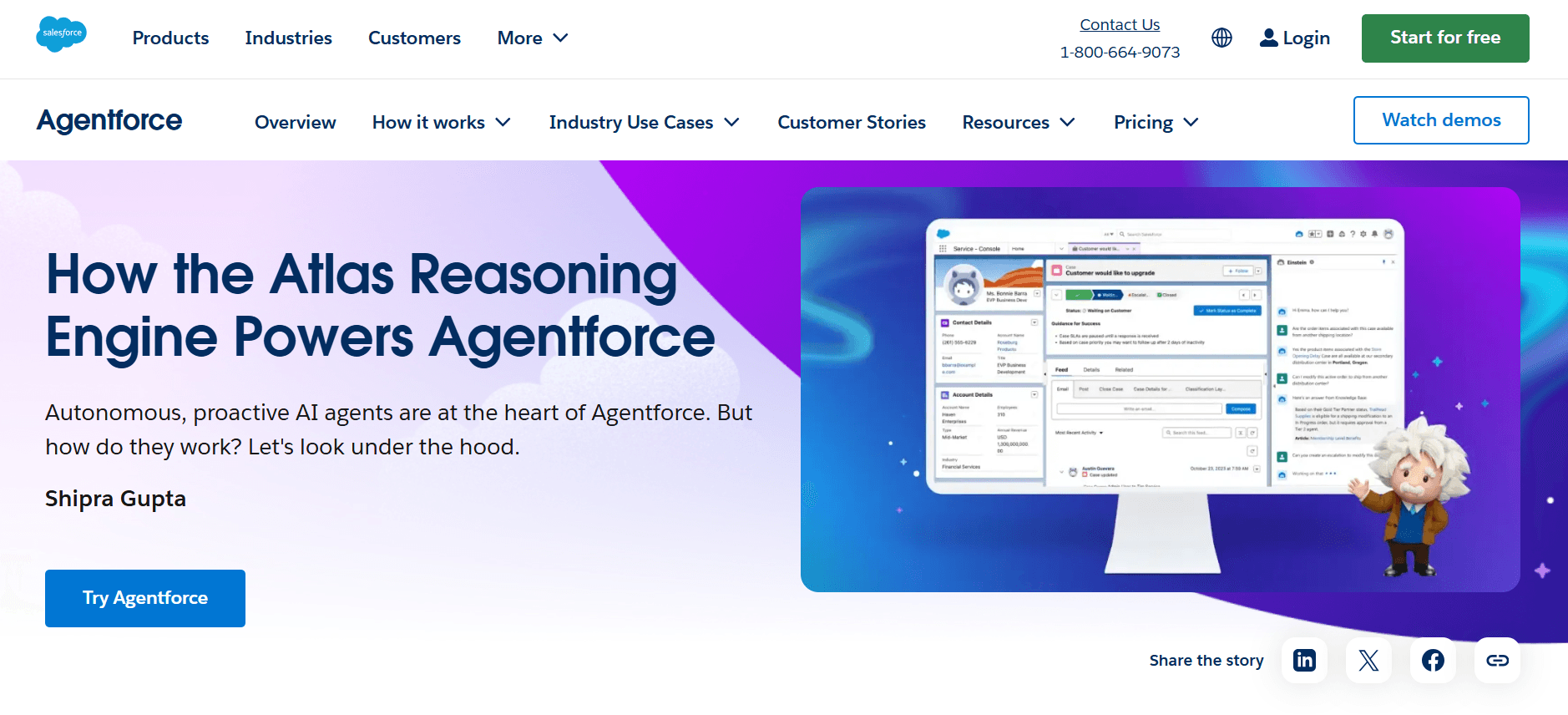
Agentforce agents, powered by Atlas reasoning, automate complex CRM tasks like lead qualification, opportunity management, and contextual outreach, using multi-step reasoning within Salesforce so data never leaves the system.
Key Features
Atlas Reasoning Engine for multi-step, deliberative decisions.
Prebuilt agent templates for sales, service, and ops tasks.
Deep native access to Salesforce CRM context and records.
Autonomously drafts messages, updates opportunities, and schedules follow-ups.
Benefits For GTM Teams
Keeps AI actions auditable and entirely within CRM governance.
Leverages full account context for more relevant outreach.
Minimizes integration surface and data leakage risk.
Automates routine opportunity and case management tasks.
Example Use Case
A sales ops lead deploys an Agentforce lead-qualification agent that assigns MQLs, drafts personalized follow-ups, and schedules reps for calls when criteria are met.
12. Breeze Intelligence (HubSpot)
Best For
HubSpot customers who want CRM-native enrichment, intent signals, and automated service handling.
What It Does
Breeze enriches contacts, surfaces buying signals, provides predictive scoring, and handles a large share of customer questions using knowledge-base driven automation within HubSpot.
Key Features
AI-powered data enrichment from an extensive buyer profile index.
Intent monitoring and predictive account scoring.
Self-service customer agent that handles many questions and escalates when needed.
Workflow recommendations based on actual team behavior.
Benefits For GTM Teams
Fills CRM gaps so reps don’t chase missing context.
Detects intent to prioritize outreach automatically.
Cuts support load by automating common inquiries.
Suggests workflows to reduce repetitive manual tasks.
Example Use Case
A customer success manager uses Breeze’s scoring to prioritize accounts showing increased buying signals, then routes those accounts to an expansion specialist.
13. Demandbase (Agentbase)
Best For
Enterprise B2B GTM teams focused on account-based marketing and sales alignment.
What It Does
Demandbase combines unified first- and third-party account data with Agentbase agents that optimize campaign bidding, summarize account engagement, and prioritize sales-ready accounts.
Key Features
Campaign Outcomes agent for automated DSP optimization.
Account Engagement agent that summarizes activity and recommends next steps.
AI-driven qualification scoring from unified data.
Tight sales and marketing alignment tools for ABM.
Benefits For GTM Teams
Improves ad performance through automatic bidding adjustments.
Gives sales crisp account briefs that reduce prep time.
Prioritizes high-propensity accounts for outbound efforts.
Reduces waste in ABM spend with better attribution.
Example Use Case
A head of ABM, Demandbase is used to auto-optimize display campaigns, while the Account Engagement agent creates one-page briefs for reps before outreach.
14. Jason AI SDR (Reply.io)
Best For
Teams that want a fully autonomous multichannel AI SDR working 24/7 with deep personalization.
What It Does
Jason acts as an AI SDR that researches prospects, crafts personalized sequences across email, LinkedIn, SMS, and phone, and manages responses and meeting scheduling with minimal oversight.
Key Features
Full autonomy for prospect research, outreach, and response handling.
Multichannel conditional sequences that adapt to prospect behavior.
Access to a large B2B contact pool for list generation.
Response classification and automated next-step actions.
Benefits For GTM Teams
Keeps outbound running around the clock, increasing touch volume.
Reduces manual response triage for sales teams.
Enables lean teams to run sophisticated cadences without headcount growth.
Improves conversion by maintaining context across channels.
Example Use Case
A small sales team deploys Jason to run a booked-meeting goal overnight and finds curated meetings arriving in the morning for reps to qualify.
15. Beam AI
Best For
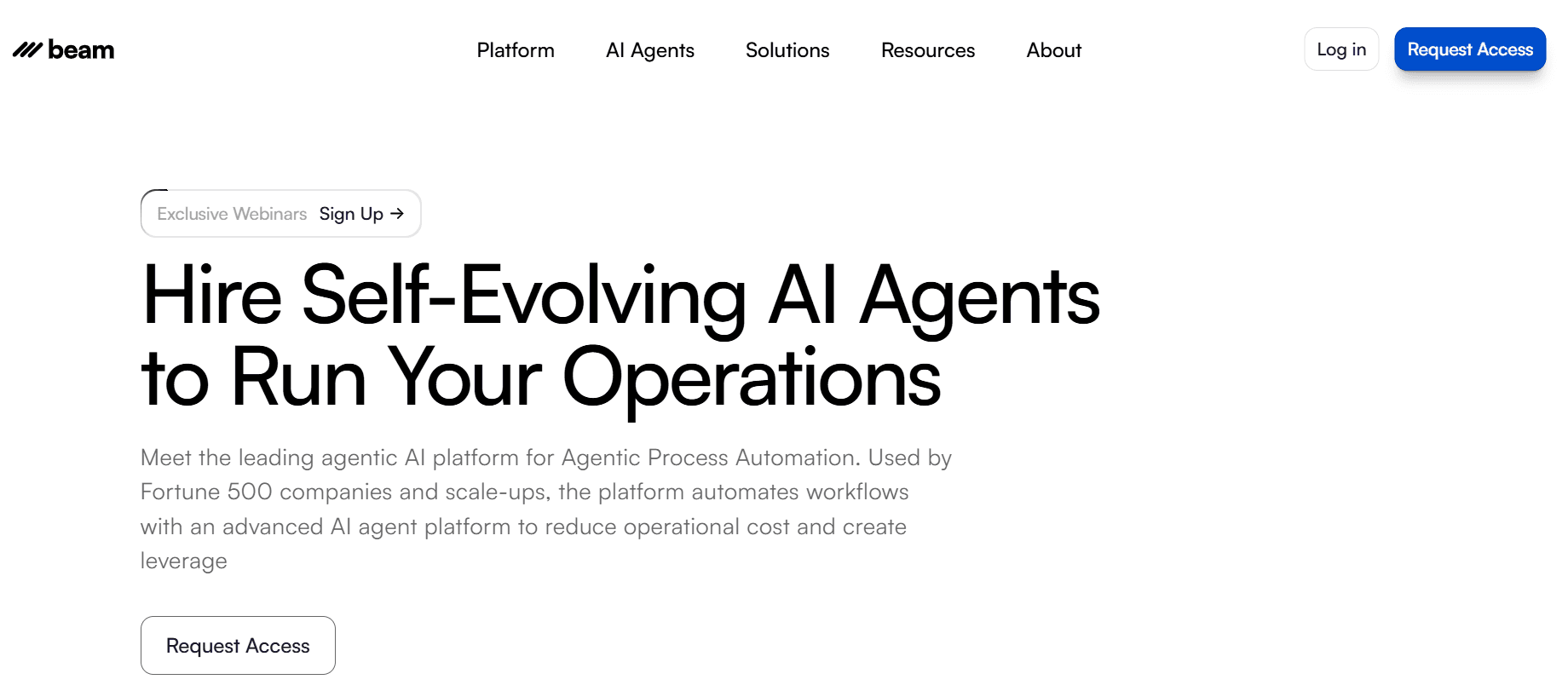
Operations and RevOps teams that require custom multi-agent workflows beyond off-the-shelf solutions.
What It Does
Beam offers a visual agent builder and multi-agent coordination for complex workflows, enabling teams to construct agents that scrape, analyze, generate, and update across systems without code.
Key Features
Drag-and-drop visual agent workflow builder.
Multi-agent orchestration for staged, conditional tasks.
Enterprise integrations with Salesforce, ServiceNow, and others.
Ability to process documents, web data, and push actions into systems.
Benefits For GTM Teams
Crafts bespoke automations for niche processes without engineering cycles.
Scales complex logic that traditional automation cannot handle.
Reduces time to production for integrations and experiments.
Keeps operational logic auditable and modular.
Example Use Case
An ops team builds a multi-agent flow that pulls RFPs, drafts initial responses, routes approvals, and updates the CRM automatically.
16. OneShot
Best For
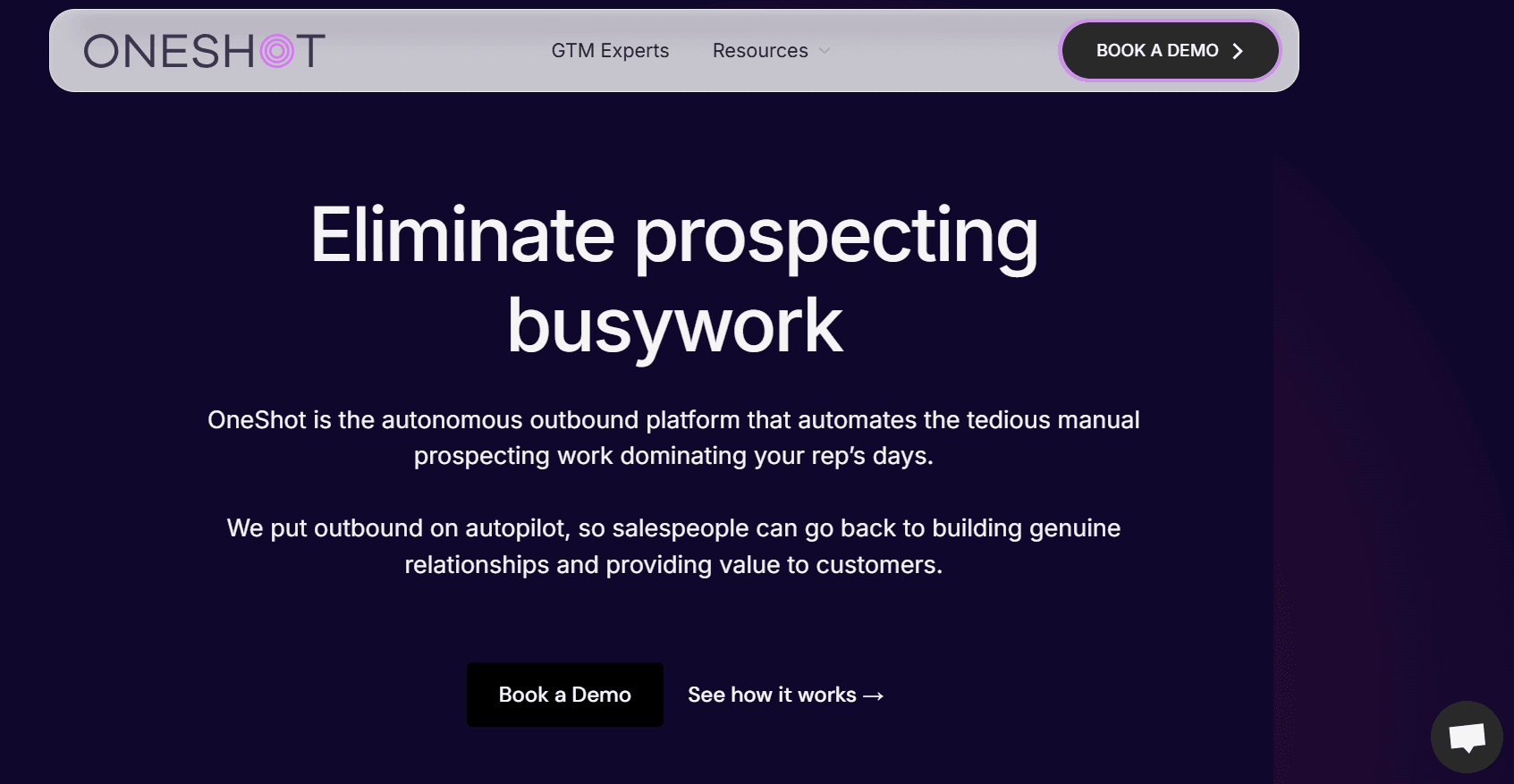
Sales teams that want an end-to-end assistant to own the entire outbound lifecycle from research to booking.
What It Does
OneShot composes teams of specialized agents that research prospects, personalize outreach, and execute multichannel campaigns to hit specific GTM goals like booked meetings or qualified leads.
Key Features
Goal-driven campaign builder that maps desired outcomes to agent tasks.
AI SDR research agent plus personalization and sequencing agents.
CRM sync and duplicate avoidance features.
Autonomous multichannel outreach across email, LinkedIn, and calls.
Benefits For GTM Teams
Transforms high-level goals into actionable campaign plans.
Offloads labor-intensive prospecting and personalization.
Reduces manual coordination between research and outreach.
Accelerates lead flow for small sales teams.
Example Use Case
A VP of sales sets a OneShot goal to book 30 demos in a month, and the platform orchestrates research, personalized email sends, and follow-ups until meetings are scheduled.
17. Empler AI
Best For
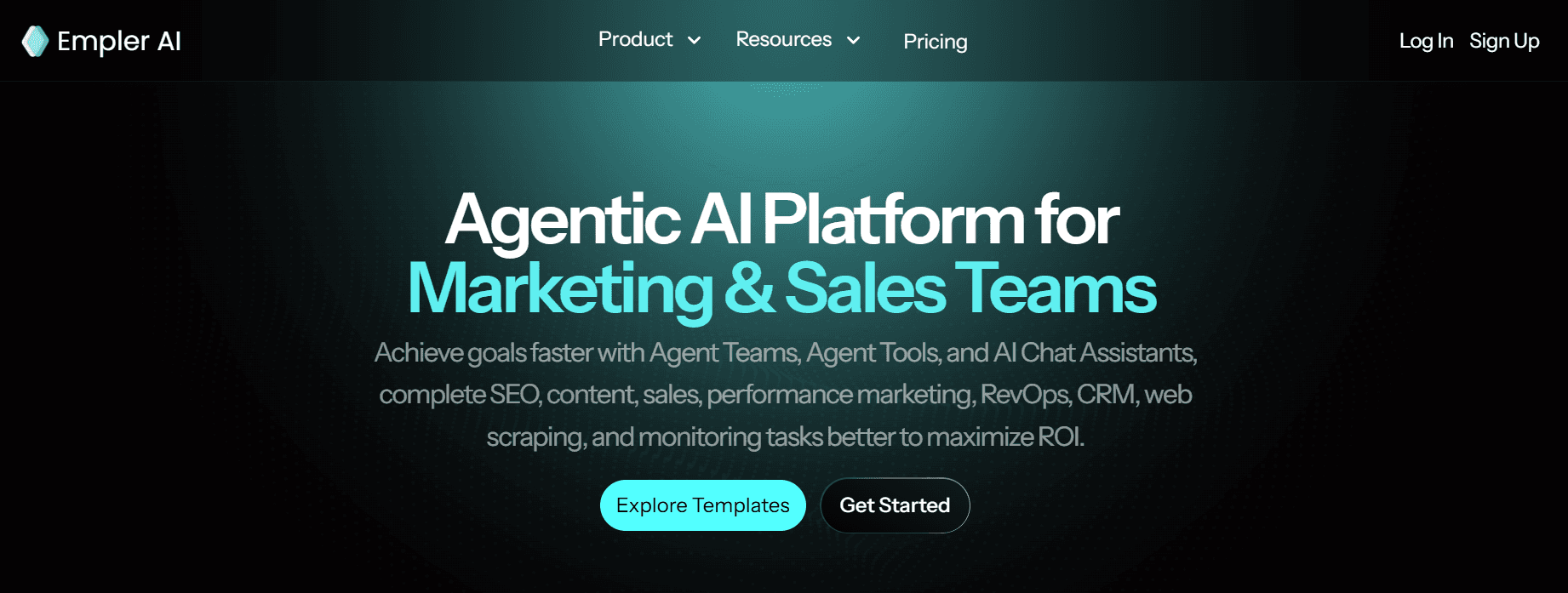
B2B sales and RevOps users who need no-code multi-agent GTM automations that non-engineers can author.
What It Does
Empler provides a visual workflow builder where users assemble AI agents to scrape signals, write outreach, score leads, and update systems, democratizing agent creation for GTM teams.
Key Features
No-code drag-and-drop agent studio.
Pre-built blueprints like funding-triggered outreach and webinar follow-up.
Integrations with CRM, email, and webhook endpoints.
Role-based governance and agent templates.
Benefits For GTM Teams
Let's non-technical users build and iterate automations rapidly.
Shortens the time from idea to live automation with templates.
Keeps governance in place while enabling experimentation.
Lowers the engineering lift for creative GTM plays.
Example Use Case
A RevOps manager uses a funding-triggered blueprint to trigger personalized outreach when target accounts announce new rounds automatically.
18. Apollo.io
Best For
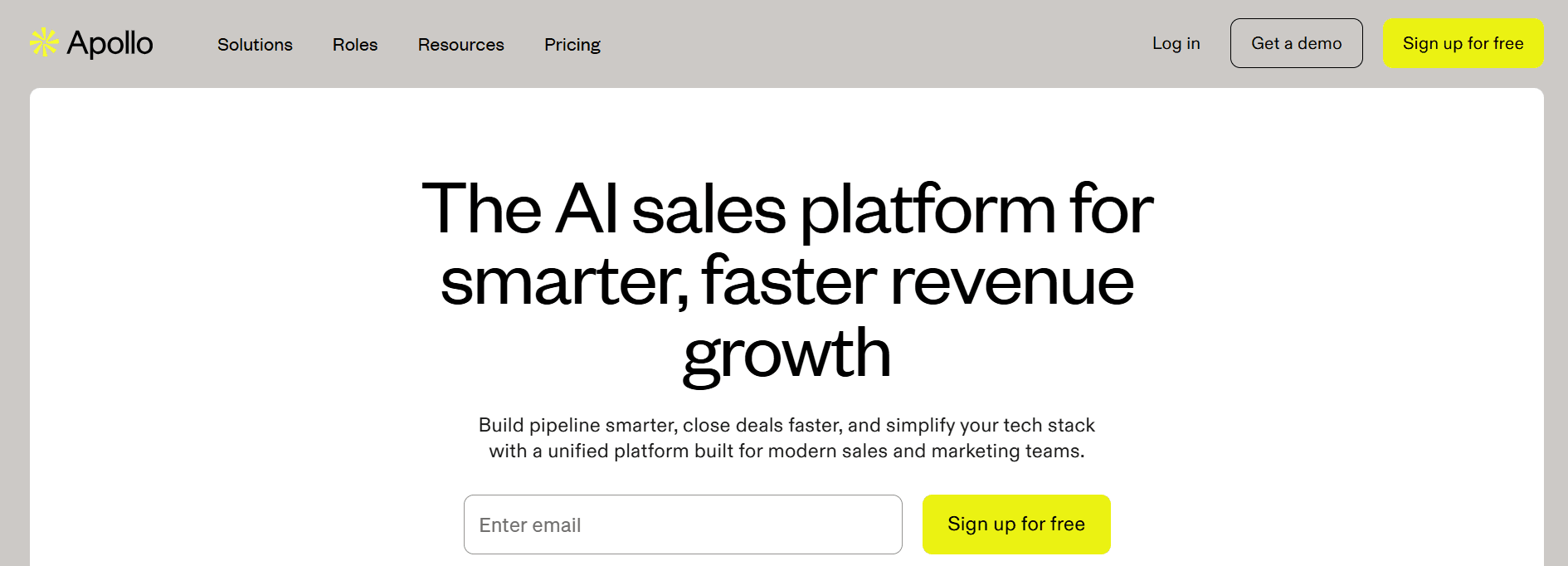
Teams that prioritize large, verified contact data combined with engagement workflows for outbound scale.
What It Does
Apollo combines a massive contact database with sequence automation and emerging AI features for search, scoring, and email generation, providing teams with both fuel and an engine for outreach.
Key Features
Large contact and company data index with verification tools.
Integrated sequence builder for email, phone, and LinkedIn.
AI-assisted drafting of personalized intros and sequence optimizations.
Chrome extension for in-flow prospecting.
Benefits For GTM Teams
Enables fast list building across many niches.
Reduces friction when turning data into outreach sequences.
Suggests optimizations that improve sequence performance.
Supports rapid prospecting from the browser.
Example Use Case
A demand gen lead uses Apollo to find decision-makers at target accounts, then deploys a tailored sequence that auto-adjusts follow-ups based on opens.
19. Lyzr.ai
Best For
Enterprises that require a platform-grade approach to agent orchestration with strong compliance controls.
What It Does
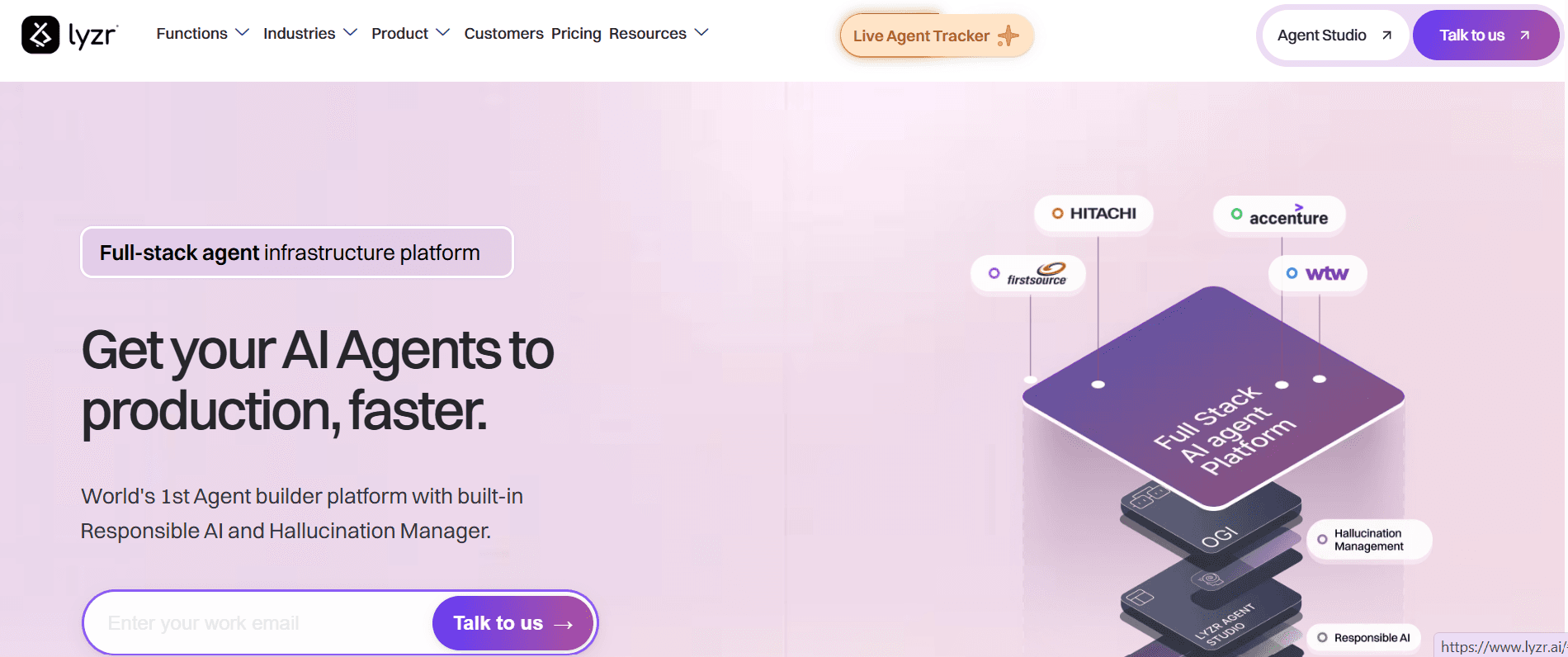
Lyzr is an agent factory that offers an enterprise Agent Studio for building, deploying, and monitoring multiple agents with telemetry and hallucination control, specifically designed for regulated industries.
Key Features
No-code Agent Studio for multi-agent workflows.
Pre-built agents for prospecting, outreach, CRM hygiene, and RFP automation.
Telemetry, deterministic planning, and hallucination controls.
Focus on enterprise compliance and reliability.
Benefits For GTM Teams
Provides enterprise-grade governance for autonomous agents.
Enables regulated industries to automate without sacrificing controls.
Coordinates complex multi-step processes reliably.
Reduces risk of agent drift through monitoring and constraints.
Example Use Case
An insurance firm deploys Lyzr to generate compliant advisor outreach while maintaining audit trails and automated escalation for sensitive interactions.
20. Unify
Best For
Companies that want signal-driven outbound that engages prospects at the precise moment of intent.
What It Does
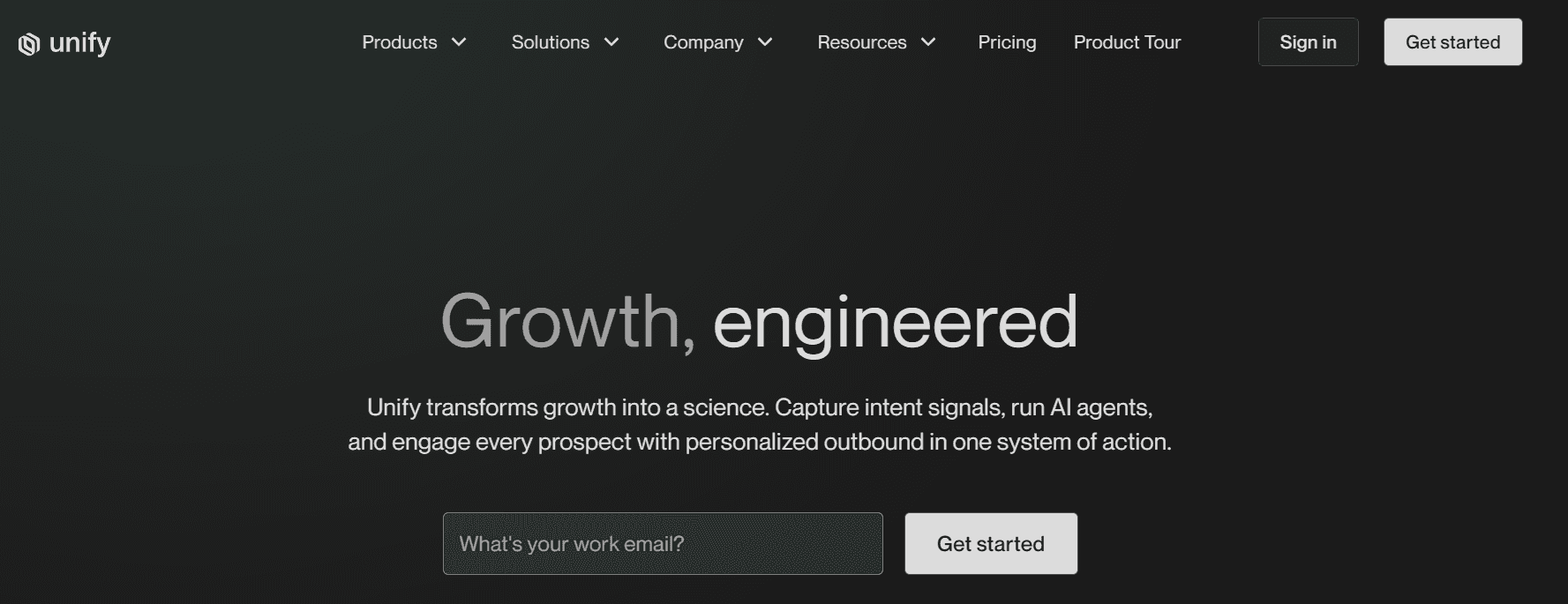
Unify continuously monitors intent signals across the total addressable market, then triggers personalized, multi-agent outreach based on events such as funding, hiring, or technology changes, utilizing a decision engine built on GPT models.
Key Features
Real-time intent signal monitoring and event-driven triggers.
Observation and research agents that compile context for outreach.
Multi-agent decision engine that picks timing and message.
Tight CRM integration for action tracking.
Benefits For GTM Teams
Turns cold outreach into warm outbound timed to fundamental prospect changes.
Reduces wasted touches by focusing on high-fit, high-intent signals.
Automates high-quality personalization at scale.
Maintains campaign momentum without manual monitoring.
Example Use Case
Unify spots a target account that just hired a VP of Sales and automatically sends a tailored outreach sequence referencing the hire and relevant use cases.
21. Clay
Best For
Teams that want high-quality enrichment and contextual snippets to supercharge personalized outreach.
What It Does
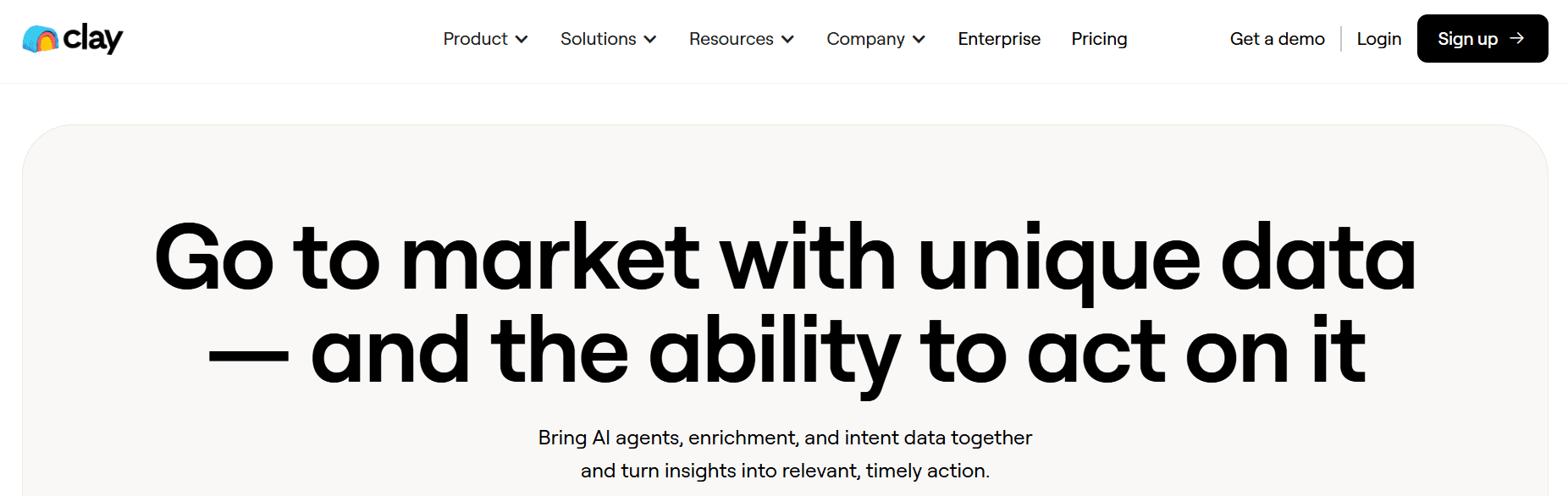
Clay automates prospect enrichment and produces ready-to-use personalization snippets by pulling data from LinkedIn, Crunchbase, job postings, and other sources, saving reps hours of manual research.
Key Features
Connectors for LinkedIn, Crunchbase, Clearbit, and APIs.
No-code workflows that produce enriched contact records and personalized snippets.
Trigger-based enrichment for signals like funding or tech adoption.
Push-to-CRM or export-ready outputs for outreach.
Benefits For GTM Teams
Arms reps with relevant context to increase reply rates.
Removes the manual research bottleneck from personalization.
Helps target prospects with timely, signal-driven messaging.
Integrates enrichment directly into existing cadences.
Example Use Case
A seller uploads a short list of accounts and receives enriched profiles with one-line personalized email openers ready to paste into their sequence.
22. Artisan.ai
Best For
Teams focused on email-first outbound that want a dedicated AI BDR to run cold sequences end to end.
What It Does
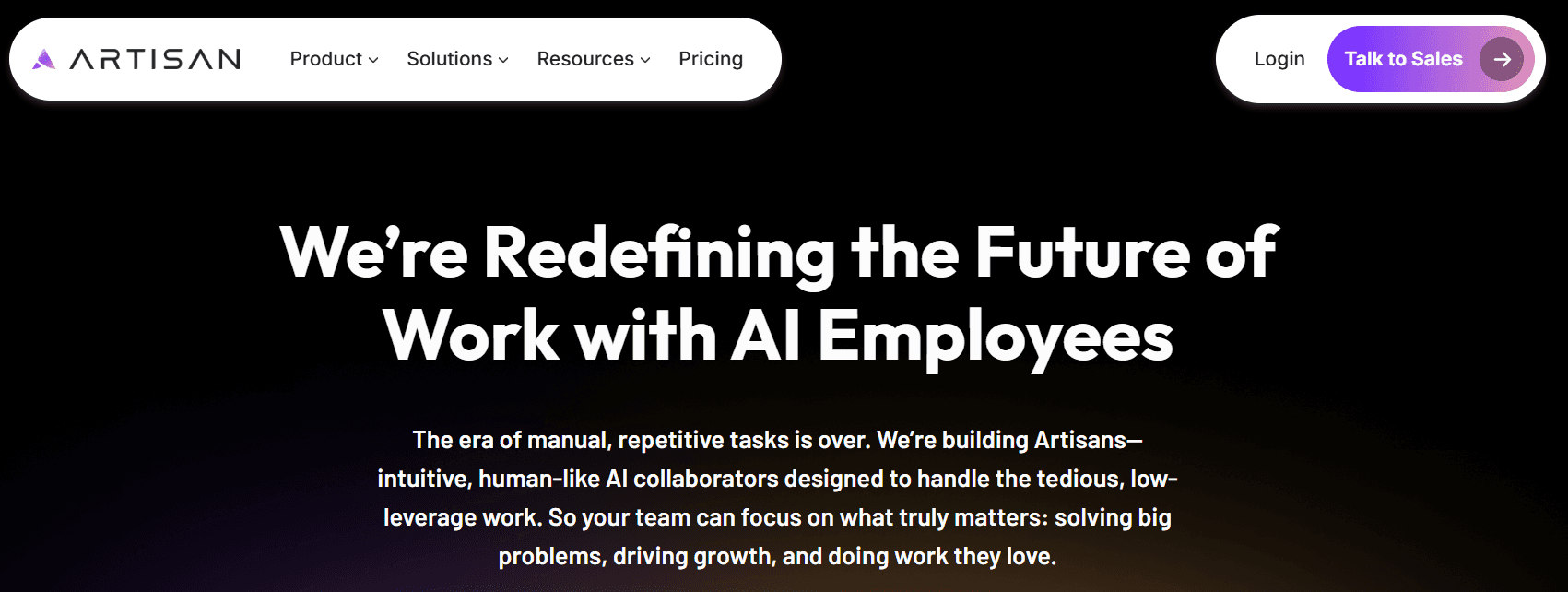
Artisan’s AI BDR Ava automates lead list creation, research, email crafting, deliverability management, and follow-ups, handling a large proportion of routine outbound tasks.
Key Features
AI BDR that builds lead lists and writes tailored cold emails.
Large B2B contact database and firmographic filters.
Deliverability tooling, auto warm-ups, and inbox health management.
Integrations with Slack, CRM, and notification channels.
Benefits For GTM Teams
Removes the repetitive work of list building and message crafting.
Improves deliverability and inbox placement for outbound programs.
Let's small teams run mature email plays without additional headcount.
Alerts humans only for qualified responses, reducing noise.
Example Use Case
A growth lead brings Ava online to run an email push, and responses that meet qualification criteria are forwarded to account executives for closing.
23. 11x.ai
Best For
Revenue organizations that want autonomous AI SDR and AE workers for high-touch outbound and inbound conversion.
What It Does
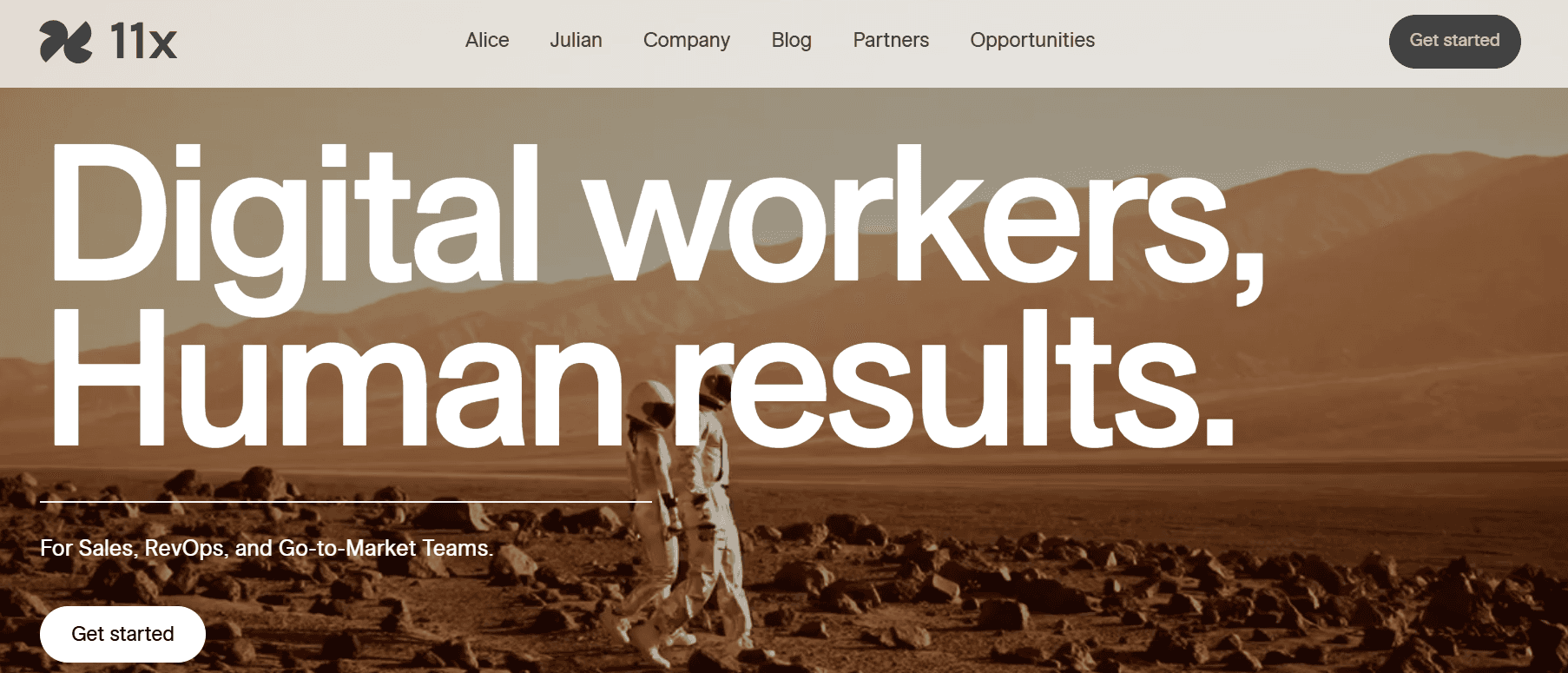
11x.ai provides autonomous agents like Alice and Julian that handle outbound prospecting and voice-based inbound qualification, operating goal-driven rather than step-by-step and integrating signals into decision-making.
Key Features
Outbound AI SDR for multichannel personalized outreach.
AI phone agent for immediate inbound qualification and booking.
Signal-driven intelligence to pause or prioritize based on events.
CRM logging, compliance guardrails, and tone customization.
Benefits For GTM Teams
Expands outreach capacity without hiring more reps.
Converts inbound leads immediately with voice-driven qualification.
Acts dynamically on signals to avoid wasted outreach.
Maintains compliance and escalation paths for human handoff.
Example Use Case
An inbound MQL receives an immediate call from Julian, the AI phone agent, which qualifies and books a live transfer to a senior rep for a demo.
24. Landbase

Best For
Teams wanting a fully autonomous agentic GTM stack that executes end-to-end campaigns with a heavy focus on proven B2B outreach patterns.
What It Does
Landbase offers agentic GTM execution driven by its GTM-1 Omni model trained on tens of millions of campaigns and conversations, with specialized agents for strategy, SDR, deliverability, and revops that can run campaigns with minimal human input.
Key Features
Pretrained GTM agents covering strategy, outreach, and revops roles.
Massive contact database with continuous enrichment and intent signals.
Automated deliverability, A/B testing, and campaign feed for one-click launches.
Closed-loop analytics to learn from every interaction.
Benefits For GTM Teams
Enables small teams to run autonomous outbound engines that scale quickly.
Automates domain warm-up and deliverability so campaigns actually land.
Reduces setup and campaign time dramatically with prebuilt plays.
Provides a single system to iterate and learn from outreach outcomes.
Example Use Case
A startup uses Landbase to launch a campaign from the Campaign Feed, letting the platform handle list building, messaging, and follow-ups while the founder focuses on closing.
The Pilot Problem: Why Complex AI Solutions Stall Adoption
When we ran pilots with lean agencies over several sprints, the same pattern emerged: high-cost, complex AI SDR solutions stalled adoption because setup and governance consumed the very resources teams were trying to save. The familiar approach is to bolt together point tools and hope the pieces behave, which works initially but creates fragmented handoffs and duplicate work as campaigns scale.
Teams find that platforms like AI Acquisition provide a tighter bridge, offering prebuilt agent plays, no-code orchestration, and end-to-end audit trails, so launch cycles compress from weeks to hours while governance stays intact.
The ROI of AI: Conversions, Cost Savings, and Vendor Evidence
A practical note on outcomes, tied to vendor-level evidence: many teams chasing scale measure conversion and cost impact differently, yet independent vendor reporting shows meaningful lifts and efficiencies.
For example, businesses report 4–7× higher conversions according to Landbase Blog, and some platform comparisons highlight up to 70% cost savings compared to traditional SDR teams, which is why choosing fit and governance matters more than chasing raw autonomy.
That simple insight changes everything about how you think about the tools you pick next.
Related Reading
What Features to Look for in AI GTM Agents?

Pick tools that solve a specific GTM problem for your team, prove value on a real workflow, and give you clean data and clear actions you can trust. Prioritize deep data integration, explainable analytics, low-friction adoption, and guardrails that preserve autonomy without compromising its usefulness.
If a vendor passes those gates, you keep speed without sacrificing control.
Which Core Features Actually Move The Needle?
Start with data integration and context. Ask vendors which systems they connect to natively, how they handle incremental syncs and schema changes, and whether they map canonical IDs back to your CRM records.
Red flag, a vendor that says “we can connect to anything” but cannot show a live connector or a sample mapping, because shallow connectors produce generic outputs that frustrate reps and erode trust.
How Does Autonomous Execution Need To Behave?
Demand explicit scopes and decision rules, not vague promises of automation. Ask for confidence thresholds, human escalation paths, and a replayable audit trail for every action. Red flags are long lists of “we can do it all” capabilities without mention of safety gates, escalation logic, or rollback hooks, because that is how agents drift into noise or risky behavior.
Why Does UX And Ease Of Adoption Matter So Much?
If your team needs weeks of training, adoption stalls. Request a demo where a non-technical user launches a campaign or route in under an hour. Insist on templates, contextual tooltips, and role-based permissions that match how your reps actually work.
If onboarding requires a custom engineering project, the time-to-value will be overshadowed by maintenance overhead.
What Should Analytics And Explainability Look Like?
Look for root-cause views, confidence scores, and lineage for every recommendation.
Ask vendors to:
Walk through three recent recommendations
Showing the signals used
Explaining why the model favored one action over another
If recommendations arrive as opaque assertions with no evidence, you will spend more time arguing with the agent than acting on them.
How Do I Test Fit With One Of Our Real Workflows?
Pick a single, high-value workflow and run a short, instrumented pilot. For example, run a 30-day test where the agent handles lead routing for one sales pod while you keep another pod on the old process for comparison.
Define two to three objective KPIs, such as:
Time-to-first-contact
Qualified meetings per week
Emails saved per rep
Use a checklist during the pilot to track data freshness, the number of human escalations, the percentage of recommendations accepted, and any hallucinations logged. Treat the pilot like a test drive on your commute; if the car cannot handle the hills and traffic you encounter every morning, it fails, even if it racked up miles on a test track.
When Most Teams Do Things The Old Way, What Breaks, And How Do You Fix It?
Most teams assemble spreadsheets, ad hoc scripts, and point tools because they are familiar and quick to start. As volume and complexity ramp, context fragments, errors multiply, and decisions slow while people chase missing data.
Platforms like AI Acquisition provide an alternative path, offering prebuilt connectors, no-code workflow composition, and auditable agent plays that compress setup time and maintain control, transforming extended handoffs into fast, traceable actions.
What Are The Nonnegotiable Red Flags During Vendor Diligence?
Your data and models
Deterministic audit logs
Explicit compliance evidence such as:
SOC2 or equivalent controls
Data residency options
Watch out for black-box SLAs, vague pricing tied to “consumption spikes,” and vendors that refuse to disclose the lineage of a single recommendation. If the vendor cannot provide a simple rollback plan or an on-demand human override, you will incur costs for fixes, including lost deals and brand risk.
How Do I Align Feature Priorities To Specific Gtm Goals?
If speed to market is the goal, prioritize no-code orchestration, prebuilt plays, and real-time performance so campaigns launch in hours, not weeks. If productivity and headcount efficiency are the target, require autonomous outbound capabilities and deliverability tooling, because platforms that increase sales output translate directly to fewer manual hours and higher throughput.
According to SuperAGI, AI-powered GTM platforms can increase sales productivity by up to 30%, which shows how operational gains map to capacity. If trust and compliance are paramount, demand strict telemetry, role-based governance, and content approval gates before allowing any agent to send messages.
Practical Vendor Questions To Bring To Demos
Show me one end-to-end recommendation and the raw signals that produced it, live.
How long from initial access to first reliable action for a scoped pilot?
Who owns data retention and where is it stored, physically and logically?
How do you handle drift, and what are the human escalation paths?
Can we export models and data if we need to switch vendors?
Each answer should be concrete, timed, and demonstrable. If a vendor answers in abstract benefits instead of showing a replay or a log, move on.
A Short Checklist You Can Use In Procurement
Integration score, based on native connectors and sample mappings.
Time-to-first-action, measured in days.
Explainability test, where they must show lineage for three decisions.
Governance grade, including audit logs, role controls, and rollback.
Pricing clarity, with predictable caps and exit terms.
If the product clears that checklist, it is worth piloting; if not, you are buying another spreadsheet with prettier labels. This works until you face the one factor most vendors do not plan for: human expectation.
But the real reason you should keep reading goes deeper than tools and checklists.
Get Access to our AI Growth Consultant Agent for Free Today
We know the skepticism, automation can promise time back, but then demand more upkeep than the initial build. So, start with a tightly scoped, no-code agent that proves ROI in weeks, rather than stretching your team thin.
If you want a low-friction way to test it, get the free AI Growth Consultant by AI Acquistion and see the results for yourself. Over 10,000 entrepreneurs have already signed up for our AI Growth Consultant Agent and our AI Growth Consultant Agent has helped businesses increase their revenue by 30% on average.