Sales reps spend hours on admin, logging call notes, and chasing follow-ups while deals go cold and quotas slip. AI for sales calls can flip that script by transcribing conversations, highlighting objections, and feeding call analytics and lead scoring straight into your CRM. Want to see how sales call automation, conversation intelligence, call summaries, real-time coaching, and pipeline automation help you close deals faster and boost revenue without wasting time on repetitive tasks?
AI Acquisition's AI automation software helps you do exactly that by recording calls, creating clear summaries, ranking opportunities, and pushing next steps into your CRM so reps spend more time selling and less time on busy work.
Summary
First impressions determine outcomes: 80% of cold calls fail in the first 20 seconds. As a result, a one-line relevance cue, matched prosody, and a quick permission check are essential.
After working with inside sales teams, we found reps diverting a quarter of their working hours to low-value triage and administrative follow-up, reducing time available for live selling.
Manual outreach creates friction: sales reps spend 15% of their time leaving voicemails and need an average of 18 calls to connect with a buyer, resulting in wasted effort.
When tooling enforces best practices, the benefits are real: 80% of sales teams using AI tools report increased efficiency when those tools deliver real-time coaching and automated follow-ups.
Adopting AI-driven call automation correlates with measurable revenue impact: companies using AI for sales calls see a 30% increase in lead conversion rates.
The ecosystem is mature enough to act now, evidenced by a practical toolkit of 25 AI tools that automate transcription, outreach, booking, and post-call workflows to compress busywork as outreach scales.
This is where AI Acquisition's AI automation software fits in: it automates call recording, clear summaries, opportunity ranking, and CRM next steps, so reps spend more time selling and less time on administrative tasks.
Table of Contents
Why Do 80% of Cold Sales Calls Fail in the First 20 Seconds?
What Is the Cost of Inefficient Sales Calls
25 Top AI for Sales Calls Solutions To Automate Your Pipeline
Turn Every Sales Call Into a Growth Opportunity: Free AI Growth Consultant
Why Do 80% of Cold Sales Calls Fail in the First 20 Seconds?

Missed leads, inconsistent follow-ups, long wait times, and human errors are the silent tax on every sales operation, bleeding revenue and morale while wrecking customer trust. When those problems compound, your pipeline looks busy but moves slowly, reps grind on low-value tasks, and prospects decide you are not worth the effort.
Why Do First Impressions Fail So Often?
Research from RevDash indicates that 80% of cold calls fail within the first 20 seconds, underscoring that the opening line and delivery often determine whether a call is meaningful. In practice, that window forces SDRs to convey credibility, relevance, and permission to continue in the time it takes most people to pick up a coffee. Tone, pace, and a one-sentence value proposition matter more than the rest of the script combined.
What Actually Breaks the Script?
The usual script is written for a moment that rarely exists. Scripts are either too generic, sounding rehearsed, or so rigid that the rep cannot react to the prospect’s emotional cues. In audits across multiple B2B sales teams in 2024 and 2025, the recurring pattern was clear: personalization gaps and static lines led to predictable hangups, not conversions. Think of a bad opening like tapping someone through their car window at a stoplight, asking for their life story; they will politely close the window.
Why are SDRs Spending Hours on the Wrong Things?
Constraint-based approaches, such as manual list building and data wrangling, can work when lead volumes are small, but as outreach scales, those tasks quickly become a full-time drain. Kieran Paul’s 2025 LinkedIn analysis documents sales development representatives spending hours building lists, illustrating how operational time is diverted from higher-leverage activities such as live conversations and thoughtful follow-ups.
The result is predictable:
Fewer quality touches per rep
Inconsistent follow-up cadences
Longer response delays for interested buyers
How Do You Fix the Pattern Without Breaking the Team?
Specific experience: Training alone is not enough. Where teams actually improve, they pair concise coaching with tooling that enforces best practices at scale. Conversation intelligence helps, but only when it feeds real-time coaching, dynamic scripting, and automated follow-up triggers that free reps to sell rather than administrate. When those pieces align, opening lines become consistent, handoffs to meetings are cleaner, and post-call tasks no longer fall through the cracks.
Why Legacy Outreach Stalls
Most teams continue to do outreach the old way because it feels familiar, and familiarity reduces friction in daily work. But as outreach volume and buyer complexity grow, that approach produces fragmented context, long manual cycles, and inconsistent customer experiences, which add up to lost opportunities and uneven conversion rates.
Scaling Through Multi-Agent AI
Solutions such as no-code and multi-agent AI platforms provide an alternative: teams find that agentic AIs can autonomously handle list enrichment, tailor opening lines, book meetings, and generate concise call briefs, thereby compressing manual prep and follow-up into a continuous, 24/7 workflow that preserves human selling time for narrative-driven conversations.
What Should You Change on the Live Call Right Now?
Confident stance: stop treating the first 20 seconds as a sales pitch, treat it as permission-seeking. Start with a one-line relevance cue, then pause to listen. Use micro-personalization tied to a single, believable value claim. Match prosody to the prospect’s energy; if they answer briskly, tighten up; if they sound wary, slow down and offer an easy opt-out. Little shifts in phrasing and tone win big because they buy you the next thirty seconds, where actual value is proven.
How Can AI Assist Without Making Calls Robotic?
Pattern recognition: the best AI for sales calls augments judgment rather than replaces it. Real-time suggestion engines surface tailored hooks based on the prospect’s company signals, call summaries capture decisions automatically, and follow-up sequences trigger when a human signal is missing. That combination preserves authenticity while raising consistency, so every rep sounds informed, and every pipeline stage has a documented next step.
Small Analogy to Make It Stick
A repeatable opening is like a door hinge:
If the door is loose, the whole door sags, and the room goes cold.
Tighten the hinge, and the entry sequence becomes predictable, smooth, and welcoming.
But the real cost of these failures is harder to quantify than you think, and it reveals itself in places most teams never check.
Related Reading
What Is the Cost of Inefficient Sales Calls
Bad leads and clumsy outreach cost you measurable deals, time, and morale: they turn your pipeline into busywork and leave reps exhausted instead of selling. You can see the mechanics of that waste when sales representatives spend roughly 15% of their time leaving voicemails and when it takes an average of 18 call attempts to connect with a buyer, according to Cleverly’s 2026 analysis, together illustrating how high activity levels often translate into friction rather than revenue.
How Badly Does This Show Up on the Floor?
After working with several mid-market inside sales teams, the pattern became clear: reps divert a quarter of their working hours to low-value triage and administrative follow-up rather than live selling. That eats quota coverage and compounds into missed forecast commitments, because each wasted hour reduces the number of quality conversations a rep can hold in a month. The emotional cost is real, too: steady grind on dead numbers breeds cynicism, fewer outbound attempts, and rising attrition among high-potential sellers.
What Does This Do to Deals and Pipeline Accuracy?
When outreach is noisy, conversion math lies to you. Managers see full lists and optimistic activity metrics, but connect rates and qualified meetings collapse. The operational result is expensive: lists get reassigned and recycled, campaign routing becomes a guessing game, and CPA creeps up while win rates fall. In one pattern we observed across several campaigns, leadership kept increasing volume to meet activity targets, and by the time the team measured the true opportunity volume, forecast accuracy had deteriorated enough to require last-minute discounting to meet revenue targets.
Why Do Reps Burn So Much Time Before a Real Conversation Happens?
Because the system still asks humans to do machine-scale work. Voicemails, manual enrichment, and repeated dialing create a feedback loop in which effort compounds while the signal does not. That loop creates two predictable failure modes:
Reps stop doing the creative, narrative work that closes deals
Customer experience slips, because prospects receive disjointed, repetitive outreach that damages trust rather than builds it.
Why Manual Assignment Fails at Scale
Most teams manually segment lists and assign callbacks in spreadsheets because it feels familiar and requires no engineering. This works at a small scale, but as lists grow and outreach frequency increases, the spreadsheet method fractures: ownership blurs, duplicates proliferate, and agents waste hours patching data instead of selling. This hidden admin tax is why operations spend more time cleaning lists than optimizing cadences.
Where a Different Approach Actually Changes the Math
Solutions like no-code multi-agent AI platforms serve as an operating system for outreach, automating enrichment, routing, meeting booking, and prep so reps can focus on high-value conversations. Teams find that agentic AIs can autonomously surface qualified prospects, handle routine voice and email touches, and book meetings 24/7, shrinking list recycling from days to hours while preserving conversation context and improving forecast reliability.
How This Looks in Daily Experience
Imagine your top seller arriving at noon and finding three well-qualified meetings with concise briefs, instead of a day spent hand-sorting leads and leaving voicemails. That shift does two things: it increases the percentage of time spent on revenue-generating work and restores professional pride. Reps stop dreading their dial lists and start owning outcomes again, which reduces stress and turnover while improving call quality. If most connections require multiple dials and a significant portion of your time is spent on one-way outreach, your per-rep capacity for live, consultative selling collapses. That is why operational metrics like cost per contact, connect rate, and first-contact outcome matter more than raw activity. Fix those, and the pipeline becomes predictable instead of noisy.
Related Reading
25 Top AI for Sales Calls Solutions To Automate Your Pipeline
1. AI Acquisition
No-code multi-agent platform that automates lead generation, outreach, meeting booking, and post-call workflows.
Primary benefit: Agentic AIs that operate 24/7 to keep the pipeline full without expanding headcount.
Key differentiators: Turnkey agent templates, CRM syncing, and an operating-system approach that chains agents into continuous workflows.
Ideal use cases: Entrepreneurs and small revenue teams who need a single platform to automate research, call outreach, scheduling, and CRM hygiene so reps spend more time closing and less time triaging.
2. Letterdrop
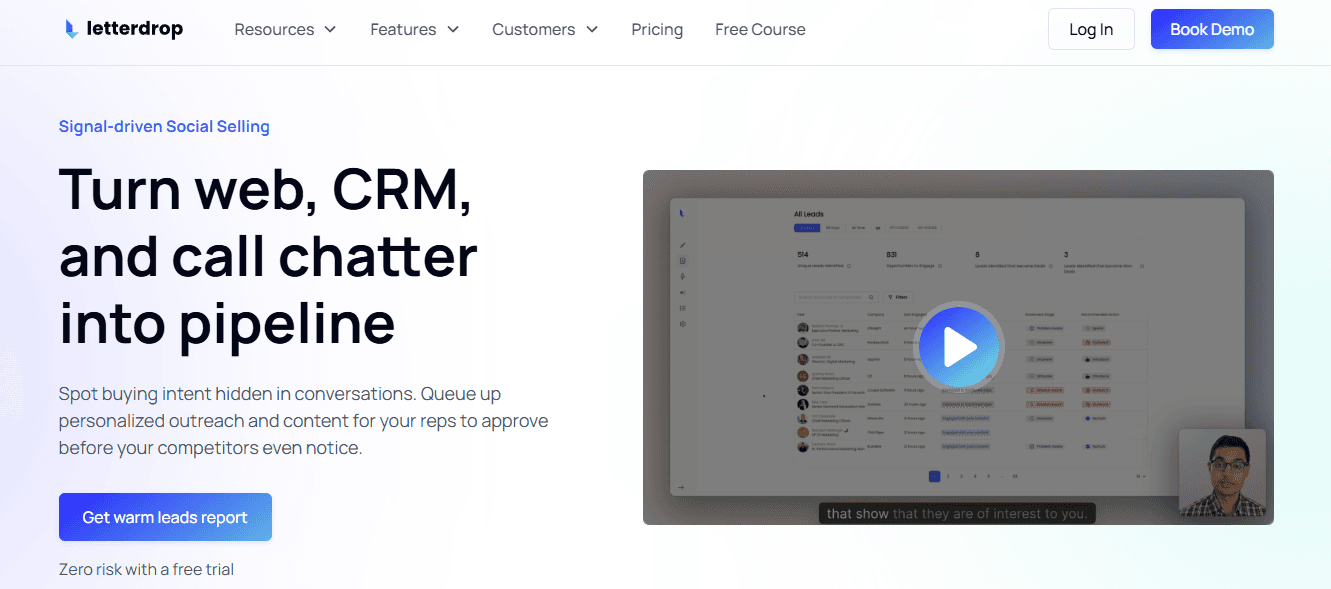
Automatically turns call transcripts into thought leadership content and social posts.
Primary benefit: Reuses sales conversations to amplify top-of-funnel momentum while saving content hours.
Key differentiators: Integrations with Gong, Chorus, and Fireflies; ability to apply a brand voice and request CTAs or hooks; rapid illustration generation.
Ideal use cases: SDRs and content-marketing teams who want to convert call insights into scalable content that warms outbound and nurtures accounts.
3. Gong
Records, transcribes, and analyzes sales conversations to reveal deal signals and coaching opportunities.
Primary benefit: Deep conversation intelligence for forecasting, objection detection, and rep coaching.
Key differentiators: Contextual search across full interaction history, deal risk scoring, and a shareable library of key moments.
Ideal use cases: Mid-market and enterprise teams focused on improving win rates through disciplined coaching and data-driven forecasting.
4. Chorus.ai
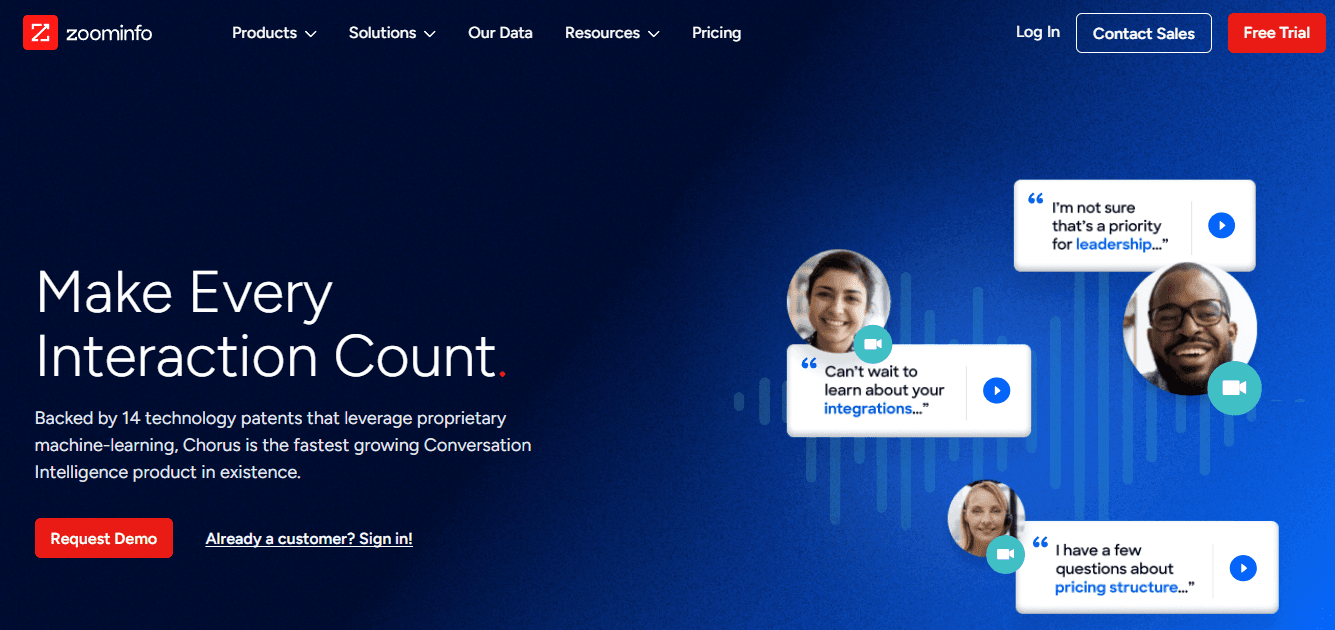
Conversation intelligence that captures and analyzes calls for market signals and deal insight.
Primary benefit: Affordable, automated clipping of important moments for quicker coaching and knowledge sharing.
Key differentiators: Competitors mention breakdowns, automatic highlight clips, and a slightly lower price point than premium rivals.
Ideal use cases: Teams that want rigorous call analysis without Gong-level cost, especially for scaling coaching across many reps.
5. Fireflies.ai
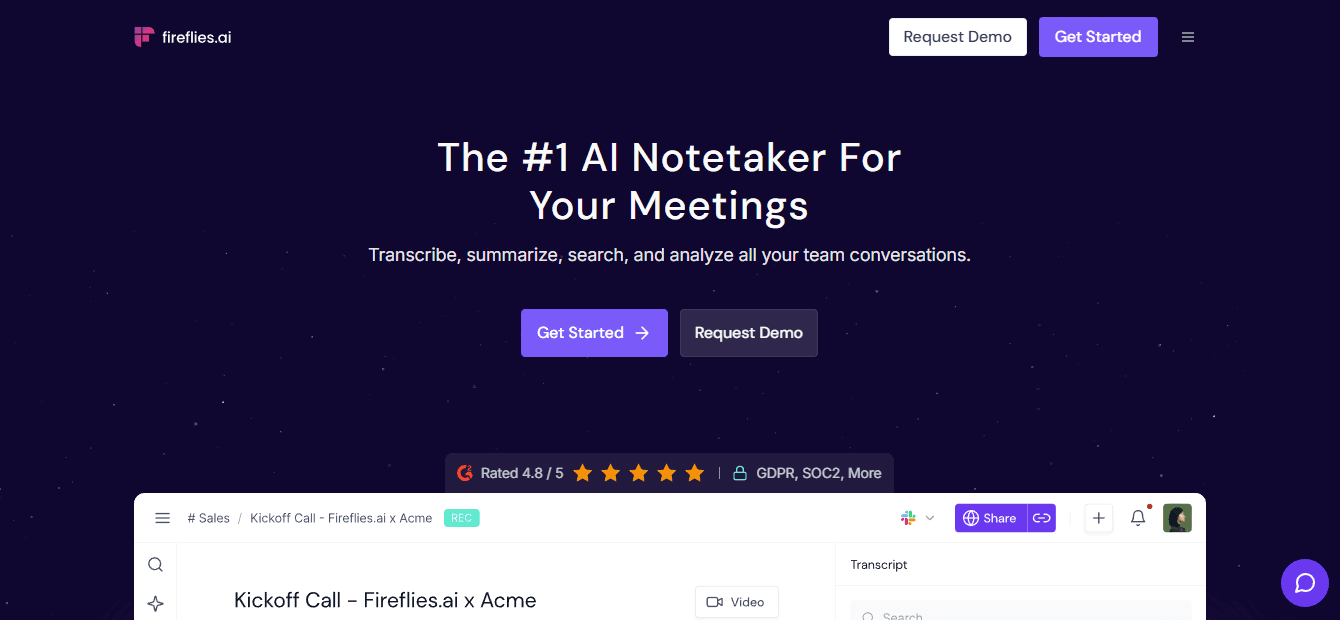
An AI meeting assistant that transcribes, summarizes, and integrates meeting notes across your apps.
Primary benefit: Removes manual note-taking and centralizes call intelligence into a searchable knowledge base.
Key differentiators: Hundreds of integrations, task automation into Asana/Trello, and a self-updating voice knowledge base.
Ideal use cases: Distributed teams that need consistent call documentation, easier onboarding, and automated task creation following calls.
6. Clari Copilot (Formerly Wingman)
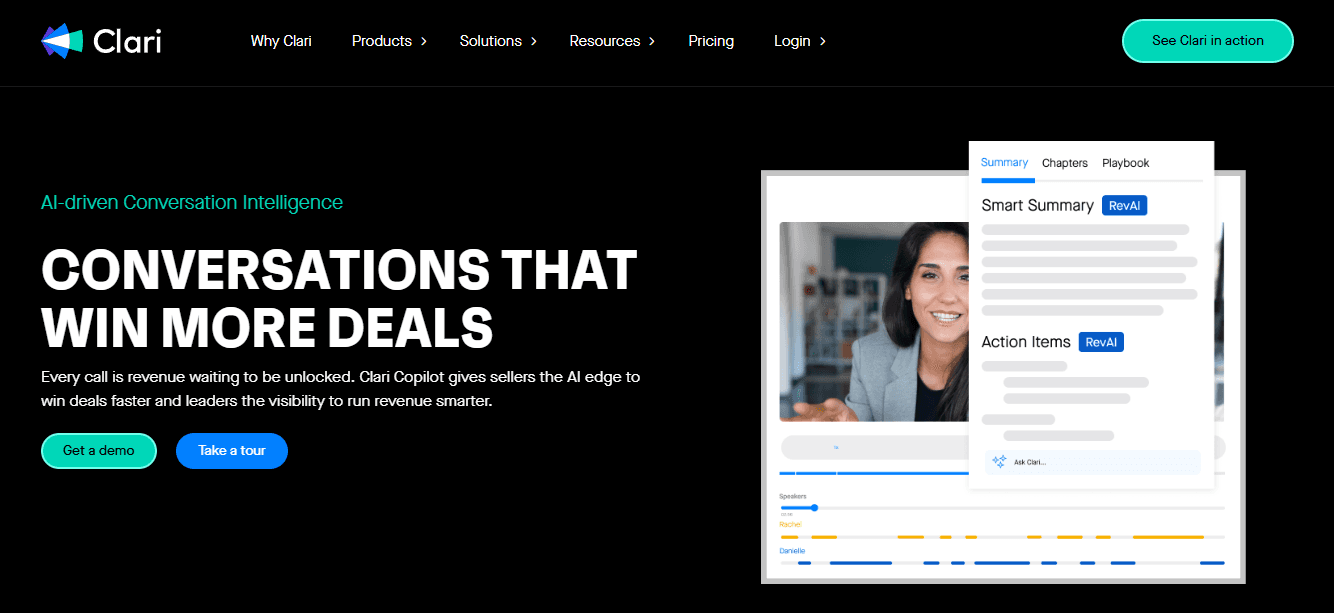
Live and post-call guidance with deal and pipeline intelligence.
Primary benefit: Real-time battlecards and post-call game tapes to convert coaching into in-call performance.
Key differentiators: Live-triggered battlecards, SOC 2 Type 2 security posture, and clear focus on pipeline health.
Ideal use cases: Managers who want in-call assistance for reps and a simple path from coaching insight to immediate behavior change.
7. Salesloft Dialer and Messenger
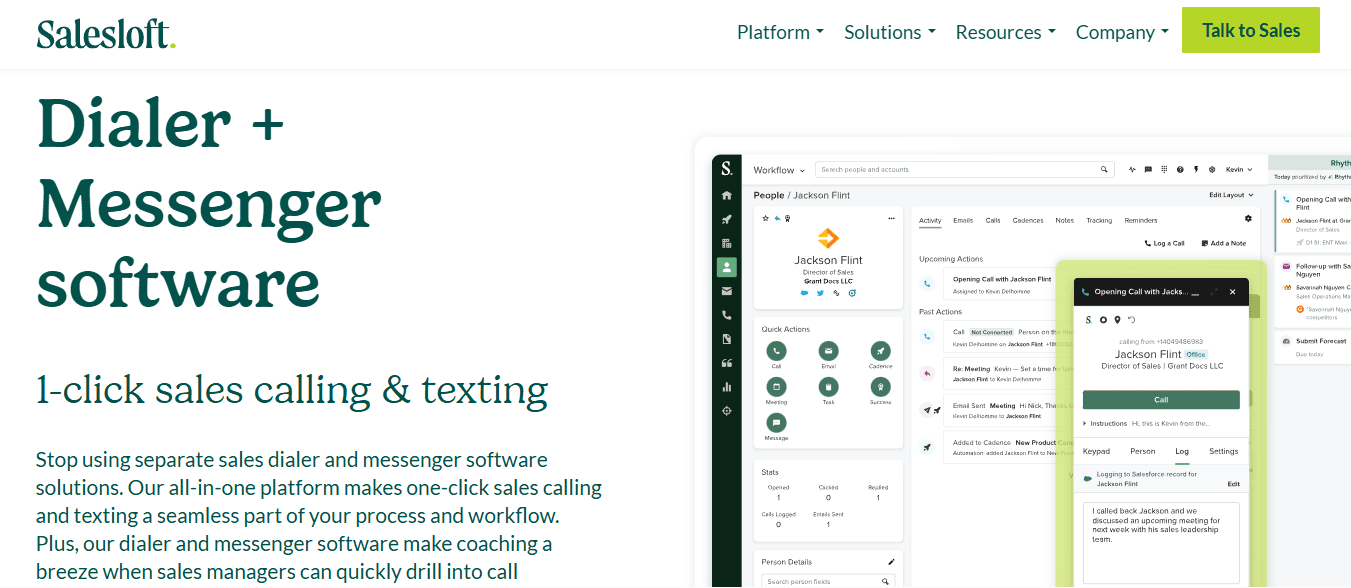
Integrated dialing, SMS, email, and voicemail automation within a sales engagement platform.
Primary benefit: Streamlines high-volume outreach with AI-assisted dialing and multi-channel follow-up.
Key differentiators: AI-powered dialing modes, voicemail drop, local presence, and deep cadence integration.
Ideal use cases: High-velocity outbound teams and SDR squads that need predictable, automated outreach sequences tied to task management.
8. Avoma
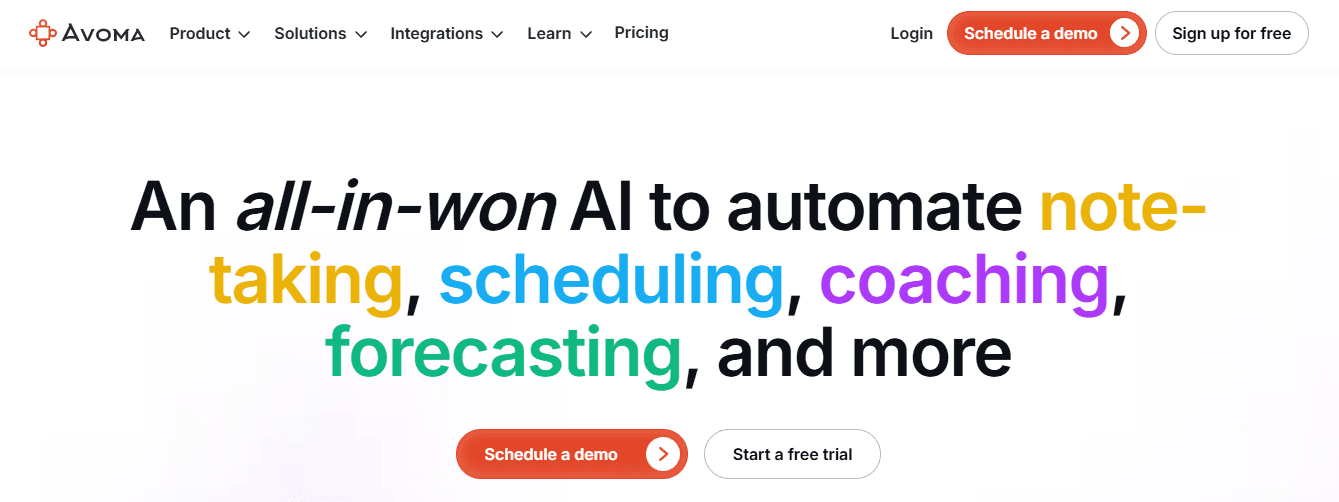
End-to-end meeting assistant for scheduling, recording, note-taking, and live bookmarks.
Primary benefit: Reduces prep and follow-up time while creating time-stamped coaching moments.
Key differentiators: Live call bookmarking, end-to-end meeting lifecycle automation, and easy onboarding sharing.
Ideal use cases: Teams that want tight meeting workflows from scheduling to coaching without stitching multiple tools together.
9. Lindy
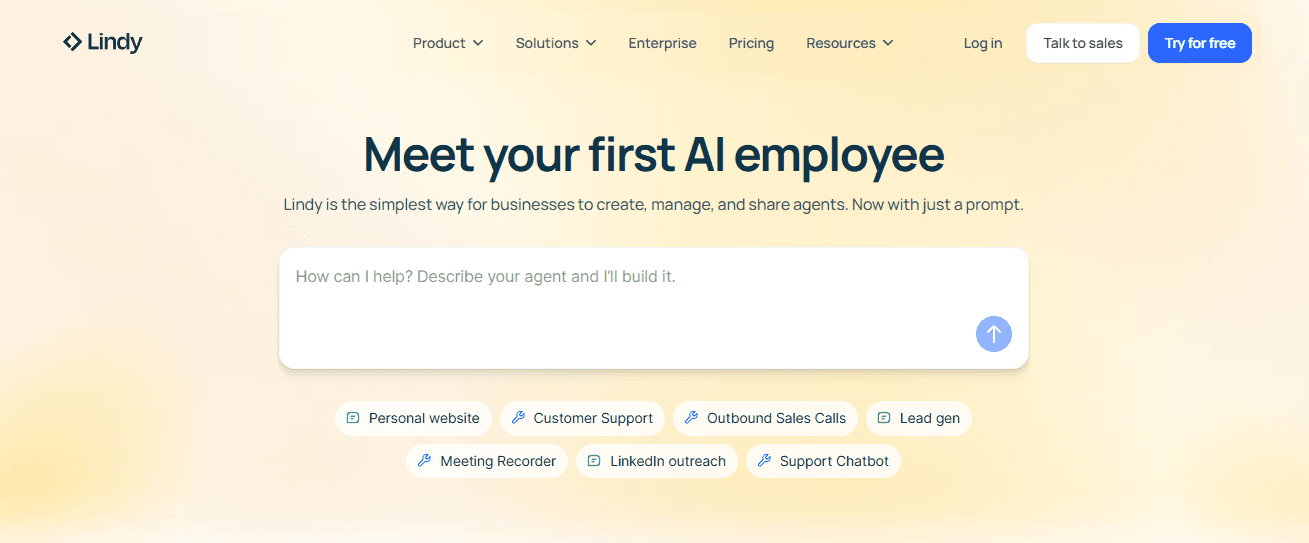
An AI-powered phone agent that can make and receive calls, qualify leads, and schedule meetings while updating CRM records.
Primary benefit: Automates routine voice interactions, allowing human sellers to focus on closing.
Key differentiators: Two-way calling capability for agents, real-time CRM updates, and call routing based on lead quality.
Ideal use cases: Teams with heavy inbound volumes or tight calendars that need an autonomous layer to qualify and book meetings reliably.
10. Gong (Repeat Listing for Specific Features)
Revenue intelligence focused on call-level behavior and deal outcomes.
Primary benefit: Predictive signals and coaching artifacts that scale best practices across the team.
Key differentiators: Keyword tracking for product and competitor mentions, coachable playlists of top deals, and CRM-level deal linkage.
Ideal use cases: Revenue ops and enablement teams that want reproducible winning behaviors granularly tied to pipeline outcomes.
11. Chorus by ZoomInfo
Conversation intelligence fused with enriched contact and account data.
Primary benefit: Combines call insight with firmographic signals to prioritize outreach and spotting risks.
Key differentiators: ZoomInfo enrichment, speaker-level analytics, and coach review workflows.
Ideal use cases: Mid-market sellers running ABM who need call context plus account enrichment to accelerate next steps.
12. HubSpot Conversation Intelligence
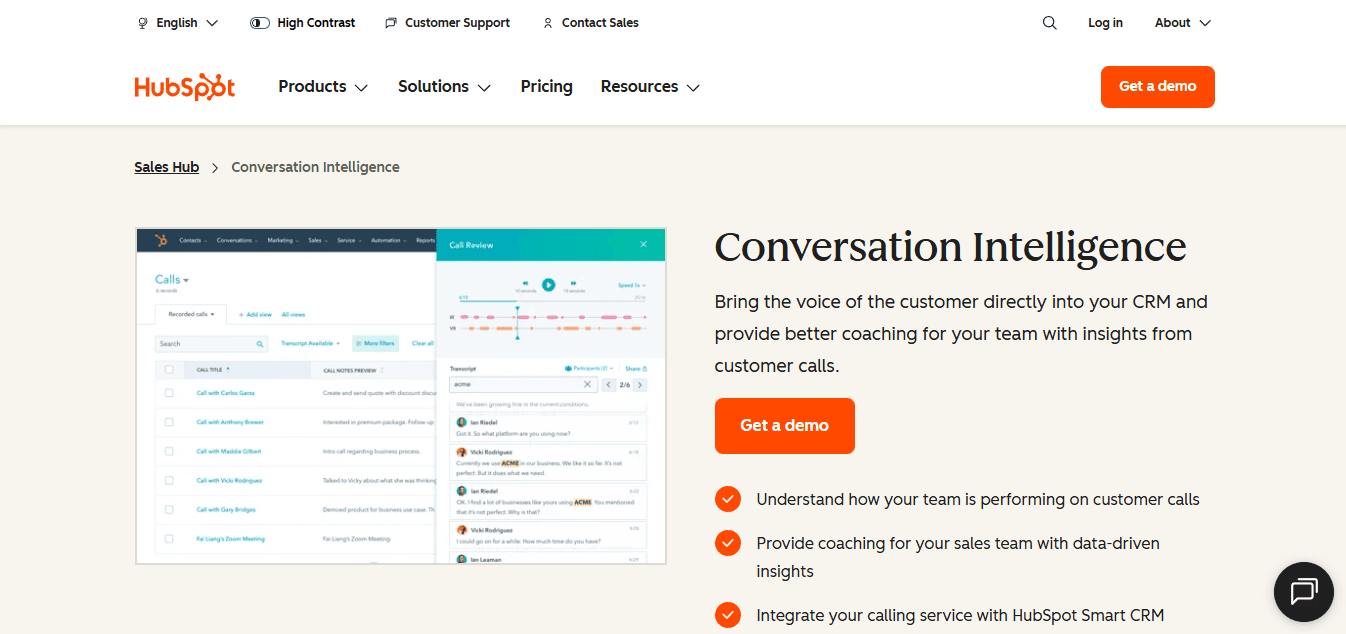
Built-in call transcription and AI analysis within HubSpot CRM.
Primary benefit: Native call intelligence that automatically connects to contact and deal records.
Key differentiators: Integrated coaching comments on transcripts, deal signal triggers, and CRM-first workflow automation.
Ideal use cases: Teams already on HubSpot who want a seamless, low-friction way to make conversation data actionable in their existing pipelines.
Why Manual Work Stalls Velocity
After working with inside sales and SMB teams, the pattern became clear: the familiar approach is to hand off transcription, enrichment, and follow-up to reps because it feels simple, but as volume rises, that choice fragments context and delays responses. As consequences grow, activities such as manual follow-up and list hygiene become bottlenecks, slowing close velocity and reducing conversion. Teams find that platforms like AI Acquisition chain autonomous agents to maintain continuous outreach, update CRMs, and book meetings, compressing those manual cycles into predictable, automated flows.
13. Apollo.io
Sales intelligence with outreach sequencing, calling, and meeting scheduling.
Primary benefit: Combines prospect discovery with embedded calling, keeping reps in a single workflow.
Key differentiators: Built-in email generation, prospect filters, and AI-assisted post-call task creation.
Ideal use cases: Outbound-first teams and SDRs who need prospect lists, cadence automation, and quick meeting scheduling from the same console.
14. Synthflow
No-code platform to build multilingual AI voice agents for sales calls and support.
Primary benefit: Scale voice-based outreach and qualification without hiring.
Key differentiators: No-code voice agent builder, 24/7 multilingual coverage, and real-time call analytics.
Ideal use cases: Companies expanding to international markets or those that need continuous voice coverage for qualification and scheduling.
15. Docket
An AI sales engineer who answers technical questions, generates RFP content, and supports technical calls.
Primary benefit: Reduces dependence on scarce product experts during sales cycles.
Key differentiators: Sales Knowledge Lake, verified technical answers, and enterprise-grade compliance.
Ideal use cases: Technical sales teams and enterprise sellers who need quick, accurate answers on complex product topics during calls.
16. Otter
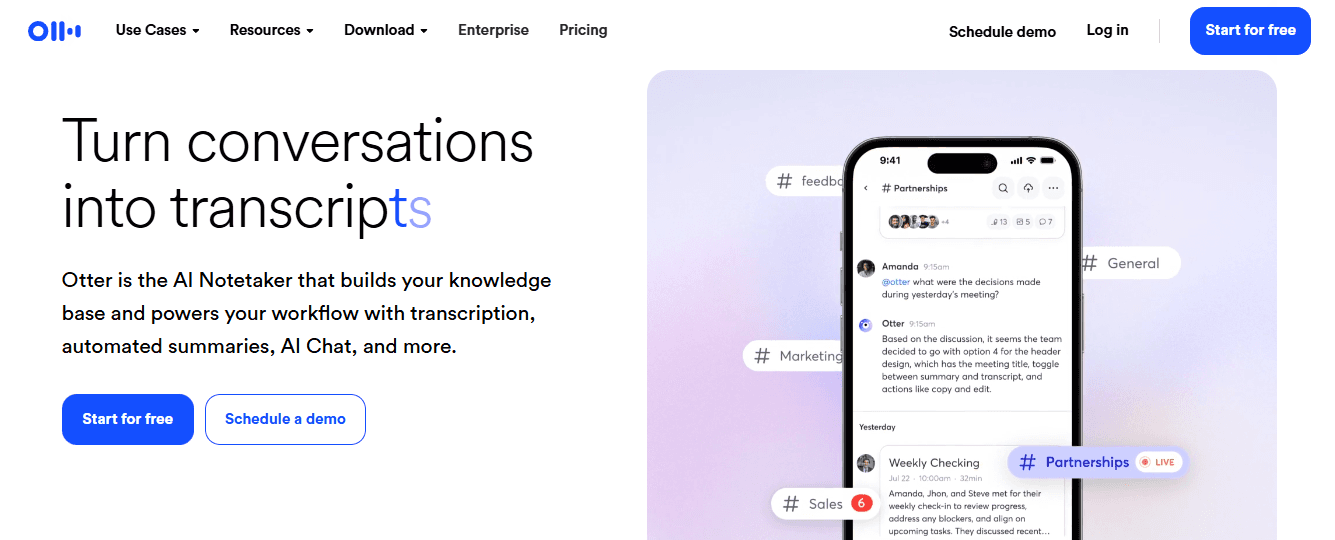
Live transcription, searchable meeting archives, and AI-driven follow-up content.
Primary benefit: Makes meeting content immediately actionable with post-call summaries and CRM-ready notes.
Key differentiators: AI chat for querying past calls, BANT-style extraction, and integrations to automate workflows.
Ideal use cases: Small sales teams seeking low-friction transcription and the ability to extract qualification data automatically.
17. Uniphore
Conversational AI for real-time coaching, sentiment analysis, and workflow automation.
Primary benefit: Guides agents in real time on next-best actions and automates post-call tasks.
Key differentiators: Real-time intent detection, generative AI question-answering across conversations, and enterprise recording controls.
Ideal use cases: Contact centers and inside-sales teams that require live assistance to improve response quality and conversion rates.
18. Fireflies (Repeat Entry with Emphasis on Integrations)
A meeting recorder and transcriber that surfaces action items and searches across conversations.
Primary benefit: Consolidates voice data into a searchable analytics layer to provide pipeline insights.
Key differentiators: Cross-platform transcription, AI search, and dashboards for conversational metrics.
Ideal use cases: Teams with distributed meeting platforms that need a central source of truth for call intelligence.
19. Alta
Autonomous revenue workforce with specialized AI agents for SDR, calling, and RevOps.
Primary benefit: Fully configurable agents that operate continuously to source opportunities and book meetings.
Key differentiators: Distinct agent roles (SDR, Caller, RevOps), real-time CRM updates, and analytics dashboards.
Ideal use cases: Revenue teams wanting to offload repetitive prospecting and routing so account execs focus on higher-value conversations.
20. Dialpad
Cloud phone system combining voice, SMS, and meetings with AI transcripts and summaries.
Primary benefit: Unified communications plus lightweight AI notes for teams consolidating tools.
Key differentiators: Power dialer, real-time transcription, and wide CRM integrations at modest price tiers.
Ideal use cases: SMBs and support teams that want a consolidated voice and messaging infrastructure with basic call intelligence.
21. Aircall
Cloud phone systems focused on ease of setup, CRM integrations, and collaborative calling.
Primary benefit: Fast deployment and simple telephony features for SMB teams.
Key differentiators: Virtual numbers in 100+ countries, call routing, and supervisor coaching tools.
Ideal use cases: Small sales and support teams that need reliable calling with minimal setup and solid CRM sync.
22. JustCall
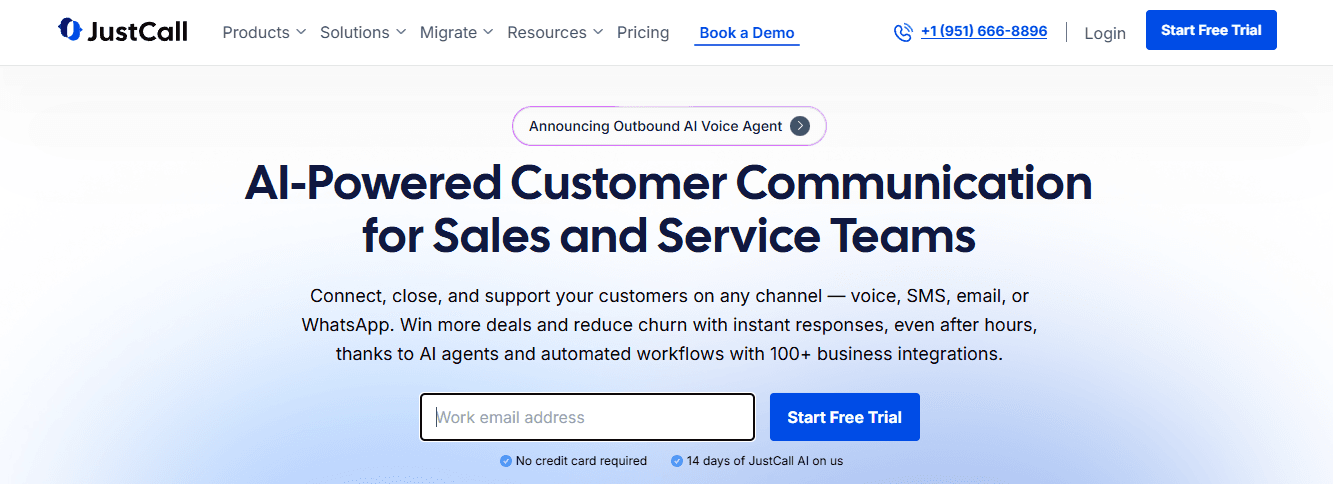
Cost-conscious cloud telephony and omnichannel messaging platform.
Primary benefit: Voice, SMS, and WhatsApp workflows at lower price points.
Key differentiators: Predictive dialing, native WhatsApp integration, and multi-channel shared inbox.
Ideal use cases: Budget-focused startups that want omnichannel outreach and predictable per-seat pricing.
23. Orum
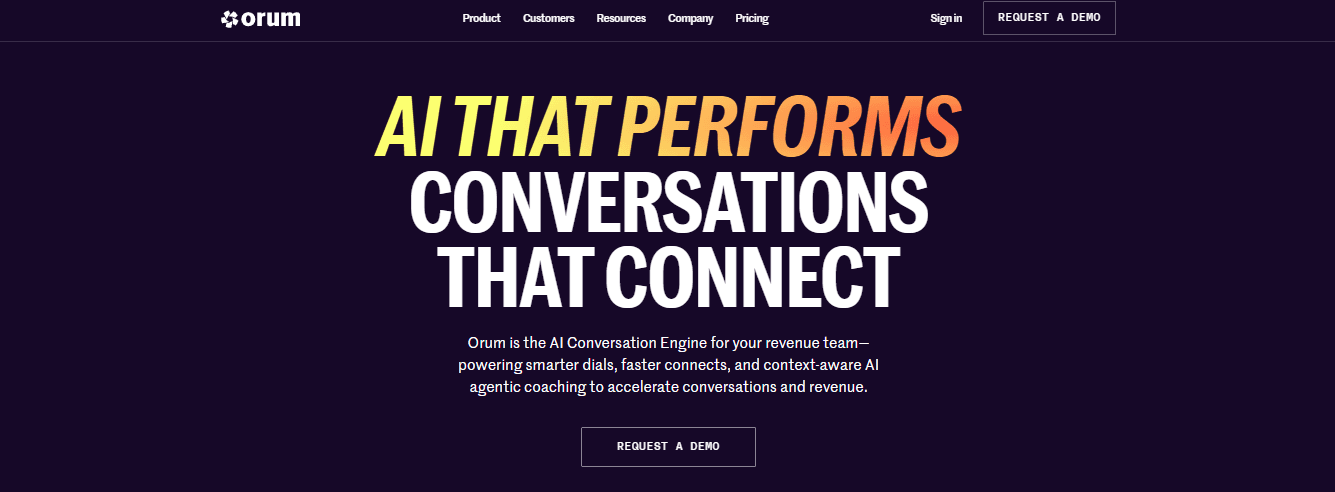
Parallel dialer that initiates multiple simultaneous calls, routing live answers to reps instantly.
Primary benefit: Maximizes live conversations per rep, dramatically increasing connect rates for high-volume teams.
Key differentiators: True parallel dialing architecture, advanced KPI dashboards, and native HubSpot integration.
Ideal use cases: Enterprise SDR operations that justify premium tech to push dial volume and live conversation throughput.
24. CloudTalk
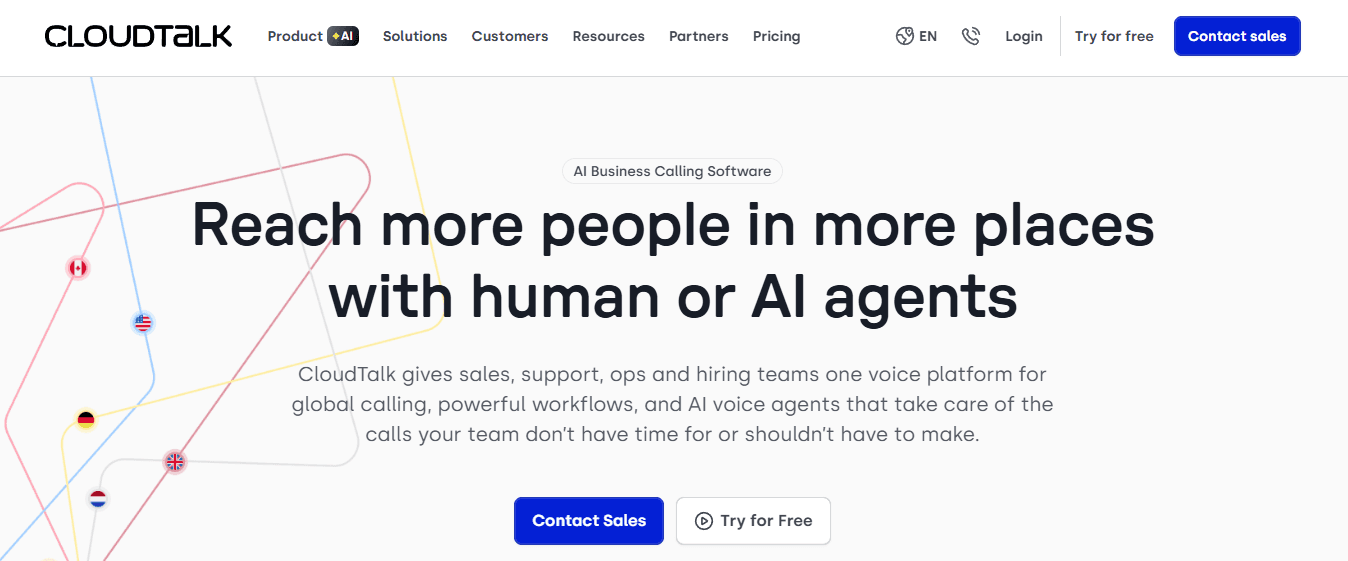
User-friendly cloud call center software with reasonable AI features and international coverage.
Primary benefit: Balances telephony essentials with modern analytics for SMB call centers.
Key differentiators: International virtual numbers, skill-based routing, and straightforward CRM connectors.
Ideal use cases: SMB support and inside-sales teams that want predictable costs and reliable call center features without heavy configuration.
25. Warmly
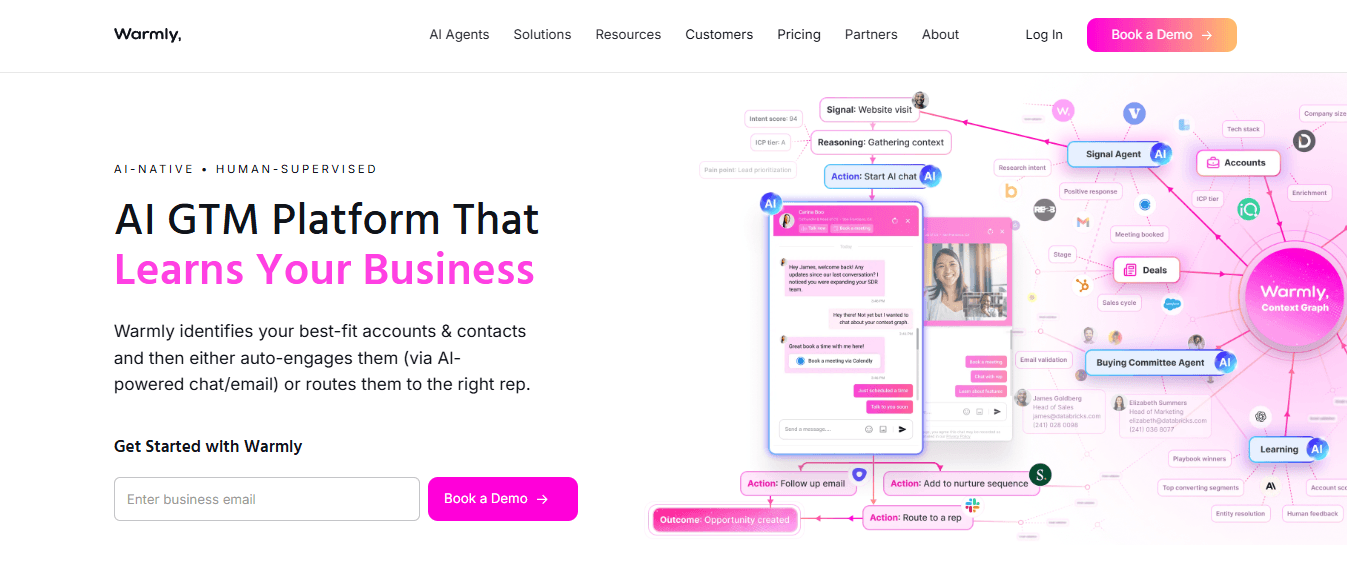
Website visitor identification and intent signal tracking to surface warm prospects.
Primary benefit: Turns anonymous site activity into actionable alerts for immediate outreach.
Key differentiators: Real-time Slack/email alerts, enrichment, and intent scoring tied to page behavior.
Ideal use cases: Marketing and SDR teams running ABM or inbound programs that need fast speed-to-lead for high-intent visitors.
Converting Interest into Predictable Revenue
According to the AI Sales Study, companies using AI for sales calls see a 30% increase in lead conversion rates. When you stack these tools together thoughtfully, you stop trading attention for outcomes, and the pipeline becomes a machine that reliably generates booked meetings and predictable next steps. That simple change is only the start, and what comes next forces you to rethink how every call is handled, prioritized, and converted.
Turn Every Sales Call Into a Growth Opportunity: Free AI Growth Consultant
Struggling with missed leads, inconsistent follow-ups, or slow sales cycles? Eliminate missed leads, automate follow-ups, and scale your sales calls without overloading your team. AI Acquisition gives you a digital sales assistant that works 24/7 to:
Fill your pipeline
Book meetings
Deliver human-quality results so your team can focus on closing deals, not chasing them.
With AI Acquisition, you can:
Automate repetitive sales tasks and follow-ups
Capture and qualify leads in real time
Scale your outreach without adding headcount
Access actionable insights from every call to improve performance
Scaling Through Collective Wisdom
Join 1,200+ entrepreneurs who have generated over $30 million collectively this year, with clients averaging $18,105 in monthly revenue. Get your free AI growth consultant today and see how AI can transform every sales call into measurable growth.
Related Reading
AI Sales Prospecting Tools
AI Tools For B2B Marketing
AI For Sales Calls
Lead Qualification Strategies