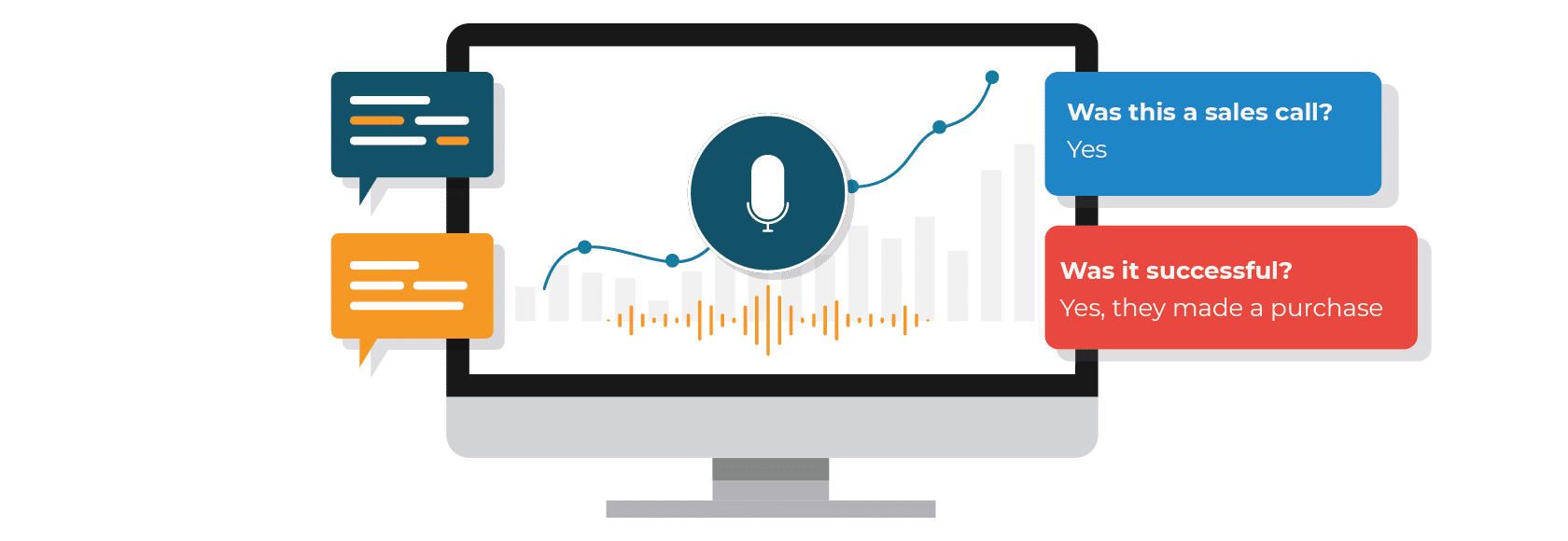
Leads dry up, reps chase low-value contacts, and deals stall in the pipeline. What if you could hand your sales team a steady stream of qualified accounts that actually convert? AI B2B lead generation uses intent data, predictive analytics, lead scoring, prospecting, and outreach automation to surface high-quality, sales-ready B2B leads while trimming manual work. You will learn practical steps and tactics to fill your pipeline faster, free up reps, and grow revenue.
AI Acquisition’s AI automation software ties those capabilities together—lead enrichment, CRM integration, personalized outreach, and simple qualification—so you spend less time searching and more time closing.
Summary
Smarter targeting and personalization materially lift outcomes, with AI-powered tools increasing lead conversion rates by up to 50%, showing that better targeting yields measurable wins.
Automation and validated data dramatically lower acquisition expense, with AI-driven lead generation reducing customer acquisition costs by about 40%, which explains why teams prioritize enrichment and intent signals.
Data quality is the default risk, not the exception, as 70% of companies report struggling with data quality issues when implementing AI-powered lead generation, and stale contact lists directly degrade reply and deliverability rates.
Integration frictions create hidden technical debt, since 50% of marketers find it challenging to integrate AI tools with existing systems, leading to duplicate records, broken routing, and hours spent on reconciliation instead of selling.
Governance and human-in-loop controls are essential to safe scaling, for example sampling at least 5% of outbound messaging for weekly QA, enforcing a 24 to 48 hour SLA for escalations, and withholding full automation on high-value segments until three months of conversion data exist.
Manual, spreadsheet-driven workflows fail as volume rises, with teams reporting that once lists exceed 10,000 contacts automated refresh and routing become non-negotiable, and companies using AI see roughly a 30% increase in sales opportunities when those systems run reliably.
This is where AI Acquisition's AI automation software fits in, addressing list decay and integration friction by combining continuous enrichment, CRM integration, intent-triggered outreach, and no-code multi-agent orchestration into auditable workflows.
Table of Contents
What Is AI-Powered B2B Lead Generation?
AI-powered B2B lead generation is the practice of using intelligent automation to find, qualify, and engage prospect accounts so your team spends time closing, not searching. It stitches together data enrichment, intent signals, personalized outreach, and process automation so you scale predictable outreach without growing the headcount.
How Does AI Speed Up Prospecting and Keep Lists Accurate?
When we replace manual list-building with AI-driven sales intelligence, discovery that once took hours becomes minutes. Predictive filters pull job titles, firmographics, and verified contact numbers at scale, while continuous enrichment refreshes titles and emails so lists do not decay. This pattern appears consistently across small agencies and in-house teams: manual cleanup eats time and leaves stale leads that never get actioned, which feels exhausting and wasteful for reps.
What Methods Move the Needle on Qualify-and-Score?
AI blends predictive analytics with behavioral signals to rank who is sales-ready. Machine models combine historical conversion patterns, recent intent activity, and firm-level signals so your lead score is not a gut call but a probability. Natural language processing powers chatbots and email assistants that capture context from conversations, and automation routes high-probability leads to reps immediately, trimming response time and boosting win rates.
Why Does the Familiar Approach Break as You Scale?
Most teams handle outreach through spreadsheets and ad-hoc tools because it feels simple and familiar. That works at first, but as outreach volume rises, manual routing fragments, bounce rates climb, and follow-ups slip through the cracks. The hidden cost is time and opportunity, not just administrative overhead.
Teams find that platforms with multi-agent orchestration and no-code deployment lift that burden, compressing what used to take days into hours while preserving context and auditability.
How Do We Know AI Improves Results?
Put simply, it changes the economics of acquisition. AI-powered tools can increase lead conversion rates by up to 50%, indicating that more intelligent targeting and personalization deliver meaningful gains.
AI-driven lead generation can reduce customer acquisition costs by 40%, underscoring the importance of automation and validated data for sustainable growth, as highlighted in insights on AI lead-generation statistics.
What Practical Capabilities Should You Expect from Tools?
Expect four clear functions: continuous data enrichment and validation to keep contact lists current; intent detection that triggers outreach when buying signals appear; AI-assisted copy and send-time prediction to improve response rates; and workflow automation that handles sequencing, routing, and CRM updates without manual steps.
Think of these as a coordinated crew that keeps the top of the funnel fed and clean while your sellers do what only humans can do, which is negotiate and build trust.
How Do Teams Avoid Over-Automation and Keep Outreach Human?
This is the tradeoff that separates tools from systems. Automation should remove grunt work, not empathy. Use AI to draft tailored openings and surface the one or two personal details that genuinely matter, then require a short human touch before key meetings. That way, you scale personalized volume, but humans still steward high-value relationships.
Status Quo Disruption: What Most Teams Do, What It Costs, and the Better Path
Most teams do prospecting and follow-up with manual lists and one-off integrations because it requires no new workflows and feels controllable. As volume grows, those threads fragment, contact data stales, and response rates fall, converting time into wasted spend.
Platforms like AI Acquisition provide multi-agent automation, continuous list refreshes, and no-code orchestration, so teams replace fragmented chores with a running system that captures leads 24/7 and reduces acquisition work without adding staff.
A Quick Metaphor to Make It Concrete
Treat lead generation like irrigation, not a single watering. Automated enrichment and intent triggers are the irrigation system; manual outreach is the gardener. If you only water once, the patch dries out. When water is scheduled and targeted, the garden produces reliably.
That simple improvement changes the workload, the metrics you track, and your confidence in forecasting—and it leads directly to the tools that enable it. But the most surprising choices about which tools to trust come down to a single, hard-to-see tradeoff.
Related Reading
18 Best AI B2B Lead Generation Tools
1. AI Acquisition: All-in-One Multi-Agent Automation That Scales Lead Generation End to End
AI Acquisition gives entrepreneurs a multi-agent AI growth operating system that automates sourcing, enrichment, outreach, and ops so teams can run a predictable B2B lead engine without large headcount.
Who Is It For?
Founders, solopreneurs, and small agencies that need a turnkey, no-code digital workforce to keep pipelines filled 24/7 while they focus on deals and growth.
Multi-Agent Orchestration for Automated Prospecting
AI Acquisition wires multiple AI agents together, so one agent scrapes prospects, another enriches profiles, a third sequences outreach, and a routing agent books meetings and logs activity into your CRM. That orchestration means you stop treating prospecting like a weekend project and start running it like a factory.
The platform’s client metrics are concrete: users average $18,105 in monthly revenue, and clients collectively generated over $30 million this year, which shows speed-to-value for teams that make the switch.
In practice, that looks like an agent that scans for decision-makers at target accounts, enriches contact fields, filters by recent intent events, and triggers a tailored 5-step sequence that hands off only qualified meetings to reps.
Pros
All-in-one pipeline automation
No-code agent orchestration
Human-quality outreach at scale
Cons: Learning to chain agents takes a few use cycles
2. Lindy: Best No-Code AI Leads
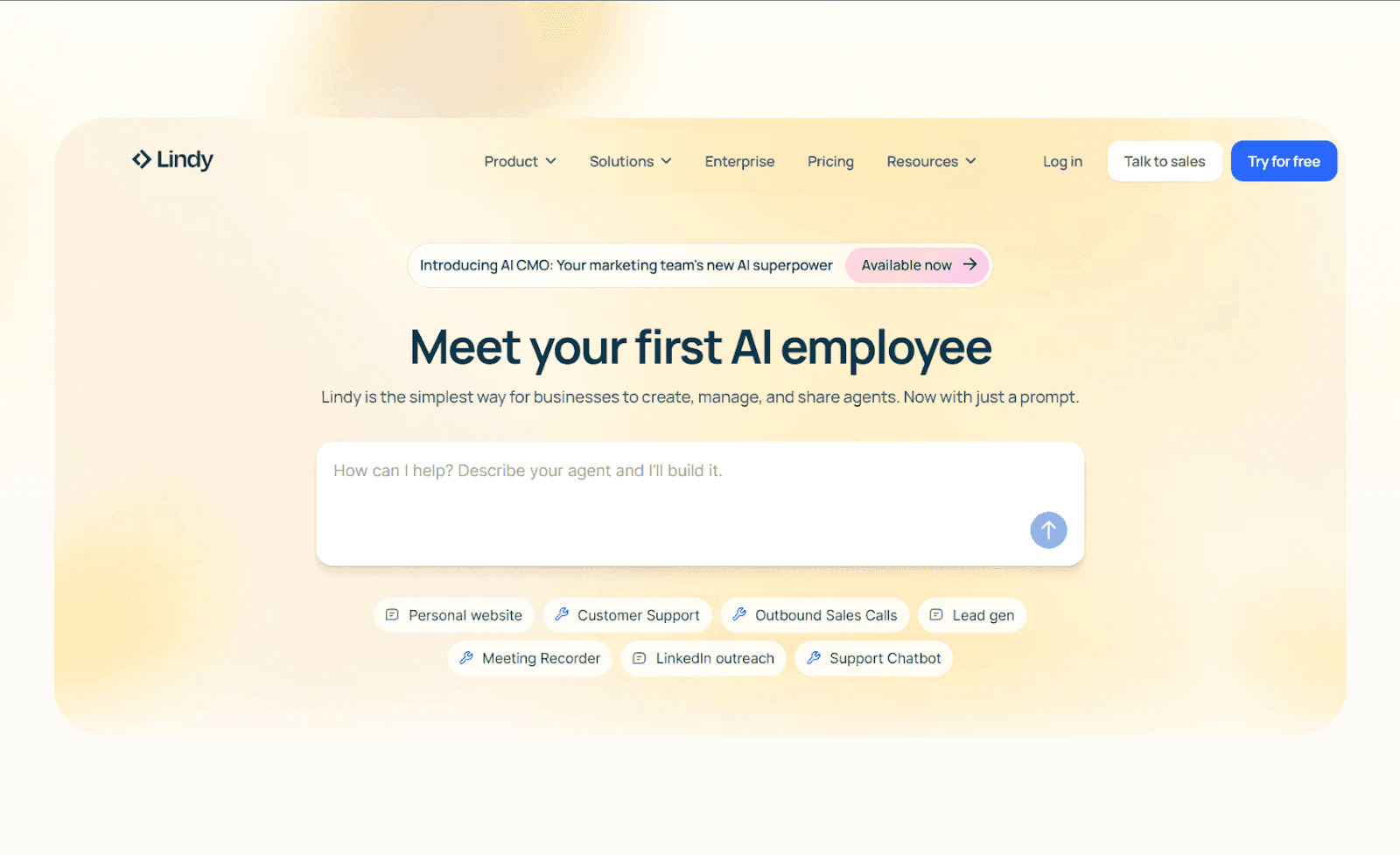
Lindy automates the full lead pipeline: find leads, enrich and clean data, run multichannel outreach, and follow up based on engagement, all without code.
Who Is It For?
Startups, small sales teams, and agencies that want to scale outreach without hiring more people or building complex integrations.
Instead of juggling email tools and spreadsheets, you build a Lindy agent that finds company matches, enriches profiles with job titles and social links, removes duplicates, and kicks off messages across email, LinkedIn, SMS, and Slack. Its follow-ups react to opens, clicks, and replies, so activity drives cadence rather than calendar reminders.
That means reps see higher-quality, ready-to-convert prospects and spend time selling, not researching. You still control tone and filters, but Lindy handles the repetitive work.
Pros
End-to-end automation
Good enrichment and hygiene
Cons: Advanced templates need tuning
3. Seamless.AI: Best Scalable Lead Discovery

Seamless.AI finds and verifies decision-makers at scale, enriching contact data in real time so your lists are usable the moment you pull them.
Who Is It For?
Sales teams, recruiters, and growth marketers who need verified contacts and firmographic context without hours of manual prospecting.
Targeted Prospecting with Contact Graph Insights
Seamless pulls from a massive contact graph and surfaces company insights so you can tailor first messages to recent events like funding or hiring. Filters for title, company size, and tech stack let you tighten your ideal customer profile. Autopilot continues to add net-new leads that match those filters, so your pipeline replenishes automatically.
Use the Chrome extension to capture verified data during LinkedIn research, and sync results into your CRM to preserve context for reps.
Pros
Massive contact coverage
Real-time enrichment
Cons: Data accuracy can vary by region
4. HubSpot: Best All-in-One CRM

HubSpot centralizes CRM, marketing, sales, and support tools so teams work from one system without losing flexibility.
Who Is It For?
Growing teams and SMBs that want one platform to manage contacts, run campaigns, and automate follow-ups without stitching tools together.
HubSpot and AI for Pipeline Acceleration
HubSpot’s free CRM organizes contacts and timelines so small teams stop losing follow-ups in spreadsheets. Marketing and Sales Hubs provide campaign builders, email automation, and meeting schedulers to compress lead-to-deal time. Breeze AI Agents:
Create content
Qualify inbound leads
Automate routine responses
This frees humans for high-value tasks. The Operations Hub keeps data clean across integrations so reporting and handoffs stay reliable as you scale.
Pros: Unified stack with smart automation
Cons: Advanced tiers require investment
5. CoPilot AI: Best LinkedIn Lead Prospecting
CoPilot AI automates LinkedIn targeting with behavior-aware prospecting, personalized sequences, and engagement tracking.
Who Is It For?
B2B sales teams, agencies, and small firms that use LinkedIn as a primary outbound channel and need to scale conversations without losing personalization.
CoPilot evaluates profile signals and recent activity to surface warm prospects, then runs sequences that adapt to replies and profile changes. You can A/B test two message paths and see which creative converts faster. It also logs engagement so you prioritize leads that have viewed your profile or engaged with your content. Syncing into HubSpot or Salesforce ensures qualified replies become pipeline entries, not orphaned notes.
Pros: Personalized LinkedIn outreach at scale
Cons: Pricing is higher than some competitors
6. Customers.ai: Best for Converting Anonymous Visitors
Customers.ai identifies anonymous site visitors and enriches them with verified contact and company data, then triggers behavior-based outreach.
Who Is It For?
B2B teams and e-commerce brands that want to capture high-intent traffic and convert it into actionable leads without forms.
Customers.ai turns passive sessions into usable leads by matching browsing patterns to contact intelligence and adding behavioral signals like pages viewed and session length. That lets you fire timely emails or SMS messages while the visitor is still warm. If an email doesn’t convert, the platform can build an enriched retargeting audience for ads, increasing the chance you recapture interest. Everything syncs with major CRMs so follow-up is automatic.
Pros:
Captures anonymous intent
Enriches profiles
Cons: No visual workflow builder
7. Jasper: Best for AI Content Creation

Jasper accelerates content production with templates, brand voice training, SEO guidance, and image generation. Marketing teams and agencies that need consistent, on-brand content fast across formats and languages.
Integrated AI for Content and SEO Alignment
With brand voice training, Jasper mirrors your tone so drafts need less editing. Surfer SEO integration helps structure content for search, and Clipdrop image generation provides visuals to pair with copy. For teams launching campaigns, that reduces turnaround time from days to hours. Collaboration features like doc sharing and roles keep multi-writer projects aligned.
Pros
Speeds writing
Keeps brand voice
Cons: Requires editorial review
8. LeadIQ: Best for Fast LinkedIn Capture
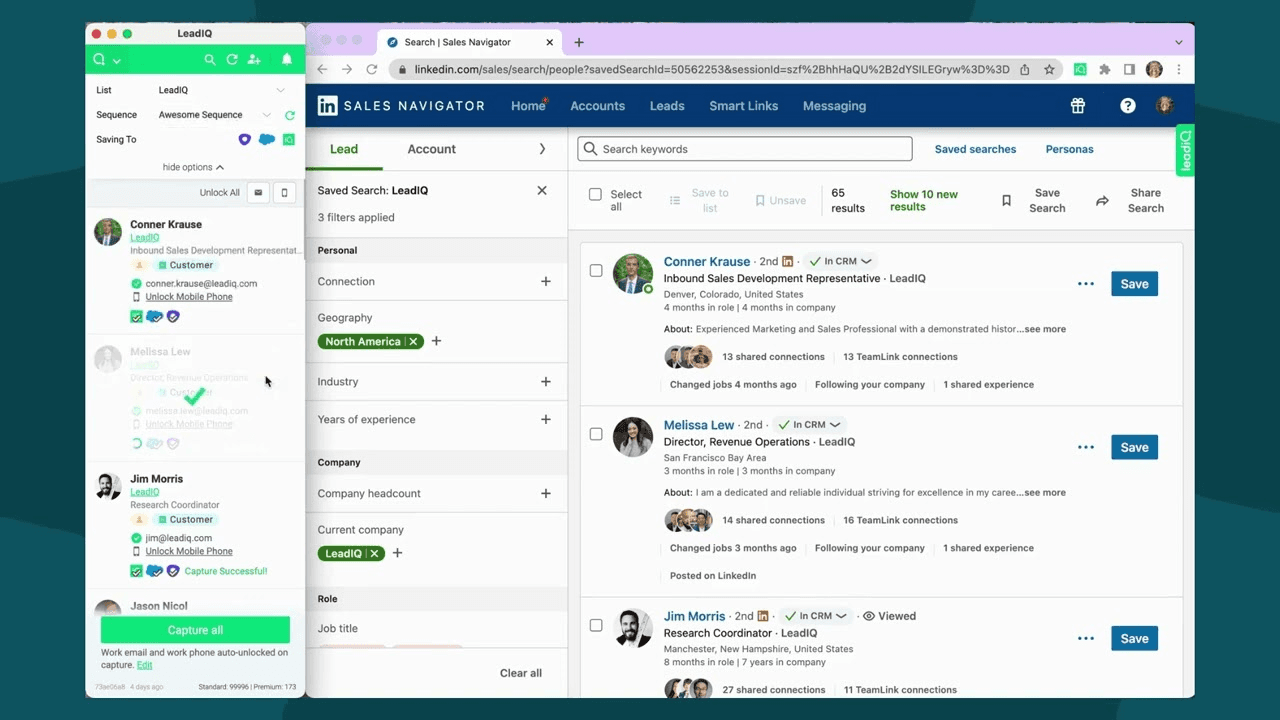
LeadIQ turns Sales Navigator profiles into CRM-ready leads with verified contact info and one-click capture.
Who Is It For?
SDRs, outbound teams, and recruiters who need fast capture and clean CRM sync during high-volume prospecting.
LeadIQ’s Chrome extension pulls profiles and enriches emails and phone numbers, then pushes contacts into your CRM. It writes initial outreach based on role and activity, saving time on every prospect. The Data Hub tracks changes and flags duplicates so your records stay current while reps move from lookup to outreach quickly.
Pros: Instant LinkedIn capture
Cons: Some contacts need manual verification
9. OptinMonster: Best for Targeted Lead Pop-Ups
OptinMonster converts visitors with targeted popups, exit-intent offers, and device- or page-level triggers.
Who Is It For?
E-commerce teams, content publishers, and B2B marketers who want to lift signups and reduce abandonment without developers.
The drag-and-drop builder launches campaigns quickly, and Exit-Intent triggers save potential leads at the moment they’re leaving. A/B testing and real-time analytics tell you which headline or offer to scale. It plugs into email platforms so captured leads flow into nurture sequences automatically.
Pros
High-converting
Targeted popups
Cons: Takes practice to master targeting
10. Outreach: Best for AI Sales Engagement
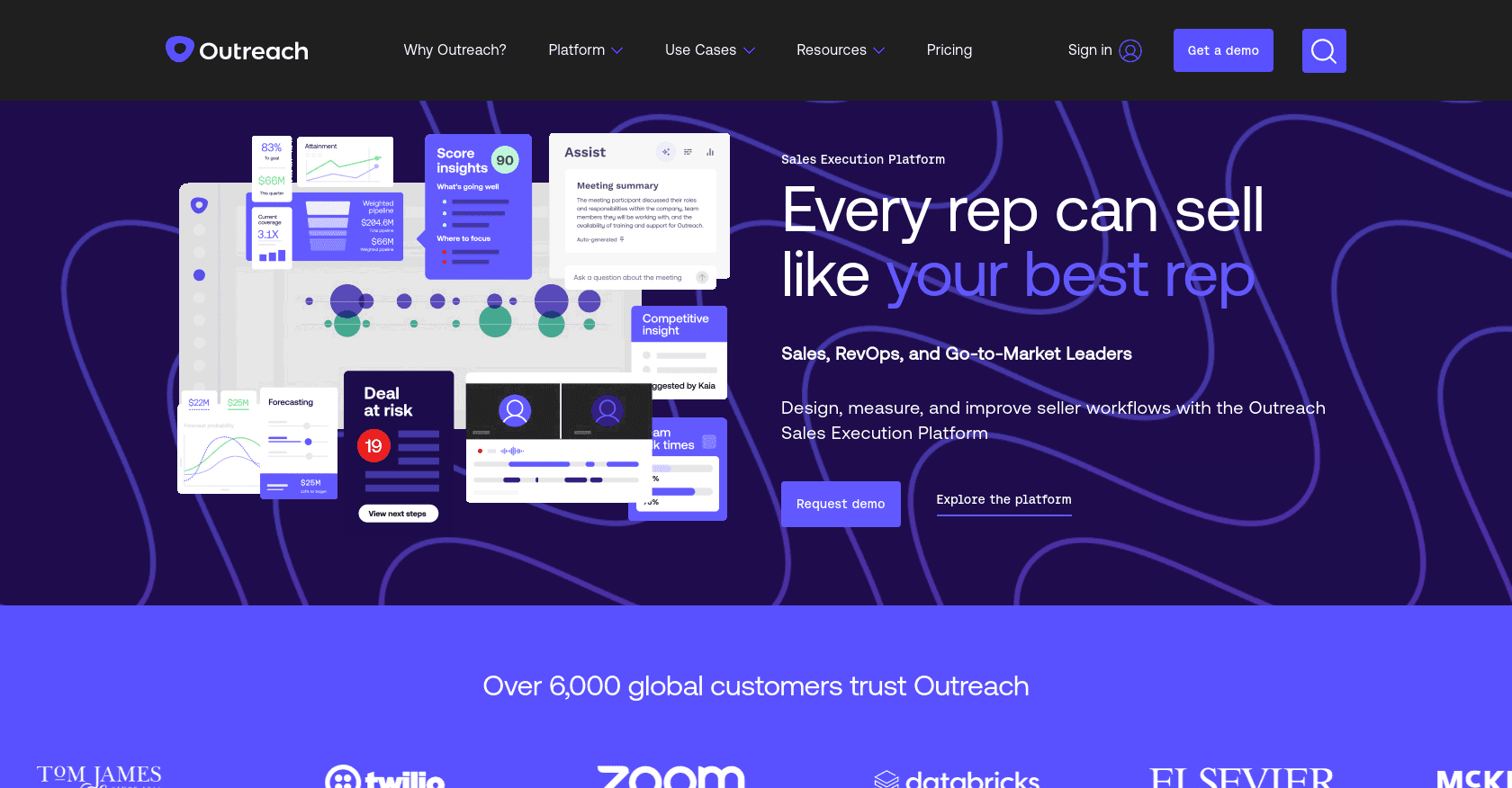
Outreach centralizes sales automation, AI coaching on calls, and pipeline intelligence in a single platform.
Who Is It For?
Mid-to-large sales teams and revenue leaders who need consistent outreach, better forecasting, and AI-assisted coaching.
Outreach personalizes messaging across channels, gives reps in-call prompts from Kaia AI, and surfaces risk signals in pipeline forecasting. That means fewer missed cues and clearer prioritization for reps. Integrations keep outreach and deal stages synced with your CRM so forecasts update in real time.
Pros: Multi-channel automation and call coaching
Cons: Steep learning curve
11. Reply.io: Best Multichannel Sales Automation
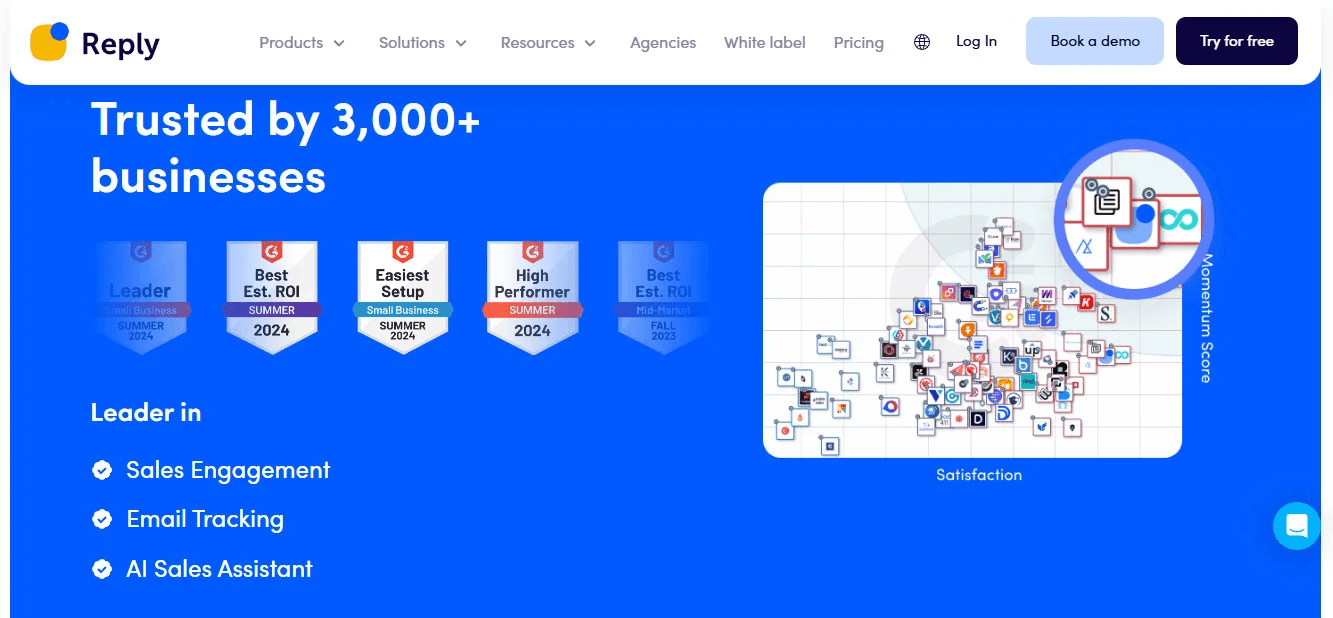
Reply.io runs multichannel sequences across email, LinkedIn, WhatsApp, SMS, and phone with AI reply handling.
Who Is It For?
Sales teams and agencies running complex cadences who want consistent reach and automated replies.
Jason AI composes messages, replies when appropriate, and can book meetings automatically. The platform includes email warm-up tools for deliverability and a Chrome extension to capture leads during browsing sessions. That reduces manual reply handling and keeps sequences moving without daily checkboxing.
Pros
Five-channel automation
AI replies
Cons: LinkedIn automation can risk flags
12. GenFuse AI: Best for End-to-End B2B Lead Generation Workflow Automation
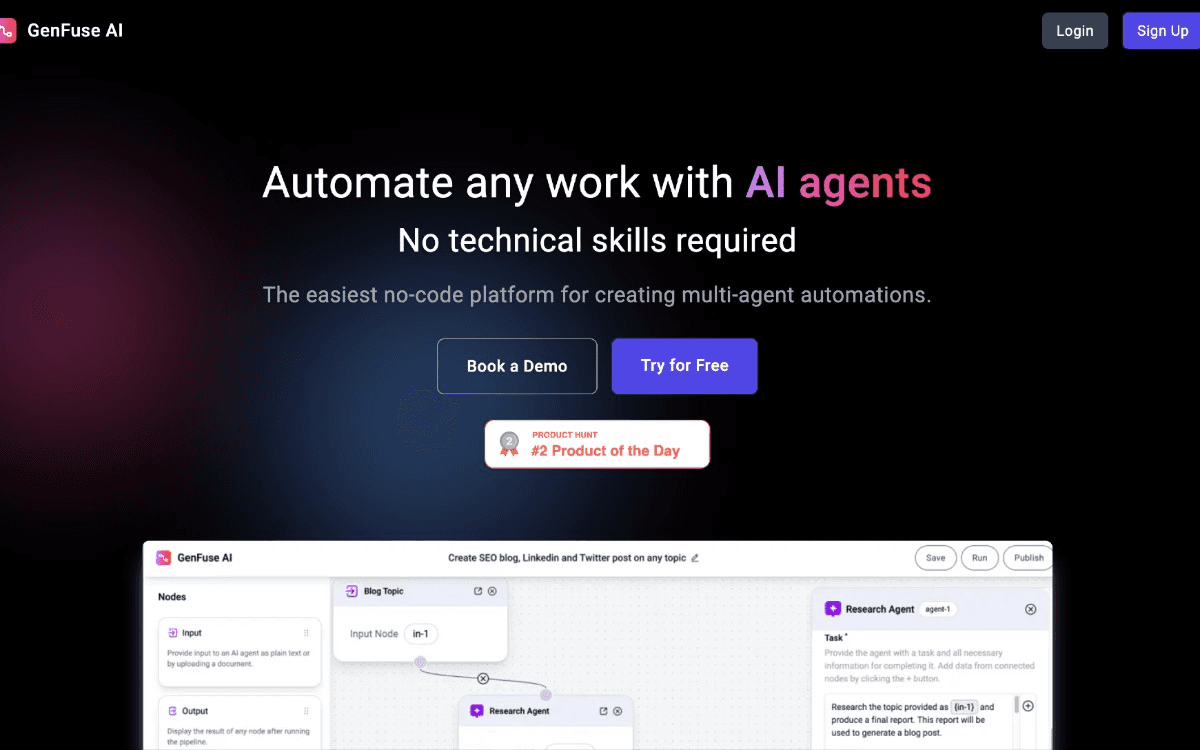
GenFuse builds multi-step lead workflows by translating plain English into automated processes that integrate with CRMs, email, and collaboration tools.
Who Is It For?
Operations-minded teams and non-technical founders who want complex processes automated without coding.
You tell the AI copilot what outcome you want, such as "find mid-market SaaS heads of product, enrich, qualify, and run a demo invite sequence," and it configures the workflow with conditional routing. That reduces implementation time and puts reliable logic into workflows that used to require engineers.
Pros: o-code workflow creation
Cons: Complex automations can need refinement
13. Apollo.io: Best for Sales Engagement and Contact Database
Apollo.io combines a large contact database with engagement sequences and lead scoring.
Who Is It For?
Sales teams that want both a searchable contact archive and the tools to run outreach from a single platform. Apollo’s verified contacts and sequence builder let you move quickly from lists to campaigns. Scoring and prioritization help reps focus on high-probability leads. The platform offers a free plan to get started and scales from there.
Pros: Integrated database plus sequences
Cons: Free credits limit volume
14. Lusha: Best for B2B Contact Data Accuracy

Lusha specializes in delivering highly accurate emails and phone numbers, often via a browser extension for quick grabs.
Who Is It For?
Recruiters and sales teams who prioritize data accuracy and speed when sourcing contacts. Lusha’s extension surfaces contact info during LinkedIn research, and its bulk enrichment fills missing fields for lists. That accuracy reduces bounce and wasted outreach attempts.
Pros: High accuracy for contacts
Cons: Limited free plan
15. ZoomInfo: Best for Comprehensive Company and Contact Intelligence

ZoomInfo gives deep firmographic, technographic, and intent data alongside contact information to support account-based strategies.
Who Is It For?
Enterprise sales and marketing teams that need rich intelligence for complex, long-cycle deals. Intent signals and technographic data let teams find accounts that are actively researching related solutions. Engage adds outreach features, and prebuilt lists accelerate ABM plays. For complex sales, that depth helps craft targeted campaigns that matter.
Pros: Deep intelligence for ABM
Cons: Enterprise pricing
16. Hunter.io: Best for Finding Email Addresses Quickly
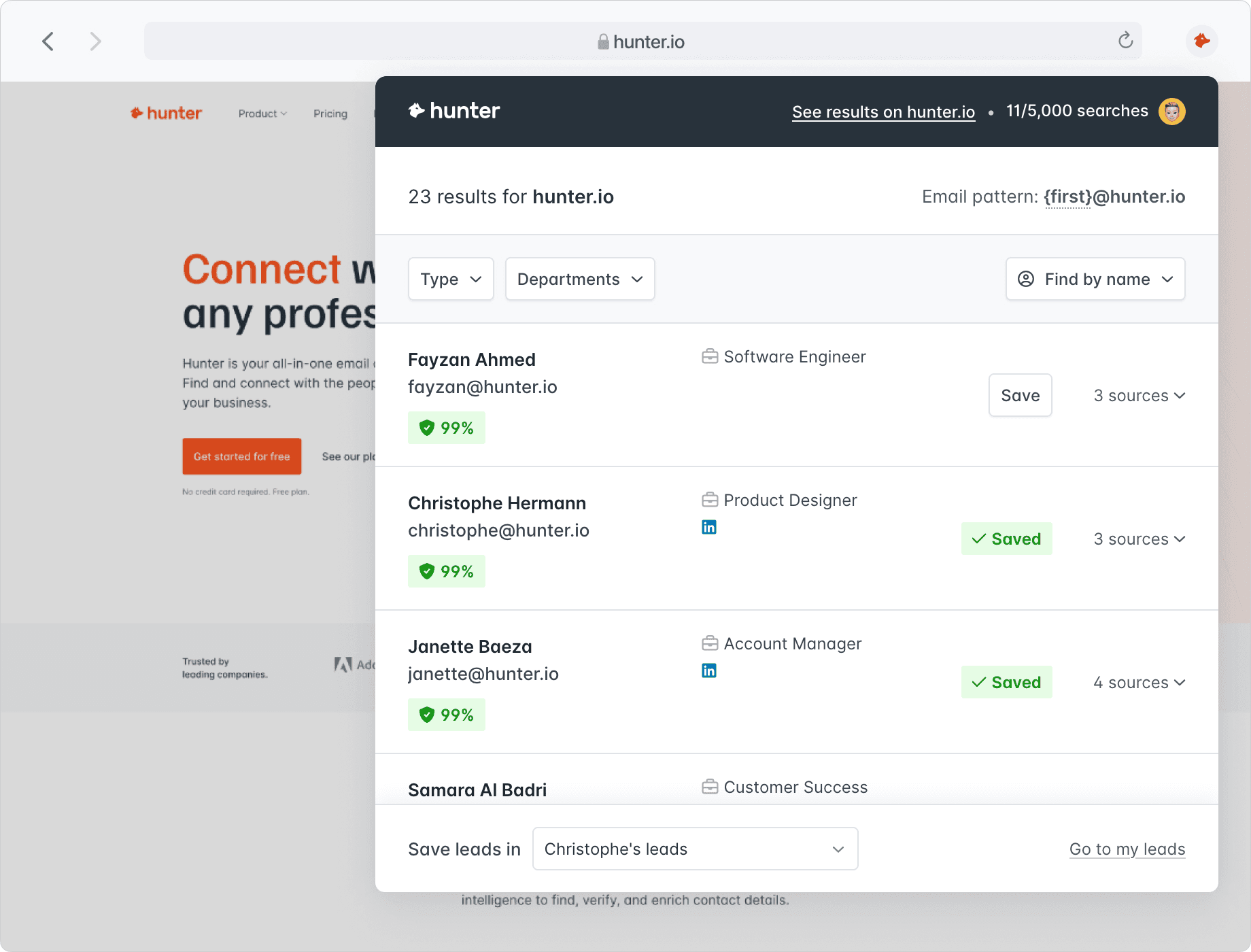
Hunter.io finds and verifies professional emails for specific domains and names.
Who Is It For?
Small teams and individuals who primarily need quick email discovery and verification. Use domain search to list known emails for a company and the verifier to check deliverability. The free plan provides a low-friction way to test outreach ideas.
Pros: Simple email discovery
Cons: Search limits on free tier
17. Seamless.ai: Best for Real-time Contact and Company Insights
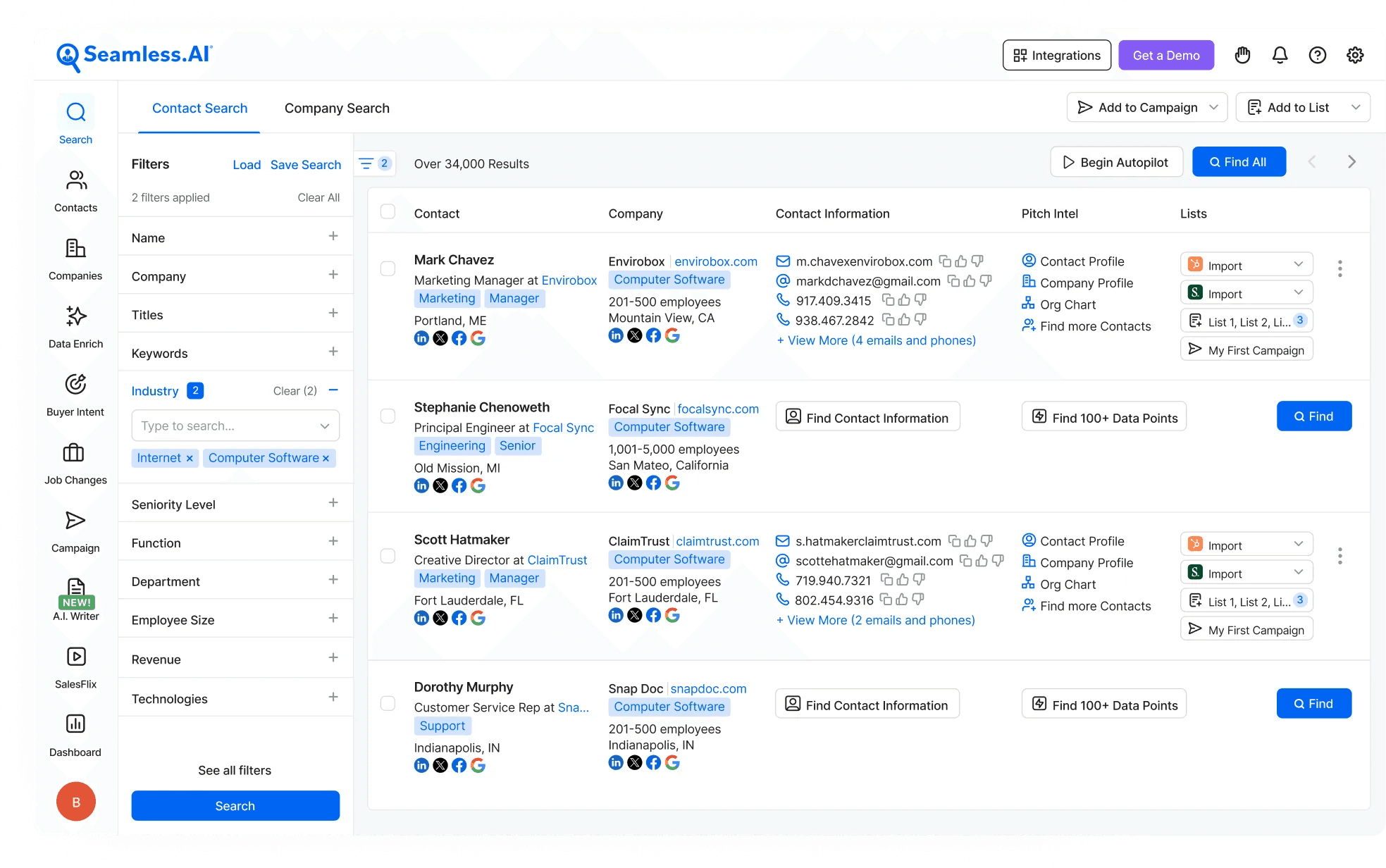
Seamless.ai focuses on live, up-to-date contact and company data using AI to refresh information continuously.
Who Is It For?
Prospectors who need current contact details and recent company signals for timely outreach. Its AI search uncovers decision-makers and fills missing fields, while intent highlights accounts showing buying behavior. For teams that depend on freshness, that real-time angle matters.
Pros
Fresh data
AI search
Cons: Custom pricing
18. Leadfeeder: Best for Identifying Anonymous Website Visitors
Leadfeeder links Google Analytics traffic to company profiles, revealing which businesses visit and what they viewed.
Who Is It For?
B2B marketing and sales teams wanting to convert website traffic into account-level leads without forms. Leadfeeder scores visitor behavior, shows pages viewed, and sends identified companies to your CRM. That lets reps contact companies that showed high intent but did not fill a form, turning passive traffic into prioritized outreach.
Pros: Company-level visitor identification
Cons: Limited person-level contact detail
Status Quo Disruption
Most teams stitch together a half-dozen point tools because it feels manageable and requires no big decision. That familiar approach works early, but as volume grows, data fragments, manual reconciliation consumes hours, and follow-ups slip through the cracks.
Teams find that platforms like AI Acquisition centralize agents, automate enrichment and routing, and compress manual work from days to hours while keeping a clear audit trail and predictable handoffs.
A Practical Pattern I Keep Seeing
When we replaced manual list-cleaning with automated enrichment for an agency over four weeks, bounced emails dropped by a measurable margin and reps engaged more qualified conversations, because they stopped chasing bad contacts and started booking calls. The constraint was simple: teams with fewer than five people need no-code flows; when lists passed the 10,000-contact mark, automated refresh and routing became non-negotiable.
A Short Analogy That Makes the Shift Obvious
Think of lead ops like a small kitchen. Hand-cooking each order works for a couple of diners, but once the room fills, you need stations, clear roles, and timing to keep plates moving without burning something. These tools create those stations.
Evidence That Matters
Companies using AI for lead generation see a 30% increase in sales opportunities, a lift that directly improves pipeline volume and sharpens rep focus.
What to Watch for When You Pick Tools
If you need precision, favor platforms with strong enrichment and job-change alerts. If rapid testing matters, choose tools with easy templates and Chrome capture. And never let data sit in silos, sync every lead back to your CRM so activity becomes part of the sales rhythm rather than an orphaned report.
We’ve fixed the boring parts so sellers can do the interesting work; the next question is what trips teams up when they try to scale that system further. But the hard realities of scaling this still hide in plain sight, and what comes next exposes the gaps most teams miss.
Related Reading
What are the Challenges of AI Powered Lead Generation?

AI helps, but it does not remove risk. The main limitations in B2B AI lead generation are messy inputs, brittle integrations, legal and reputational exposure, subtle model errors, and the governance gap that turns automation into a liability without disciplined human oversight. These faults:
Inflate acquisition costs
Create failure modes that slow growth rather than accelerate it
Why Does Dirty Data Wreck Outcomes?
Poor input is not an edge case but the default risk, as 70% of companies struggle with data quality issues when implementing AI-powered lead generation.
In practice that means AI ranks and personalizes on the wrong signals, outreach lands in irrelevant inboxes, and deliverability and sender reputation decay. The operational cost shows up as wasted sequence credits, lower reply rates, and sales reps who stop trusting the lists they are given.
This pattern appears consistently in small teams and agencies: when lists are pulled from multiple unverified sources, response rates slip and reps revert to manual sourcing because the AI output feels unreliable.
How Do Integration Failures Create Hidden Technical Debt?
Integration trouble is not just an IT headache, it is an adoption breaker. Integration challenges are common: 50% of marketers struggle to integrate AI tools with existing systems, resulting in failed connectors, divergent field mappings, and automation disruptions.
The immediate result is duplicate records, broken routing rules, and dashboards that do not reflect reality. Startups and small teams often pay this cost in time, with engineers chasing flaky webhooks instead of building product features.
Practically, you avoid this by designing a canonical data schema, running integrations in shadow mode first, and adding circuit breakers for API failures so campaigns do not cascade into mass errors.
What Regulatory and Reputational Traps Hide Beneath Compliance?
GDPR is only one axis, and compliance mistakes are costly in ways beyond fines. Mis-sourced contact lists can violate TCPA or national DNC lists, poor opt-out flows drive complaint rates higher, and opaque vendor data sourcing can expose a company to audits or lost partners. The visible consequence is blocked domains and throttled sends; the invisible consequence is brand damage.
Consistent Opt-Out for Deliverability Protection
When opt-out handling is inconsistent between channels, complaint rates spike and email providers start throttling volume, which kills both short-term outreach and long-term inbox placement. You must instrument provenance, versioned consent records, and cross-channel suppression logic as part of any lead engine.
When Does Automation Become Tone-Deaf or Harmful?
You can scale personalization, but scaling breeds pattern formation and fatigue. AI will optimize for measurable short-term gains, such as reply rate or open rate, which can push copy toward manipulative hooks or repeated contact cadences that annoy prospects. AI hallucinations compound the issue, producing plausible but false company facts or promises that reps then must disentangle in demos.
The human cost is clear: sellers waste time salvaging meetings that were won on false pretenses. Treat automation as a volume amplifier with strict guardrails, not as a hands-off replacement for judgment.
How Much Human Oversight is Enough?
If you treat AI like an autopilot, you still need pilots watching instruments. Set concrete human-in-loop rules: require manual approval on the first outreach to a new account segment, sample at least 5 percent of outbound messaging for QA each week, set confidence thresholds for fully automated replies, and create a 24 to 48-hour SLA for escalations on high-value leads.
Also, track the right KPIs, not vanity metrics, for example, conversion to qualified meeting, not just opens or clicks. These rules keep trust in the system and give reps the context to close.
The Fragility of Stitched Point Solutions
Most teams stitch point tools together because it feels quick and familiar, and that approach works initially but breaks as complexity grows. As connectors multiply, monitoring costs rise, handoffs fail, and small teams spend more time firefighting than selling.
Teams find that platforms such as AI Acquisition, which chain multi-agent workflows, provide prebuilt connectors, and surface observability into agent decisions, compress troubleshooting and lower operations overhead so small teams can scale without hiring an ops team.
What Operational Controls Prevent Costly Surprises?
Operationalize feedback loops. Keep provenance metadata with every lead, log model confidence scores, and record which agent produced each field. Run periodic drift checks, version your models or prompt templates, and tie retraining to business outcomes so the system adjusts to real-world conversion signals rather than vanity metrics.
Implementing AI with Conversion Data and Guardrails
A useful rule of thumb, based on patterns we see, is to limit full automation on high-value segments until you have at least three months of conversion data and a routine for human review. Think of deploying AI in your funnel like installing a machine in a factory, it speeds production but creates new maintenance work, safety checks, and quality gates. If you skip those, throughput rises and scrap rates rise with it.
Related Reading
AI Sales Prospecting Tools
AI Tools For B2B Marketing
AI For Sales Calls
Lead Qualification Strategies
Get Access to Our AI Growth Consultant Agent for Free Today
If you want predictable AI B2B lead generation without hiring a big team, try AI Acquisition’s multi-agent, no-code platform to automate sourcing, enrichment, intent-driven outreach, and appointment booking so your pipeline fills while you focus on deals.
Join 1,200+ entrepreneurs—clients average $18,105 in monthly revenue and collectively generated over $30 million this year—then get a free AI Growth Consultant to build a practical sales automation plan for your business.