Sales teams waste hours on manual follow-up, segment building, and CRMs updates while campaigns stall. In AI AI-assisted sales, AI marketing automation tools replace repetitive work with smart workflows, predictive analytics, dynamic personalization, and automated email and chatbot outreach. Want higher conversion rates and clearer ROI with less effort? This article shows how to identify and use the best AI marketing automation tools that save time, boost campaign performance, and drive measurable growth.
To reach those goals, AI Acquisition's AI automation software bundles campaign templates, intelligent lead scoring, CRM integration, A/B testing, and real-time analytics so you can set up campaigns, tune personalization, and measure lift without a steep learning curve.
Summary
Operational strain is now the default: 75% of marketers report increased workloads over the past year, which correlates with lost creative time, higher churn, and slower strategic execution.
Marketing has become more complex for 60% of professionals, and fragmented channels drive message drift and longer coordination cycles unless rules for orchestration are enforced.
Manual handoffs are costly: small teams waste roughly 6 to 12 hours per week on list builds and CSV exports, while salespeople often spend 3 to 6 hours per week chasing misrouted leads.
Data volume and tooling gaps make measurement brittle: 90% of the world's data was created in the last two years, and traditional BI tools can handle only about 20% of data types, leading teams to spend 4 to 10 hours per week reconciling metrics.
Rule-heavy automation breaks down as scale increases, and the sheer proliferation of tools is evident in a catalog of 31 AI marketing and growth tools, which creates maintenance overhead and fragile rule networks.
Small optimizations add up quickly: email improvements can lift open rates by 25 to 40% and conversions by 15 to 30%. Yet buyer signals often cool within 24 to 48 hours, so real-time personalization and faster responses materially affect outcomes.
AI Acquisition's AI automation software addresses this by bundling campaign templates, intelligent lead scoring, CRM integration, A/B testing, and real-time analytics to centralize workflows and compress decision loops.
Table of Contents
Why Does It Feel Like Marketing Got Way Harder in the Past Year?

1. Information Density
Information overload is the baseline problem. Individual creators outpaced traditional outlets years ago, and now every niche has a thousand voices competing for attention. Standing out requires surgical focus, not volume. The consequence is emotional and tactical; we feel battered by noise and waste creative energy chasing impressions that do not convert. That pattern shows up in creative reviews where teams iterate five times on the wrong concept because they misunderstood the audience signal, and those lost cycles are expensive.
2. Fragmentation of communication channels
Today, customers are spread across countless platforms, and your message must follow them. Managing email, social, paid ads, landing pages, personalization rules, and chat flows is routine work for modern teams, but it fragments ownership and dilutes voice. When teams add platforms, message drift appears: copy that worked on one channel reads flat on another. The failure point is process, not intent. You need orchestration and rules that enforce brand voice; otherwise, every channel becomes a separate campaign with its own learning curve.
3. Speed
Technology and culture change now move in daily bursts. Trends ignite and fade in hours, not months. That forces marketers into reactive mode, which is exhausting and inefficient. The practical result I often see is tactical debt: teams push a campaign live to catch a trend, then never complete the measurement, attribution, or optimization work. Over time, that builds an archive of half-measured bets that blurs the line between which efforts actually drove business.
4. Executive Disconnect
Most leadership still expects marketing to be coin-operated: spend equals immediate revenue. That expectation ignores how buyer behavior now demands storytelling, authenticity, and experience over interruption. When executives demand short-term lift from channels built for long-term trust, teams either overspend on ads or retreat to safe, measurable activities that lack resonance. The real cost is strategic: you optimize for what’s easy to report, not what’s humanly persuasive.
The Spreadsheet Fragmentation Trap
Most teams handle coordination with spreadsheets, email threads, and ad-hoc checklists because they are familiar and require no new tools. As campaigns multiply, those habits fragment context across dozens of files and inboxes, response times stretch from hours to days, and mistakes compound. Teams find that platforms such as AI automation software centralize workflows, automate routing and status updates, and compress review cycles from days to hours while maintaining full audit trails.
5. Measurement
Measurement is no longer optional, yet the tools and methods lag behind the pace of change. We ask marketers to chase cultural signals in real time, while their reporting remains monthly, manual, and brittle. That mismatch forces a choice: either cling to what you can measure easily or pursue emergent opportunities without clear attribution. The practical trade-off I recommend is to reserve a small, instrumented budget for exploratory channels while automating core reporting, so you can learn without sacrificing governance.
6. System Fragility
Digital marketing is fragile because it rests on other people’s platforms and shifting algorithms. A single platform policy change can wipe a month of growth, and ad-cost swings can turn profitable funnels into losses overnight. This fragility shows up as crisis work:
Emergency migrations
Creative refreshes
Hurried reallocation of the budget
The right defense is redundancy, automation of repetitive rebuild tasks, and easy failover processes, so recovery is fast rather than panicked.
7. Authenticity
Authenticity now wins attention more often than slick production. Small teams that talk to customers directly have a built-in advantage because human-specific stories build trust. Authenticity is hard to delegate to agencies because it lives in daily customer interaction, not a campaign brief. This means marketers need systems that capture real customer signals and translate them into repeatable messaging without losing voice.
Why This Is Acute Right Now
When you add it all up, the workload and complexity are not theoretical. A recent community discussion among digital marketers found that 75% reported increased workloads over the past year, making operational strain the default condition for many teams.
The Orchestration Exhaustion Gap
In the same thread, 60% of marketing professionals said digital marketing has become more complex over the past year—a clear signal that manual tactics break down as scale increases. The emotional truth I keep encountering is simple and sharp: it is exhausting when talented people are trapped in orchestration work instead of the creative thinking they were hired to do. That pressure drives churn, blunts strategy, and produces inconsistent customer experiences.
The Agentic Revenue Catalyst
Ready to build and scale your AI-powered business without the complexity or massive teams? Join 1,200+ entrepreneurs using AI Acquisition's all-in-one agentic platform to automate lead generation, sales, and operations. Our clients average $18,105 in monthly revenue and have collectively generated over $30 million this year using our software.
The Digital Workforce Evolution
Get access to our free AI Growth Consultant today and discover how our digital workforce of AI agents can work 24/7 to fill your pipeline, book meetings, and deliver human-quality results while you focus on growth, not guesswork. But the frustrating part is this: the tools you rely on today are exactly the ones that will fail you when scale and speed truly matter.
Related Reading
Why Traditional Tools Can’t Keep Up With Today’s Demands

Having an email platform, CRM, or scheduling tool does not solve the problem on its own. Those systems are useful pieces, but they were not designed to read rapidly changing customer behavior, resolve edge cases automatically, or stitch every signal into a single, actionable view in real time. You still pay for wasted hours, missed personalization, and a poor lift in conversions.
Why Do Manual Workflows Still Steal Time?
The familiar approach is to build rules and manual handoffs because it is simple to start. That works until audience signals arrive faster than you can update rules. In practice, this pattern appears across small e-commerce teams and B2B sellers: manual list builds, CSV exports, and ad hoc tag fixes consume roughly 6 to 12 hours per week for a small team, and salespeople commonly spend 3 to 6 hours per week chasing leads that were never routed correctly. Those hours are not minor overhead; they are opportunity cost—time that could be used to close deals, craft creative, or iterate on messaging.
How Does Missing Real-Time Personalization Translate Into Lost Revenue?
When your stack only updates overnight or on weekly exports, you miss micro-moments where buyers decide. Signals cool fast, often within 24 to 48 hours after first contact, so delayed responses convert far worse than timely ones.
The Static Segmentation Crisis
Data volume is exploding: as highlighted in an analysis of modern data demands by IT Convergence, nearly 90% of the world’s data has been created in the past two years, making static segmentation insufficient to capture the real behaviors that drive purchase intent. The result is personalization that feels generic, timing that feels off, and product recommendations that land too late to matter.
Why Do Disconnected Systems Damage Customer Experience and Measurement?
Silos are not just inconvenient; they create contradictory customer journeys. Reports and attribution that require manual stitching force marketers to guess which touchpoints mattered. The same research indicates that traditional BI tools can process only about 20% of the data types available today, meaning that even well-designed dashboards often overlook:
Call recordings
Chat transcripts
Other unstructured behavioral signals are critical to decision-making.
In practice, teams spend 4 to 10 hours per week reconciling metrics across tools, which increases campaign latency and makes it harder to prove cause and effect.
What Breaks When You Try to Scale Rule-Heavy Automation?
This is a constraint-based failure: rules are fine when your product catalog, buyer personas, and channels are stable. As variety grows, the number of rules explodes, edge cases multiply, and maintenance becomes a full-time job.
The Fragmented Logic Failure
The failure mode is predictable: you deploy a new channel or product, and your rule network fractures, causing inconsistent messaging and increased manual firefighting. Think of it like conducting an orchestra with a paper checklist, rather than giving each musician a score that adapts to tempo and key. Most teams manage this by patching with custom scripts and spreadsheets, because it is familiar and requires no new tools. That approach works until stakeholders multiply, real-time decisions are required, and the cost of errors shows up in lost deals and churn.
The Decision Loop Compression
Platforms like AI Acquisition offer an alternative path: teams find that prebuilt agentic automation centralizes routing, continuously updates audience models, and compresses decision loops from days to minutes, reducing manual reconciliation and preserving brand consistency without heavy engineering.
The Talent-to-Task Mismatch
There is a human side to this, too. It is exhausting to watch talented people spend their best hours on routine fixes instead of strategy, and that frustration shows up as slower launches and higher churn among makers. When you pair that stress with the technical limits above, the math becomes clear: the stack you have at launch will not scale into a growth engine unless it learns and acts on data in real time.
Related Reading
31 Best AI Marketing Automation Tools for Smarter Growth
1. AI Acquisition
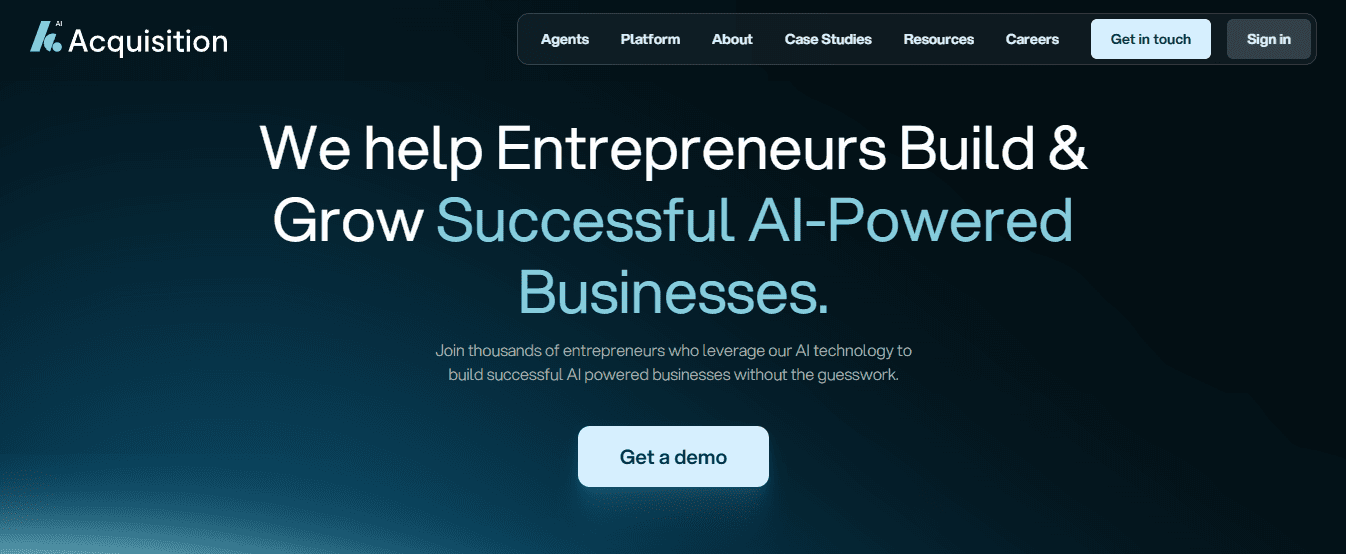
Ready to build and scale your AI-powered business without the complexity or massive teams? Join 1,200+ entrepreneurs using AI Acquisition's all-in-one agentic platform to automate:
Lead generation
Sales
Operations
Our clients average $18,105 in monthly revenue and have collectively generated over $30 million this year using our software.
The 24/7 Autonomous Pipeline
Get access to our free AI growth consultant today and discover how our digital workforce of AI agents can work 24/7 to:
Fill your pipeline
Book meetings
Deliver human-quality results while you focus on growth, not guesswork.
Key Features
Multi-agent workflows
Prebuilt funnel or VSL playbooks
No-code setup
Lead routing
Meeting booking
Strengths
Turnkey deployment
Outcome-focused playbooks trained on real ad spend
Pricing
Free growth consult + tiered plans (contact sales for scale pricing).
Ideal for: Founders who want fast revenue experiments without hiring an ops team.
2. Gumloop
Key Features
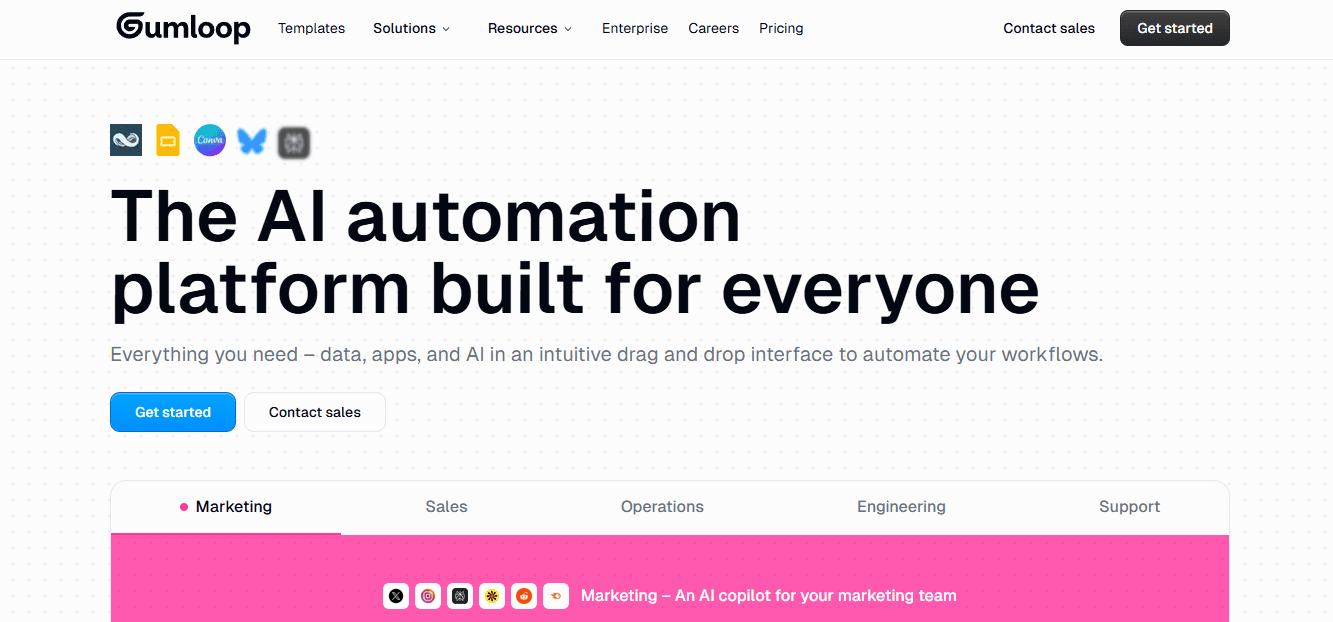
Visual automation builder
Built-in access to premium LLMs
Web/App scraping
Continuous agents
Strengths
Zapier-like UX with an AI layer
No API keys required
Beautiful interface that teams enjoy using
Pricing
Generous free plan
Paid tiers with more credits (20% off code MARKETERMILK as an occasional promotion).
Ideal for: Startups and marketing teams that need real-time scraping and autonomous agents to research, qualify leads, or update CRMs without engineering time.
3. Surfer SEO (For Content Optimization)

Key Features
Content scoring
Keyword density checks
Outlines
Headers guidance
Editor with live feedback
Strengths
Combines on-page optimization metrics and copy guidance so writers see immediate SEO impact.
Pricing
Free trial, then subscription tiers
Integrates with WordPress, Google Docs, Jasper
Ideal for: Content teams focused on organic growth and writers who want prescriptive SEO feedback while drafting.
4. Notion AI (For Productivity)
Key Features
In-context answers from your workspace
Brainstorming
Auto-filling tables
Writing assistance
Strengths
Seamless inside Notion
Strong privacy controls (GDPR compliance)
Familiar editor experience
Pricing
$8–$10 per member/month, depending on billing
Free responses for small workspaces
Ideal for: Teams that already run knowledge and project work in Notion and want to reduce admin friction.
5. Jasper AI (For Copywriting)
Key Features
Tone/style templates
Long-form assistant
SEO integrations
Multi-format copy generation
Strengths
Quick draft generation across email, ads, and blog posts
Easy dashboard for non-technical users
Pricing
Free trial, then subscription
Affordable for solo marketers and midsize teams
Ideal for: Marketers who need fast first drafts and headline/subject-line variants to A/B test.
6. Lexica Art (For Blog Thumbnails)

Key Features
High-quality image generation
Prompt presets
Brand-consistent saving
Strengths
Produces realistic images that reduce reliance on stock photography.
Pricing
Freemium with paid options for higher usage
Ideal for: Content teams wanting on-brand thumbnails, social posts, or lightweight creative variations.
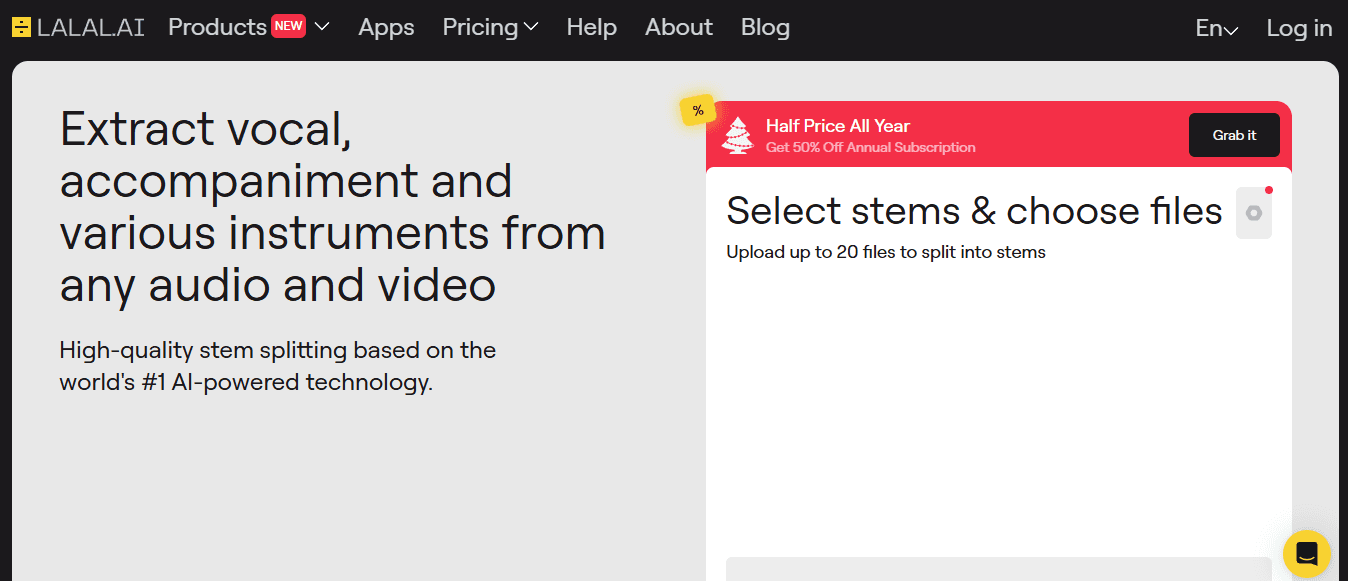
7. LALAL.AI (For Recording Audio)
Key Features
Vocal and instrumental separation
Noise reduction
Quick processing
Strengths
Cleans noisy field recordings without flattening voice quality.
Pricing
Pay-as-you-go credits plus subscription packages.
Ideal for: Podcasters, YouTube creators, and marketers who need clean audio fast without re-recording.
8. Crayo (For Short-Form Videos)
Key Features
Ideation templates
Script-to-video
Creator workflow tools
Strengths
Built by creators
Optimized for TikTok/Reels/Shorts formats and viral patterns. Even popular new formats like faceless reels
Pricing
Tiered plans for creators and teams.
Ideal for: Fast-moving social teams and creators scaling short-form output with repeatable templates.
9. Brandwell (For Generating SEO Blog Posts)
Key Features
Long-form article generation
Human-like output that passes many detection tools
Content templates
Strengths
Produces high-quality drafts that often read 70%+ human by detectors.
Pricing
Subscription-based
Varies by output volume
Ideal for: Agencies and publishers needing scalable SEO content with minimal editing time.
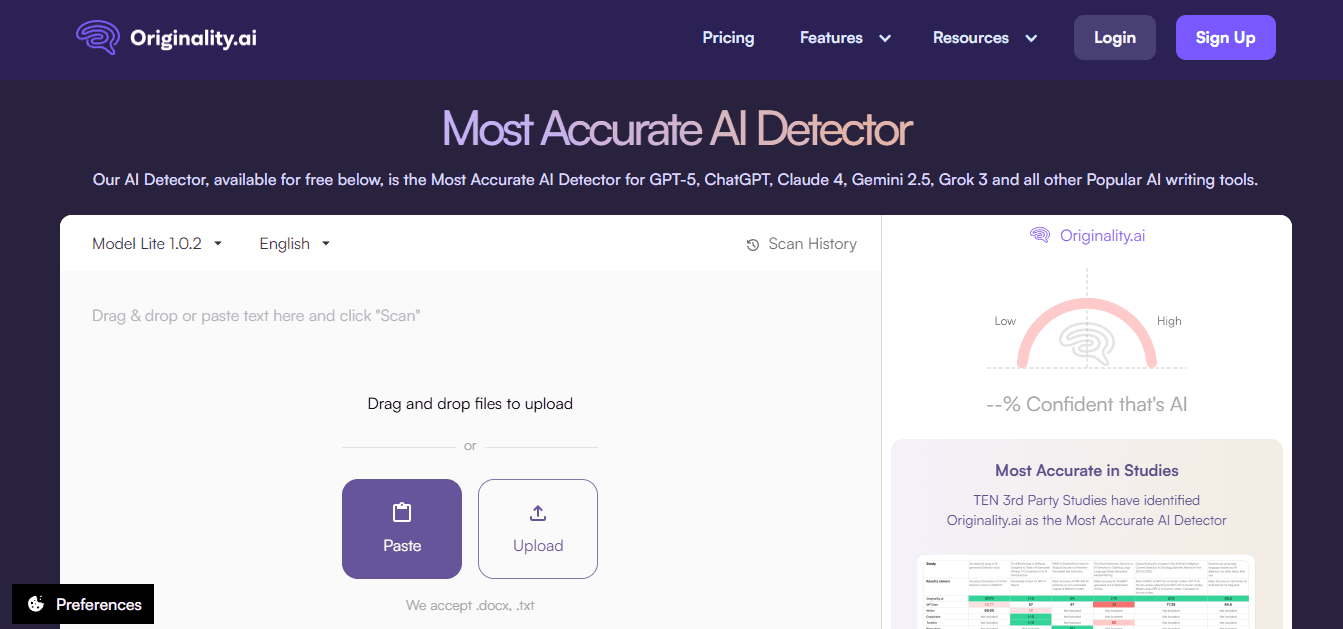
10. Originality AI (For AI Content Detection)
Key Features
AI-detection
Plagiarism checks
Report generation
Strengths
Reliable flagging
Clear reports when vetting outsourced or generated content
Pricing
Pay-per-check or subscription
Ideal for: Content managers and editors who enforce originality policies with freelancers.
11. Writer (Content Writing for Teams)
Key Features
Autocorrect
Brand style enforcement
Approved terminology database
Collaborative editor
Strengths
Enterprise-grade governance that keeps tone and accuracy consistent across a distributed team.
Pricing
Enterprise and team tiers
Free trials may be available
Ideal for: regulated industries or large marketing teams that need controlled language and compliance.
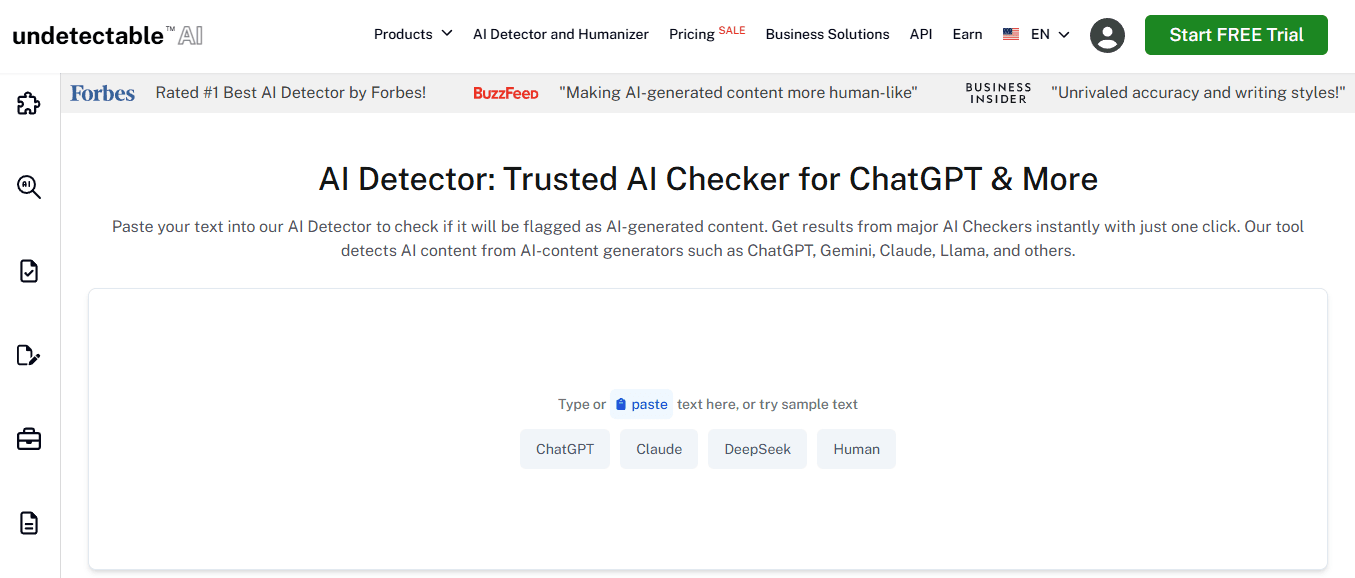
12. Undetectable AI (For Rewriting AI Content)
Key Features
Rewrite engine focused on humanizing AI drafts
Tone adjustments
Strengths
Good at turning generic AI outputs into more natural-sounding copy.
Pricing
Subscription
Test outputs
Always proofread
Ideal for: Teams using generative tools but wanting fewer obvious AI markers before human review.
13. ContentShake AI (For SEO Blog Writing)
Key Features
LLM writing, plus Semrush-driven SEO data
Multi-language generation
Brand voice training
Strengths
Merges SEO intelligence with AI writing in one workflow and publishes directly to WordPress or Google Docs.
Pricing
Tiered plans depending on word tokens and integrations.
Ideal for: SEO teams that want outlines and full drafts grounded in competitor and keyword data.
14. Fullstory (For Digital Experiences)
Key Features
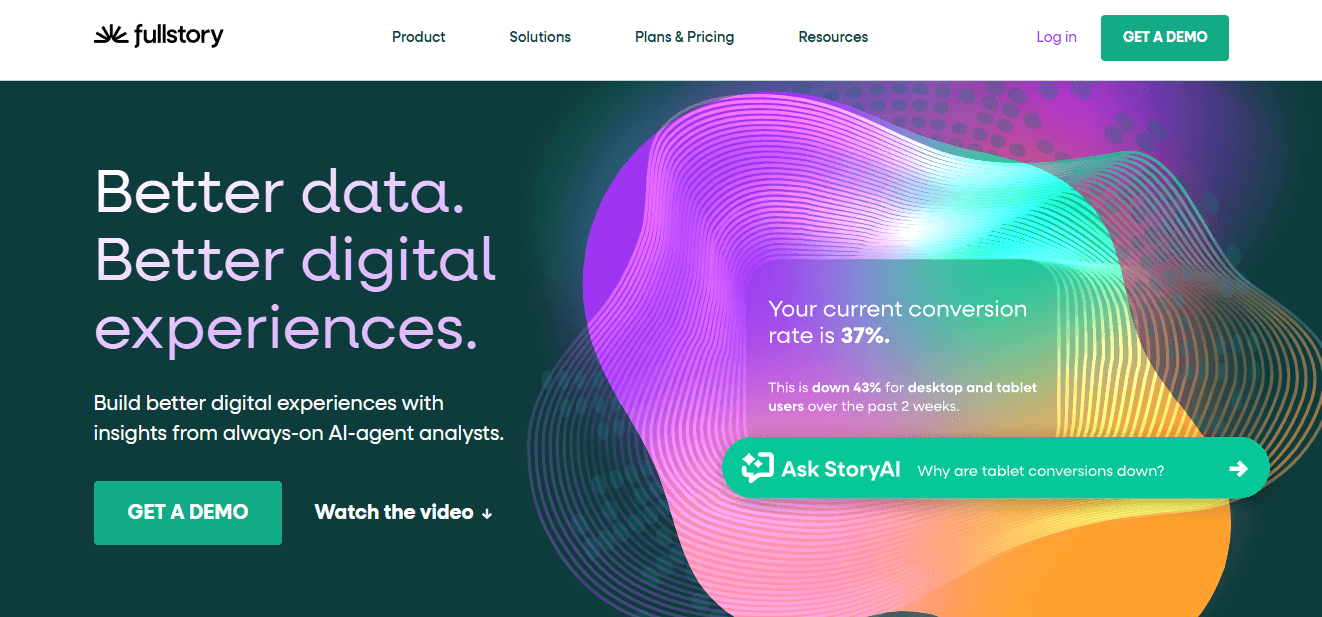
Session replay
Journey analytics
Error detection
Behavioral clustering
Strengths
Converts user behavior into concrete friction points you can fix, reducing wasted UX cycles.
Pricing
Freemium to enterprise
Price grows with sessions tracked
Ideal for: Product and growth teams optimizing onboarding flows and checkout funnels.
15. Zapier (For Automating Tasks)
Key Features
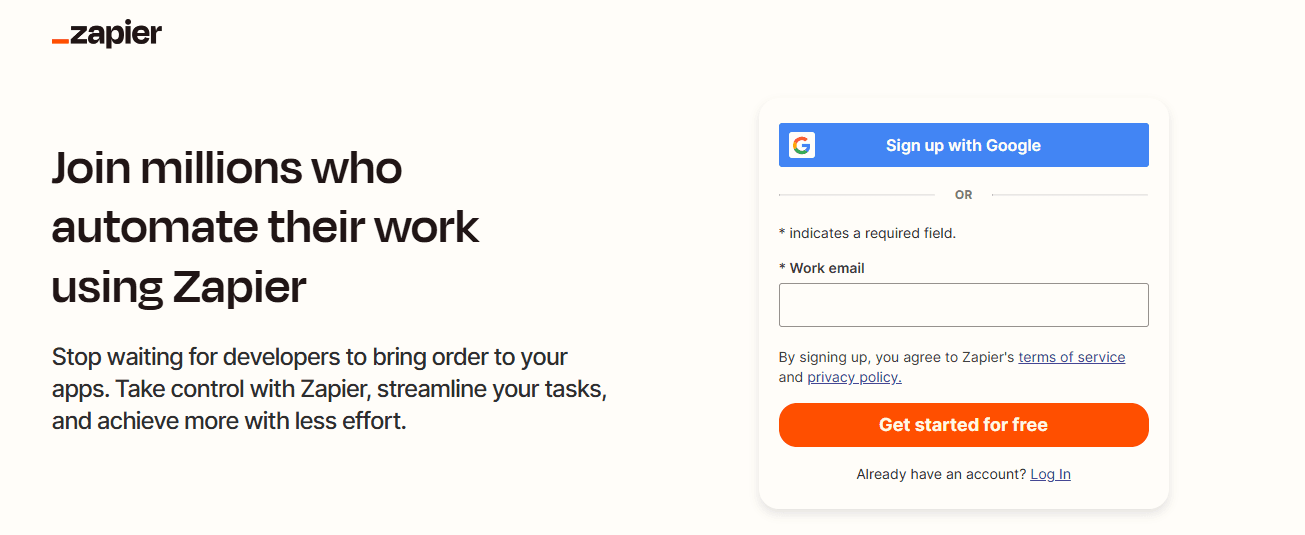
3,000+ integrations
Visual workflow editor
Branching logic
Templates
Strengths
Fast, no-code automation that connects disparate systems and removes repetitive handoffs.
Pricing
Free tier with limited zaps
Paid tiers for multi-step automations and higher volume
Ideal for: Teams wanting quick wins by automating routine syncs without engineering.
16. Hemingway App (For Content Editing)
Key Features
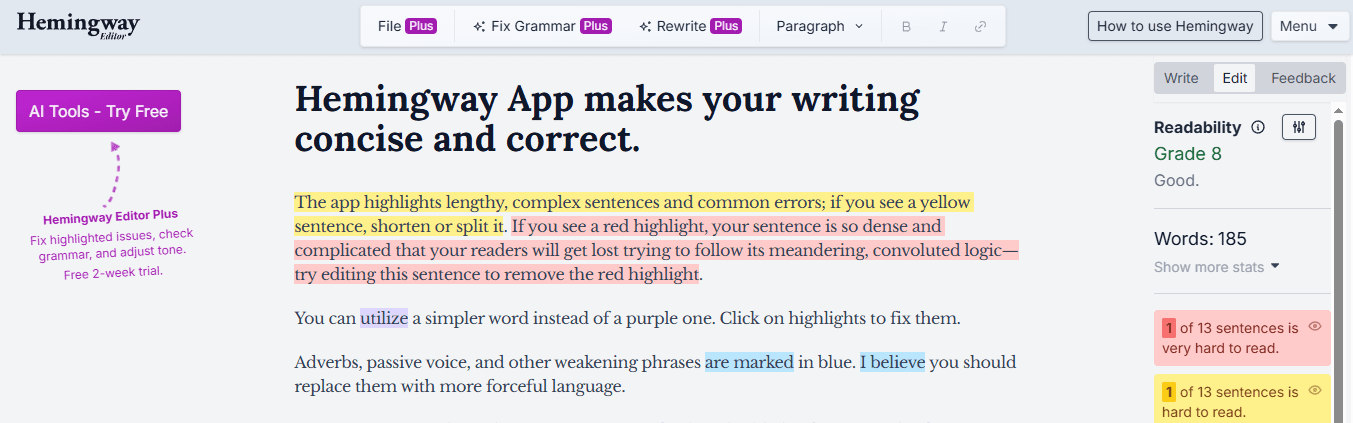
Readability scoring
Sentence simplification suggestions
Passive voice detection
Strengths
Free online tool that forces sharp, plain copy for broad audiences.
Pricing
Free
$20 for a desktop with extra export options
Ideal for: Writers and editors who want to tighten prose quickly before publishing.
Most teams build simple automations with spreadsheets and point-to-point tools because it feels quick and familiar. That works until the volume of edge cases and exceptions makes upkeep a full-time job, costing weeks of staff time and slowing experiments.
The Operations-as-a-Service Paradigm
Platforms like AI Acquisition provide an alternative: prebuilt agentic automations, continuous routing, and no-code playbooks that reduce manual reconciliation and compress decision loops from days to hours, so teams scale without hiring an ops squad.
17. Chatfuel (For Chatbots)
Key Features
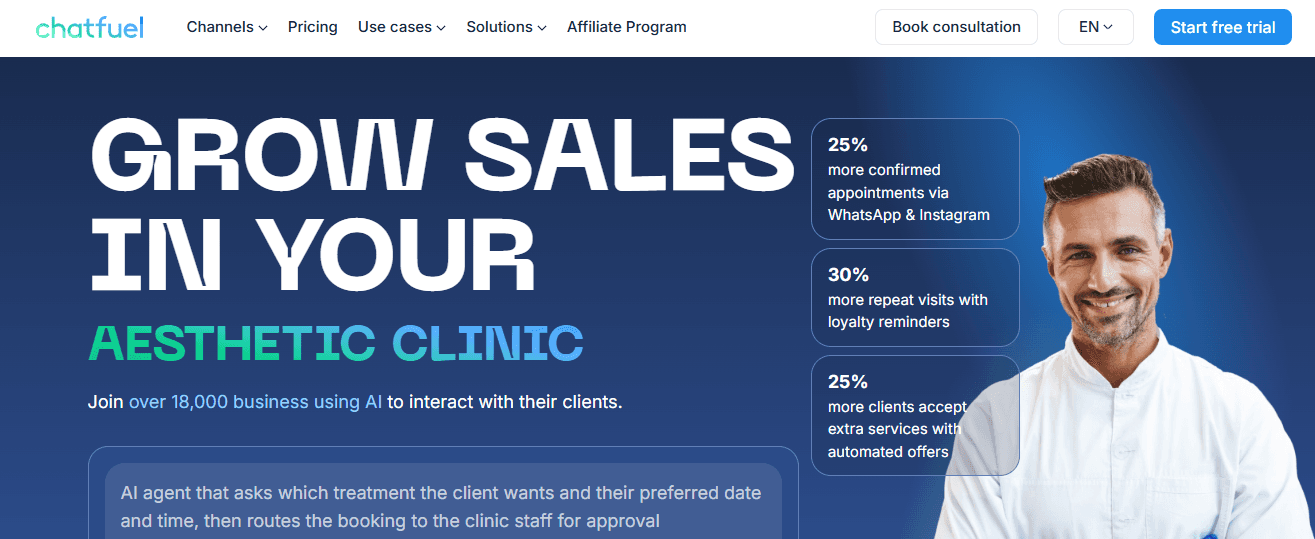
Drag-and-drop bot builder
NLP handling for typos
Meta partnership
Strengths
Quick to launch conversational experiences that answer FAQs and capture leads.
Pricing
Free plan
Premium features for advanced flows
Ideal for: Small businesses that want Messenger and site chatbots without engineering overhead.
18. Grammarly (For Content Editing)

Key Features
Grammar
Clarity
Tone detection
Cross-app plugins
Strengths
Real-time corrections across email, docs, and social platforms, improving polish at scale.
Pricing
Free tier
Premium and Business plans for advanced features.
Ideal for: Anyone sending public-facing content who wants fewer rounds of editing.
19. Albert.ai (For Digital Advertising)
Key Features
Cross-channel ad optimization
Audience discovery
Automated testing
Strengths
Hands-off optimization that learns which creatives and audiences work, scaling spend efficiently.
Pricing
Enterprise pricing
Typically used by larger advertisers
Ideal for: Brands running multi-channel paid campaigns who need automated experimentation.
20. Headlime (For Landing Pages)

Key Features
AI copy for landing pages
Subject lines
Templates
Simple page builder
Strengths
Fast landing page copy and layout generation with conversion-minded templates.
Pricing
Subscription tiers
Usually affordable for SMBs
Ideal for: Marketers who need landing pages and copy variations without heavy design cycles.
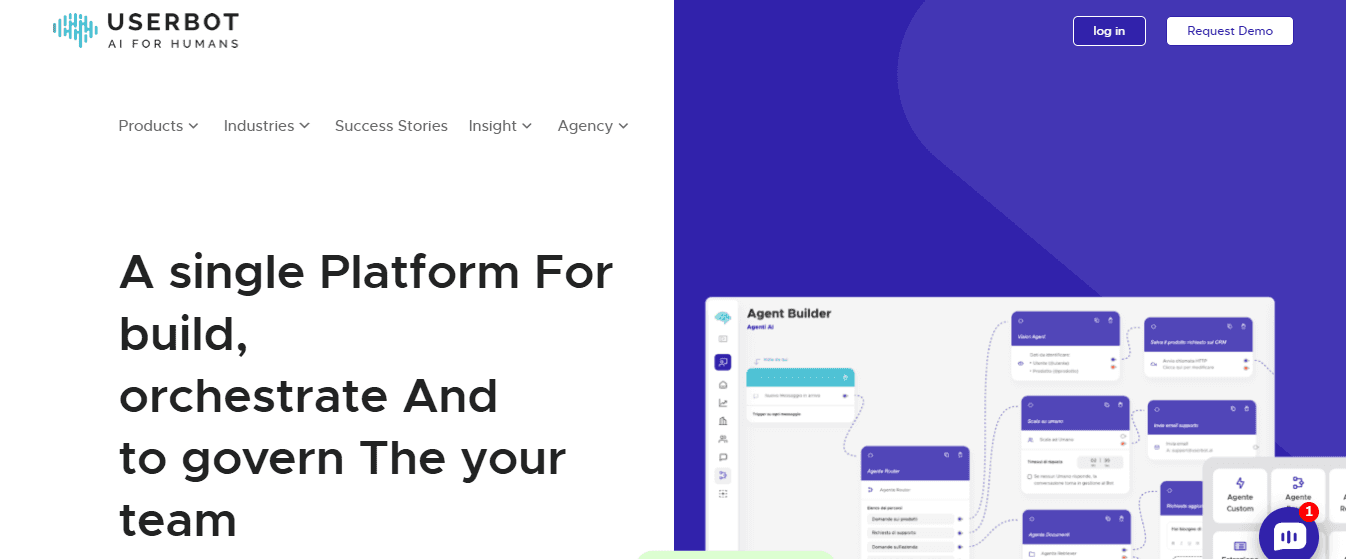
21. Userbot.ai (For Conversation Management)
Key Features
Handoff to humans
Continuous learning from interactions
CRM integrations
Strengths
Improves over time by ingesting unresolved queries and turning them into training data.
Pricing
Tiered by volume and integrations.
Ideal for: Customer support teams that want the bot to learn from real human responses.
22. Browse AI (For Scraping Web Pages)
Key Features
Trainable scraping bots
Spreadsheet auto-fill
Scheduled runs
Strengths
Fast competitive intelligence and price monitoring without writing code.
Pricing
Paid tiers
Enterprise options available
Ideal for: Product and pricing teams that need frequent, structured competitor data.
23. Algolia (For Search and Recommendation APIs)

Key Features
Instant search
Typo tolerance
Ranking strategies
Personalization
Strengths
Lightning-fast
Highly customizable search and recommendations that increase conversions.
Pricing
Usage-based
Scalable for enterprise catalogs
Ideal for: eCommerce sites or media platforms with large inventories that need better findability.
24. PhotoRoom (For Removing Image Backgrounds)

Key Features
Background removal
Batch processing
Mobile app
Strengths
Removes the design bottleneck of cropping and masking, saving designers up to 5 minutes per image.
Pricing
Free with premium plans for bulk and pro features.
Ideal for: Product marketers, creators, and teams that need to quickly create consistent product imagery.
25. Reply.io’s AI Sales Email Assistant (For Email Replies)
Key Features
Automated cold sequences
Response scoring
Multi-channel outreach
Strengths
Builds and scales personalized outreach
Scores replies so sales can focus on opportunities
Pricing
Subscription with CRM integrations
Tiered by seats and send limits
Ideal for: SDR teams looking to automate sequences and prioritize warm responses.
Why This Matters Right Now
Optimizing subject lines and send times can materially improve performance, with AI-driven email optimization shown to lift open rates by 25-40% and conversions by 15–30%, an impact that can rapidly change campaign economics.
26. Brand24 (For Media Monitoring)
Key Features
Web and social listening
Sentiment analysis
Trend spotting
Strengths
Surfacing emergent issues or earned mentions so teams can act before a small problem becomes a crisis.
Pricing
Monthly plans with differing mention limits.
Ideal for: PR teams and brand managers tracking reputation.
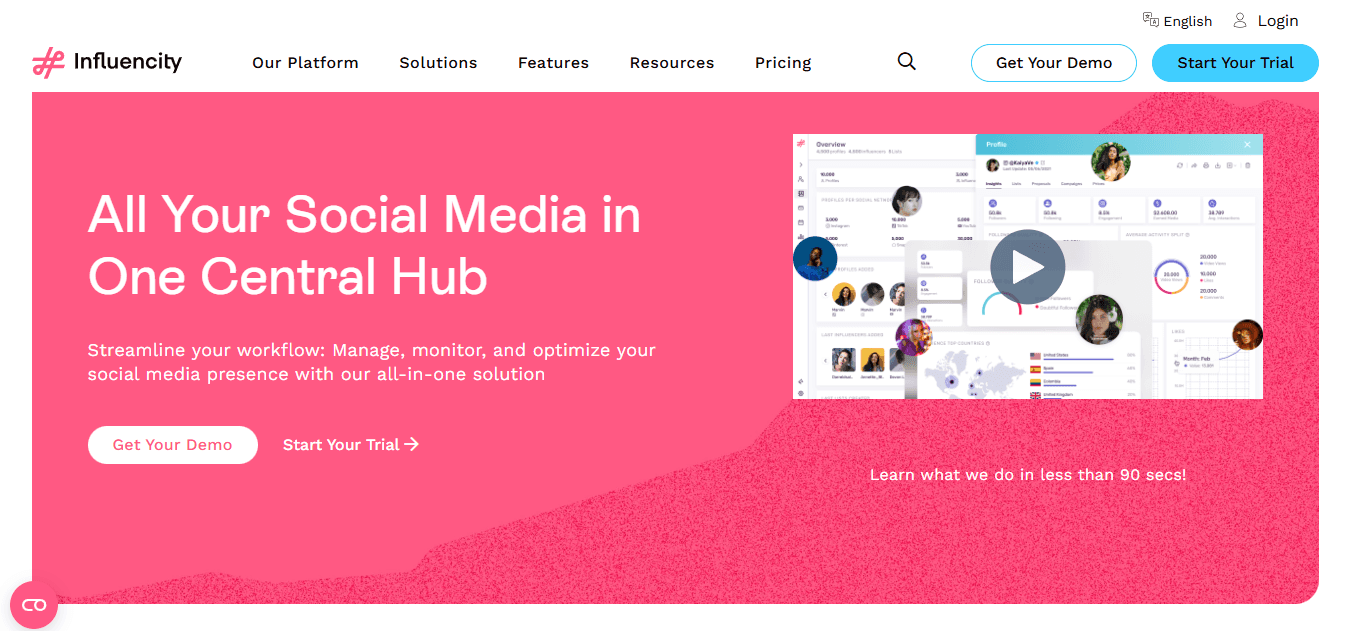
27. Influencity (For Influencer Marketing)
Key Features
Influencer discovery
Audience analytics
Campaign tracking
Strengths
Run influencer programs at scale with measurable metrics across platforms.
Pricing
Agency and brand plans
Ideal for: Brands that run recurring influencer campaigns and need centralized measurement.
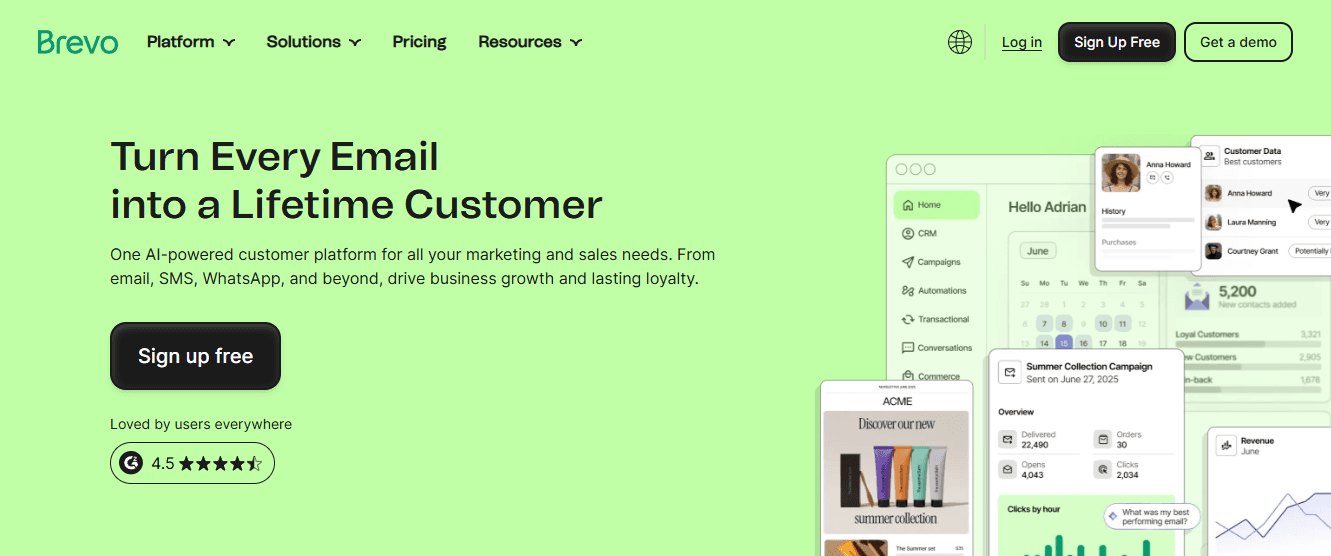
28. Brevo
Key Features
Multichannel messaging (email, SMS, WhatsApp)
AI subject line analyzer
Send-time optimization
Automation builder
Strengths
Combines affordability with useful automation that improves deliverability and opens.
Pricing
Free tier
Pay-as-you-go credits
Affordable paid plans
Ideal for: Small businesses that want a single tool for email and messaging.
Business Impact Note
Marketers choosing smarter send strategies often unlock broader efficiency gains; Bit Flows, companies usually see 20-40% better marketing efficiency and up to 40% more email revenue which is exactly the kind of uplift simple choices like subject lines and timing can deliver.
29. MailerLite
Key Features
AI subject lines
Autoresponders
Templates
Predictive send timing
Strengths
Minimal learning curve
Clean UI
Sharply priced for creators and small businesses
Pricing
Free tier
Modest paid tiers as lists grow
Ideal for: Creators, solopreneurs, and small shops that want email simplicity and decent automation.
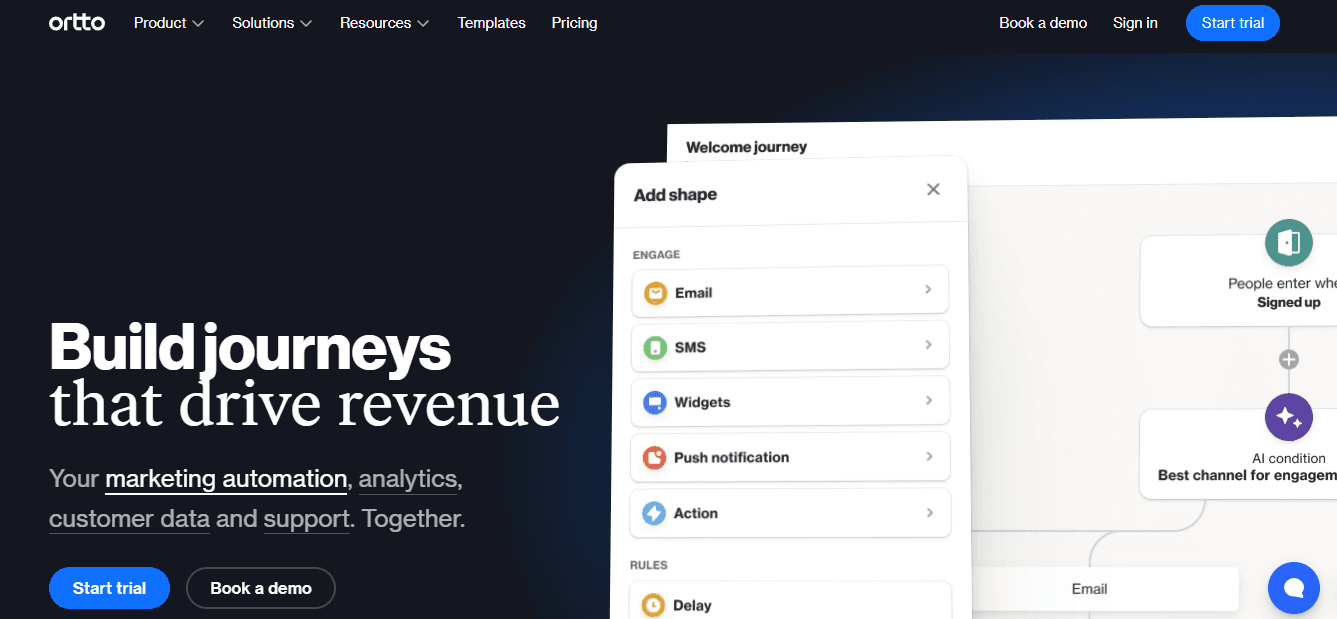
30. Ortto
Key Features
Unified customer journeys
Predictive segmentation
Conversion insights
Lead scoring
Strengths
Ties behavioral data to messaging so teams can automate tests with clearer ROI.
Pricing
Tiered by contacts and features
Ideal for: Startups that want to use behavioral signals to prioritize outreach and product experiments.
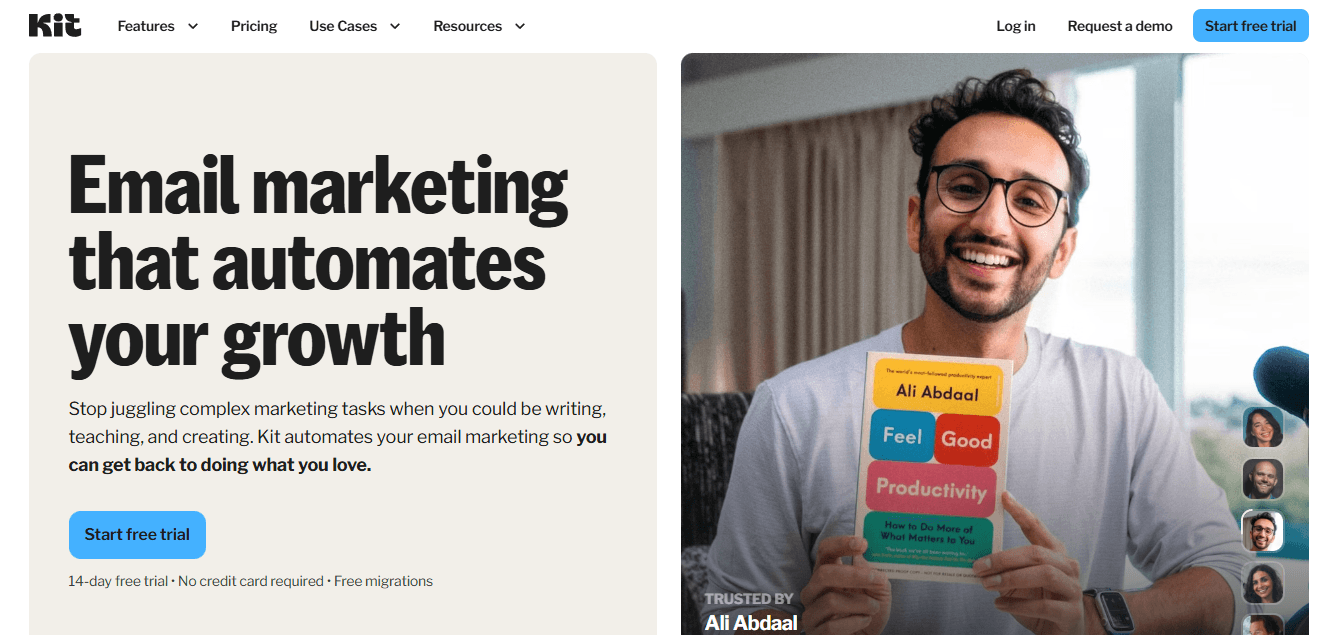
31. Kit (Formerly ConvertKit)
Key Features
Creator-focused automations
Tagging
Visual email flow builder
Simple personalization
Strengths
Extremely approachable for creators who value simplicity over feature overload.
Pricing
Free tier for basics
Paid plans for advanced automation and commerce features
Ideal for: Bloggers, podcasters, and creators delivering newsletters and paid subscriptions.
The Tool Selection Hierarchy
Practical note on tool choice: treat tools like kitchen knives, not silverware; you pick the right blade for the task, then practice with it. Match tools to the job, limit integrations to the 3 systems that hold your truth data, and schedule a one-day sprint to test hypotheses so you avoid slow diffusion of responsibility. That solution sounds tidy until you realize the one step most teams skip that turns experiments into habit.
Related Reading
AI Sales Prospecting Tools
AI Tools For B2B Marketing
AI For Sales Calls
Lead Qualification Strategies
Turn AI Marketing Automation Into Results, Instantly
When your best people are tied up fixing spreadsheets and chasing lukewarm leads, strategy and momentum suffer. You’ve seen how complex marketing tasks can overwhelm your team, and why traditional tools aren’t enough. Now imagine AI agents working 24/7 to handle lead generation, nurture campaigns, and optimize your workflows, while you focus on strategy and growth. AI Acquisition’s AI growth consultant agent does exactly that:
Automates lead generation and sales outreach.
Books meetings and nurtures prospects with human-quality precision.
Operates continuously, so your marketing never sleeps.
Provides insights and recommendations to optimize campaigns in real time.
The Lean Scaling Framework
Join 1,200+ entrepreneurs who’ve scaled smarter, generating over $30 million collectively this year while averaging $18k+ in monthly revenue per client. Get free access to your AI growth consultant today and see how a digital workforce of AI agents can transform your marketing, sales, and operations—without building a massive team.