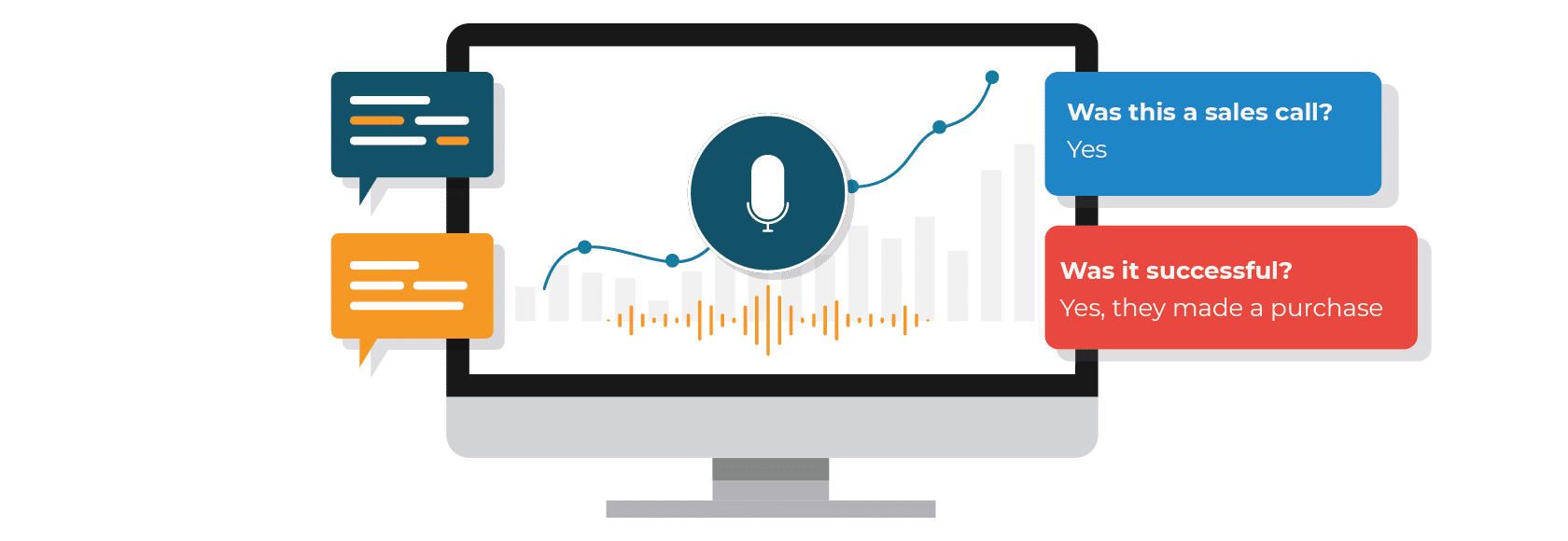
Your sales team spends hours chasing contacts that go nowhere. Lead qualification AI changes that by using predictive analytics, lead scoring, buyer intent, intent signals, and data enrichment to rank prospects and lift conversion rates inside your CRM. Want fewer dead ends and a faster pipeline? This article shows how to identify and prioritize high-quality leads using AI, enabling their sales team to close more deals faster and with less wasted effort.
AI Acquisition's AI automation software makes this practical by automating prospect prioritization, predictive scoring, segmentation, and workflow routing, so reps can focus on the opportunities that matter.
Summary
Automated lead qualification can reduce manual scoring from about 2 hours to 2 minutes per prospect, enabling reps to follow up the same day and materially increase pipeline velocity.
Signal fusion uncovers more opportunities by combining intent, conversational nuance, and firmographics, with AI lead qualification identifying about 40% more qualified opportunities than traditional methods.
AI-driven outreach and personalization can deliver significant improvements in conversion rates, with some analyses reporting up to a 50% lift when messaging and timing are optimized using machine learning.
Reducing qualification overhead is a scalability lever: AI tools can cut lead qualification time by roughly 50%, enabling small teams to maintain conversion quality at higher inquiry volumes without proportional headcount increases.
Governance matters because automation can accelerate both wins and mistakes, yet 75% of marketers report improved lead quality from AI tools, and teams should enforce data rules, such as pausing retraining if more than 2% of records fail enrichment.
Measured rollout and clear SLAs pay off, with companies seeing about a 30% reduction in acquisition costs or a similar uplift in sales opportunities when intake is centralized, scores are explainable, and routing SLAs are enforced.
AI Acquisition's AI automation software addresses this by automating prospect prioritization, predictive scoring, segmentation, and workflow routing, helping teams focus outreach on the prospects most likely to convert.
Table of Contents
Why Use AI for Lead Qualification?

AI qualification lifts the burden of guesswork and paperwork from your reps, so they spend time selling instead of sorting. It does that by scoring and prioritizing leads in real time, surfacing the best opportunities from noisy, multi-channel data so your team follows up faster and with more confidence.
What is AI Lead Generation?
This is not a checkbox automation; it is signal fusion at scale. Instead of relying on a single form field or a salesperson’s gut, modern lead qualification AI ingests behavior from web sessions, email opens, conversation transcripts, firmographics, and third-party intent feeds, then weighs those signals against your ideal buyer profile. The outcome is a continuously updated lead score and a short, actionable summary for the rep, not a raw spreadsheet row. In practice, that means fewer manual handoffs, more precise next steps, and consistent rules for routing and outreach that sustain momentum.
Benefits of AI in Lead Generation
Efficiency, Plain and Simple
When qualification shifts from manual triage to automated scoring, hours of repetitive work are eliminated, and follow-up occurs while buyer interest is still high. Research from 2025 shows that AI-driven lead qualification can reduce manual scoring from roughly two hours to just two minutes per prospect. This time compression directly increases pipeline velocity, enabling sales reps to engage sales-ready prospects the same day rather than days later.
Better Signals, Fewer Misses
AI captures subtle cues that human teams routinely miss, combining intent patterns with conversational nuance and firmographic context to identify better prospects. That ability to surface non-obvious buying signals explains why 2025 research shows AI-driven lead qualification can identify about 40% more qualified opportunities through advanced signal analysis. In practical terms, teams gain a larger pool of genuinely convertible leads without increasing marketing spend.
Scalability and Consistency
Manual qualification works well in pilots but breaks at scale. When inquiries grow past a daily handful, teams hit a triage ceiling: inconsistent scoring, delayed outreach, and lost momentum. AI applies the same rubric to every interaction, preserving conversion quality as volume rises and enabling small teams to operate at a larger scale without additional hires.
Personalization Without the Grind
AI does more than sort; it enables personalization at scale: dynamic messaging that references a prospect’s company size, technology stack, and expressed pain points, then routes them to the rep most likely to close. That keeps conversations human, while removing hours of manual research.
Traditional vs. Automated Lead Qualification
Most teams handle qualification the familiar way, with reps making discovery calls and updating CRM fields by hand. That approach works when volume is low and accounts are few because it keeps the relationship personal and decisions simple.
What Happens as Volume and Complexity Increase
The failure point shows up quickly: data fragments across tools, scoring criteria drift between reps, and follow-up timing slips from hours to days. The cost is not just admin time; it is momentum and credibility with prospects who expect immediate, relevant replies.
How Automation Changes the Tradeoffs
Solutions that use voice bots, chatbots, and CRM-integrated scoring remove the manual bottleneck while preserving context. These systems ask targeted qualifying questions, append behavioral signals to the lead record, and can automatically convert qualified prospects into meetings. The technical shift is less about replacing humans and more about reallocating human effort to high-value selling.
Status Quo Disruption, in Practical Terms
Most teams route leads manually because it feels controllable and cheap at first. As leads multiply, human routing fragments and response times lengthen, reducing conversion rates and wasting ad spend. Platforms like AI Acquisition provide no-code, agentic AI workflows that collect qualification data, score and route leads automatically, and convert intent into calendar bookings, compressing the hidden costs of manual routing while keeping control in the hands of small teams. Teams find that this approach scales decision quality without hiring engineers or ballooning headcount.
A Pattern We See Repeatedly
When you constrain yourself to manual scoring, a predictable backlog forms: leads pile up during busy hours, reps prioritize by familiarity instead of fit, and the best opportunities cool off. When qualification is automated, follow-up becomes systematic and measurable, and you regain control of pipeline timing and predictability. It feels decisive now, but the next part raises the stakes in a way few expect.
Related Reading
How AI Transforms Lead Generation

AI changes lead generation by turning messy signals into predictable actions: it scores who to call, reads intent across channels, automates research, writes tailored outreach, and runs virtual assistants that keep prospects moving through the funnel. Together, these capabilities enable small teams to operate like well-resourced sales engines without hiring a large staff.
Predictive Lead Scoring: How Does AI Decide Who’s Worth Chasing?
Machine learning builds a model of your highest-value customers and compares new prospects against it. The engine analyzes firmographics, role, past buying patterns, and behavioral signals to generate a probability score and a brief rationale you can act on. Think of it like a metal detector tuned to your best buyer profile, not every piece of metal on the beach. The model trains on outcomes, so the scoring improves as you close or lose deals, and you get not just a number but actionable reasons for why a lead moved up or down.
Behavioral Analysis and Intent Signals: What Behaviors Matter?
AI identifies repeated, high-intent actions, such as returning to pricing, downloading comparison guides, spending an unusually long time on product pages, and searching for solution terms. Natural language processing turns conversation text and page content into intent categories, so "which integrates with Salesforce" maps to a technical-integration need. At the same time, repeated visits to case studies signal readiness for proof. This signal fusion reduces guesswork by highlighting behavior patterns that correlate with buying stages, so follow-ups are timed and framed around what the prospect is actually looking for.
Automated Prospect Research: How Does AI Replace Hours of Manual Digging?
AI crawls public profiles, news, job postings, and tech stacks, then enriches CRM records with relevant context, risk flags, and conversation hooks. Instead of a rep spending 30 to 60 minutes per lead, the system delivers a compact brief with topical talking points and suggested personas to target. This is not just faster research; it changes outreach quality: you reach out with timely relevance, not generic speculation.
How AI Qualifies Leads, Step by Step
Data collection: the system captures web sessions, email actions, social touches, form responses, and CRM history.
ICP analysis: where the model extracts patterns from your closed-won accounts and defines what “good” looks like.
Lead scoring: where each lead gets a probability based on both fit and behavior.
iv) Segmentation, where the platform groups leads into treatment lanes for pricing-sensitive, enterprise, or SMB flows.Real-time analysis: where signals such as a pricing-page visit increase the score and trigger rapid actions.
Continuous learning: where the model updates with outcome feedback so its following predictions improve.
This flow is a method you can instrument and measure, not a black box. The key is to keep outcome labels clean, so the AI learns the right lesson.
Personalized Outreach at Scale: How Does AI Write Messages That Convert?
AI uses prospect context to generate subject lines, body copy, and dynamic snippets that reflect company size, tech stack, and the specific pain reflected in recent behavior. It tests variations automatically and pushes the winning versions into sequences. Because the system also suggests optimal send times and channels based on engagement history, you no longer have to guess when to call or email. That practical targeting explains why one analysis found that AI-driven lead generation tools can increase conversion rates by up to 50%, a meaningful lift when volume scales and small gains compound across the funnel.
AI Agents and Virtual Assistants: Where Do Agents Fit Into the Day-to-Day?
Agents act like junior reps that never sleep: they greet site visitors, answer routine questions, and run qualification scripts that update lead records in real time. When an agent detects high intent, it can either book a calendar slot automatically or hand the lead to a human with a one-line brief. This preserves human selling for high-value work while automating repetitive touchpoints. The practical result is better lead coverage and fewer dropped conversations, especially outside business hours.
Status Quo Disruption: Why the Usual Approach Breaks as You Grow, and What Bridges It
Most teams rely on manual research, spreadsheets, and ad-hoc outreach because it is familiar and feels controllable. That works early on, but as inquiries increase, context fragments, timing slips, and follow-up consistency collapse into noise.
Predictable Pipeline Growth
Teams find that platforms like AI Acquisition centralize signal collection, automate enrichment and scoring, and convert intent into booked time, which shortens response cycles and lowers missed-opportunity risk while keeping control in non-technical hands; teams shift from firefighting to predictable pipeline management, and some users see measurable reductions in acquisition cost, including a reported 30% reduction in customer acquisition costs.
Real Human Friction and a Practical Warning
This technology excites people because it removes tedious work. Still, it also creates new failure modes: models trained on noisy or biased outcome labels will favor the wrong leads, and over-personalization without guardrails can sound creepy. The consistent pattern I see is simple and painful: automation accelerates both winners and mistakes. So instrument outcomes from day one, test small, and put human review gates on the highest-impact decisions.
A Quick Analogy to Keep This Grounded
Treat AI like a seasoned assistant who summarizes prospects and suggests moves, but keep the final call in human hands until the system proves its accuracy on your books. The assistant is fast, not infallible. That next section will make you rethink which tools actually move the needle for teams that need results, not demos.
Top 13 Lead Qualification AI Tools That Can Help You Get Started
1. AI Acquisition
Main features: Multi-agent, no-code workflows that automate lead capture, qualification, outreach, and calendar conversion.
Strengths: Designed for lean teams that need full-stack automation without engineers, with agent orchestration across email, chat, and CRM.
Ideal use cases: Solo founders, small agencies, and micro-ops that want continuous pipeline coverage and turnkey playbooks.
Pricing/integration: Tiered plans for agency scale, native CRM connectors, and calendar sync; consult vendor for setup and growth-consultant credits.
2. Jason AI SDR (Reply.io)

Main features: AI-driven SDR that runs personalized, multi-channel sequences using a 1+ billion contact database and intent signal analysis.
Strengths: Strong at sustained outreach volume, multilingual messaging, and automated reply management to book meetings.
Ideal use cases: Teams that need to scale outbound cadence, re-engage stale lists, or combine intent data with large contact libraries.
Pricing/integration: Available as an add-on to Reply.io subscriptions, integrates with major CRMs and calendar tools.
3. HubSpot (Sales Hub / Marketing Hub)
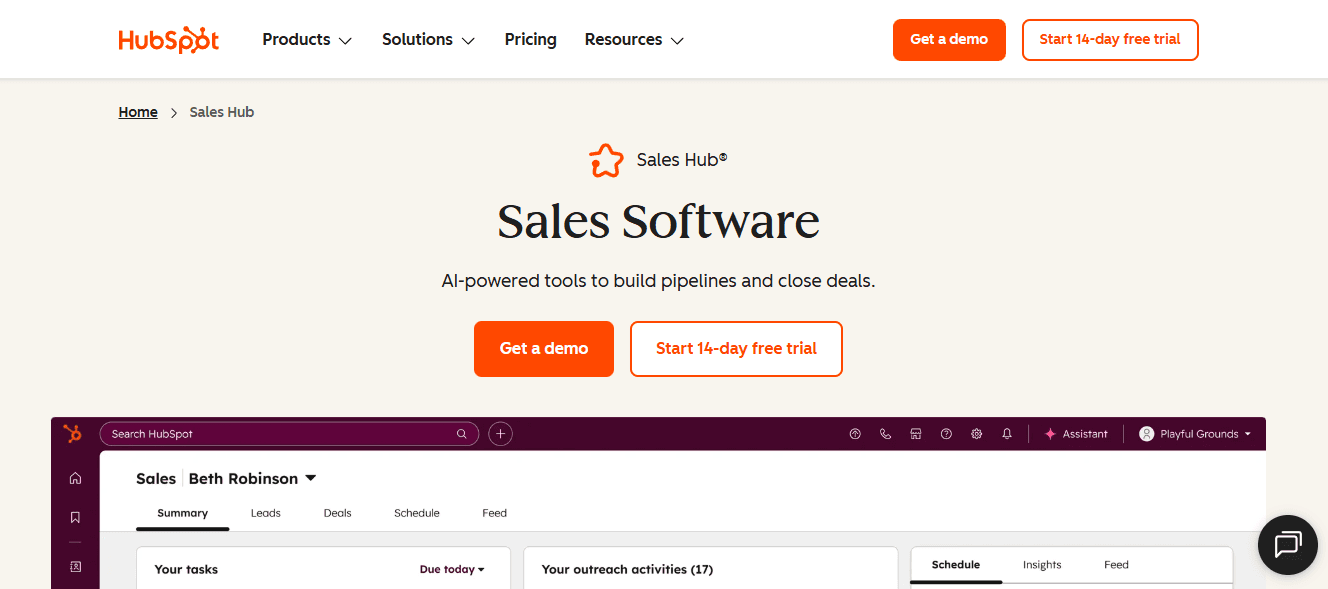
Main features: CRM-integrated lead scoring, behavior tracking, email sequencing, and reporting dashboards.
Strengths: User-friendly, easy to adopt, tight inbound-to-sales handoff, and widely known for predictable workflows.
Ideal use cases: Small to mid-market firms wanting an all-in-one stack with native marketing and service tools.
Pricing/integration: Free CRM tier, paid hubs by feature set; deep integrations with common martech and sales tools.
4. RB2B
Main features: Identifies anonymous website visitors and enriches them with LinkedIn and contact details, plus firmographic filtering.
Strengths: Converts passive traffic into actionable B2B leads with high-resolution profiles and Slack alerts.
Ideal use cases: B2B sellers that rely on website discovery and want immediate notifications for high-intent visits.
Pricing/integration: Subscription model, integrates with Salesforce, HubSpot, and Slack.
5. Klue
Main features: Competitive intelligence with automated scraping, AI summarization, and dynamic battlecards.
Strengths: Helps sales teams position offers by surfacing competitor moves, wins, and product updates.
Ideal use cases: Sales organizations competing in crowded categories that need quick objection handling and competitive talking points.
Pricing/integration: Enterprise pricing, connectors for Salesforce and Slack.
6. Leadfeeder
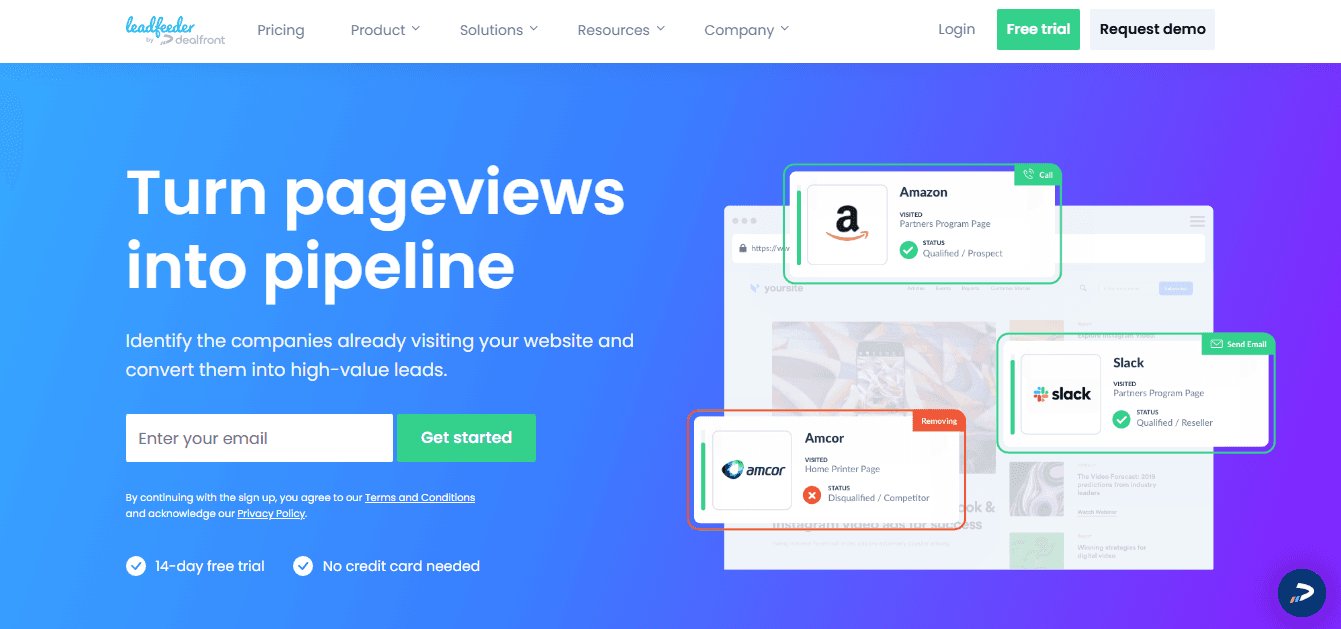
Main features: Company-level visitor identification using IP and behavior analytics, with lead scoring based on page interactions.
Strengths: Excels at turning anonymous visits into prioritized account lists and surfacing high-intent repeat visitors.
Ideal use cases: Businesses whose site drives most pipeline and that want behavior-driven prioritization.
Pricing/integration: Freemium tier, paid plans with CRM sync and Google Analytics integration.
7. Bardeen
Main features: No-code browser automation and workflow builder that scrapes data, enriches leads, and triggers outreach.
Strengths: Fast setup for repetitive tasks, flexible templates, and a natural language "magic box" to build automations without code.
Ideal use cases: Small teams wanting to automate ad-hoc prospect enrichment, LinkedIn scraping, and follow-up workflows.
Pricing/integration: Free and paid plans, Chrome extension-based, integrates with many apps through API or webhook.
8. Drift (Conversational Marketing)
Main features: AI chatbots, live chat, automated routing, meeting scheduling, and web-conversation playbooks.
Strengths: Converts real-time intent into booked meetings with personalized chat flows and routing rules.
Ideal use cases: Mid-market to enterprise websites that need real-time qualification and reduced time-to-meeting.
Pricing/integration: Subscription tiers, native CRM integrations, and calendar sync.
9. n8n
Main features: Open-source, node-based automation that connects apps, databases, and APIs with a self-hosting option.
Strengths: Unmatched flexibility for custom workflows and strong privacy controls, useful for teams with technical resources.
Ideal use cases: Companies that require bespoke automation logic, on-premise control, or advanced data transformation.
Pricing/integration: Free self-hosting, paid cloud plans, 350+ integrations.
10. Exceed.ai

Main features: Conversational AI across email, chat, and SMS that asks qualifying questions and schedules meetings.
Strengths: Human-like dialogue at scale, strong for nurturing and automatic calendar conversion.
Ideal use cases: Organizations with large inbound volumes that need 24/7 qualification and routing to human reps.
Pricing/integration: Enterprise-focused pricing, integrates with CRMs and calendars.
11. Salesforce Einstein
Main features: Embedded predictive analytics, automated lead scoring, and opportunity insights inside Salesforce CRM.
Strengths: Deep CRM context, model retraining on your data, and enterprise-grade governance.
Ideal use cases: Large Salesforce customers that want AI tightly coupled with their existing sales processes.
Pricing/integration: Add-on to Salesforce, requires admin setup and data hygiene work.
12. 6sense
Main features: Account-based predictive analytics with intent signals and orchestration across channels.
Strengths: Strong ABM play, prioritizes accounts with buying intent, and maps buying journeys.
Ideal use cases: Enterprise sellers running account-based programs and coordinated marketing-sales plays.
Pricing/integration: Enterprise contracts, integrates with major CRMs and advertising platforms.
13. Conversica
Main features: Conversational AI assistants that run two-way email and chat conversations to qualify and nurture leads.
Strengths: Excels at persistent follow-up, freeing reps from repetitive email threads while keeping conversations natural.
Ideal use cases: Teams with high lead volume needing automated outreach and qualification before human handoff.
Pricing/integration: Subscription model, CRM, and marketing automation integrations.
Utility Over Complexity
When we ran a focused six-week pilot with lean agency clients, the pattern became clear: they did not need another multi-feature Swiss Army knife; they needed fast filters that protected bandwidth and prioritized follow-up. Too many tools create decision fatigue, and when teams chase features, response time slips and momentum vanishes. Platforms like AI Acquisition step in here, offering agentic, no-code workflows that centralize capture, apply focused filtering, and convert intent to booked time, so teams scale response speed without hiring engineers. According to Autobound Blog, companies using AI for lead qualification see a 30% increase in conversion rates. AI tools can reduce lead qualification time by 50%.
Tooling for Bottlenecks
A quick rule of thumb to choose: if your bottleneck is speed-to-contact, favor conversational AI and lightweight automations like Drift, Exceed.ai, or Jason; if your problem is noisy inbound with poor enrichment, pick enrichment-first tools like RB2B, Leadfeeder, or Bardeen; if you need enterprise-grade prediction tied to CRM outcomes, use Salesforce Einstein or 6sense. Think of these tools as sieves, not nets; select the mesh that matches your ICP so volume becomes quality. Which one you should test first depends on capacity constraints, not feature lists: if your team cannot respond to leads within an hour, start with conversational agents or an SDR; if your reps spend time researching, start with enrichment and automation tools. The fastest wins come from removing the single most excellent daily friction point, not from installing every shiny feature.
Related Reading
Best Practices for AI-Powered Lead Generation

How Should Teams Integrate AI With Existing Sales Workflows?
This pattern appears across small agencies and local brokerages, where leads from web forms, marketplaces, and text messages are captured but end up as mismatched records in the CRM. Map every inbound source to a canonical lead ID first, then wire a single intake layer that:
Normalizes fields
Timestamps events
Emits webhooks into your CRM and enrichment layer
Risk-Managed Deployment
Run the AI in shadow mode for 2 to 4 weeks while the system scores leads but does not change routing, then compare the top-decile picks to rep judgments before you flip any automation to live. Include rollback playbooks so a human can pause routing rules instantly if conversion drops.
How Do You Maintain Data Quality So the Models Learn the Right Signals?
Start with data contracts: define required fields, accepted formats, and an enrichment TTL, then enforce them at capture time. Automate dedupe daily using the canonical ID and a conservative matching threshold, and standardize job titles and company names with a taxonomy to avoid feature fragmentation. Institute a weekly audit that samples 100 randomized records to verify contact deliverability, correct outcome labels, and consistent won/lost reasons, because label drift is the single most significant silent cause of model failure. Use lightweight error budgets: if more than 2% of records fail enrichment or have contradictory outcomes, pause retraining and investigate.
What Should Clear Lead-Scoring Criteria Look Like?
Begin by tying scores to a business outcome you can measure, for example, conversion to a qualified meeting within 14 days.
Define a small set of score components, such as profile fit, recent intent actions, and engagement recency, then require explainability for each element, so every score shows the top three reasons it moved.
Set explicit routing SLAs by score band, for example, immediate call for >85, same-day outreach for 60–84, and nurture for <60, and publish those SLAs to your reps so the system’s behavior is predictable.
According to a 2025 analysis, 75% of marketers say AI tools have improved lead quality, underscoring that prioritizing quality over raw volume strengthens rep confidence and overall pipeline health.
How Do You Continuously Monitor AI Performance and Detect Drift?
Track operational metrics weekly and business metrics monthly: precision or yield among the top decile, conversion rate by score band, speed-to-contact, and revenue per routed lead. Add model health signals, such as:
Feature distribution comparisons
Prediction confidence histograms
Calibration plots
Performance-Driven Guardrails
Automate alerts for specific triggers, for example, when precision in the top 10% drops by more than 7% points or when model confidence contracts sharply for a core feature. Run controlled A/B experiments where half of a segment follows the AI route and half follows the manual approach, and measure lift in sales opportunities and deal velocity before increasing automation scope. When properly instrumented, these checks produce measurable gains, which helps explain why companies using AI for lead generation report a 30% increase in sales opportunities.
The Cost of Complexity
Most teams handle intake and routing by email and simple CRM rules because it is familiar and low-friction. That works early, but as channels multiply, handoffs fragment, reps chase the loudest leads, and follow-up timing slips from hours to days, costing momentum and deals. Teams find that solutions like AI Acquisition centralize intake, normalize data, provide no-code routing rules, and automatically enforce SLAs, compressing follow-up cycles and preserving human focus for high-value conversations.
What Failure Modes Should You Watch for, and How Do You Guard Against Them?
Automation accelerates both good and bad habits, so start small and increase trust progressively. Use human-in-the-loop on the top 5% of scored leads for the first month, then expand if human audits confirm quality. Watch for bias by reviewing feature importances and segment-level outcomes, and create an appeals process so reps can quickly correct mislabeled cases.
Safe and Compliant Outreach
Avoid over-personalization that references stale or sensitive signals; limit dynamic fields to safe, verifiable facts, and keep templates plain and helpful. Finally, enforce privacy by design: log consent flags, honor do-not-contact directives, and maintain data retention in accordance with applicable regulations.
Practical Rollout Checklist You Can Use This Week
Map sources to a canonical ID and deploy the intake layer.
Run the AI in shadow for 2 to 4 weeks and measure top-decile precision vs. human triage.
Publish SLA routing rules by score band and instrument alerts for model drift.
Start with a progressive trust model: suggest-only, then auto-route low-risk leads, then expand.
Maintain a weekly 100-record audit and an automated alert for a >7 point precision drop. These small, discipline-driven steps let you scale without handing the keys to automation too early.
From Pilot to Scale
It’s exhausting when good leads cool off because process friction wins; the only difference between pilots that stall and programs that scale is how deliberately teams govern the AI and keep humans in control. That next move looks simple, but it reveals who actually turns automation into repeatable growth.
Related Reading
AI Sales Prospecting Tools
AI Tools For B2B Marketing
AI For Sales Calls
Lead Qualification Strategies
Get Access to our AI Growth Consultant Agent for Free Today
If you're ready to scale without adding headcount, consider lead-qualification AI from AI Acquisition's all-in-one agentic platform. Join 1,200+ entrepreneurs using it to automate lead generation, sales, and operations, with clients averaging $18,105 in monthly revenue and collectively generating over $30 million this year. Get access to a free AI Growth Consultant today to see how a digital workforce of AI agents can work 24/7 to fill your pipeline, book meetings, and deliver human-quality results so you can focus on growth, not guesswork.