Leads slip through the cracks when teams juggle incoming messages, manual follow-up, and scattered data. What if a system could handle first contact, qualify prospects, and keep them warm while your sales reps focus on closing? In AI-assisted sales, conversational AI and chatbot automation drive a steady pipeline through lead capture and lead scoring. This article shows how to capture, qualify, and nurture leads automatically, boosting conversions and growing your business without adding more manual work.
AI Acquisition's AI automation software does exactly that, combining CRM integration, automated follow-up, segmentation, drip campaigns, and conversion optimization to move prospects through your sales funnel and increase customer engagement.
Summary
Slow or inconsistent follow-up is an active revenue leak; the average response time sits near 42 hours, while Forrester found companies that excel at lead nurturing generate 50% more sales-ready leads at 33% lower cost.
Response speed drives qualification: companies that follow up within an hour are seven times more likely to qualify a lead, so minute-level delays can turn marketing contacts into sunk costs.
Generic chatbot deployments often underperform; many implementations achieve conversion rates below 5%, while Gartner notes 12% to 15% as high-performing, and Forethought reports that 80% of customers abandon a chatbot due to a poor experience.
Well-designed conversational qualification moves the needle. eCommerce chatbots average 2%-4% conversion rates, while optimized conversational AI can exceed 10%. The right flows can reduce acquisition costs by up to 30%.
Measured automation delivers tangible ROI. ControlHippo found that companies that automate lead management see a 10% or greater increase in revenue within 6 to 9 months, and chatbots can cut response time by about 30% when routing is improved.
Operational rigor scales results: start with a 4- to 6-question qualification flow, pilot with 5% to 10% of traffic, and track five core KPIs daily during launch so copy and routing can be iterated quickly.
AI Acquisition's AI automation software addresses this by providing on-demand conversational qualification that validates contact data, writes structured CRM records atomically, and routes sales-ready prospects to human sellers.
Table of Contents
Why Poor Lead Follow-Up Is Hurting Your Revenue
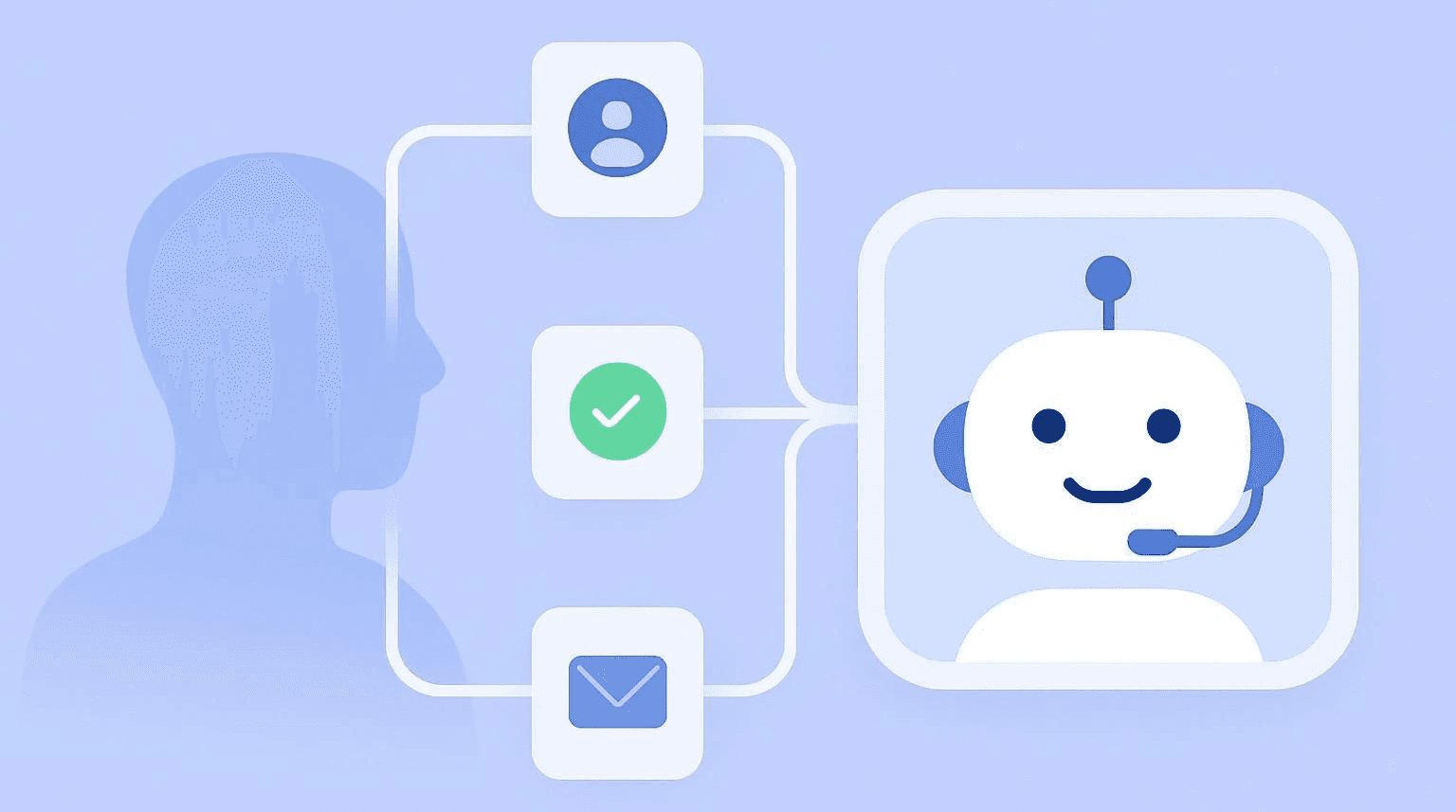
When it comes to lead follow-up, speed is everything. Research shows that responding within five minutes can boost conversion rates by up to 100x, while a delay of just ten minutes can increase the risk of losing a lead by 100x. Yet, despite this overwhelming evidence, many businesses still rely on slow, error-prone manual processes. The average response time sits at a shocking 42 hours—more than a full day for prospects waiting to hear back.
Why Manual Follow-Up is Silently Costing Your Business
Missed Opportunities: Studies show that 35–50% of sales go to the first-responder company. Manual follow-ups simply cannot keep up with this pace, resulting in valuable deals slipping through the cracks.
Inconsistent Follow-Ups: Nearly 48% of sales teams never follow up after the initial contact, even though 80% of sales require at least five follow-ups. Without automation, these repeat touches often fall through the cracks, leaving potential revenue on the table.
Scalability Issues: Manual processes break down as lead volumes grow. More leads mean more administrative overhead, slower response times, higher costs, and more errors.
Poor Customer Experience: Inconsistent messaging and delayed responses undermine trust. Today, 88% of buyers value their experience as much as the product itself, meaning poor follow-up can damage both conversion and brand reputation.
The result? Missed opportunities, wasted marketing spend, and prospects going cold before your team even has a chance to engage. From scrappy startups to enterprise teams, every business feels this pain but not everyone realizes the scale of lost revenue until it’s too late.
How Manual Follow-Up Damages Sales Performance
Lost Leads and Missed Opportunities
A staggering 85% of lost sales result from inconsistent follow-ups. Many businesses give up too soon: 44% of sales reps stop after a single attempt, even though 60% of customers say “no” four times before saying yes. Timing compounds the problem: leads contacted within the first hour are seven times more likely to be qualified, yet manual processes rarely hit this benchmark. Every lapse in follow-up increases the risk of losing a prospect entirely, directly reducing conversions and leaving the sales pipeline fragmented.
Inconsistent Messages and Poor Customer Experience
Manual follow-ups also create inconsistent communication. Multiple team members handling leads without centralised coordination often confuse prospects and weaken sales messaging. Research shows that companies maintaining consistent messaging across platforms can boost revenue by up to 23%. Customer expectations have shifted dramatically. Buyers demand personalization and consistency.
The Personalization Paradox
Twilio Segment reports that 89% of leaders believe personalization is crucial to business success. Without tools to automate and scale tailored follow-ups, teams rely on generic messages that fail to engage prospects meaningfully, eroding trust precisely when decisions are being made.
Why Manual Processes Don’t Scale
Manual follow-up might work for ten leads a week, but it quickly becomes a logistical nightmare at scale. Operational bottlenecks slow responses, create errors, and often require hiring additional staff. Frank Tilleli from ConnectPointz puts it bluntly: “Manual processes have become a hindrance, putting those who use them further behind their competitors and limiting their ability to create valuable, efficient workflows.”
Scaling manually comes with trade-offs:
Scaling Challenge | Impact on Performance |
Increased hiring costs | Cuts into profit margins as revenue grows |
Training complexity | Slows onboarding and increases error rates |
Bottleneck creation | Delays responses across all lead interactions |
Tracking difficulties | Reduces visibility into what’s working |
Luis Bocanegra Pérez of Efficientix summarises the core problem:
“Throwing more people at the problem won’t scale. Neither will buying yet another disconnected tool. You need a single source of truth—a centralized platform that grows with you and adapts to your business needs.” Manual processes not only create inefficiencies but also limit growth, leaving your business vulnerable to competitors who leverage smarter, faster systems.
The Solution: AI-Powered Lead Follow-Up Automation
AI-powered automation eliminates errors, reduces delays, and enables scalable, personalized communication. Companies using marketing automation report up to 451% more qualified leads, while AI-driven follow-up alone can boost conversions by 20%, reduce costs by 60%, and free sales teams to focus on closing deals rather than chasing leads.
Smart Lead Prioritization
AI excels at identifying leads requiring immediate attention. Machine learning analyzes behavior, demographics, and past interactions to automatically score prospects, ensuring high-potential leads receive top priority. Unlike traditional scoring that relies on surface-level metrics, AI evaluates patterns such as:
Website activity
Email opens
Response times
This improves conversion rates by 3-5% while ensuring responses occur within the crucial five-minute window.
Personalized Follow-Up Sequences
AI transforms generic, one-size-fits-all outreach into personalized sequences crafted from customer profiles and engagement history. Multi-location dental chains using Emitrr saw a 60% increase in lead conversions, while home service providers cut missed leads by 60% and improved follow-up efficiency by 45%.
Dynamic Multichannel Engagement
Automation adapts dynamically: emails can switch to SMS if engagement suggests higher efficacy, and triggers respond to actions such as:
Downloads
Webinar attendance
Abandoned quote forms
Doing this manually across hundreds of leads would be nearly impossible—AI makes it seamless.
Multi-Channel Communication Management
AI also synchronizes messaging across email, SMS, WhatsApp, phone calls, and even supports multilingual conversations. Businesses that offer omnichannel follow-up retain 89% of their customers, compared with single-channel competitors. Epson America, using Conversica's Revenue Digital Assistant, achieved a 75% increase in leads that converted to opportunities. AI keeps conversations context-aware across channels, ensuring seamless follow-up whether a lead moves from email to WhatsApp. It works 24/7, capturing leads even when competitors are offline, while reducing operational costs by 60% and increasing customer satisfaction by 27%.
The Automation Mandate
Manual follow-up is no longer just inefficient—it’s costing real revenue, eroding trust, and slowing growth. In today’s market, AI-powered automation is no longer optional—it’s the competitive advantage businesses can’t afford to ignore.
Related Reading
Why Relying on Basic Chatbots Doesn’t Work

No chatbot will, by itself, fix lead management. Generic bots that give canned answers, fail to qualify prospects, or do not push structured data into your CRM will quietly leak pipeline while your team thinks the problem is solved.
What Breaks When You Install a Generic Chatbot?
Generic reply engines create friction, not efficiency. The chatbot market may be headed toward a massive opportunity, yet conversion performance is uneven: a 2024 Gartner study found that only 12% to 15% of conversion rates qualify as high-performing, while many deployments sit below 5%, meaning most bots are not moving the needle.
The Abandonment Leak
Latency and shallow scripts exacerbate the problem, as slow, irrelevant interactions erode trust and cause users to drop off before qualification begins. Research indicates that 80% of customers abandon chatbot interactions due to a poor experience, making this abandonment a direct revenue leak rather than a minor user experience issue.
Why Do So Many Bots Annoy or Lose Leads?
This pattern is common across B2B SaaS and eCommerce: teams deploy FAQ-style agents to reduce ticket volume, only to find they cannot interpret intent, qualify budget, or route real opportunities. The result is robotic responses that frustrate buyers who expect meaningful next steps.
The Human Handoff Imperative
For complex cases, buyers still favor human support—60% of users prefer human agents to chatbots for complex queries—underscoring the critical importance of effective human handoff. Imagine a prospective buyer attempting to schedule a demo, being pushed through seven irrelevant questions, and then leaving the page; that small chain of friction is how high-potential leads quietly disappear.
What Does a Real UX Disaster Look Like?
When logic is script-first instead of qualification-first, you get the polite but useless bot: it asks the wrong questions, records dirty data, and never pushes a clean contact into the CRM. That is why many firms report underwhelming outcomes even as the market grows: eCommerce chatbots typically convert at only 2%-4%, whereas well-optimized conversational AI can drive conversion rates above 10%. In B2B, the right conversational qualification flow can reduce acquisition cost by up to 30%. These numbers show the gap between deploying a widget and running a conversion engine.
Most Teams Do This Because the Familiar Approach Looks Low Risk
Most teams roll out a simple chat widget because it seems fast and cheap. That works early, but as interactions scale, the hidden cost becomes clear: data quality collapses, handoffs fail, and sales reps chase noise. Solutions like lead-management chatbots change that by using AI-driven, on-demand conversations to qualify leads, enforce data quality at capture, and move structured prospects into CRMs or workflows with minimal setup, thereby reducing handoff time and protecting pipeline value.
How Can You Spot a Bot That is Costing You Money?
Look for these signals: conversations that end without a clear next step, user replies that repeat or diverge from intent, no automated CRM records, and an inability to escalate complex queries to a human effectively. Those failure modes correlate with low conversion benchmarks and with frustrated buyers who expect a consultative experience, not a scripted FAQ.
What to Fix First, Emotionally and Technically
Stop treating launch as completion. The emotional cost is real: teams feel demoralized when leads come in, but nothing actionable follows. Technically, prioritize qualification questions tied to BANT-style signals, immediate CRM writes with validation, and minimal latency so the conversation feels live. Think of the bot as a triage nurse, not a receptionist; when triage is done well, human specialists get only the patients worth treating.
A Short, Sharp Analogy to Keep This Practical
Deploying a generic chatbot and expecting it to manage leads is like installing a phone and expecting sales calls to close themselves. The device is fine, but the process around it must change.
Scale Without Complexity
Ready to build and scale your AI-powered business without the complexity or massive teams? Join 1,200+ entrepreneurs using AI Acquisition's all-in-one agentic platform to automate lead generation, sales, and operations. Our clients average $18,105 in monthly revenue and have collectively generated over $30 million this year with our AI automation software.
Related Reading
How to Build a Lead Management Chatbot That Actually Works
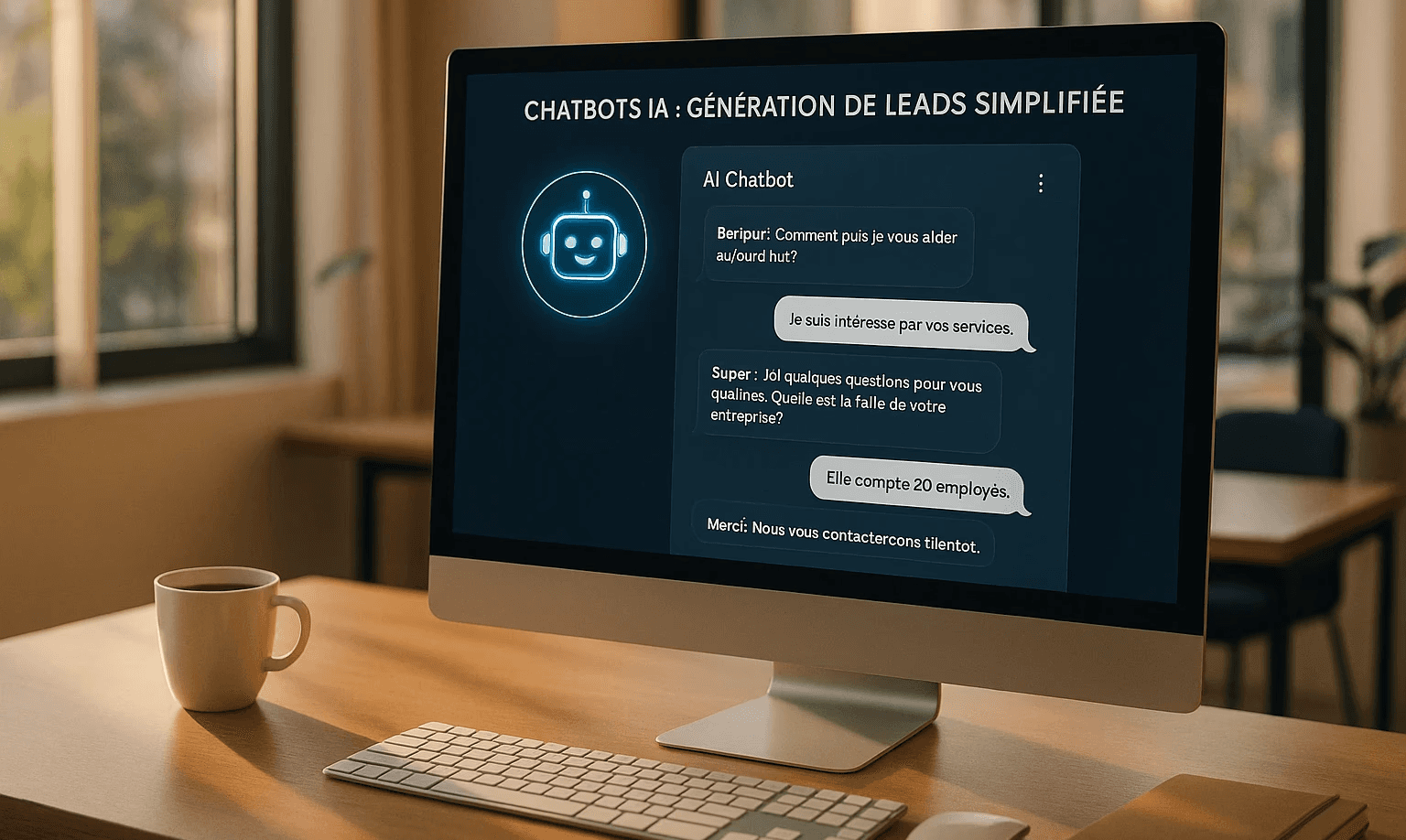
Map the qualification you need, then build a short, conditional conversation that captures those signals, validates the data, and writes a clean record into your CRM so sellers get only the leads worth chasing. Start small, measure the gates that matter, and iterate fast: question order, field validation, and routing rules are where you win or lose.
Which Platform Should You Pick?
If your team values launch speed over full customization, choose a hosted platform with prebuilt connectors and a visual flow editor. When you need deep control and custom NLP models, choose a platform that exposes APIs and supports webhook logic. Evaluate each option against five criteria:
Connector library
Message scripting flexibility
Data validation rules
Security/compliance
Pricing that scales with conversations rather than per-seat
Prioritize platforms that allow nontechnical users to edit copy and branching, as copy changes are the most frequent post-launch tweak.
How Do You Script an Intelligent Interaction?
Start with a one-line promise, then ask permission to ask a few questions. Keep the active qualification path to four to six decisive questions, with optional micro-paths for complex answers. Use these building blocks in order: quick context, role check, problem, timing, and the suggested next step.
Sample microcopy: "Hi, thanks for stopping by. Can I ask three quick questions to see if we can help?" Follow with conditional follow-ups: if they say "enterprise," ask about company size; if they say "pilot," ask about the timeline. Validate email and phone formats before writing to CRM, and use inline confirmations for ambiguous answers, for example, repeating an odd job title back to the user to confirm intent.
How Should You Design Lead-Qualification Rules?
Define three signal groups, then assign weight to each: firmographics (company size, industry), intent (product area, project timeline), and engagement (pages viewed, CTA clicks). Turn those into a points model where higher total routes the prospect to sales, mid scores trigger nurture, and low scores receive automated content.
Precision Handoff Protocols
Set two action thresholds: immediate human handoff at a high score, and scheduled nurture at a mid score. Map each qualification field to a single CRM field so downstream automations never have to reconcile multiple values, and implement a data quality rule that blocks a write unless the email or phone passes validation. When teams keep doing things the familiar way, costs hide in messy data and slow routing.
That approach feels safe early on, but as volume grows, manual gating creates friction and lost opportunities.
Frictionless Pipeline Integration
Platforms like lead management chatbot, which provide AI-driven, on-demand conversations, enforce data quality at capture and push structured prospects into CRMs with minimal setup, reducing routing time and preserving pipeline value.
How Do You Integrate the Bot With Your Systems?
Treat integration as mapping, not wiring. Create a one-page field map that lists bot question, CRM field, validation rule, and dedupe key. Use native connectors where available for reliability, and fall back to authenticated webhooks that support retries and idempotency. Include these integrations:
CRM writes
Contact enrichment
Automated follow-up email sequences
Scheduling tools
Analytics
For scheduling, create calendar invites atomically only after the CRM write confirms a successful record ID to avoid orphaned events. Add an error queue that flags failed writes for human review and a webhook health monitor that alerts on integration failures.
How Should You Test and Deploy?
Run three staged tests: developer smoke tests, role-based QA using real conversation scripts, and a limited production pilot with 5% to 10% of traffic.
Test scenarios that break systems, not just happy paths: malformed emails, rapid-fire replies, and partial exits.
Track these KPIs daily for the first two weeks: qualified-lead rate, bot-to-CRM write success rate, lead-to-opportunity conversion, and average time-to-first-human-contact for handoffs.
Use A/B tests on question order and phrasing; small copy changes frequently move the needle more than complex logic changes.
What Do You Measure to Prove Value?
Monitor measurable outcomes tied to revenue and time saved: percentage of leads that meet your handoff threshold, average time sellers spend on screening, and uplift in pipeline conversion. According to ControlHippo, companies that automate lead management can see a 10% or greater increase in revenue within 6–9 months, highlighting how disciplined automation can quickly impact the top line.
Dual-Layer Visibility
Keep a short dashboard for executives and a more detailed one for operations so both audiences can track progress without unnecessary noise. According to Landbot, chatbots can increase conversion rates by up to 30%, underscoring the value of optimizing question order and validation.
What Do Teams Feel When They Get This Right?
This challenge appears across sales and proposal teams: manual RFP reviews and drafting steal hours and make proposals inconsistent under deadline pressure. Automating first-touch triage returns that time to sellers and makes proposals more consistent by enforcing structured answers and capturing clean context for human follow-up.
Think of the bot as a triage nurse that filters noise and hands only real patients to the specialists.
A Short Checklist to Act on Today
Define your qualified-lead signals and score weights.
Write a 4–6 question flow that validates contact info before CRM writes.
Build a one-page integration map and test idempotent writes.
Pilot with a small traffic slice, track the five KPIs above, and run a week-long A/B test on question order.
That solution works until you hit the one operational decision that quietly unravels everything.
Do’s & Don’ts of Lead Management Chatbots

Do
Personalize every path, not just the greeting.
Use dynamic tokens and one or two quick context checks so the bot feels like part of a relevant conversation, not an interrogation; this increases engagement and keeps conversion windows open.
According to LinkedIn Pulse, 70% of businesses report improved lead conversion rates after implementing AI-driven chatbots, highlighting that personalization is now a measurable driver of results, not just a nice-to-have.
Do
Integrate atomically with your CRM.
Write validated contact records only when the bot confirms required fields, so downstream automations never chase dirty data; this saves reps hours reconciling records and preserves trust in the pipeline.
Do
Track a tight set of outcome metrics.
Measure qualified-lead rate, bot-to-CRM write success, and time-to-first-human-contact daily during launch week so you can spot regressions quickly and iterate on copy or routing.
Do
Keep flows sharply focused.
Limit the core qualification path to the few signals that determine handoff, then branch only when necessary; simple flows scale better and reduce drop-offs from question fatigue.
Which Common Mistakes Actually Destroy ROI?
Don’t
Chase volume at the expense of intent.
When we ran a trial removing credit-card gating, signups rose 340%, conversions fell 60%, and support costs spiked. More leads are worthless without a gate that filters out non-serious ones.
Don’t
Let the bot be the final owner of complex handoffs.
If the conversation can trigger an opportunity, require a clear human-escalation rule so sellers receive timely, contextual handoffs rather than ambiguous notes.
Don’t
Ignore experiment structure.
Stop guessing which copy or order works; A/B test single variables with a traffic slice and measure lift before rolling changes wide.
Don’t
Over-engineer on day one.
Complex NLP rules and 20 branching paths feel clever but slow learning. Ship a minimal, measurable flow and evolve it from real interactions.
What Does the Status Quo Cost You, and What’s the Alternative?
Most teams keep lead routing in shared inboxes and spreadsheets because it is familiar and requires no new tools. That habit works during pilots, but as volume and complexity rise, threads splinter, context erodes, and response times lengthen, causing qualified prospects to cool off.
Automated Pipeline Protection
Platforms like lead management chatbot centralize qualification with validated CRM writes, conditional routing, and low-lift connectors, so teams find that conversations turn into clean, actionable records and routing delays shrink, improving speed and accuracy and delivering measurable pipeline protection.
How Should You Prioritize Fixes Tomorrow?
Start with a one-page field map linking bot questions to CRM fields and validation rules, then run a 5–10% traffic pilot.
If handoff delay is your biggest leak, focus first on routing rules and escalation thresholds; companies using chatbots for lead management see a 30% reduction in response time, which is the difference between a warm lead and a lost one.
Assign a weekly owner for copy tweaks, and treat copy updates as the fastest lever for conversion improvements.
A quick analogy to make this stick: think of your bot as a gatekeeper, not a funnel—if the gate is too wide, you drown the team in noise; too narrow and you miss good matches. That fix feels decisive, but the next step reveals a different set of tradeoffs that most teams aren’t ready for.
Automate Lead Generation and Grow Revenue Without the Guesswork. Get Access to Our AI Growth Consultant Agent for Free Today
We know teams hesitate to change lead handling because pilots feel risky and resources are tight, so run a narrow pilot you can measure in weeks. Platforms like AI Acquisition's lead management chatbot let teams deploy an agentic, 24/7 conversational lead-capture that books meetings, validates contacts, and routes sales-ready records into your CRM with minimal lift. You can also get a free AI growth consultant to map a pilot that proves the impact.
Related Reading
AI Sales Prospecting Tools
AI Tools For B2B Marketing
AI For Sales Calls
Lead Qualification Strategies