Imagine a website where interested visitors leave before a rep can reply. An AI lead-generation chatbot acts as a tireless front desk, using conversational AI and chat automation to turn casual visitors into qualified prospects. Want to capture more high-quality leads automatically, streamline follow-ups, and grow your business without adding extra sales effort? This article outlines practical steps for conversational marketing, lead capture and qualification, CRM integration, automated follow-up, lead scoring, drip messaging, and other sales automation tactics to help you set up reliable systems.
AI Acquisition's AI automation software makes that simple by running an intelligent AI Lead Generation Chatbot on your site and in your CRM that captures and qualifies prospects, scores and nurtures leads with drip messaging, and hands warm contacts to your sales team while keeping customer engagement high.
Summary
Real-time conversational capture prevents intent from cooling, with AI chatbots increasing lead generation by 67% by engaging visitors the moment they show interest.
Interactive dialogs outperform static forms, delivering up to a 30% increase in conversion rates and reducing cost per lead through scalable automation.
AI adoption is now mainstream, with over 70% of businesses using AI for lead generation and companies reporting a 50% increase in conversion rates when they apply AI-driven workflows.
Human-only outreach degrades as volume rises, with response windows slipping from minutes to 24–72 hours and pipelines shrinking as warm prospects cool.
Stage launches and measurement prevent costly rollouts: use soft launches to 5–10% of traffic, then expand to 50% while tracking capture rate, bot-to-qualified conversion, and time-to-first-human-contact.
Operational mistakes create noise, not value, yet well-designed chatbot programs can also cut support costs, with implementations reporting up to a 30% reduction in customer service expense.
AI Acquisition's AI automation software addresses this by running an intelligent AI Lead Generation Chatbot on your site and in your CRM that captures and qualifies prospects, scores and nurtures leads with drip messaging, and hands warm contacts to your sales team while preserving context and speeding handoffs.
Table of Contents
Why Use AI Chatbots for Lead Generation?
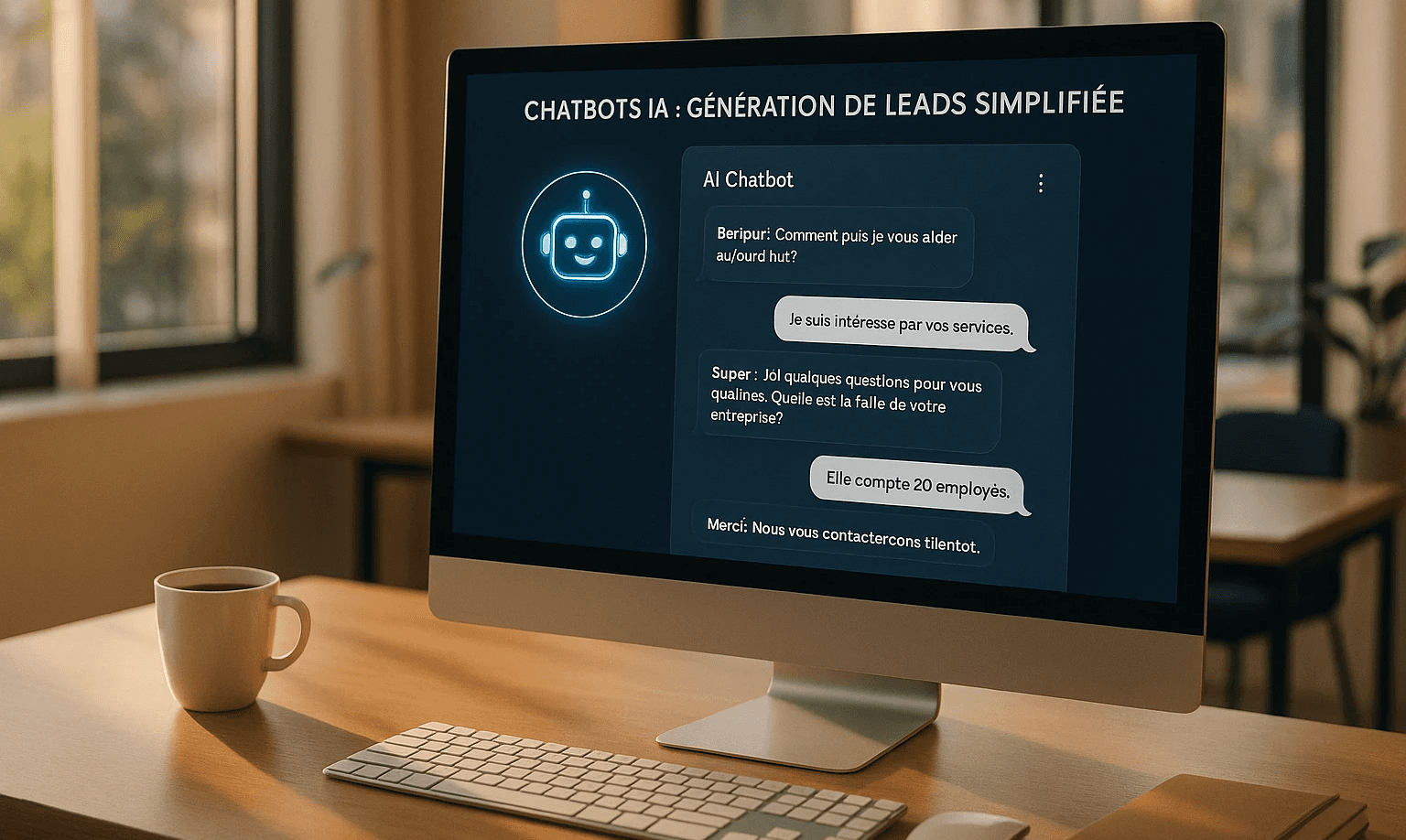
Manual, human-only outreach breaks as volume and expectation rise. AI chatbots capture interest the moment it appears, automatically qualify and segment leads, and keep personalized conversations running 24/7 so you don't lose prospects to time zones or slow follow-up.
Why Does Human-Only Outreach Fail at Scale?
Most teams handle lead capture with forms, email follow-ups, and manual triage of new contacts because it feels familiar and low-friction to start. That works for low traffic, but the pattern is predictable: when a campaign spikes visits, follow-up slips from minutes to 24–72 hours, prospects cool, and the pipeline thins. It’s exhausting for reps and demoralizing for marketers who watch warm leads evaporate simply because response windows widened.
How Do Chatbots Qualify and Engage Visitors?
A chatbot asks the right questions at the right time, captures contact details without relying on static forms, and routes leads into the correct funnel. Industry data on AI chatbot lead-generation performance shows that chatbots can increase lead volume by up to 67%. This lift comes from capturing intent while it is live, guiding uncertain visitors toward next steps, and delivering fully qualified prospects to sales rather than incomplete spreadsheets.
What Measurable Wins Should You Expect?
Chatbots optimize where your marketing dollars have the most significant impact by driving more qualified conversations, reducing acquisition friction, and accelerating time-to-contact. Businesses using chatbots for lead generation experience a 30% increase in conversion rates. In practice, this means interactive dialogues outperform static forms, and cost per lead decreases as automation scales efficiently without requiring proportional increases in headcount.
Most Teams Manage Leads One Way, Then Discover the Cost
Most teams rely on email threads and manual callbacks because that workflow requires no new systems and feels controllable. As volumes climb, threads fragment, response times lengthen, and opportunities slip away. Solutions like AI Acquisition provide a plug-and-play, no-code multi-agent automation layer that captures, qualifies, and books follow-ups 24/7, compressing answer-to-contact cycles from days to minutes while producing measurable handoffs for sales.
What breaks when a chatbot is poorly implemented?
Chatbots only help when they are configured to route, escalate, and integrate. If the bot asks irrelevant questions, pushes every lead to sales, or fails to sync with your CRM, it creates noise rather than value. This failure mode often occurs when teams treat bots as gimmicks rather than components of an operational system; fix it by mapping decision rules first, then scripting conversational paths that match real buyer behavior.
Which Signals Matter to Track First?
Track capture rate, bot-to-qualified conversion, time-to-first-human-contact, and channel attribution. Those four numbers tell you whether the bot is catching intent, whether qualification logic filters correctly, whether sales are following up fast enough, and which pages or campaigns produce the best leads.
From Patchwork to Precision
Think of the bot as a receptionist who records everything precisely and hands a neat file to the rep, rather than leaving a voicemail full of guesses. It’s tiring to keep patching manual workflows; the more brilliant move is to treat conversational AI as an operational component that delivers consistent outcomes and frees humans for higher-value work.
Related Reading
17 Best AI Lead Generation Tools That Actually Work
1. AI Acquisition
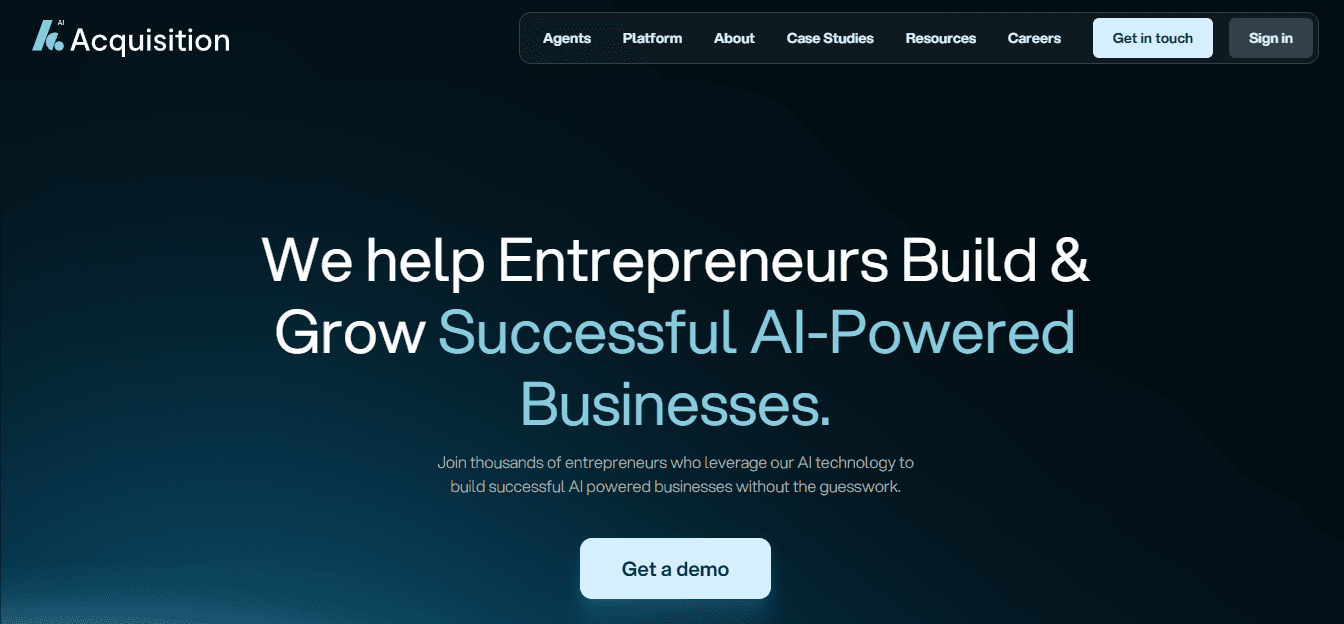
An all-in-one, no-code multi-agent AI operating system that chains specialized agents to capture, qualify, book meetings, and automate follow-up without engineering work.
Core feature for lead generation: Agentic automation that autonomously books meetings and hands off qualified prospects.
Why it’s effective: Building on the earlier section’s bottlenecks around missed timing and inconsistent handoffs, agentic automation keeps the pipeline running 24/7 and ensures the same qualification rubric is applied every time.
Unique advantage: Plug-and-play multi-agent workflows reduce coordination costs, and documented client metrics provide predictable revenue signals rather than experimental guesses.
2. Nextiva
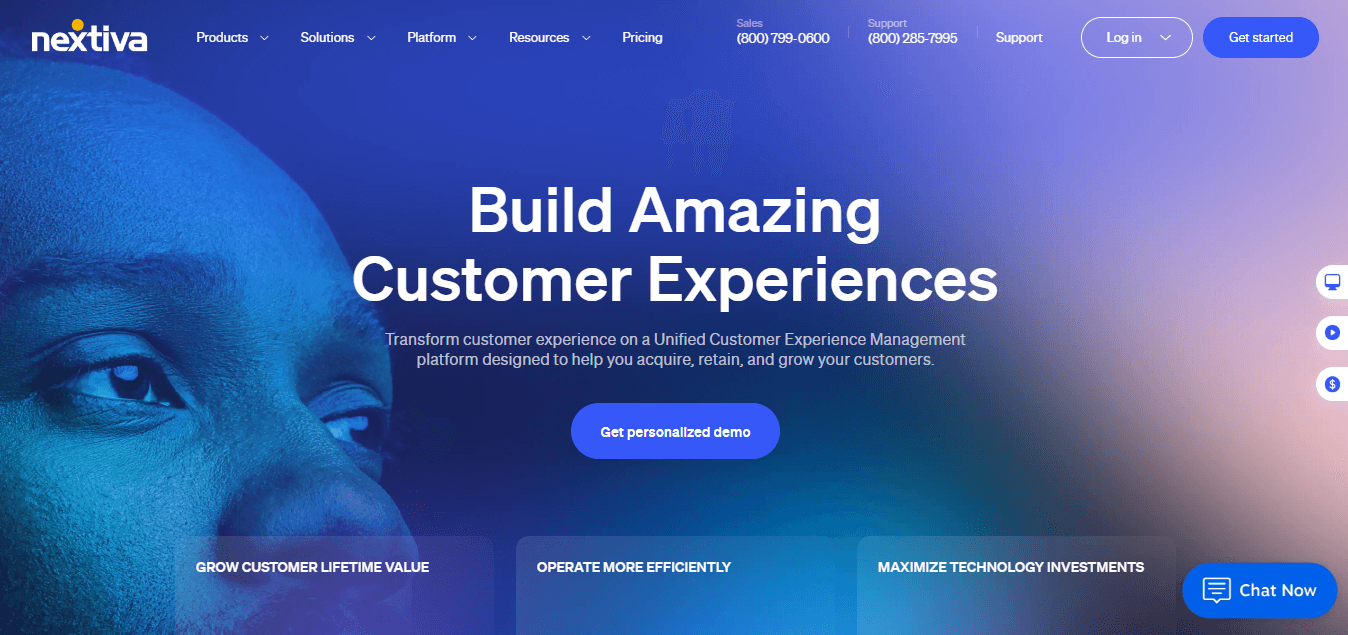
Live chat automation with omnichannel reach, routing website chat, SMS, and social DMs into unified conversations.
Core feature for lead generation: Language-aware routing plus CRM integration to keep qualified leads in one record.
Why it’s effective: It addresses the problem where conversations fragment across channels and never rejoin the CRM record.
Unique advantage: Support for over 50 languages and configurable escalation rules, which matters for global audiences and compliance-aware handoffs.
3. Drift
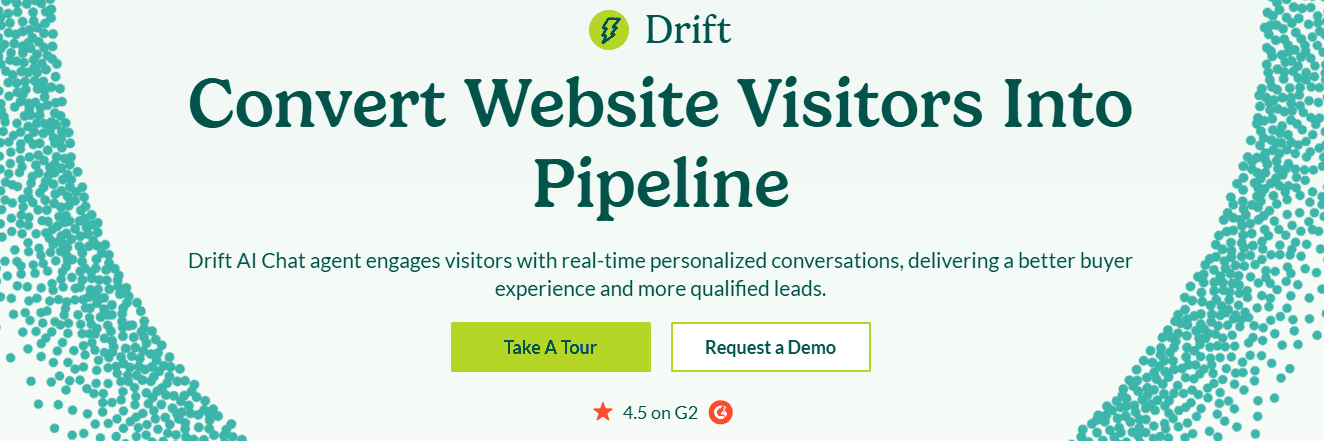
Conversational marketing and chatbot that books meetings via calendar integration and in-app prompts.
Core feature for lead generation: Real-time meeting scheduling tied to buyer intent signals inside the chat.
Why it’s effective: It shortens time-to-meeting by collapsing the scheduling negotiation into the same window you captured intent.
Unique advantage: Strong integrations with HubSpot and popular stacks, though advanced Salesforce setups can require detailed engineering and careful mapping.
4. Intercom
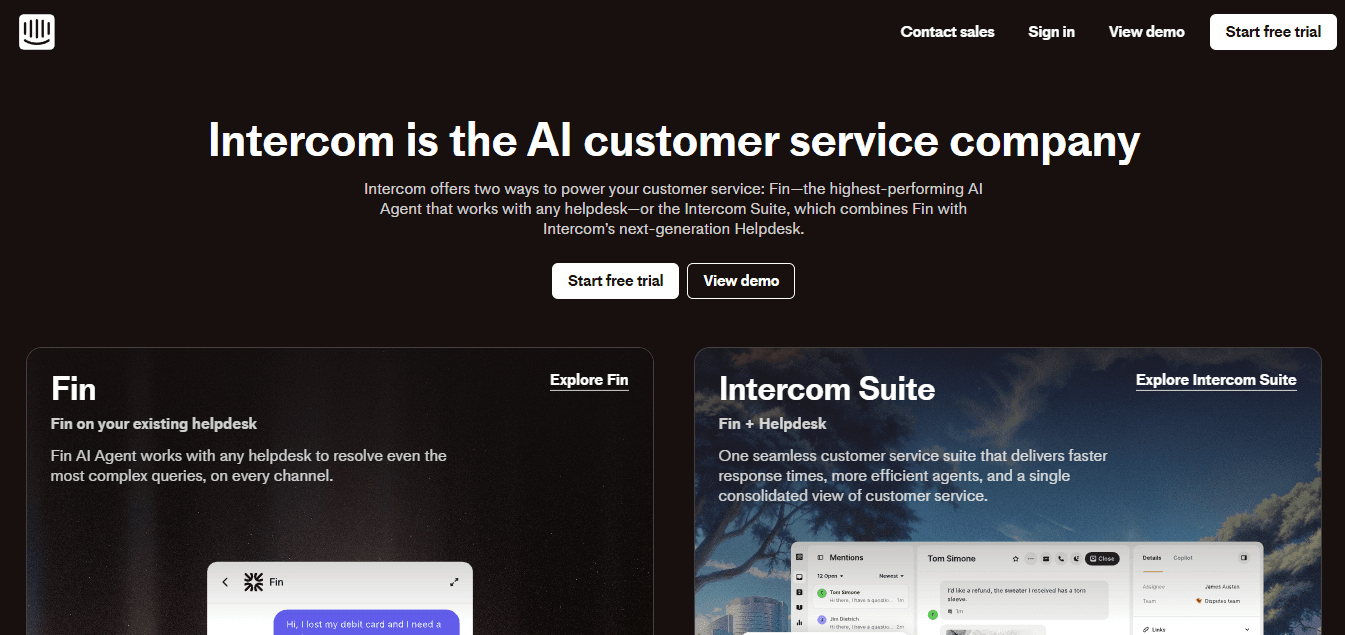
A customizable chat platform that uses templates and automation to qualify, follow up, and update lead records.
Core feature for lead generation: Pre-built playbooks that escalate hot prospects and trigger follow-up sequences.
Why it’s effective: It reduces manual triage by automating routine qualification steps and preserving context for reps.
Unique advantage: Rich message templates and multi-channel support, though UX gaps can appear if you demand deep, cross-system data pulls.
5. Zendesk
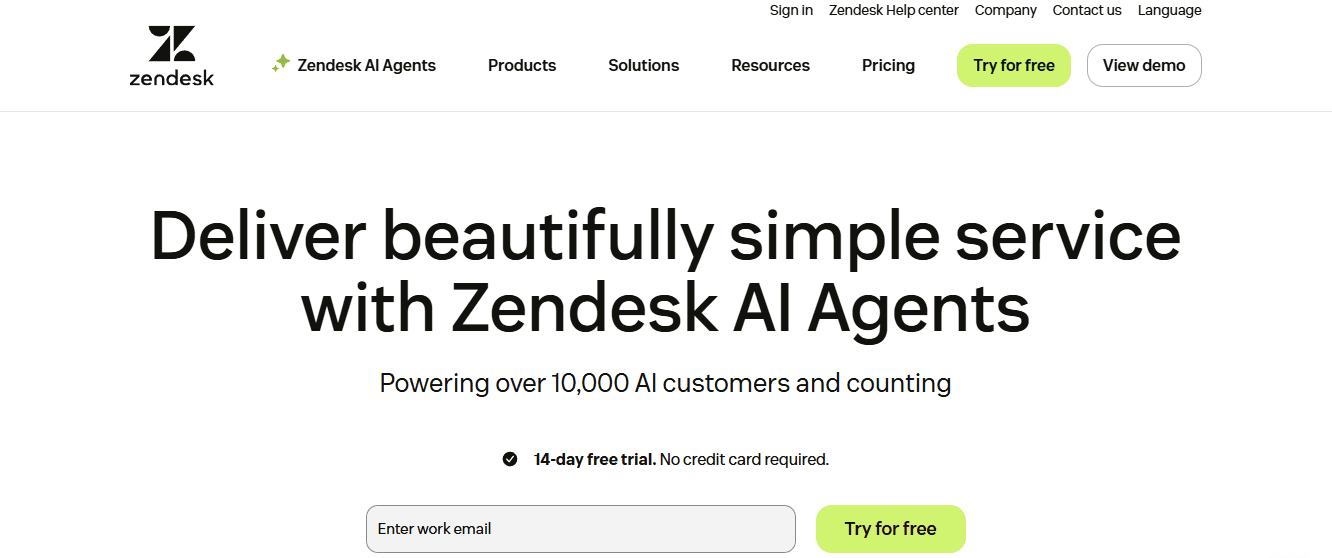
Support platform with behaviorally triggered bots that engage based on user actions.
Core feature for lead generation: Event-driven engagement, so the bot talks only when a predictive trigger indicates interest.
Why it’s effective: It turns passive browsing into conversations at the exact moment intent shows, lowering noise for reps.
Unique advantage: Built-in performance reporting for agent activity, but beware of renewal pressure and the platform’s tendency to keep knowledge siloed.
6. Tidio
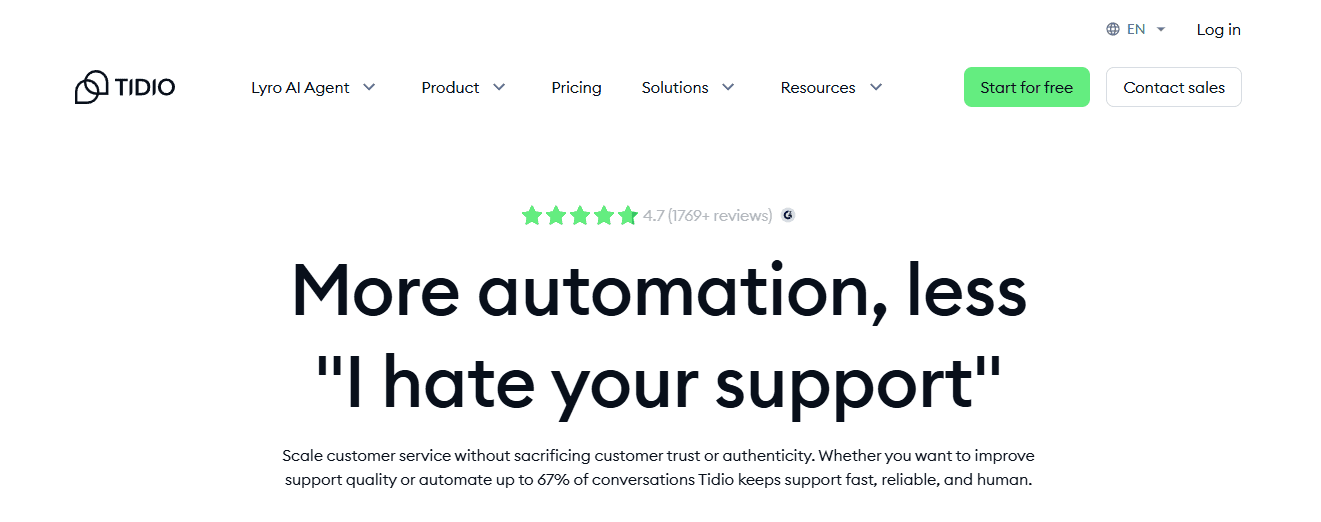
Quick-start chatbot builder with canned responses and round-the-clock live chat.
Core feature for lead generation: Ready-made templates that capture contact data and answer FAQs automatically.
Why it’s effective: It reduces friction for smaller teams that need immediate coverage without heavy customization.
Unique advantage: Fast setup and multi-channel reach; the tradeoff is limited advanced customization when you outgrow templates.
7. Saleshandy (Best for Startups and Solopreneurs)
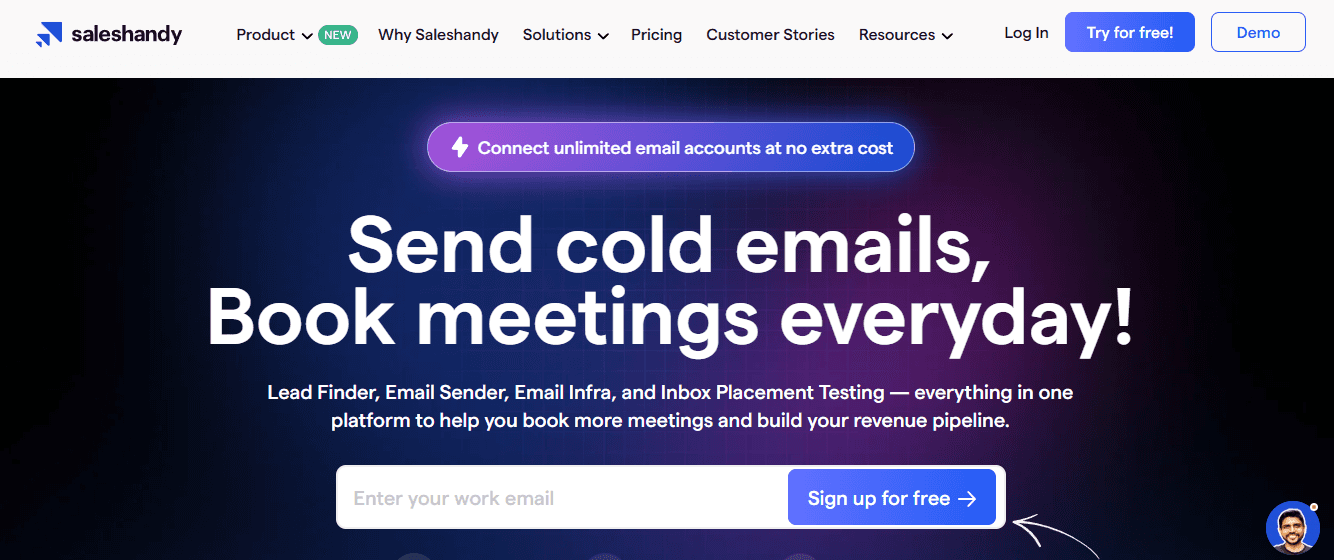
An affordable outreach and sequencing platform with AI reply sorting for cold email workflows.
Core feature for lead generation: AI reply categorization that automatically triages responses into meaningful buckets.
Why it’s effective: For resource-constrained teams, a common failure is missed replies; automated sorting ensures that high-value replies are prioritized.
Unique advantage: Low entry price and native CRM integrations that stop manual logging from becoming a time sink.
8. Persana (Best for B2B Prospecting at Scale)
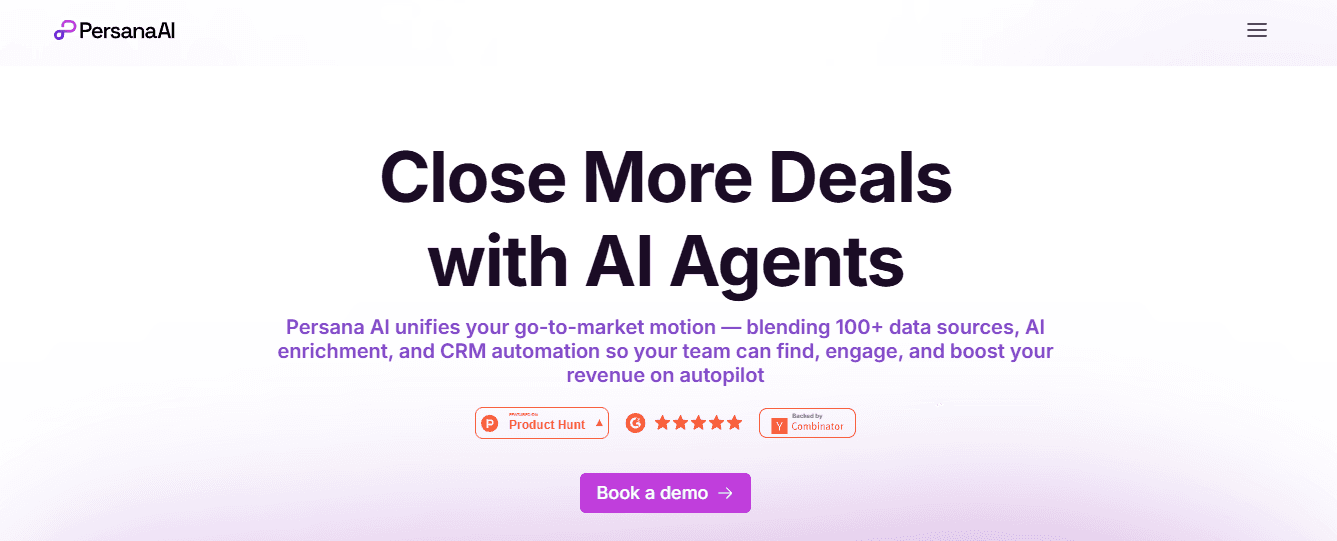
Signal-based selling that builds custom predictive models from CRM history, campaigns, and public data.
Core feature for lead generation: Proprietary lead scoring and enrichment across 75+ sources to surface high-potential accounts.
Why it’s effective: It fixes the mismatch between volume and signal quality, so reps work only the most promising names.
Unique advantage: Real-time job-change alerts and ample contact coverage, ideal for agencies and teams that need continuous, autonomous sourcing.
9. Klenty (Best for Multichannel Outreach)
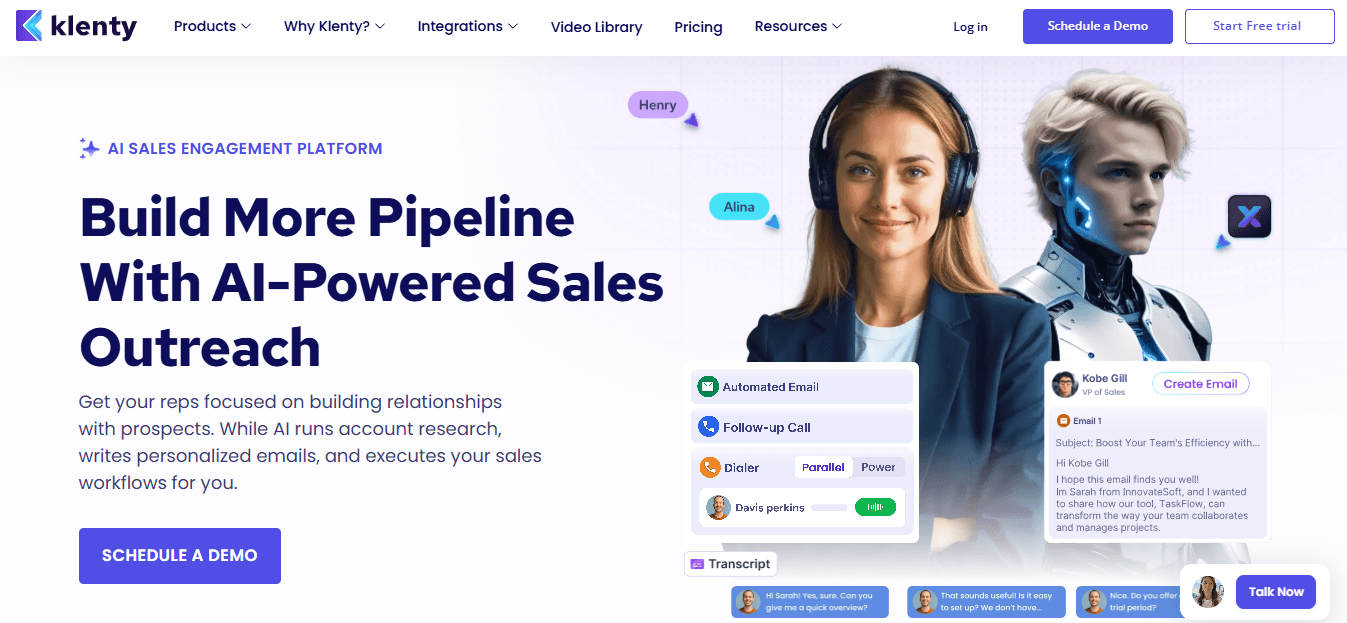
Unified outreach platform that creates AI-generated cadences across email, LinkedIn, calls, SMS, and WhatsApp.
Core feature for lead generation: AI cadences and message generation that produce multi-step outreach sequences quickly.
Why it’s effective: It solves the coordination problem where each channel is managed separately, and messages lose coherence.
Unique advantage: Conversion intelligence and Call IQ provide measurable feedback on what works, accelerating the iteration of messaging and sequences.
10. Copilot AI (Best for LinkedIn Lead Generation)
LinkedIn-focused AI that filters interactions, predicts reply likelihood, and surfaces high-intent prospects.
Core feature for lead generation: Reply prediction and sentiment analysis to rank likely responders.
Why it’s effective: It lets teams prioritize inbound social signals instead of treating LinkedIn as a blind broadcast channel.
Unique advantage: Smart inbox and batch tools that scale LinkedIn outreach without losing personal context.
11. Seamless.AI (Best Free AI Lead Generation Tool)
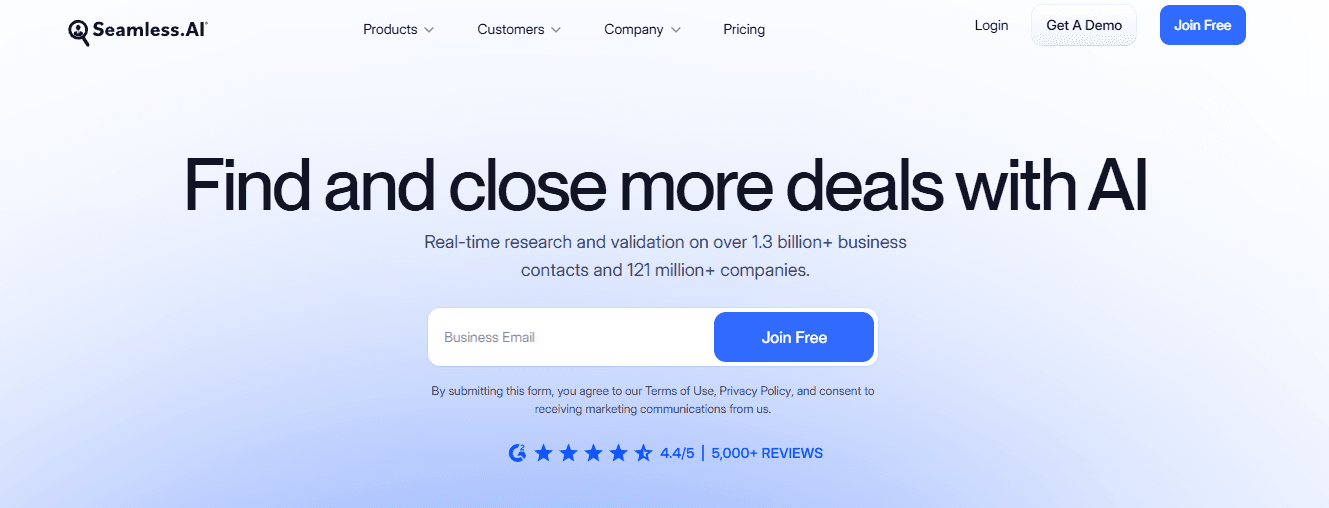
Lead discovery with real-time contact verification and a useful free tier.
Core feature for lead generation: Free credits and verified contact data to build targeted lists without upfront cost.
Why it’s effective: It reduces outreach to dead addresses and allows teams to validate lists before committing budget.
Unique advantage: Broad CRM compatibility and a Chrome extension that converts browsing into list building instantly.
12. Factors.ai (Best for Enterprise Analytics)
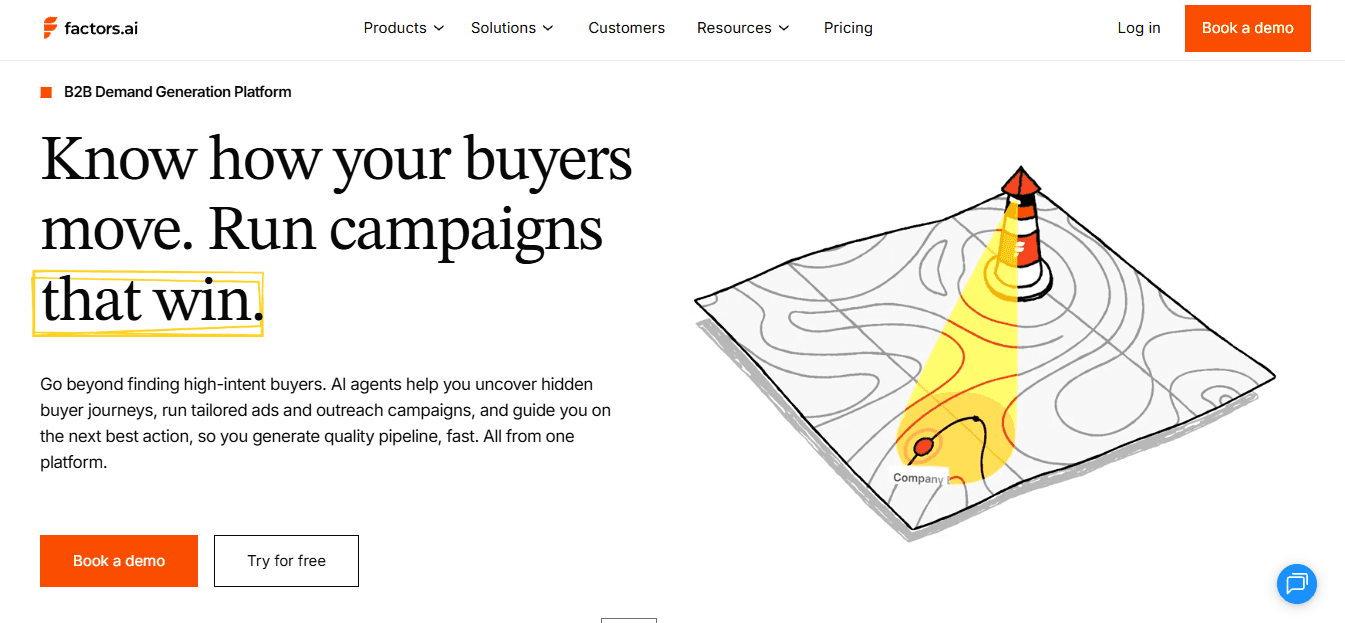
Account intelligence and predictive scoring that aggregates intent signals across channels and vendors.
Core feature for lead generation: Predictive lead scoring and cross-channel buyer intent capture.
Why it’s effective: For enterprise teams, poor account prioritization creates long, noisy pipelines; Factors.ai turns signals into clear, prioritized accounts.
Unique advantage: High IP-matching accuracy and compliance-first data handling, which keeps analytics trusted and actionable.
13. Vapi (Best for Voice-Based Lead Qualification)
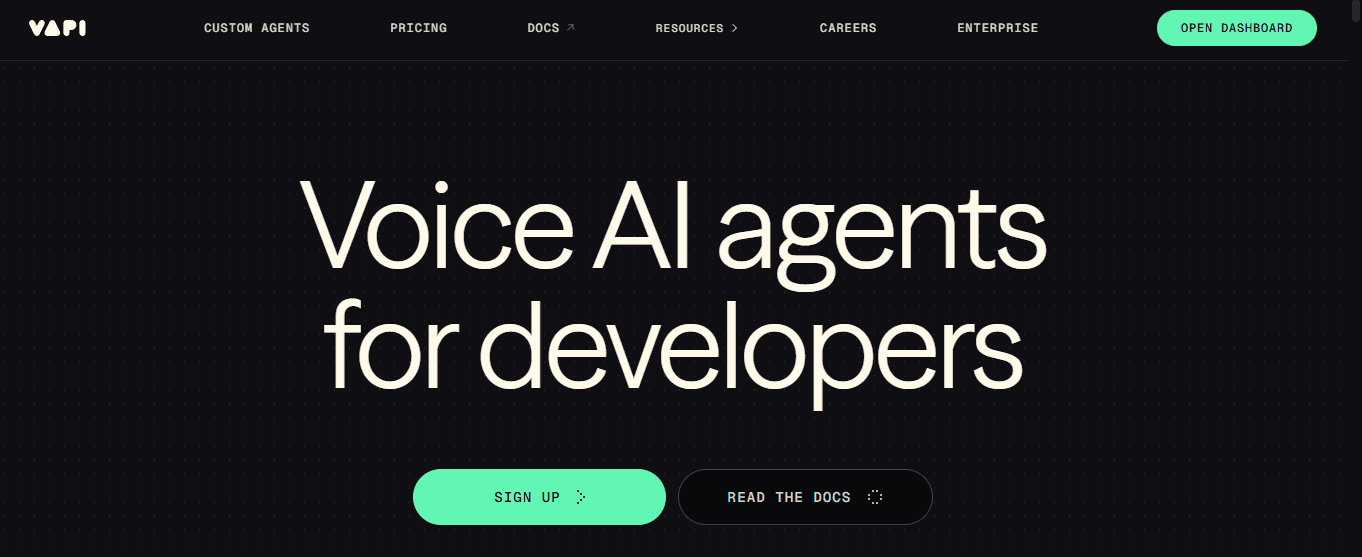
Voice-first AI agents that handle both inbound and outbound calls, screening and scheduling at scale.
Core feature for lead generation: Autonomous voice screening that categorizes and schedules high-fit leads.
Why it’s effective: When phone intake is required, asynchronous voice automation prevents long manual call campaigns and lost opportunities.
Unique advantage: Pay-as-you-go pricing and enterprise-grade compliance, which lowers cost barriers for regulated industries while maintaining reliability.
14. eesel AI
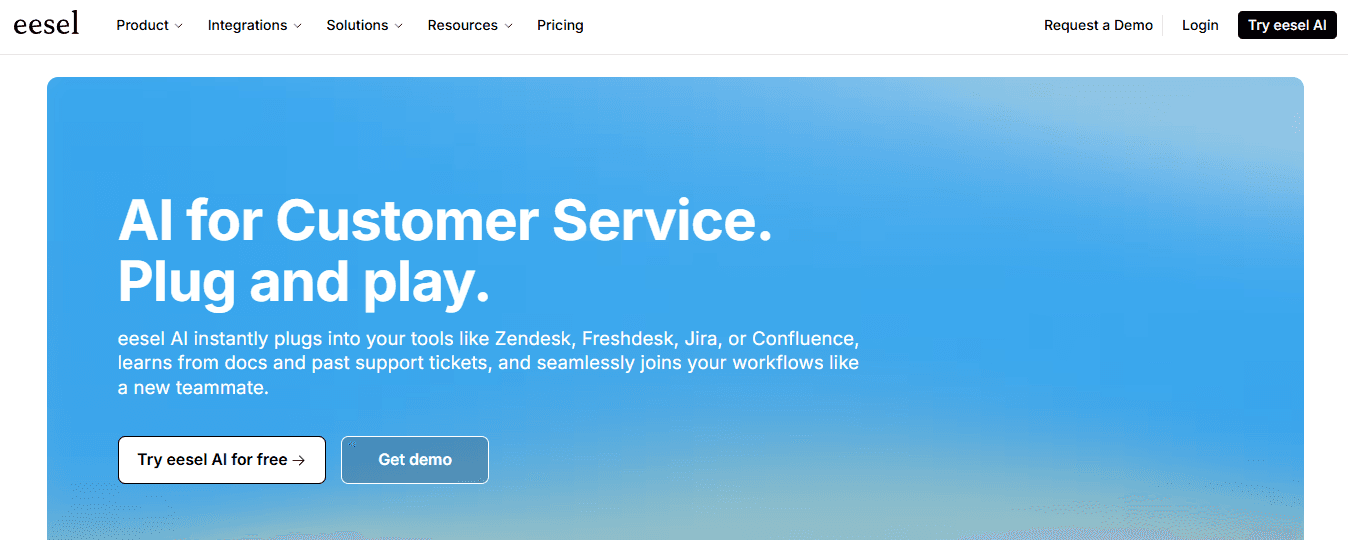
A self-serve chatbot that connects to all your internal knowledge sources for context-aware answers.
Core feature for lead generation: Knowledge-first responses that pull from help desks, docs, and product data to produce accurate conversational replies.
Why it’s effective: It fixes the common failure where bots give generic answers because they lack company context; eesel gives bots a real memory.
Unique advantage: Simulation mode that tests thousands of past conversations before going live, letting you quantify likely ROI without risk.
15. Landbot
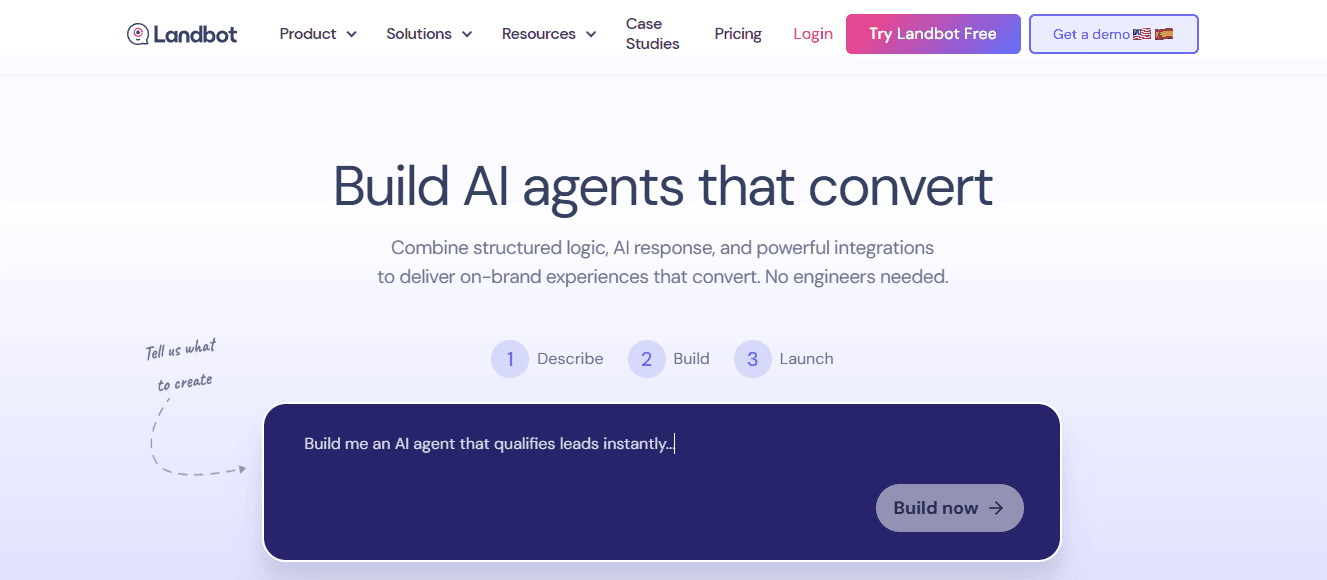
No-code, visual conversation builder that favors structured flows over freeform NLP.
Core feature for lead generation: Drag-and-drop conversation design for predictable multi-step qualification.
Why it’s effective: For campaigns where you want controlled, guided journeys, Landbot keeps the experience tight and measurable.
Unique advantage: Visual clarity that non-technical marketers love, though it can stumble when visitors type outside the script.
16. Botsonic (by Writesonic)
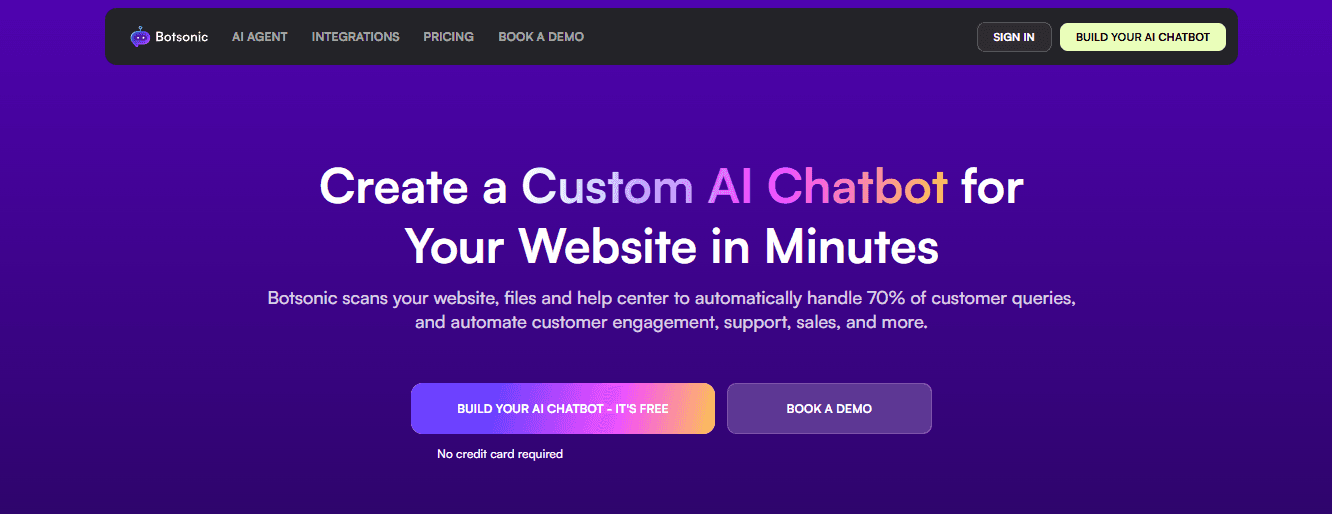
Rapid Q&A bot generation from website content or documents.
Core feature for lead generation: Fast creation of an information bot that captures contact details while answering common questions.
Why it’s effective: It plugs immediate knowledge gaps and captures leads without weeks of engineering.
Unique advantage: Speed to live, with the tradeoff that it is not a deep workflow automation engine.
17. Zendesk Answer Bot
Native Zendesk bot that suggests help articles and reduces ticket volume inside the Zendesk ecosystem.
Core feature for lead generation: Automated pre-ticket engagement that resolves routine queries and surfaces issues needing human follow-up.
Why it’s effective: It keeps knowledge-driven interactions within the support flow, reducing time spent duplicating answers.
Unique advantage: Seamless for teams already embedded in Zendesk, but it struggles when your knowledge lives outside of the platform.
The Scripting Ceiling
A quick status quo check: Most teams manage lead routing and qualification with ad-hoc scripts and form fills because that feels simple, and it does work at low volume. As traffic, channels, and stakeholders grow, those scripts fragment, and manual triage creates latency and lost context. Platforms like AI Acquisition provide a plug-and-play, multi-agent layer that centralizes routing, enforces qualification rules, and hands off qualified contacts in a consistent format, compressing handoff time and restoring predictability without heavy engineering.
The Friction Gap
I’ve seen the fatigue that comes from mismatched integrations, the frustration when a bot can’t access a critical knowledge source, and the relief when a low-cost tool actually syncs cleanly with CRM data; these emotional beats matter because adoption stalls when the workflow still feels like work. The practical rule I use: If a tool cannot prove it preserves context and syncs with your CRM in the first week, assume it will create more overhead than it removes.
Think of this list as an equipment rack, not a shopping list: choose by the failure mode you need to fix, not by feature count. Which specific failure are you trying to eliminate first, and which tradeoff are you willing to accept between speed, control, and long-term automation?
Related Reading
How to Build an AI Lead Generation Chatbot

Start by deciding the outcome you need the bot to own, then build the smallest conversation that reliably produces that outcome and connects to your stack. With clear qualification rules, mapped integrations, and a staged rollout, you can move from a prototype to 24/7 lead capture without adding headcount.
Which Platform Should You Pick?
Pick by constraints, not features.
If your team cannot support engineering, choose a no-code or low-code builder with native CRM connectors and webhooks.
If you need custom logic, pick a platform that exposes an SDK and supports serverless hooks so you can run enrichment, scoring, or compliance checks outside the visual flow.
Look for three concrete capabilities:
Prebuilt CRM integrations
Calendar scheduling
Multi-channel deployment (web chat plus at least one messaging channel).
If those are present, you shave weeks off development and reduce maintenance debt.
How Do You Build the Base Conversation to Convert?
Start with a one-path minimum viable flow that does only three things:
Surfaces intent
Gathers contact fields
Executes the following action
Script the path in plain language, then convert each line to a node. For each node:
Define the trigger and the allowed user replies.
Provide one transparent fallback if the bot does not understand.
Set the following action, for example, score lead, route to sales, or book a meeting.
Use short questions that double as data validators, for example, ask for an email and validate the format before moving on.
Limit required fields to the absolute minimum needed to act, and collect enrichment asynchronously; every extra field reduces completion.
What Should Your Lead Qualification Logic Look Like?
Translate business value into simple signals. Create a numeric lead score composed of three buckets:
Intent (page, button clicked)
Fit (company size, role)
Engagement (time in chat, responses)
Assign easy thresholds, for example, for the score:
>= 60, auto-schedule a call
30-59, create a nurture sequence
Below 30, create a light-touch follow-up.
Use conditional routing: urgent queries route immediately to a live handoff with a 15-minute SLA; high-fit leads go to the senior rep queue; and ambiguous leads go through a short sequence of automated follow-ups.
Keep the rubric in a spreadsheet so changes are auditable and nontechnical teammates can tune it.
How Do You Wire Integrations So Data Does Not Leak or Die?
Map every chatbot field to a named CRM field before you build, including tags for source, campaign, and first-touch page. Use native connectors where possible, and fall back to durable webhooks if you need custom logic. When mapping:
Create canonical field names in CRM to avoid duplicates.
Add a 24-hour retry for failed webhooks and an error queue for inspection.
Write tests that simulate standard inputs and verify that records are created with the correct tags.
Contextual Data Syncing
For scheduling, use direct calendar APIs rather than screenshots of availability; populate the calendar event with meeting metadata (lead score, page URL, conversational transcript), so reps have context. For two-way SMS and WhatsApp, use a managed provider such as Twilio and route replies to the same CRM thread to avoid conversation fragmentation.
How Should You Test and Measure Before Full Launch?
Run three test bands:
Band 1 is internal QA, where teammates play both buyer and rep roles to identify logic gaps.
Band 2 is a soft launch to 5–10 percent of traffic for one week, measuring capture rate, bot-to-qualified conversion, and time-to-first-human-contact.
Band 3 expands to 50% while enabling live analytics and an error dashboard.
Use those KPIs to tune language, thresholds, and fallbacks. Keep deployments small, measure, adjust, repeat.
What Are the Common Failure Modes, and How Do You Prevent Them?
Noisy routing occurs when every lead is escalated to sales. Prevent it by enforcing score thresholds and adding a “needs nurture” queue.
Context loss occurs when the bot and CRM store different identifiers. Fix this by mapping canonical IDs and passing the chat transcript during handoff.
Compliance friction occurs in regulated work, such as legal or healthcare, where intake must honor TCPA, HIPAA, or GDPR. Address this by integrating consent checks into the workflow and storing sensitive attachments only in approved, auditable storage.
These are operational problems, not UX ones, so treat them as engineering requirements during scoping.
When Do You Build Versus Buy Components?
If a component is already solved, do not rebuild it. When teams rebuilt basic features such as two-way SMS, activity feeds, or e-signature flows, costs and time increased significantly; choose vendors or prebuilt connectors instead. Use serverless functions for small, unique business logic and rely on the platform for primitives like session management, retries, and identity. That trade-off saves budget and shipping time while allowing you to focus on competitive differentiators.
A Reality I Run Into With Regulated Clients
When we implemented an AI intake for a midsize law practice over six weeks, the constraint was never the conversation script; it was compliance and document handling, including integrating DocuSign and implementing audit logs to meet TCPA and GDPR needs.
Compliance-First Scoping
The team expected a fast launch, but integrating secure storage and consent checks added two sprints. The lesson was simple, painful, and constant: plan for compliance as a feature when you scope the build. Most teams handle lead capture with forms and ad hoc routing because it is familiar and fast. As volume, channels, and stakeholders increase, the spreadsheet or email thread approach splinters, response times lengthen, and valuable context is buried in inbox noise.
Orchestrated Lead Compression
Solutions like AI Acquisition offer a plug-and-play, no-code multi-agent AI operating system that chains agents for capture, qualification, booking, and follow-up, preserving context and enforcing qualification rules. Hence, teams regain predictable handoffs and compress lead-to-contact cycles. Expect measurable efficiency from day one, with compounding savings as the system matures—track cost per qualified lead and response SLAs alongside funnel conversion to capture real impact.
The Efficiency Dividend
Automation reduces support overhead while freeing reps to focus on closing, a pattern supported by Landbot’s findings on chatbot-driven cost reduction, which show customer service costs can drop by up to 30%. The same research highlights improvements in lead conversion efficiency through chatbots, with conversion rates increasing by up to 30%. Think of the whole system like a kitchen line: mise-en-place matters, roles are explicit, and handoffs are choreographed so no order gets cold. Start with one clear outcome, wire the integrations that let that outcome be executed automatically, and expand only when the first loop is stable.
Tips for the Best Chatbot for Lead Generation That Works

Building a high-performing lead-generation chatbot requires more than a good widget on the page; it requires disciplined conversation design, continuous measurement, and careful experimentation so the bot reliably surfaces qualified prospects rather than noise. Focus your work on three things at once:
Sculpt the conversation
Instrument what matters
Run rapid, low-risk tests that improve qualification and booked calls.
How Should You Design Conversations to Improve Lead Quality?
Start with a short, outcome-driven path that does one measurable thing well, then expand.
Use progressive profiling so the bot asks only for the minimum required to act and collects richer details later, once the visitor is already invested.
Favor quick tap choices over long free-text fields for common intents, because structured replies both reduce friction and produce cleaner signals for routing.
Treat the chat like a maître d at a busy restaurant: greet, triage, and seat the right customer without pressuring them into a decision.
Research on consumer preferences for chatbot interactions shows that 70% of consumers prefer chatbots for quick responses, indicating that conversational priorities should focus on speed and clarity rather than novelty. Fast, accurate answers preserve engagement and increase the likelihood that a visitor becomes a qualified lead.
Which Analytics Should You Monitor Beyond Basic Capture Counts?
Measure where the conversation actually wins or fails.
Track node-level drop-off, time-to-intent, which captures how long it takes users to reveal buying signals, and a conversational friction score that combines:
Retry rate
Average responses per step
Fallback frequency
Monitor qualified lead velocity, the rate at which bot-handled interactions convert to booked calls, not just form fills.
Set automated alerts for sudden shifts in any of these metrics so you can act within hours, not weeks.
Those signals allow you to connect language changes and prompt refinements directly to pipeline outcomes.
Revenue-First Optimization
Research cited in industry analysis on chatbot-driven conversion gains shows that chatbots can increase lead conversion rates by up to 30%, meaning improvements to these metrics translate into measurable revenue lift when you optimize for intent recognition and high-quality handoffs.
How Should Teams Test Prompts and Personas Without Risking Traffic or Brand Tone?
Adopt small, staged experiments and version everything.
Create a sandbox where you run seeded conversations and automated quality checks before touching live traffic.
When testing personas, run paired A/B trials that vary only the system prompt or opening microcopy, then measure lift in the qualified-lead metric rather than raw engagement.
Keep a prompt change log with a safety rollback, and enforce a performance minimum for any persona you promote to production.
Use multi-armed tests for temperature, few-shot examples, and instruction phrasing, but always evaluate against downstream outcomes like booked meetings and lead accuracy, not vanity metrics.
How Do You Prevent Chatbot Messaging From Feeling Pushy or Tone-Deaf?
Design for consent and pacing.
Use behavior-based triggers: only proactively prompt when a visitor reaches a clear signal threshold, cap proactive touches per session, and offer a visible opt-out.
Frame CTAs as options, not demands, and keep escalation to humans a relief valve rather than the default. From multiple deployments, the consistent pattern is this: aggressive nudges increase short-term clicks but reduce the percentage of genuinely interested prospects and raise churn in follow-up sequences. The antidote is value-first language, short choices that respect time, and explicit options to pause or get a summary by email.
What Operational Changes Scale Conversational Quality?
If your team expects the chatbot to be a one-and-done project, it will degrade. Treat the bot like a product, with a roadmap, release cadence, and an owner responsible for quality. Build lightweight SLOs for response accuracy, handoff time, and lead conversion; review them weekly the first month, then biweekly. Automate transcript sampling so your team sees representative conversations rather than only the extremes. Bake enrichment and sanity checks into background workflows so missing fields are appended asynchronously rather than blocking an interaction.
The Patchwork Penalty
Most teams spin up chat tools quickly because it feels productive, and that approach works early. But as volume grows, patchwork bots create duplicate outreach, fragmented threads across channels, and inconsistent qualification, wasting reps’ time.
Orchestrated Lead Flow
Teams find that platforms like AI Acquisition, which provide no-code, multi-agent orchestration and native routing, plus calendar booking, reduce coordination burden by maintaining context across agents and channels, keeping follow-ups orderly, and ensuring qualified leads handed to sales are consistent and actionable.
Which Mistakes Cause the Biggest Backslide and How Do You Avoid Them?
The simplest failures are preventable: never hard-code absolute rules without an override, avoid forcing users into long forms, and never route every interaction to sales. Add a “needs nurture” queue for borderline leads and instrument it with short automated sequences. Finally, monitor model drift by sampling outputs monthly.
Adaptive Dialogue Governance
Language that worked after launch can become stale as the product and pricing change, so schedule deliberate refreshes tied to product updates. A quick analogy to remember: optimize the bot like a good team member, not a billboard; it should earn trust before asking for commitment.
Related Reading
AI Sales Prospecting Tools
AI Tools For B2B Marketing
AI For Sales Calls
Lead Qualification Strategies
Get Access to our AI Growth Consultant Agent for Free Today
If you want to build and scale an AI-powered business without the complexity or massive teams, join 1,200+ entrepreneurs using AI Acquisition's all-in-one, no-code multi-agent platform to automate lead generation, sales, and operations. Our clients average $18,105 in monthly revenue and have generated over $30 million this year. Get a free AI growth consultant and see how a digital workforce of agentic AI lead-generation chatbots and calendar-booking agents can run 24/7 to fill your pipeline, qualify prospects, and book meetings. Hence, you focus on growth, not guesswork.