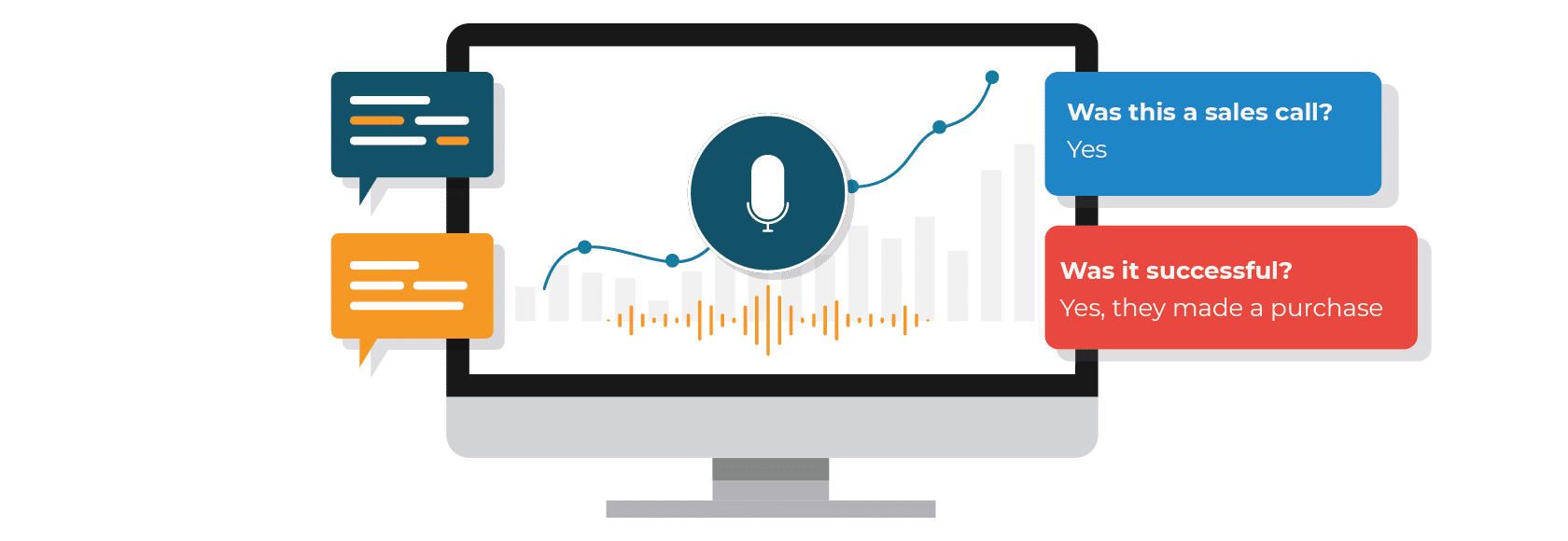
Sales teams drown in prospects but miss the ones that will actually close; in AI-assisted sales, the gap between a lead and a sale comes down to fast, accurate qualification. Lead qualification tools, including predictive analytics, lead scoring, CRM integration, data enrichment, intent data, and qualification workflows, help identify the right buyers, improve conversion rates, and streamline pipeline management. Want to quickly identify high-quality leads using the best tools, so your sales team spends less time chasing prospects and more time closing deals?
To help you get there, AI Acquisition's AI automation software uses behavioral scoring, prospect prioritization, and sales automation to surface qualified leads, move MQLs to SQLs faster, and cut the busy work your reps face.
Summary
Automated lead qualification consistently increases sales productivity; 75% of companies using these tools reported significant gains in 2025.
Automation cuts wasted time on low-value prospects, studies show a roughly 50% reduction in time spent on unqualified leads after adopting qualification tools.
Traditional scoring methods are breaking down; 60% of B2B sales teams report that traditional approaches are ineffective, and AI-powered methods can outperform legacy qualification by about 30% in conversion rate.
Speed wins: modern buyers complete about 57% of their research before talking to sales, and even a one-day response delay can halve the likelihood that a warm lead will engage.
Nurture plus automated qualification improves unit economics; companies that excel at lead nurturing generate 50% more sales-ready leads at 33% lower cost.
Pilot and measure thoughtfully, for example, route 10 to 20 percent of incoming leads to a pilot for at least 30 days while tracking qualification accuracy and time-to-contact, noting that 80% of B2B companies report increased sales efficiency after implementing qualification tools.
This is where AI Acquisition's AI automation software fits in: it runs multi-agent, 24/7 scoring, routing, enrichment, and booking to keep qualification fast and consistent as volume increases.
Table of Content
25 Best Lead Qualification Tools To Enhance Sales Efficiency
How to Choose and Implement Lead Qualification Tools Effectively
What Lead Qualification Tools Are and Why They Matter

Lead qualification is the process of scoring, ranking, and prioritizing prospects so your sales team focuses on those most likely to convert. Lead qualification tools automate this work, so teams stop guessing and start acting faster. These platforms:
Collect firmographics, behavioral signals, and engagement data
Translate them into scores or labels
Push only the best-fit, high-intent leads into your CRM and outreach stacks.
How Do These Tools Decide Who Is Hot?
They combine firmographic filters, intent signals, and engagement events. The system:
Watches email opens, pricing-page visits, demo requests, content downloads, job titles, company size, and industry
Uses weighted scores or labels to signal readiness. That score tells you whether a lead is an MQL, an SQL, or needs more nurturing, so reps get a prioritized queue instead of a mixed pile of names.
What Types of Lead Qualification Tools Should You Know About?
Rule-based, when you need predictable behavior mapping and quick setup. You define the "+10 for pricing page, +5 for three emails opened" rules and tune them over time.
AI-based solutions excel when historical deal data and subtle intent patterns matter. Predictive scoring and natural language processing uncover combinations of actions that humans often miss, which is why, in 2025, 75% of companies using lead qualification tools reported a significant increase in sales productivity, with many teams attributing these gains directly to automated scoring.
Real-time tools, when speed is the variable that wins deals. These systems update scores and route leads the instant they act, so there is no waiting for manual checks or messy handoffs.
Why Automation Changes Outcomes
When we replaced manual vetting for a small sales team, the change was immediate: lead-review time that used to take hours dropped to minutes, and reps stopped chasing dead ends. That relief is more than convenience; it prevents competitors from stealing momentum when a prospect is actively researching solutions.
Lead qualification tools can reduce the time spent on unqualified leads by 50%, and in 2025, teams used these time savings to focus on higher-value outreach and conversations.
What Breaks With Manual Qualification, at Scale?
Most teams handle early qualification with form fields and manual LinkedIn checks because that approach feels safe and familiar. But as lead volume rises, it fragments attention: SDRs spend hours triaging noise, follow-up delays grow from hours to days, and conversion velocity stalls.
Solutions like platforms built around multi-agent AI treat qualification agents as zero-code components that run 24/7 to capture, score, route, and even book calls, reducing handoffs and converting speed into measurable pipeline lift and lower workload.
How Should You Choose and Implement a System?
If your funnel is small and your ICP is simple, start with rule-based scoring to get fast wins. If you have several hundred closed deals and clean historical data, introduce predictive models to learn which behaviors actually drive revenue. If sales cycles are short and response time matters, prioritize real-time routing and booking.
The trade-off is always among speed, complexity, and data readiness; choose a hybrid, staged approach when any axis is weak.
What Practical Steps Make Qualification Reliable?
Instrument the entire buyer journey, map high-value pages and actions to score weights, set a clear handoff threshold, and A/B test score rules or model thresholds while tracking three KPIs: time to first contact, SQL conversion rate, and deal velocity. Treat qualification like a product that you iterate on each month, not a one-off checklist.
That seems promising, but the problems you just escaped have a deeper cause that most teams never notice.
Related Reading
Why Traditional Lead Qualification Methods Often Fail

Manual, one-size-fits-all qualification fails because it leans on human memory and blunt heuristics at the very moment precision and speed matter most. If you assume reps can reliably weed out bad fits and respond fast enough to capture intent, you are stacking the deck against predictable pipeline growth.
Why Does Manual Qualification Break Down So Quickly?
When teams keep qualification as a human task, bias and inconsistency creep in. After a six-week engagement with a bootstrapped SaaS team, we discovered an SDR spending five hours a day on follow-ups, with deals slipping whenever an activity was missed; that kind of friction turns momentum into churn.
It’s exhausting for reps and expensive for the business, because attention is finite and opportunities are fleeting.
What Does the Data Say About Those Old Methods?
According to a LinkedIn Pulse report on B2B lead scoring, 60% of sales teams in 2025 found traditional lead-scoring methods ineffective because many systems fail to separate signal from noise in real-world pipelines, leading teams to chase low-quality leads.
The performance gap is measurable: traditional lead qualification methods result in a 30% lower conversion rate than AI-powered approaches, indicating that relying on manual rules can significantly reduce your win rate.
Quick Examples of Failure Modes
Human bias, when reps favor familiar titles or company names, causes missed niche opportunities and inconsistent prioritization.
Slow response times let active prospects cool; a single-day delay can halve a warm lead’s chance of answering.
Overloaded CRMs fill with unfiltered names, so high-intent signals get buried under noise, and nobody follows up at the right moment.
10 Reasons This Old Model Is Unsustainable
1. Buyers Have Taken Control of the Purchase Journey
The modern SaaS buyer completes 57% of their research before speaking with a sales representative. This buyer empowerment has completely disrupted traditional SaaS lead qualification processes.
Traditional lead generation relies on pushing messages out to prospects through interruptive channels, but today’s buyers prefer to pull information in at their own pace through self-service resources and peer networks.
2. Cold Calls Aren’t Cutting Through Information Overload
The rise of caller ID, spam filters, and gatekeeper resistance has created significant barriers to traditional outbound prospecting methods. Remote work has made it even harder to reach prospects through traditional phone-based outreach. 32% of prospects answer a call from companies they haven’t yet spoken with (RAIN Group Top Performance in Sales Prospecting Benchmark Report).
3. Over-Reliance on Gated Content Is Creating Friction
Ten years ago, ebooks and white papers behind lead-capture forms were goldmines for generating MQLs (Marketing Qualified Leads). Today, buyers are experiencing form fatigue and are reluctant to share contact information for generic content. The proliferation of ungated, high-quality content across the internet has raised buyer expectations for immediate value without friction.
4. Generic Messaging Fails to Resonate with Target Audiences
Traditional campaigns often rely on one-size-fits-all messaging that doesn’t address specific industry challenges or role-based pain points. But modern SaaS buyers expect hyper-personalized experiences tailored to their unique:
Business situations
Company size
Technology stack
Position in the buying cycle
Generic messaging fails to cut through the noise in increasingly crowded software categories.
5. Sales and Marketing Misalignment Creates Pipeline Leakage
Traditional lead generation often operates in silos, with marketing generating leads and handing them off to sales without proper qualification or context. This misalignment leads to frustrated sales teams pursuing unqualified prospects and missed opportunities with high-intent buyers.
The disconnect between marketing metrics (leads generated) and sales metrics (revenue generated) creates organizational tension and inefficient resource allocation.
6. Vanity Metrics Don’t Drive Revenue Growth
Click-through rates, impression counts, and raw lead volume once defined marketing success. In the SaaS business model, more leads don’t automatically translate to more revenue, especially if those leads aren’t properly qualified or aligned with your ideal customer profile.
Traditional metrics often mask underlying issues with lead quality, pipeline velocity, and customer acquisition efficiency.
7. Traditional Events Have Been Permanently Disrupted
Trade shows and in-person networking events were once cornerstone channels for B2B lead generation, providing face-to-face relationship-building opportunities. The global shift toward remote work and virtual interactions has fundamentally changed how business relationships form and deals progress.
Traditional event-heavy strategies are no longer sustainable or scalable for modern SaaS companies.
8. Paid Advertising Costs Are Becoming Unsustainable
Cost-per-click (CPC) rates for competitive SaaS keywords have increased dramatically, with some enterprise software terms costing $50+ per click. Relying solely on paid advertising for pipeline generation creates unsustainable unit economics, especially for early-stage SaaS companies with limited marketing budgets.
Ad fatigue and banner blindness have also reduced the effectiveness of traditional display advertising approaches.
9. Ignoring Intent Data Misses Critical Buying Signals
Traditional lead generation approaches often rely on demographic data and explicit form fills, missing critical behavioral signals that indicate purchase intent. Without leveraging intent data from content consumption, technology research, and competitive analysis activities, outreach often happens at the wrong time in the buyer’s journey, either too early when interest is minimal or too late when decisions have been made.
10. SaaS Growth Models Require Scalable Systems
Traditional lead generation methods such as manual list building, one-to-one outreach, and resource-intensive nurture campaigns don’t scale efficiently in SaaS environments where rapid growth depends on operational efficiency and repeatable processes.
The SaaS business model rewards companies that efficiently acquire customers at scale while maintaining healthy unit economics throughout growth.
The Manual Triage Trap
Most teams handle lead triage manually because it feels low-risk and requires no new tooling, but that approach breaks down as volume and complexity grow. As stakeholders multiply and buying signals arrive out of hours, manual queues fragment, response times stretch from hours to days, and high-intent prospects vanish before a rep can notice.
Platforms like AI Acquisition’s multi-agent systems run 24/7 to capture intent, apply consistent scoring rules, route the right leads, and even book calls, compressing handoffs and converting speed into measurable pipeline lift while lowering workload.
The Compounding Cost of Delay
It’s urgent and frustrating to fix this because the small choices you make now about who follows up and when compound quickly into either steady revenue or wasted budget and morale. That solution sounds tidy, but the next piece will reveal which specific tools actually sustain fast, consistent qualification under real growth pressure.
Related Reading
25 Best Lead Qualification Tools To Enhance Sales Efficiency
1. AI Acquisition
All-in-one agentic platform that deploys multiple AI agents to automate lead gen, qualification, booking, and operations, packaging those agents as zero-code components you can iterate quickly.
Key Features
Multi-agent orchestration for 24/7 lead capture and follow-up
Automated meeting booking, CRM sync, and pipeline updates
Prebuilt playbooks and a free AI Growth Consultant for onboarding
Revenue dashboards and client case tracking
Best for: Entrepreneurs and founders building AI-first businesses who want a hands-off digital workforce that focuses on predictable revenue growth.
2. HubSpot Lead Scoring
Points-based scoring inside HubSpot, mixing demographic fit and engagement signals with optional predictive AI layers.
Key Features
Customizable scoring rules and thresholds
Predictive AI-assisted models trained on your history
Positive and negative attribute handling
Automated routing when thresholds are crossed
Best for: Mid-market B2B companies already on HubSpot that want native scoring without integration headaches.
3. Clearbit
Real-time enrichment that turns basic form fills and anonymous visits into rich firmographic and technographic profiles.
Key Features
85+ enrichment data points per record
Website visitor reveals for anonymous traffic identification
Prospecting lists and verified contact details
Native CRM and marketing automation integrations
Best for: Enterprise B2B and SaaS teams who need deep company intelligence to improve fit-based qualification.
4. MadKudu
Predictive lead scoring that trains directly on your closed-won data to surface which prospects resemble your best customers.
Key Features
Custom AI models derived from historical deals
Behavioral plus firmographic feature analysis
Automatic segmentation and grading (A, B, C)
CRM and automation tool integration
Best for: Product-led growth SaaS teams that convert trials or freemium users into paid seats.
5. 6sense
Account-based predictive platform blending web-wide intent signals and predictive scoring to find buying committees before they surface.
Key Features
Cross-web intent aggregation and predictive analytics
Account and contact identification with buying stage labels
Orchestration across ads, email, and sales sequences
Enterprise-grade reporting and ABM workflows
Best for: Large ABM programs selling into complex, multi-stakeholder accounts.
6. Exceed.ai
Conversational AI SDR that runs two-way email, SMS, and chat dialogues to qualify leads and book meetings automatically.
Key Features
Multi-channel AI conversations with qualification flows
Automated calendar booking and rep routing
Intent recognition and escalation of hot leads
CRM logging of all interactions
Best for: High-lead-volume sales teams that need human-quality initial conversations at scale.
7. Leadfeeder (Dealfront)
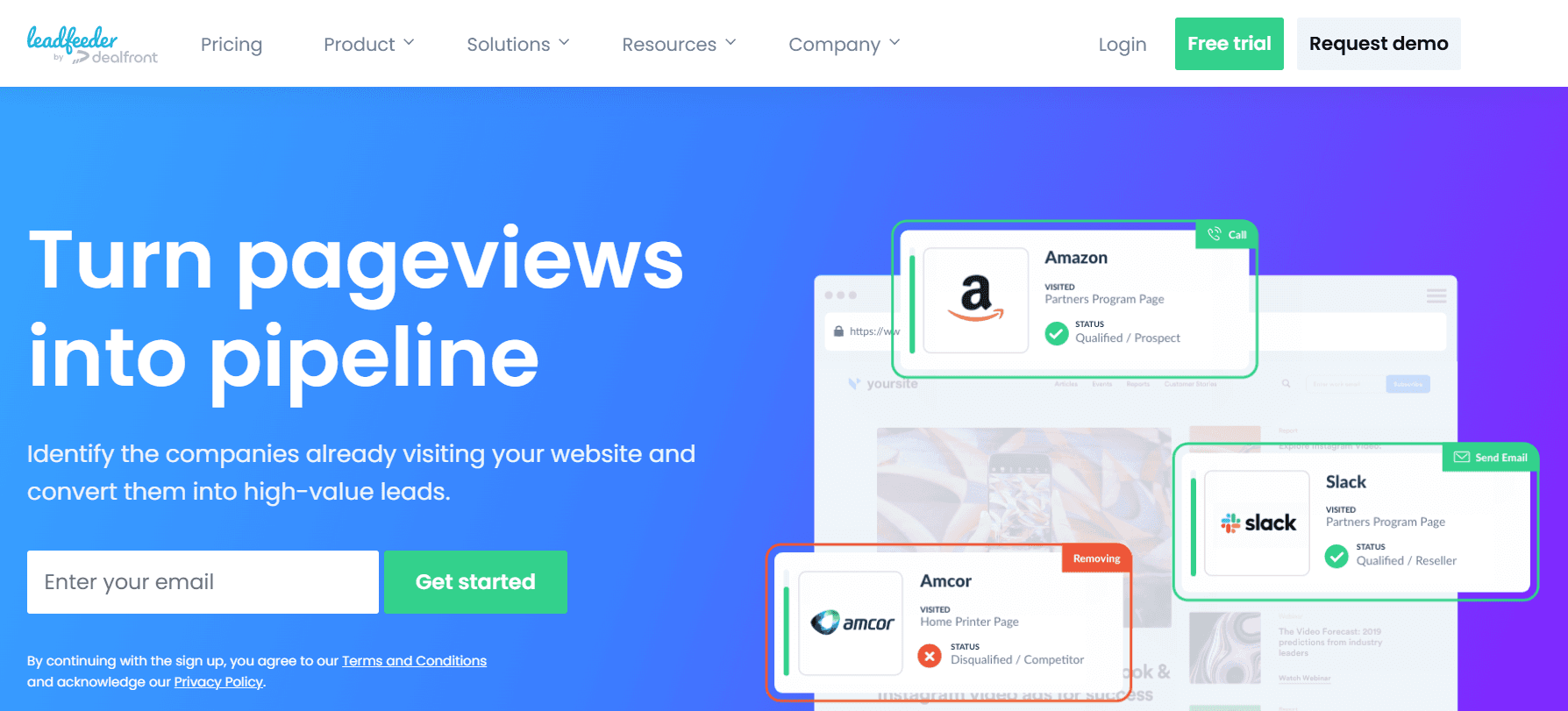
Company-level website visitor identification combined with sales intelligence to convert anonymous traffic into actionable leads.
Key Features
Company reveal for anonymous site visitors
Behavioral engagement scoring and visit history
Custom filters to remove noise and bot traffic
CRM push and list creation for outreach
Best for: B2B teams with steady site traffic who want to monetize anonymous visits lost to traditional forms.
8. Cognism
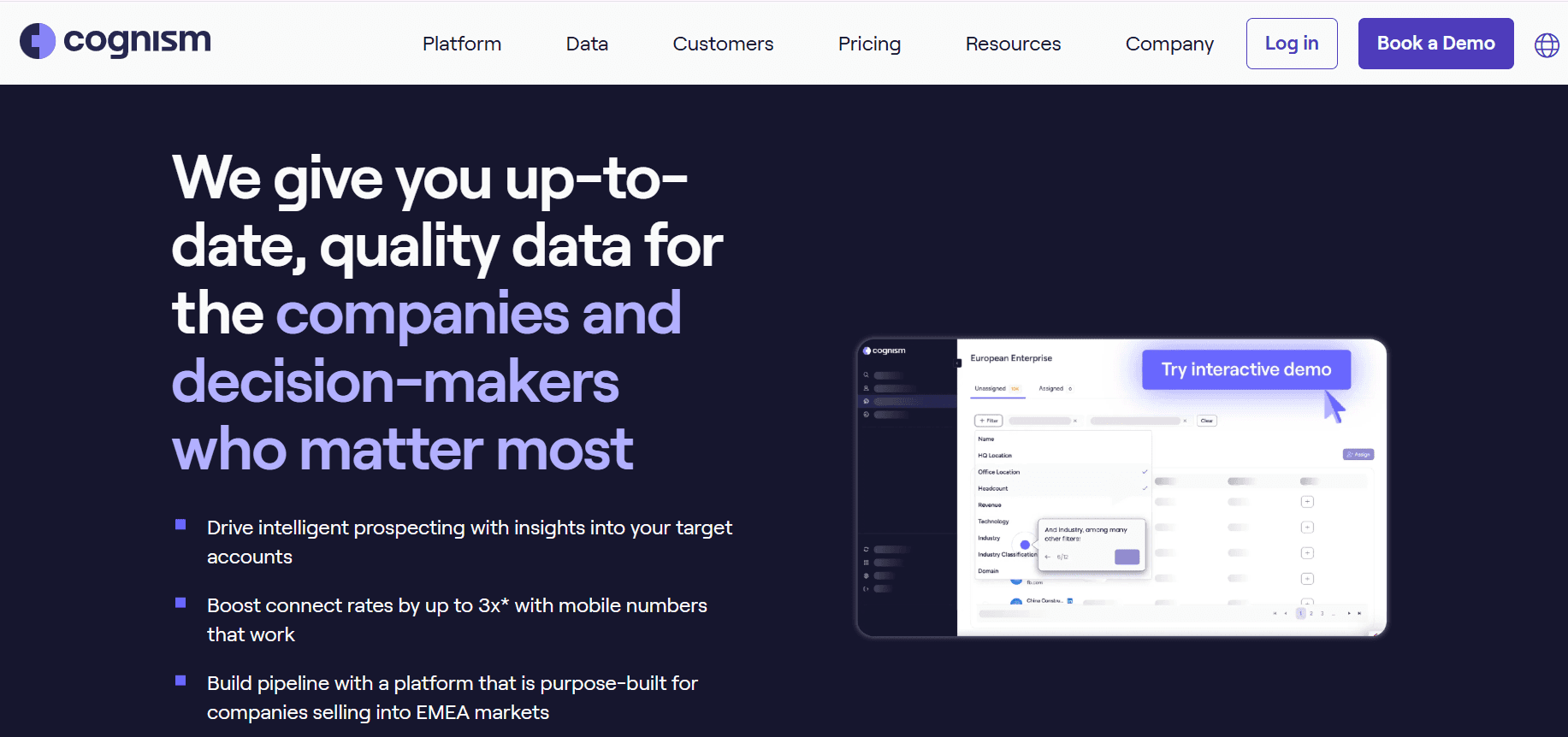
B2B contact database with verified numbers and intent signals designed for compliant prospecting.
Key Features
Phone-verified contact data and Diamond Data option
Intent tracking across web research behaviors
Chrome extension for LinkedIn prospecting
CRM integrations and manual verification on demand
Best for: Outbound teams needing high-quality, compliant contact data across Europe and North America.
9. Chili Piper
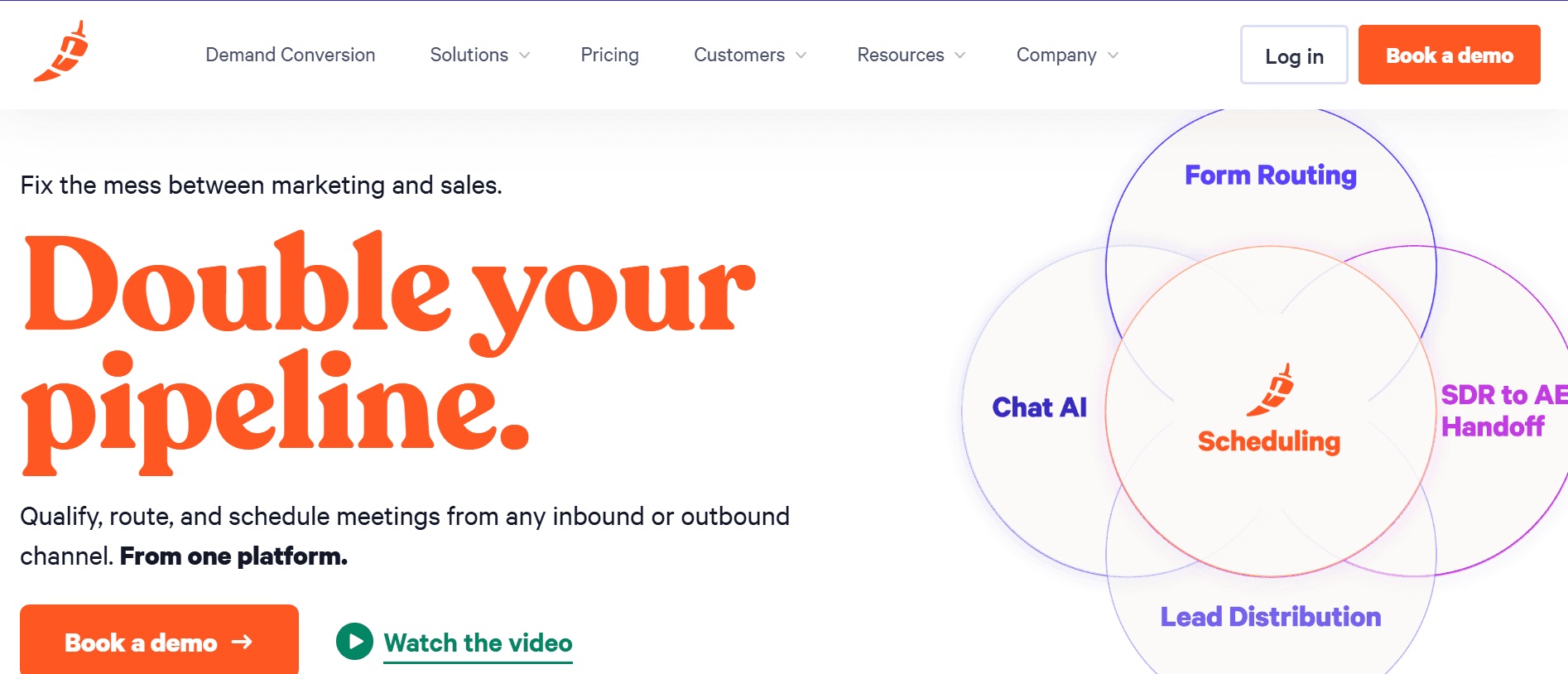
Instant scheduling and routing that converts form fills into booked meetings in real time using qualification rules.
Key Features
Real-time routing and calendar-based scheduling
Qualification questions before booking
Flow Builder for cross-channel workflows
CRM sync for each booking
Best for: High-velocity inbound teams where speed-to-booking determines conversion.
10. Clay
An AI researcher and enrichment layer that aggregates 100+ sources, runs automated web research, and scores leads in custom workflows.
Key Features
Multi-source enrichment and GPT-4 powered research agents
Custom scoring, waterfall enrichment strategies, and workflows
Native HubSpot and Salesforce integrations (Pro+)
Chrome extension for on-the-fly prospect research
Best for: Revenue ops and growth teams that want full control over enrichment logic and personalization data.
11. Default (Best Overall Lead Qualification Software)
Point solution for instant qualification at conversion with an orchestration layer that ties lead capture to routing, scheduling, and CRM updates.
Key Features
Real-time enrichment and behavior-based qualification
Drag-and-drop no-code workflows and forms
Instant routing and scheduling at the conversion point
Seamless integrations with marketing automation and sales tools
Best for: Teams that want fast speed-to-lead with an orchestration layer that connects the whole RevOps stack.
12. Calendly (Scheduling + Basic Qualification)
Simple, calendar-first scheduling with personalized links and automated reminders; best as a scheduling point solution.
Key Features
Personalized booking pages and team routing
Reminders and follow-ups, CRM integrations
Enterprise security and admin controls
Best for: Small to mid teams that primarily need frictionless booking and calendar hygiene.
The Integration Gap
Most teams keep qualification and scheduling as separate habits because calendar links and form fills are low-friction and familiar. As lead volumes grow, that habit fragments data across tools, slows response, and creates routing errors that lose meetings and momentum.
Teams find that platforms with agentic automation centralize qualification plus booking, compress response time, and reduce manual routing, turning fragmented workflows into a predictable, auditable conversion pipeline.
13. Salesmate
CRM with built-in lead scoring and automation to prioritize leads and reduce manual triage.
Key Features
Customizable scoring models and automation
Real-time score updates and analytics
Integration with marketing tools and pipelines
Best for: Small to mid-sized teams wanting an all-in-one CRM with scoring baked in.
14. Zapier
Workflow automation glue that connects disparate tools and automates lead-scoring triggers across apps.
Key Features
Thousands of app integrations and custom workflows
Conditional logic and activity dashboards
Low-code automation for routing and scoring events
Best for: Teams that need to stitch niche tools together without engineering resources.
15. Salesforce Lead Scoring
Enterprise-grade lead scoring inside Salesforce that leverages AI and vast CRM data for custom predictive models.
Key Features
AI-driven predictive scoring and tailored models
Deep analytics and reporting across the customer lifecycle
Rich integration across the Salesforce suite products
Best for: Large organizations that already run Salesforce and need bespoke scoring logic.
16. Keap
CRM and marketing automation with simple lead-scoring for small businesses.
Key Features
Automated scoring based on behavior and interactions
CRM integration and lead behavior tracking
User-friendly interface and onboarding support
Best for: Small businesses and solopreneurs who want affordable automation and scoring.
17. Pipedrive
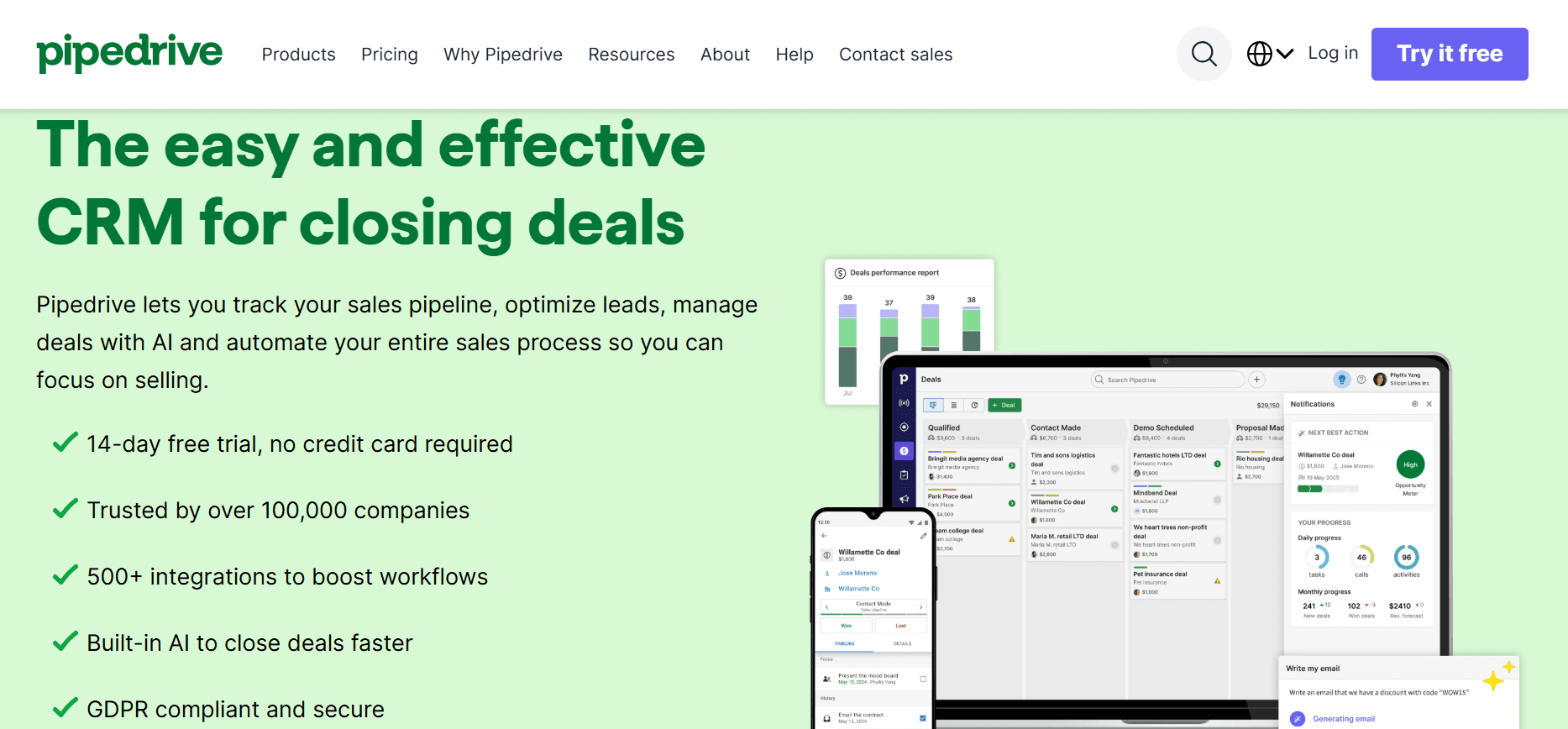
Visual sales pipeline with lead scoring and automation focused on deal movement.
Key Features
Visual pipeline and automated scoring triggers
Real-time lead insights and activity reminders
Integration with outreach and marketing tools
Best for: Sales teams that prioritize pipeline clarity and deal-by-deal management.
18. monday.com
Flexible work platform that embeds lead scoring and qualification into custom boards and workflows.
Key Features
Highly customizable scoring columns and automations
Cross-team visibility and reporting
Integration with CRM and communication tools
Best for: Teams that want to combine project management and lead ops under a single configurable interface.
According to Corefactors, 70% of sales teams report that lead qualification is their biggest challenge, making it crucial to choose tools that specifically address this gap rather than acquiring every available feature.
19. ActiveCampaign
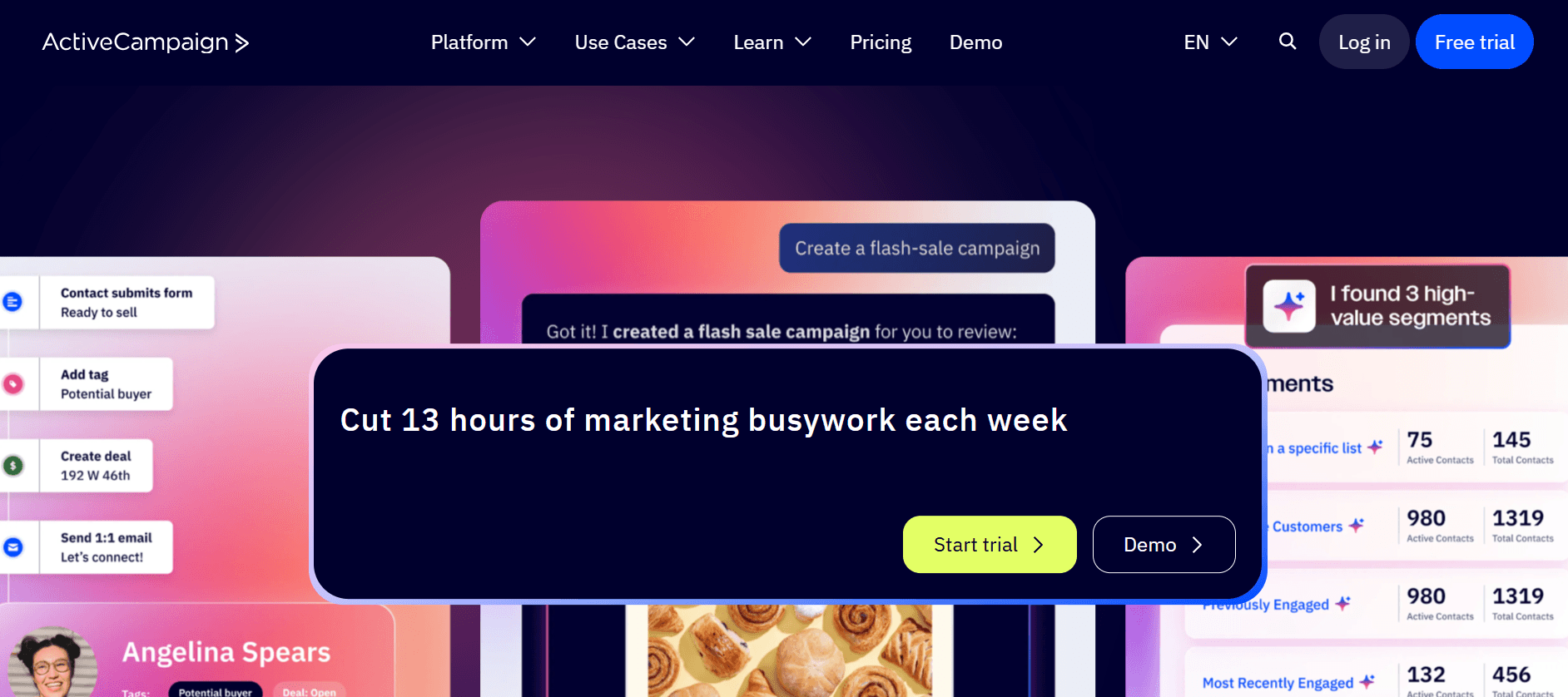
Email-first marketing automation with lead scoring tied to behavior, enabling real-time nurture and qualification.
Key Features
Advanced automation builder and behavior-based scoring
Real-time analytics and CRM sync
Strong email personalization and deliverability tools
Best for: Marketing teams who rely on email to drive early-stage qualification and nurture.
20. SugarCRM
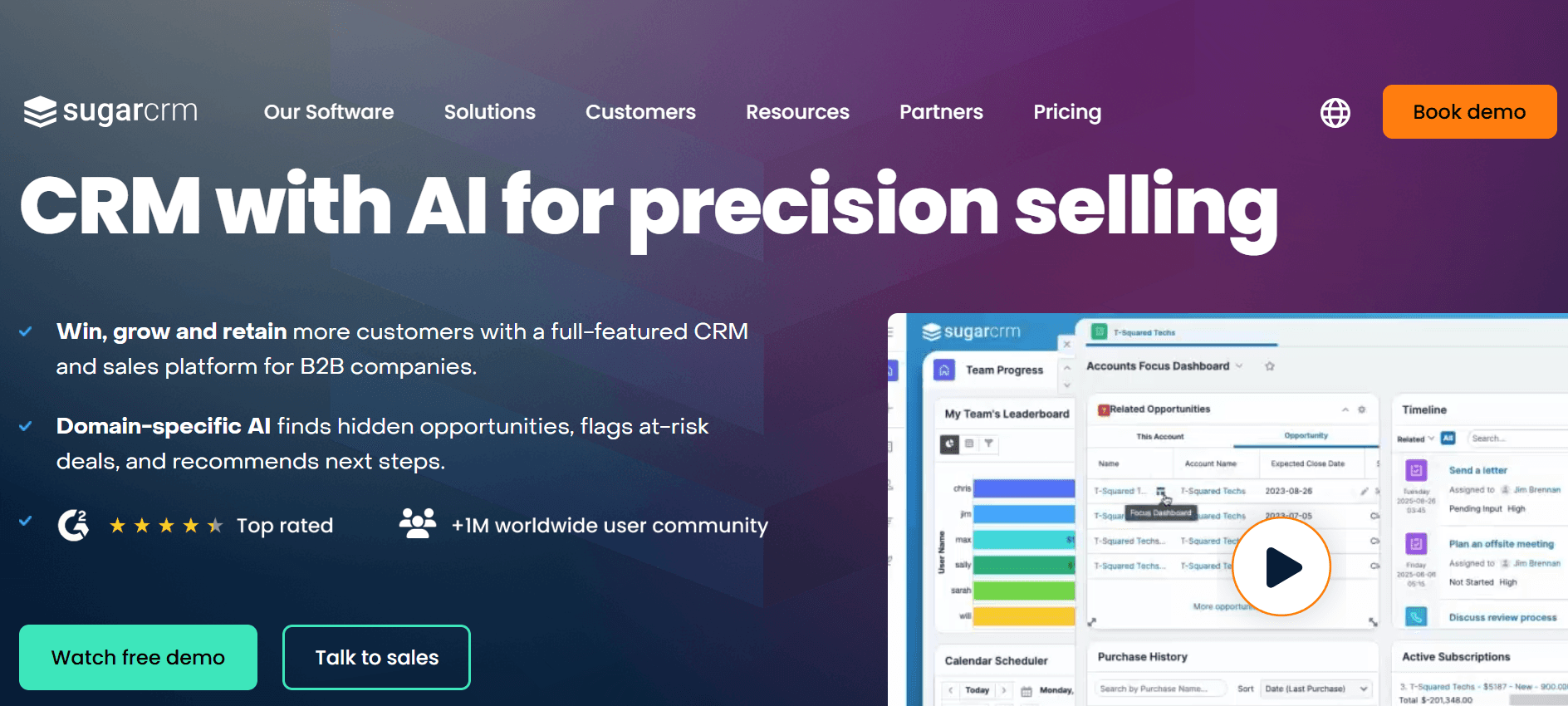
Enterprise CRM with customizable scoring and deep analytics for complex sales organizations.
Key Features
Custom scoring models and real-time tracking
Detailed reporting and integration capabilities
Strong support and professional services
Best for: Enterprises that need deep customization and stakeholder reporting.
21. Zeeg
Integrated booking plus CRM intake forms that capture qualification at the moment of scheduling, then route and log automatically.
Key Features
Booking-linked intake forms and CRM auto-entry
Conditional logic that tailors qualification paths by prospect type
Native calendar support and round-robin routing
GDPR-ready compliance and AI phone answering options
Best for: B2B consultative sellers who need qualification tied directly to booked conversations.
22. Apollo.io
Massive contact and company database with built-in enrichment and intent-like behavioral filters to fuel qualification.
Key Features
200M+ contacts and 60M+ companies
Behavioral filters and multi-channel sequences
Real-time analytics and CRM connectors
Best for: Teams that rely on broad, searchable data sources for outbound qualification.
23. Chili Piper (again, B2B emphasis)
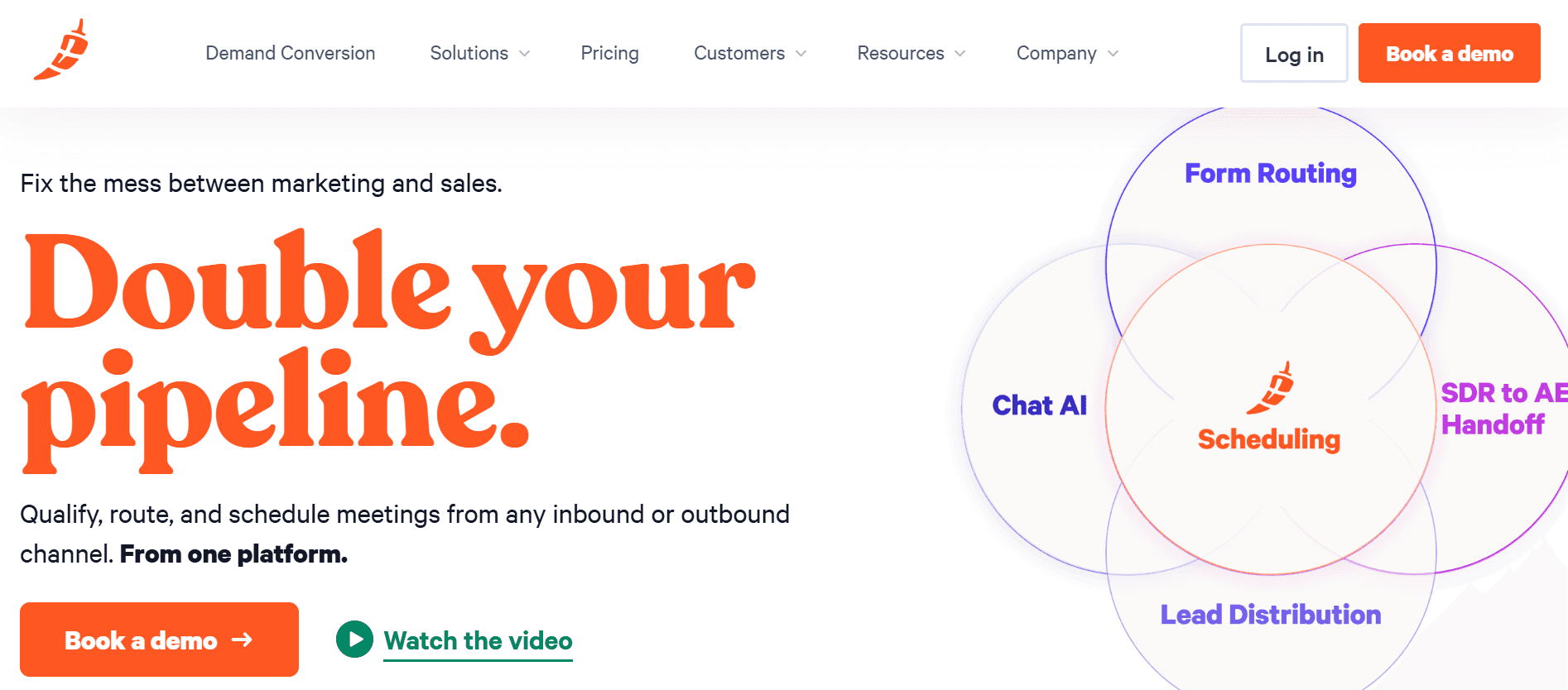
One-click scheduling tailored to enterprise routing needs, ideal for B2B qualification-to-book flows.
Key Features
Rules-based routing and instant booking
Reminder and follow-up sequencing
CRM logging via Chrome extension
Best for: B2B teams prioritizing pipeline speed and accurate rep assignment.
24. ZoomInfo
An intent- and trigger-signal platform that surfaces accounts actively researching your category for timely qualification.
Key Features
Intent signals and trigger alerts for buying behavior
FormComplete for enriching minimal form data
WebSights for anonymous visitor revelation
Best for: Account-based sellers who need both fit and timing signals to prioritize outreach.
25. Salesloft (With Drift Conversational Capability)
Conversational qualification via AI chatbots plus sales engagement cadences that convert chat interactions into enrolled outreach sequences.
Key Features
Intelligent chatbots with conditional logic for rich qualification
Real-time routing and calendar booking from chat
Cadence enrollment and conversation context for reps
Best for: B2B companies where interactive chat yields higher quality intake than static forms.
The Localized Intent Gap
A pattern I keep seeing: teams in Europe struggle with US-first-intent tools that miss local signals and raise compliance questions. Choose vendors with demonstrated EU coverage and GDPR controls if that market matters to you.
Similarly, the pragmatic hybrid approach excels in execution, with AI handling high-volume outreach and enrichment while experienced reps take over once qualification crosses the trust threshold.
The Efficiency of Automated Nurture
According to Corefactors, companies that excel at lead nurturing generate 50% more sales-ready leads at 33% lower cost, demonstrating that investing in nurture workflows and automated qualification improves both lead volume and cost efficiency.
That's where things stop feeling like vendor shopping and start feeling like product design for your pipeline. The next section will outline the decision points that determine whether your stack scales or collapses.
How to Choose and Implement Lead Qualification Tools Effectively

Map the process, lock down score logic and measurable KPIs, pilot the change with a narrow segment, and train the teams who will own the decisions—then choose a platform that automates scoring, plugs into your CRM, and gives AI recommendations so you can scale without hiring more people.
Do those four things in that order, and you move from guesswork to predictable pipeline performance.
How Should You Map the Current Lead Process?
Start with a one-page lead flow that lists every touchpoint, owner, and conditional routing rule.
Export 30 days of inbound and outbound leads, then tag each row with source, first touch timestamp, who owned it, next action, and final outcome. That artifact surfaces where leads stall, and which sources produce the most followable signals.
Expect to find three common failure modes, the pattern being consistent across mid-market and enterprise teams:
Routing rules that work for low volume break down at scale
Ownership gaps appear when shifts or holidays hit
Anonymous site activity gets lost without reveal or enrichment.
Fix those first, because everything else builds on clean handoffs.
What Should Go Into Your Scoring Criteria and KPIs?
Treat scoring like a product decision, not a spreadsheet.
Build a compact scorecard with four weighted dimensions, for example: fit 30 points, intent 35 points, engagement 25 points, and disqualifiers minus 20 points.
Define a routing threshold that triggers either automated booking, SDR review, or long-term nurture, and record the decision rule in plain language.
Track operational KPIs that show the model’s health, such as qualification accuracy (true positive rate), lead decay rate (percent of leads inactive after 14 days), percent of leads with owner assigned within the SLA window, and cost per qualified lead.
Aim for a qualification accuracy above your historical baseline and set the SLA for owner assignment to a measurable minute value for inbound flows, because speed compounds into conversion.
How Do You Pilot Without Breaking the Funnel?
Use a shadow test and a single-channel pilot.
Route 10%-20% of incoming leads to the qualification tool, while keeping the human workflow unchanged, so you can compare outcomes side by side.
Run the test for a minimum of 30 days and define success criteria upfront, including:
Improved qualification accuracy
A higher percentage of leads is routed correctly
Reduced manual triage time
If speed is a priority, teams often see measurable time savings when automation is introduced. Companies using lead qualification tools report a 30% reduction in time spent on unqualified leads. Use A/B thresholds rather than a wholesale replacement so you can iterate score weights and routing rules without disrupting live deals.
How Should You Train Sales and Marketing for Adoption?
Teach outcomes, then mechanics.
Run a 90-minute kickoff that focuses on decision rules, not tool buttons, followed by three 20-minute micro-sessions: score logic, exception handling, and playbook role-plays.
Pair a top-performing rep with an SDR for two weeks to create real-world playbooks, and log every exception so you can turn it into a rule or a new negative signal.
Measure adoption with simple metrics: percent of qualified leads accepted without change, weekly feedback submissions, and automation utilization rate. When teams see that EU-compliant enrichment and seamless CRM sync stop false positives and reduce follow-up noise, resistance turns into relief and curiosity.
Most teams keep a qualification and routing manual because it costs nothing up front and feels familiar, but as volumes and channels multiply, that habit fragments data, and response time becomes a hidden tax.
Scalable Autonomy in Lead Triage
Teams find that platforms like AI Acquisition deploy multiple zero-code agents that run 24/7 to capture signals, auto-score and route leads, sync back to the CRM, and even recommend the next-best action, thereby compressing handoffs, reducing manual triage, and making qualification a repeatable capability rather than a fragile, person-dependent step.
How Do You Choose the Right Platform During Rollout?
Match tool capabilities to your constraints.
If you need fast time-to-value and limited engineering support, prioritize no-code connectors, prebuilt CRM mappings, and out-of-the-box playbooks.
If compliance and regional coverage matter, require EU data controls and transparent consent management.
If you have historical wins to learn from, pick a solution with predictive modeling that can train on closed-won signals. Remember to write explicit acceptance criteria for the pilot:
Minimum lift in qualification accuracy
Reduction in manual triage hours
A clear path to full routing after two successful iterations. That disciplined acceptance approach prevents endless pilots that never scale.
What Operational Guards Prevent Model Drift?
Schedule weekly audits for the first two months, then monthly reviews thereafter. Monitor drift signals such as sudden drops in qualification accuracy, increasing lead decay, or unexpected changes in source quality. Version your scorecard so every rule change has an author, rationale, and rollback plan.
Finally, build a lightweight feedback loop: require reps to tag false positives and false negatives in the CRM, then use that data as training signals for rule updates or model retraining.
The Measurable ROI of Efficiency
Expect real ROI when the four steps are executed correctly, as the efficiency gains are measurable and repeatable. Adopting the right lead qualification tool transforms how the team spends its time, not just the tasks it completes. According to Zeeg, 80% of B2B companies report improved sales efficiency after implementing lead qualification tools.
That simple improvement makes the pilot worth running, but the next section will expose the mistakes that quietly undo even the best plans.
Common Lead Qualification Mistakes You Should Avoid

Qualifications fail most often when judgment, timing, and empathy collide. Start with a small set of high-impact signals, let behavior fill in the rest, and treat exceptions as data rather than drama. That keeps conversion rates high, reduces wasted outreach, and preserves momentum without hiring more people.
How Do You Avoid Collecting Too Much Information Too Soon?
Ask one or two mandatory questions that directly affect routing or immediacy, then use progressive profiling and silent enrichment to fill the rest. A practical pattern: require a contact email and one high-value qualifier up front, for example, budget band or current solution, then trigger enrichment pipelines that append company size, tech stack, and secondary signals within 24 to 48 hours.
Use micro-commitments in early touchpoints, simple choices rather than open fields, because a two-click answer feels less like an interrogation and more like a step forward. This reduces friction and preserves the candid tone that moves prospects toward a meeting.
Which Qualification Questions Matter First?
Prioritize questions that change the outcome of the next action. If an answer sends the lead to an instant book, route it. If an answer delays contact, send a tailored nurture path instead. Examples of high-impact first questions: "Are you evaluating solutions in the next 90 days?" or "Which team will use this tool most?"
Those shape whether you auto-book, flag for SDR review, or enroll the lead in a longer nurture map. Keep wording concrete and time-bound; vague questions produce vague signals.
Why Is Demographic Data Alone Misleading?
Behavior trumps fit when intent is active. Firmographics tell you where the prospect sits, not whether they are moving. Weight recency and pattern over single data points: a pricing page visit followed by two follow-up opens in 72 hours is stronger than a perfect job title with no activity.
Treat demographic attributes as gating variables for playbooks, not as final verdicts. When we group leads by source and reweight scores based on recent activity, the queue cleans itself, with fewer false positives at the top.
When Should Qualification Frameworks Bend?
Rigid frameworks create false negatives. Use rules that adapt by buying stage and by channel. For example, allow a lower budget threshold for inbound content downloads that show product-fit intent, while holding outbound SDR-reached targets to stricter fit criteria.
Require an exception justification for any lead that bypasses score thresholds, log that reason in CRM, and review exceptions weekly for two months to convert gray-area cases into new signals or negative rules. That governance preserves flexibility while preventing wishful thinking from seeding your pipeline with noise.
What Does Good Lead Nurturing Look Like for Qualified But Not-Ready Prospects?
Segment qualified leads by readiness, not just score. Create at least three nurture lanes: immediate outreach for high readiness, value-led education for mid readiness, and calendar-reminder or re-engagement for long-window opportunities. Time content to behavior: if a lead watches a product demo clip, follow up within 7 days with a short case study and an invitation to a brief Q&A.
Use automated re-qualification triggers every 30, 60, and 120 days tied to fresh behavior, not arbitrary time alone, so you catch shifts without wasting attention.
How Do You Measure Whether Your Qualification Predicts Revenue?
Split-test your thresholds and treat qualification as a predictive model.
Track precision and recall over rolling 90-day windows, and calculate the revenue per qualified lead, not just conversion rates.
Tie false positives to rep time cost and false negatives to missed ARR, then compare the two. Remember that improving precision by tightening rules can lower volume, so run experiments that report both conversion lift and pipeline delta.
Recognize the business signal. When lead qualification improves, operational productivity follows; companies that excel at lead qualification see a 20% increase in sales productivity. This demonstrates the payoff of careful measurement and iterative optimization.
Why Do Teams Still Get This Wrong So Often?
Most teams default to safe, familiar habits: long intake forms, checkbox filters, and binary yes/no gates. That feels orderly, but it hides inefficiency, because those habits scale poorly and create stale queues.
The cost manifests in wasted outreach budgets and distracted sales representatives; 50% of sales teams fail to properly qualify leads, resulting in misallocated resources. This prevalence explains why small, tactical adjustments to question design and lead gating can deliver outsized returns.
The Momentum Erosion
Most teams handle initial qualification with static forms and manual checks because it is low friction and familiar, but as volume grows, that habit fragments response windows, buries intent, and wastes rep time. The hidden cost is not only lost meetings but also a culture of reactive follow-up that erodes momentum.
Agentic Triage and Human Judgment
Teams find that platforms with agentic automation centralize progressive profiling, run enrichment workflows in the background, enforce exception logging, and book meetings when intent surfaces, compressing triage time while keeping human judgment for the hard calls.
Think of qualification like triage in an urgent care clinic: you screen breathing and consciousness first, stabilize the case you can help immediately, then collect deeper history while treatment starts. That sequence preserves both speed and accuracy.
Related Reading
AI Sales Prospecting Tools
AI Tools For B2B Marketing
AI For Sales Calls
Lead Qualification Strategies
Qualify Leads Smarter with AI Acquisition
When you sift through hundreds of leads by hand, you end up chasing noise, losing meetings, and burning hours that should go to closing deals. I recommend trying AI Acquisition's agentic qualification agents.
Get free access to the AI growth consultant to see automated lead scoring, prioritization, enrichment, and instant routing that put the right prospects back on your calendar without hiring more people.