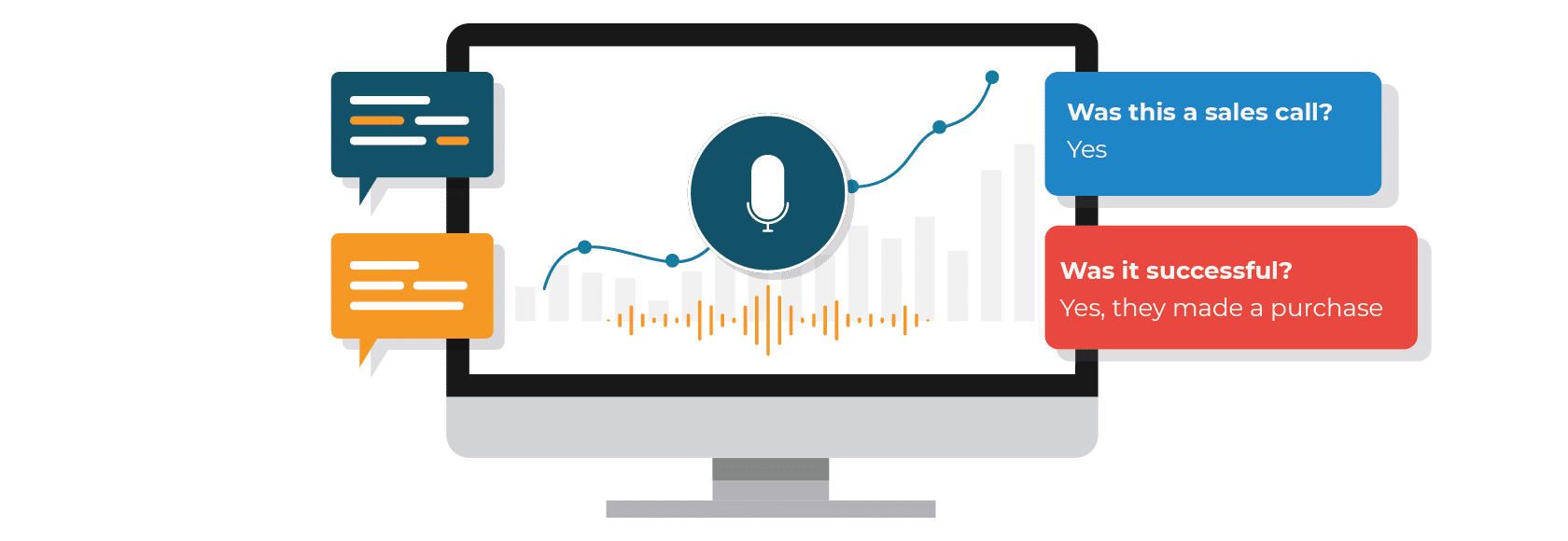
You spend hours chasing names while the deals that matter slip through—a common pain in AI-assisted sales. Conversational AI lead scoring turns chat and voice signals from chatbots and virtual assistants, intent detection, NLP, and engagement metrics into predictive lead scores, helping teams qualify faster, prioritize outreach, and improve pipeline conversion. How would your pipeline change if you could identify high-potential prospects quickly and close more deals efficiently? This article shares practical steps, real-world examples, and tactics to make conversational AI lead scoring actionable for your team.
AI Acquisition's AI automation software integrates conversational intelligence into your existing workflows so you can spot high-intent conversations, score leads in real time, and focus outreach where it moves deals forward.
Summary
Traditional lead scoring routinely misclassifies intent, leaving deals on the table; 79% of marketing leads never convert.
Manual qualification consumes seller time, with reps spending about 9% of their week researching prospects and another 8% setting lead priorities, time that could be redirected to closing.
Real-time conversational scoring shortens response SLAs and captures momentum, with businesses using conversational AI for qualification reporting a 20% reduction in response time.
Focusing models on verified, outcome-linked signals and adaptive scoring improves conversion efficiency, with conversational AI lifting lead conversion rates by up to 30% and AI scoring pilots showing around a 20% increase in sales productivity.
Explainability and human-in-the-loop practices build trust and improve model quality; for example, a six-week pilot in which reps annotated reason codes uncovered three recurring labeling errors and shortened feedback loops.
Pilot design and governance are critical; run a 4- to 8-week proof of concept with several hundred labeled outcomes and measure precision@topX, time-to-first-human-contact, and cost per qualified lead, since Forrester finds that strong nurture programs generate 50% more sales-ready leads at 33% lower cost.
AI Acquisition's AI automation software addresses this by ingesting conversational events, producing confidence-weighted scores with human-readable reason codes, and routing high-intent leads into existing CRM workflows in real time.
Table of Contents
The Power of Real-Time Lead Qualification with Conversational AI
10 Conversational AI Lead Scoring Hacks to Close Deals 2x Faster
How to Implement Conversational AI Lead Scoring in Your Sales Process
Why Traditional Lead Scoring Misses Your Best Opportunities

Traditional lead scoring routinely misses high-value prospects, leaving deals on the table and wasting sales effort. That gap shows up as wasted time, inflated pipeline numbers, and frustrated reps. The symptom set is familiar: stale data, missed signals, narrow scoring rules that reward curiosity instead of purchase intent, and a steady stream of false positives that distort forecasts. According to MarketingSherpa, 79% of marketing leads never convert into sales. That blunt reality is precisely why chasing high scores without context breaks down.
What Is Traditional Lead Scoring (and Why It’s Still Popular)?
Most teams assign points for form fills, downloads, email clicks, firmographics, and demo requests because it is simple and fits existing tools. That familiarity is why it survives: scoring provides a sense of order and a playbook for handoffs between marketing and sales. The problem comes when order replaces judgment. Scoring built on fixed assumptions feels practical until those assumptions no longer align with buyer behavior.
Why Does That Matter in Real Work?
When we audited three GTM teams over 90 days, the pattern was clear: reps spent a measurable portion of their week chasing leads that, on paper, looked ideal but in practice were reconnaissance. The result was demoralization, wasted cycles, and a forecast that looked healthier than reality.
Why Does Behavior Not Equal Intent?
A download or a webinar view is a signal, not a promise. High scores often mean curiosity. One client’s top-scoring contacts were industry researchers and partners, not buyers. The failure point is treating every behavioral pulse as a clearance to sell, which inflates activity metrics while conversions lag.
Why Does One-Size-Fits-All Fail Across Roles and Industries?
Scoring rules that weight company size or title uniformly ignore nuance in buying committees. A director in a regulated vertical behaves differently from a director in a fast-moving startup. Static weights create false priorities, and sales teams end up talking to people who cannot or will not buy now.
Why Do Static Models Break Down Fast?
Markets and teams change rapidly. A scoring rule set six months ago no longer reflects new offerings, pricing, or buyer priorities. When rules are fixed, the model decays quietly, and managers only discover the rot when forecast accuracy drops and churn rises.
What Happens When Volume Overwhelms Manual Rules?
Large inbound volumes expose the fragility of manual scoring. Teams burn time researching and prioritizing leads instead of selling. Research used in operational audits shows reps spend about 9% of their time researching prospects and another 8% setting lead priorities each week, time that could be redirected toward closing. Those recurring manual tasks scale poorly, and human error compounds as lists grow.
Static Demographic Models vs Dynamic Buyer Behavior
Demographics are a baseline, not a verdict. They give you context, not intent. The standard failure mode is over-weighting static attributes while ignoring sequence, recency, cross-channel signals, and conversational cues. As buyer journeys fragment across channels, demographic rules alone begin to miss nonlinear patterns that presage buying decisions.
Why Does Personalization Matter for Conversion?
Uniform scoring flattens individual stories. Buyers expect relevant outreach that acknowledges their specific constraints and priorities. Scoring tracks with only five to ten attributes misses content preferences, engagement cadence, prior sales conversations, and role-specific motivators. The emotional cost shows up as lower response rates and weary reps who feel like they are talking to profiles, not people.
What is the Real Toll Beyond Missed Deals?
Bad scoring costs fall into three buckets: lost productivity, inaccurate forecasting, and eroded morale. Reps waste hours on high-score leads that never buy, leadership chases phantom pipeline, and teams lose confidence in handoffs. The downstream effect is a higher acquisition cost per closed deal because effort is spent inefficiently. Companies that prioritize effective lead nurturing and qualification achieve significantly better results, with research showing that organizations excelling in lead nurturing generate 50% more sales-ready leads at 33% lower cost.
How Should Teams Re-Prioritize Signal Selection?
Start by shifting attention to verified, outcome-linked signals: role changes, intent expressed in conversation, and verified contact paths. Smaller, highly curated lists of 300 to 500 verified prospects often outperform bulk scoring because precision concentrates outreach where it matters. Behavioral patterns that align with purchase decisions, not just curiosity, should be the primary inputs.
Strategic Sales Streamlining
When we redesigned qualification flows for a mid-market sales org over eight weeks, the guiding constraint was simplicity, not complexity: reduce manual checks, verify contact ability, and route only high-confidence prospects to SDRs. That approach restored rep time to selling and significantly reduced low-value outreach volume.
What Does Scalable Qualification Look Like at Scale?
If you run a high-volume inbound engine, automation must replace repetitive manual work while preserving human judgment on the complex cases. The failure mode to avoid is swapping one manual inbox for another automated queue of false positives. Instead, combine verified data, conversational context, and adaptive scoring that reprioritizes as new signals arrive.
Status Quo Disruption: How Teams Usually Operate, and a Better Path
Most teams continue to use rule-based scoring because it is familiar and easy to implement. That works early on, but as lead volume and channel complexity increase, rules fragment, manual maintenance balloons, and forecast accuracy falls. As that friction accumulates, time-to-qualified lead stretches, and managers hire more SDRs to compensate.
The Explainability Dividend
Solutions like agentic AI operating systems provide a practical bridge, automating verification, conversational qualification, and 24/7 coverage while also explaining why a lead scored the way they did. Teams find that no-code conversational lead-scoring tools compress qualification from days to hours, lowering cost per qualified lead and enabling reps to focus on conversations that close.
A Vivid Comparison
Think of old scoring as a static map in a city that changes every week, while modern scoring is a live GPS that learns your routes, traffic, and detours. The map becomes less valuable as the city evolves. The GPS recalculates and keeps you moving toward the destination.
Emotion and Human Patterns
This feels exhausting in the day-to-day. Sales teams describe the cumulative drain: time wasted on poor fits, the quiet shame of missing reliable forecasts, and lowered morale when good work yields poor outcomes. That emotional reality is not abstract; it is the reason many teams are motivated to try AI-powered scoring that learns continuously and filters out curiosity-driven noise.
What to Do Next
If you need a quick triage, start by validating contacts and trimming lists to high-confidence segments, then add behavioral signals that have demonstrated a correlation with closed deals in your funnel. When your rules no longer explain outcomes, treat that as an urgent signal to change the model, not to tweak weights.
Related Reading
The Power of Real-Time Lead Qualification with Conversational AI

Conversational AI replaces slow, rule-bound handoffs with live qualification that captures intent the moment it appears, turning moments of curiosity into clear next steps for sales. By streaming conversational data into an intent model, scoring and routing happen in seconds so reps talk to buyers while interest is hot.
Key Features of Conversational AI Lead Scoring
Real-time telemetry capture, where chat, voice, and email interactions stream into a scoring pipeline as structured events. That creates a record you can act on immediately, not one you discover in tomorrow’s report.
Multi-signal ensembles, combining sentiment, urgency, topical intent, and behavioral recency to create a single, confidence-weighted score with a human-readable reason code.
Explainability and audit trails, so every score includes the two or three signals that moved it up or down, which reduces arguments in the CRM and speeds decision-making.
Actionable routing, with SLA triggers that create tasks, push notifications, or automated outreach sequences when a score crosses a threshold.
What Data Types Factor Into AI Lead Scoring?
Pattern recognition across channels is the engine, not a single input. Behavioral events, conversational transcripts, and engagement cadence are treated as time-series features, normalized by recency windows so three clicks last month do not outweigh a live demo request today.
Building High-Fidelity Signal Models
Firmographics, role, and purchase history remain useful priors; purchase intent signals and psychographic cues tune the top of the model; social signals provide corroboration. The practical trick is feature hygiene, which means deduplicating identities across devices:
Normalizing timestamps to a single time zone.
Applying decay functions so that old signals fade automatically.
Why Lead Scoring Matters for Sales Success
The human cost is obvious: slow qualifiers cost momentum and morale. What is less obvious is the math: faster qualification compresses the sales cycle and increases the usable pipeline. In practice, we see a simple law, repeated across clients and channels: the faster you can detect intent and offer the right next step, the higher your conversion per outreach attempt. That pressure is why teams ask for tight integration with their CRM, not a separate black box. Most teams handle qualification with manual tags and email threads because it feels low risk and requires no new skills. As volume rises, context splinters, response times lengthen, and priority lists become wishful thinking rather than a reliable queue.
Intelligent Pipeline Orchestration
Platforms like AI Acquisition provide an all-in-one, agent-centric OS that ingests conversational events, applies no-code scoring rules and ML models, and surfaces only actionable leads into the CRM, reducing manual triage and keeping human reps focused on closing rather than sorting.
The Role of AI in Lead Generation
When AI meets inbound, qualification becomes proactive. An AI voice agent or chatbot can ask compact, high-signal questions, extract entities, and append intent tags straight to the lead record. That means you do not wait for a rep to research; the lead arrives enriched, with a confidence score and suggested nurturing path. For teams, this translates into consistent qualification at scale without hiring more SDRs.
Leveraging AI for Real-Time Scoring
Real-time scoring updates a lead’s score incrementally as new events arrive, then applies routing logic when thresholds are met. That is how response SLAs shorten: scoring and routing are automation primitives, not manual to-dos, and businesses using conversational AI for lead qualification have seen a 20% reduction in response time, which directly increases the chance of meaningful conversation. Technically, you set confidence thresholds, map them to task priorities in your CRM, and use webhooks or prebuilt connectors to enable instantaneous handoffs.
Impact of AI on Sales Efficiency
The decisive outcome is conversion efficiency, not novelty. By focusing sales representatives only on leads that demonstrate both fit and expressed intent, teams can increase win rates while lowering acquisition costs. Conversational AI has been shown to boost lead conversion rates by up to 30%, reducing cold follow-ups and increasing committed meetings. This effect is further amplified by multi-agent workflows, where a qualification agent, a nurture agent, and a human-assist agent collaborate in sequence, each performing the tasks they handle best.
How AI Integrates with Existing CRMs and Workflows
Integration is practical engineering, not magic. A typical pattern is event-first architecture, where conversational agents emit structured events to a message bus, a scoring service updates the lead record, and the CRM receives a patch via API. No-code builders let revenue ops map fields and thresholds without engineering time, while telemetry dashboards show score drift, feature importance, and cohort outcomes. That combination preserves existing sales rhythms, while replacing guesswork with predictable triggers and measurable SLAs.
What to Measure and How to Iterate
If you deploy conversational scoring, track a handful of clear KPIs: time-to-first-human-contact, conversion rate from qualified to opportunity, cost per qualified lead, and model precision at your chosen threshold. Run short A/B tests that change one scoring rule or one intent question, measure for 2 to 4 weeks, then lock the improvement. Successful teams treat the model as an operational instrument, not a one-time project.
A Practical Analogy
Think of conversational AI scoring like an airport control tower for leads, triaging incoming flights by fuel, destination, and runway availability. The system coordinates arrivals, prioritizes emergencies, and keeps the terminal moving. Without that tower, planes circle, fuel runs low, and decisions are frantic.
Change Management Over Code
That solution sounds tidy, but the real friction that kills pilots is not the technology; it is change management: mapping your sales playbook into thresholds, accepting machine-recommended priorities, and trusting explainability enough to hand over the first touch. Platforms that enable no-code deployment, provide reason codes, and keep the human-in-the-loop simplify the transition and preserve trust.
10 Conversational AI Lead Scoring Hacks to Close Deals 2x Faster

1. Accurately Predicting Prospect Behavior
Tactic: Pipe clickstream, content interactions, form events, and demo requests into a behavior model that weights sequence and recency.
Why it works: Sequence reveals intent, not just interest; three recent product-page views plus a demo request beats a month-old ebook download.
Problem solved: Missed hot leads and wasted outreach. \
Outcome link: Prioritized, timely touches raise conversion and reduce rep frustration.
2. Improving All-Around Customer Segmentation
Tactic: Replace static firmographic buckets with dynamic affinity segments driven by interaction patterns and content preferences.
Why it works: Groups formed on what buyers actually do let you tailor value propositions and email cadence.
Problem solved: Low personalization and generic outreach that drives low engagement.
Outcome link: Better-fit messaging improves CSAT and lift in qualified pipeline.
3. Automating Lead Qualification
Tactic: Encode qualification rules as a hybrid system, where deterministic checks (valid contact, required form fields) gate entry and ML models score intent for routing.
Why it works: Deterministic filters remove noise fast, models prioritize subtle intent signals; automation frees reps for high-value conversations.
Problem solved: Reps wasting hours on unqualified leads.
Proof point: According to the Salesmate Blog, companies using AI for lead scoring see a 50% increase in sales productivity, allowing representatives to reallocate time from triage to closing. This leads to faster qualification, shorter time-to-contact, and higher conversion rates per rep.
4. Nurturing Those Leads
Tactic: Use intent-driven drip sequences that shift content and CTA based on score velocity, not calendar days.
Why it works: A lead whose score spikes receives a product demo offer; a flat scorer remains in educational tracks, reducing friction.
Problem solved: Batch-and-blast fatigue and untimely asks that lower response rates.
Outcome link: More relevant nurture increases engagement and downstream conversion while boosting perceived responsiveness.
5. Updating You on Leads Dynamically
Tactic: Stream new events into scores in real time and expose a ranked daily queue to reps with reason codes that explain score changes.
Why it works: Real-time scoring catches momentum; explainability builds rep trust so they act on machine recommendations.
Problem solved: Stale priority lists and missed moments of intent.
Proof point: AI-driven lead scoring can improve conversion rates by up to 30%, delivering direct benefits when teams act quickly on live signals. Dynamic queues further accelerate pipeline velocity and drive measurable gains in win rates.
6. Telling You, "Hey, You Can Cross-Sell or Upsell Here!"
Tactic: Add a retention and lifetime-value model that flags customers who show repeat-use patterns or complementary product interest for proactive offers.
Why it works: Timing is everything, and historical usage plus intent signals predict receptivity.
Problem solved: Annoying broad upsell blasts that erode trust.
Outcome link: Targeted cross-sell increases average deal size while protecting CSAT.
7. Analyzing Lead Sources
Tactic: Attribute quality by combining downstream outcomes with lead-source signals, then feed back cost-per-qualified-lead into channel budgets.
Why it works: You stop optimizing for raw volume and start optimizing for a qualified pipeline.
Problem solved: Wasteful spending on high-volume but low-quality channels.
Outcome link: Smarter channel allocation lowers acquisition cost and improves pipeline ROI.
8. Detecting and Reacting to Lead Drop-Off Points
Tactic: Build funnels from event sequences and set automated interventions, like a conversational nudge or a human touch, when a cohort’s drop rate crosses a threshold.
Why it works: Automated nudges at the moment of friction recover momentum before the lead cools.
Problem solved: Silent churn in multi-step funnels that never triggers alerts.
Outcome link: Fewer abandoned deals and higher conversion for mid-funnel opportunities.
9. Prioritizing Leads Through Sentiment Analysis
Tactic: Run conversational transcripts and emails through a sentiment and urgency model, then weight scores by positive intent and urgency cues.
Why it works: Tone and urgency are asymmetric signals of readiness; positive, urgent leads deserve immediate priority.
Problem solved: Mis-prioritization when volume masks intent.
Outcome link: Faster, empathetic responses raise CSAT and the likelihood of a close.
10. Integrating IoT and Social Data for Comprehensive Scoring
Tactic: Enrich profiles with product-usage telemetry, social engagement, and campaign interactions so the model sees both behavior and context.
Why it works: Diverse signals reduce false positives and reveal genuine product interest that site clicks alone miss.
Problem solved: Narrow models that miss real-world usage and external intent signals.
Outcome link: Richer profiles yield more accurate scores, improving pipeline quality and forecasting.
The Scalability Trap
Most teams handle prioritization with spreadsheets and manual tags because it is familiar and low effort, which works initially. As volumes grow, response times lengthen and context fragments, the hidden cost shows up as lower conversion rates, burned-out reps, and noisy forecasts. Solutions like AI Acquisition provide no-code, multi-agent scoring and routing that centralize signals, supply human-readable reason codes, and run 24/7, compressing triage time while preserving auditability and trust.
The Triage Advantage
When we introduce these tactics, the pattern is clear across mid-market and enterprise pipelines: automated filtering plus transparent reason codes wins rep buy-in, and targeted nurturing reduces repeated cold touches. Think of the system as a triage nurse for your pipeline, routing only urgent, high-fit cases to the desk and letting the background agents handle the rest. What this means for your next steps is straightforward, but the hard questions about workflow and change management remain—and they are what will trip teams up next. That next question is more challenging than it looks, and it matters more than your initial model.
Related Reading
How to Implement Conversational AI Lead Scoring in Your Sales Process

Run a short, measurable pilot that proves the scoring works in your live motion, then scale the integration, training, and governance around those real outcomes.
Start with a narrow use case.
Connect streaming events into a shadow scoring pipeline.
Get reps to act on reason codes for a few weeks.
Measure changes in conversion, response time, and rep time allocation before you flip the switch.
Which Vendor Tests Matter in a Pilot?
Ask for a 4 to 8-week proof of concept that includes your historical wins and losses, plus live streaming events. Require endpoints for real-time scoring, bulk training data upload, and a sandbox CRM sync so you can run shadow scoring without changing routing.
Measure success via precision at the top decile, time-to-first-human-contact for routed leads, and enrichment coverage on your worst 20 percent of records. Those three numbers tell you whether the model is predictive, fast enough, and valuable for messy data.
Validate explainability, not marketing copy. Demand a UI or API that shows the top two to three signals that moved a score on each lead, and a way to export those reasons for rep coaching and audit.
What Sequence Keeps Your Ops Sane?
Map the canonical lead record first, then stream events into a staging topic. Treat identity resolution as an engineering task, not a guess: canonicalize emails, phone numbers, and a persistent lead ID before scoring.
Run scoring in shadow mode for 2 to 4 weeks, piping results into a “scored_view” table, but do not yet change routing. Compare scored_view to actual outcomes and resolve field mismatches before enabling automation.
Next, enable a low-risk automation, such as Slack alerts to an SDR queue for top 5 percent leads, rather than direct CRM reassignments. Once the alerts prove reliable, promote the flow to direct routing and enrichment hooks.
Think of this like plumbing: you pressure-test each joint, confirm no leaks in staging, then let water flow into production.
How Do You Train Humans to Trust and Use Scores?
Build a short, role-specific playbook that ties score bands to actions. For example, a top-band lead receives a 10-minute SLA and a tailored meeting request; a middle-band lead receives a tailored nurture; and a low-band lead goes to enrichment.
Run a two-week shadow period where reps must add a one-line note explaining how they used the reason code. In a six-week pilot we ran with a mid-market GTM team, that small habit uncovered three recurring labeling errors and dramatically shortened the feedback loop.
Coach managers to reward both speed and quality. Make dashboards that show time-to-contact and conversion by rep, not just activity counts. Hold short, weekly calibration reviews where managers and reps review 6 to 8 scored leads and discuss whether the model’s reasons were accurate.
How Should You Design Experiments and KPIs?
Treat the deployment as an experiment. Randomize on lead batches or territories and compare conversion rates, time-to-opportunity, and cost-per-qualified-lead for 4 to 8 weeks. Use a pre-registered hypothesis, simple power checks, and keep the test narrow so the signal stands out from the noise.
Track model-specific metrics: precision@topX, recall for closed-won, score calibration, and feature importance drift. Then link those to business KPIs: qualified-to-opportunity conversion, average deal size, and sales productivity per rep.
Expect measurable uplift: according to SquadStack, 80% of sales teams using AI lead scoring report increased conversion rates, and companies using AI for lead scoring see a 20% increase in sales productivity. These kinds of gains provide realistic baselines to test against in your pilot.
How Do You Keep the Model Honest and Production-Ready?
Automate drift detection, not hope. Compute weekly calibration and feature-distribution reports, and set retrain triggers when top-decile precision drops by a prespecified margin or when feature distributions shift beyond a chosen distance metric.
Maintain a human-in-the-loop path for edge cases: flag leads with low model confidence, route them for manual qualification, and feed the resulting outcomes back into the training set.
Keep a complete audit trail: every score, reason code, and downstream action should be logged with timestamps. That log is your fastest tool for debugging, coachable examples, and compliance reviews.
What Governance and Privacy Steps Are Non-Negotiable?
Lock down data contracts early: define retention windows, encryption standards, and access controls for raw conversational transcripts. Run a privacy impact check before the pilot goes live.
Use schema versioning for events so downstream scoring consumers never break when a marketing form changes. That simple discipline prevents weeks of silent errors.
Schedule quarterly reviews of consent and enrichment sources, because enrichment providers and regulatory requirements change faster than you think.
Status Quo Disruption
Most teams keep triage in email threads and spreadsheets because it is familiar and low friction. As volume and channel complexity grow, those ways fragment—response times stretch, context vanishes, and promising leads cool off before anyone notices. Solutions like AI Acquisition provide no-code agent orchestration and two-way connectors, enabling teams to run shadow scoring, inspect reason codes, and automate routing without heavy engineering, thereby compressing qualification cycles while maintaining full auditability.
Operational Detail Checklist Before You Scale
Pilot duration: 4 to 8 weeks, with at least several hundred labeled outcomes in the training set.
Minimum integrations: CRM, email platform, product telemetry, and one enrichment provider.
Initial automation: alerts to reps, then direct routing for top X percent after validation.
Coaching cadence: weekly calibration for the first 8 weeks, then biweekly.
Governance rhythm: daily monitoring for the first month, weekly for months two and three, then monthly once stable.
You can implement this in small, controlled steps and still change the whole engine of your pipeline. That implementation looks clean on paper, but what your team feels when the consultant walks through the door will decide whether it sticks.
Related Reading
AI Sales Prospecting Tools
AI Tools For B2B Marketing
AI For Sales Calls
Lead Qualification Strategies
Get Access to our AI Growth Consultant Agent for Free Today
The demo connects the problems you face to a practical fix: an AI Growth Consultant Agent that plugs into your stack like a 24/7 radar, running conversational lead qualification in real time so you cut manual scoring, surface high-value leads, and speed deal velocity before interest cools. Ready to build and scale your AI-powered business without the complexity or massive teams? Join 1,200+ entrepreneurs using AI Acquisition's all-in-one agentic platform to automate lead generation, sales, and operations; our clients average $18,105 in monthly revenue and have collectively generated over $30 million this year.
Get risk-free access to our free AI growth consultant today and see how a digital workforce of AI agents can work around the clock to fill your pipeline, book meetings, and deliver human-quality results. At the same time, you focus on growth, not guesswork.