Leads pile up, replies slow, and your best prospects fall through the cracks — a familiar challenge in AI AI-assisted sales. What if you could automate follow-up without losing the personal touch? Artificial lead automation and nurture blends lead scoring, personalization, timed follow-ups, and behavioral triggers to keep your sales funnel moving and improve your conversion rate. This article outlines practical steps for segmentation, CRM workflows, email sequences, chat follow-up, and intent-based outreach, so you can consistently convert more leads into paying clients with less manual effort by leveraging AI-powered automation to nurture prospects effectively.
AI Acquisition's AI automation software brings those elements together with automated outreach, pipeline management, and reengagement tools, so you spend less time on manual busywork and more time closing deals.
Summary
AI-driven lead nurturing materially lifts conversion outcomes, with Leadspicker reporting a 50% increase in conversion rates for companies using AI-powered nurture systems.
Automation lowers customer acquisition costs. Sidetool found a 30% reduction in CAC for firms that deploy AI lead nurturing.Behavior-driven personalization increases engagement: DemandGen reports that lead-nurturing emails deliver 4 to 10 times the response rate of standalone blasts.
Automation scales pipeline coverage without proportional headcount. 80% of businesses using automation see an increase in leads, and teams report qualification cycles compressing from days to hours.
Adoption urgency is real: Leadspicker forecasts 85% AI lead-nurture adoption among B2B firms in 2025, which raises the competitive premium for getting nurture right.
Operational controls matter, for example, fix pipelines that produce more than 5 percent missing or duplicated data before going live, and seed models with 50 to 200 high-quality message examples for reliable performance.
This is where AI Acquisition's AI automation software fits in: it centralizes outreach, automated scoring, and no-code workflows to reduce response lag while keeping auditability and escalation rules visible.
Table of Contents
What Are AI Lead Nurturing Systems?
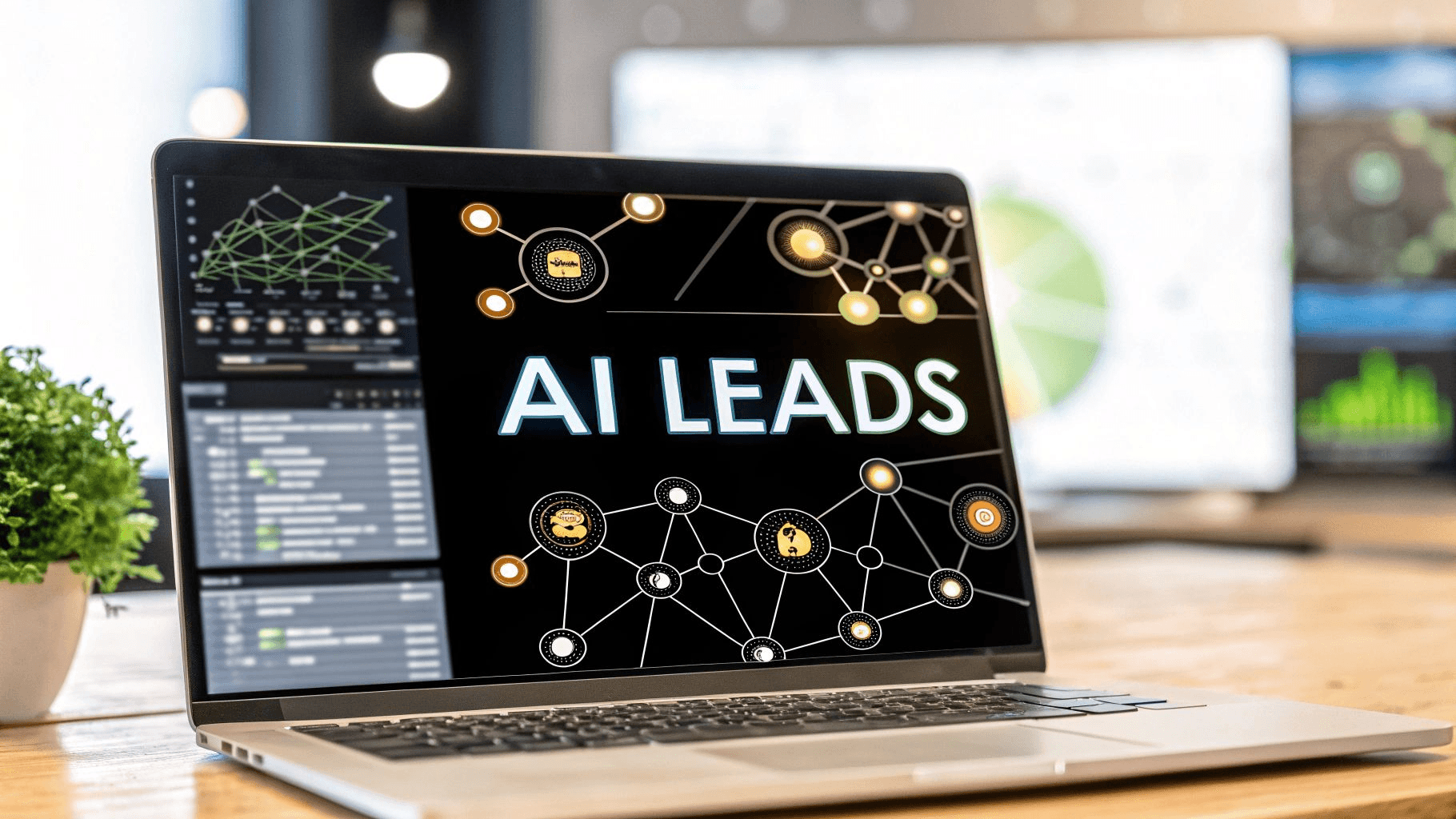
AI lead-nurturing systems are automated platforms that use machine learning and rule-based automation to track, segment, and communicate with prospects across email, chat, social, and ads, so each lead receives the right message at the right time without requiring manual rep effort. They continuously:
Observe behavior
Re-rank priorities
Trigger personalized touchpoints that push prospects down the funnel toward a sale.
What are AI Lead Nurturing Systems?
AI lead-nurturing systems combine data ingestion, predictive models, and multi-channel delivery to deliver ongoing, personalized outreach. Think of one as a competent operations team that never sleeps: it collects signals from your CRM, website, and messaging channels, enriches contact records, scores intent, and automatically sequences tailored content and follow-ups.
The result is consistent, timely personalization at scale, like a conductor cueing the right instrument at the exact beat so the whole piece coheres.
Why is lead nurturing important?
Lead nurturing turns interest into a relationship, and relationships into transactions. It’s how you learn a prospect’s constraints, show value over time, and earn the right to offer a solution. The practical payoff is simple: better understanding of buyer pain points, higher-priority pipelines for reps to focus on, and sustained trust that leads to repeat business.
This is precisely the pressure small teams face when volume rises: manual follow-up becomes exhausting and inconsistent, and opportunities slip away simply because there are not enough hours in the day.
AI Lead Nurturing vs. Manual Nurturing: What’s the Difference?
Manual nurturing depends on people doing repetitive research, drafting messages, and remembering to follow up, which scales only as far as headcount allows. AI-driven nurturing automates identification, personalization, and sequencing, so outreach is continuous and behavior-driven rather than calendar-driven.
The practical differences are apparent: automated processes ingest data in real time, scale personalization across thousands of prospects, and keep follow-ups consistent so nothing falls through the cracks.
The Main Components of AI Lead Nurturing Systems
Identifying, Scoring, and Segmenting Leads
AI systems automatically pull and enrich contact and firmographic data, then apply models to rank each lead’s readiness. Integration with your CRM and web analytics enables the system to update scores when someone clicks a pricing page or opens a demo invite.
That dynamic ranking is why 85% of businesses that use AI for lead nurturing report a significant increase in lead conversion rates, which signals that scoring plus timely outreach translates into more leads becoming sales-ready.
Personalizing Content and Automating Delivery
Segmentation by intent, behavior, and technographic or firmographic signals enables AI to assemble and send messages that actually fit the lead's stage in the buyer’s journey. Automation handles versioning, A/B testing, and cadence, freeing reps to step in only when a lead hits high intent.
This keeps volume manageable and preserves a human touch for the moments that matter, while the platform runs hundreds of routine interactions automatically.
Providing Predictive Analytics and Dynamic Optimization
The most valuable part is the loop: models learn which content, subject lines, and outreach times perform best, and then automatically adjust future messaging.
That learning reduces wasted spend and clarifies which channels drive the most impact for your ICP. It directly affects the bottom line: companies using AI lead-nurturing systems see a 30% reduction in customer acquisition costs, demonstrating that automation lowers the average cost to win customers as outreach scales.
When Teams Keep Doing Things the Old Way, Here’s What Happens
Most teams manage outreach with spreadsheets and manual email threads because they are familiar and require no new tools. That works early on, but as lead volume grows, response times stretch, follow-up becomes inconsistent, and high-intent prospects get buried.
Teams find that platforms like AI Acquisition centralize enrichment, automate scoring, and orchestrate multi-agent sequences, compressing qualification cycles from days to hours while keeping human reps focused on closing rather than chasing.
How These Pieces Change Sales Workflows
When you combine real-time scoring, behavior-driven personalization, and continuous optimization, the role of a rep shifts from mass outreach to high-value conversion work. That means smaller teams can handle larger pipelines without hiring proportionally more staff, and the work becomes less about busywork and more about relationship craft.
The tradeoff is learning how to trust and audit models, but once governance is in place, throughput and consistency improve markedly.
A Practical Image to Keep in Mind
Automation is not a set-and-forget black box. Treat the system like a skilled junior rep you train and audit: give it clean data, set rules for escalation, review edge-case flags, and tune sequences from performance signals. That way, the system scales the routine, and your team handles nuance.
That feels like progress, until deciding precisely what to automate first reveals unexpected tradeoffs.
Related Reading
9 Things You Can Automate to Nurture Your Agency’s Leads

1. Automated Lead Scoring
You already know scoring ranks prospects; what most teams miss is the operational loop needed to keep scores meaningful. Automate ingestion of firmographics, page visits, content downloads, and conversational cues, then let models update scores in real time. AI improves this by finding non-obvious correlations, for example, combining webinar attendance with a repeat pricing-page visit to mark a lead as "high intent."
For agencies, the gain is time reclaimed for closing work; for leads, it means faster, more relevant outreach. A practical play: run weekly score recalibration, surface the top 20 leads for a human call, and log the outcome to tighten model signals.
2. AI Salespeople
AI sales agents handle extended voice interactions, recall prior context, and complete CRM tasks at the end of the call. The improvement is twofold: consistency in follow-up and the ability to run dozens of parallel conversations without burnout. Agencies scale coverage across time zones; leads get immediate, coherent answers and appointment options.
Example: Deploy an AI agent to qualify routine discovery calls and escalate only qualified demos to senior reps, freeing human time for complex negotiations.
3. Automated PPC Bidding Strategies
Automated bidding tunes bids by conversion probability, rather than blunt rules. AI uses conversion signals and budget pacing to pursue goals like clicks, impression share, or target CPA without constant manual tweaking. Agencies see steadier lead flow and better ROAS; leads find landing pages faster because high-intent queries trigger timely ads.
Practically, set experiments where one campaign uses smart bidding and another manual control, compare cost per lead and conversion velocity, then roll the winner into the nurture stack.
4. Automated Cross-Platform Messaging
Automated cross-platform messaging connects ad leads, Messenger threads, email, and SMS into a single engagement thread, with routing rules and templates that follow the prospect. AI selects the next best message and the channel most likely to elicit a response based on past behavior.
Strategic Multi-Channel Fallbacks
For agencies, that reduces duplicated outreach and missed touchpoints; for leads, it prevents repetitive questions and delivers the message where they already are. A hands-on tactic: map everyday customer journeys, then create channel-fallback rules so a missed SMS attempt triggers an email within X hours.
5. Dynamic Content Delivery
Dynamic delivery swaps page blocks, CTAs, and case studies based on a lead’s:
Industry
Behavior
Intent
Dynamic Content Personalization
AI determines which content variant resonates and serves it without creating new templates for each segment. Agencies can pitch multiple verticals from the same site while keeping messaging tight; leads receive instantly relevant materials, shortening evaluation cycles. Think of it like a stage manager that swaps props depending on the actor on stage, so every visitor sees the version that speaks to them.
6. Blockchain Smart Contracts
Smart contracts automate conditional business events and preserve immutable records of actions, reducing reconciliation work and enabling verification of lead claims. AI picks which triggers to fire, and blockchain guarantees the sequence cannot be tampered with.
Agencies benefit from cleaner audit trails and fewer disputes over commitments, resulting in faster, more reliable transactions when contracts execute automatically after a verified form fill. Use case: automatic onboarding emails and initial invoice issuance when a lead passes identity verification and pays a first deposit.
7. AI-Generated Content Audits
Generative tools can run thorough website and content audits, flagging technical SEO problems, content gaps, and topical opportunities in minutes. AI improves the process by synthesizing competitor signals and keyword intent into prioritized recommendations.
Agencies win efficient lead magnets you can deliver as a free audit, converting awareness into a working relationship; leads get actionable, specific guidance instead of a vague checklist. Pair automated audits with a short human review, and you keep lead quality high while cutting audit time from days to a few hours.
8. Automated GMB Chat Responses
Pre-filled FAQ responses and guided prompts on Google Business Profiles can answer common local inquiries instantly, with links that drive deeper engagement. AI selects the best FAQ variant and suggests follow-ups when questions shift toward purchase intent.
Agencies reduce response lag and capture more local queries; leads receive fast, practical answers that push them toward contact. A simple experiment: pre-fill the top 10 FAQs with next-step links and track which replies convert to calls or direction requests.
9. Automated Sales Funnel Optimization
Automate A/B testing, heatmap analysis, and multivariate experiments to enable the funnel to adapt continuously. AI analyzes behavioral recordings, finds friction points, and pushes winning variants into production. Agencies get steady conversion improvements without a backlogged optimization queue; leads see clearer paths to conversion because the funnel removes recurring friction.
Compounding Revenue Through Automation
When agencies integrate these optimizations into their nurture sequences, the impact compounds over time. This synergy aligns with industry benchmarks showing that automated lead nurturing can drive a 10% or greater increase in revenue within just six to nine months, proving that consistent, machine-led engagement directly accelerates growth.
Most teams handle these pieces with ad hoc scripts, spreadsheets, and reactive fixes because that approach is familiar and requires no new platform. As lead counts grow, those workarounds fragment: follow-ups stretch, data drifts, and conversion handoffs break down.
Platforms like AI Acquisition provide a bridge, centralizing connectors, no-code multi-agent workflows, and prebuilt escalation rules, reducing response lag from days to hours while maintaining auditability and human-quality interactions.
Scaling Beyond Manual Operations
I have seen the pattern repeat across boutique and growing agencies: manual scoring and one-off scripts get you to a point, but they start costing real opportunities and eroding team morale. That pressure feels like constantly patching a leaky roof during a storm rather than fixing the structure.
Once you recognize that, the playbook becomes choosing the handful of automations that eliminate your biggest daily drains, then building escalation rules. Hence, humans only touch the edges that require nuance.
This works in practice because automation does not replace the human element; it reshuffles it, putting humans where they add the most value: negotiating, closing, and relationship work, while the system runs the routine.
Related Reading
Steps and Strategies for Artificial Intelligence Lead Automation and Nurture

A practical implementation follows a clear ladder: prepare clean data and stakeholder SLAs, build persona-stage playbooks that the AI can execute, run small pilots while measuring intent signals, then iterate and scale by automating the proven sequences. The work is mostly orchestration, not invention:
Set measurable gates
Train the AI on your voice
Keep humans in the loop for edge cases
What Do You Need to Begin Lead Nurturing?
Start with a minimalist checklist you can complete in 30 days: a single-source-of-truth CRM, event tracking on key pages, a content library with three assets per persona-stage, a decision-maker roster (sales, marketing, ops), and an SLA for first human follow-up.
Add governance rules up front, such as frequency caps, privacy retention periods, and a RACI for hand-offs.
Assign each play a success metric and a 30-, 60-, and 90-day milestone so you know when to expand a pilot into production.
Buyer Personas
Turn each persona into an operational object, not a document. For each persona, create a one-page canvas that includes preferred channels, three typical objections, signature keywords they search for, and three high-value content assets mapped to their buying signals. Tag contacts in your CRM with the persona ID and expose it as a routing field for automation, so the AI can select the correct content variant and cadence without relying on fuzzy heuristics.
Sales Cycle
Map micro-conversions and acceptable wait windows for each stage. Define, for example, the time you expect a lead to move from Awareness to Consideration, and what behavior resets their clock. Build score decay rules to prevent a dormant lead from clogging the active pipeline. Set an SLA that defines when a lead is escalated to sales, and log the reason for every escalation to refine the model later.
Content for Lead-Nurturing Campaigns
Build a content matrix that the AI can query: tag each asset by persona, stage, outcome, and estimated read time. Prefer modular assets that can be recombined, such as a short case snippet plus a one-slide deck. Assign unique links and UTM tags to each asset so the AI can learn which micro-content nudges conversions for each persona.
Key Strategies for Effective AI Lead Nurturing
How do you make personalization behavior-driven rather than guesswork?
Define explicit behavioral triggers the AI can act on, for example: pricing-page repeat visit plus webinar attendance equals “high curiosity” trigger. Create substitution tokens for the company name, pain, and outcome to make messages sound more human. Add a rule that limits personalization depth when data is sparse to prevent awkward guesses.
How should I integrate AI with CRM without disrupting workflows?
Treat the CRM as the canonical event store. Map three classes of fields into the AI: identity, engagement events, and lifecycle stage. Use simple, auditable field names and a nightly deduplication policy. Implement a monitoring job that flags sync failures and spikes in field values to catch integration drift early.
Which channels should I use, and how do I avoid fatigue?
Score channels by expected response and cost to the relationship, then layer them into fallbacks: start with the persona-preferred channel; if there is no response after X hours, switch to an alternate channel with a lower cadence. Limit touch frequency across all channels using a global throttle so a lead never receives more than N outreach touches in M days.
How do I build workflows that adapt in real time?
Design workflows with micro-branches and clear exit conditions. Keep branches short and decisive: if a lead clicks a product demo link, move them to a qualification track and pause other sequences. Log every branch taken so you can later analyze which paths win. For urgent intent signals, configure real-time alerts to the rep team with context and suggested next steps.
How do you make predictive scoring sound and defensible?
Start with a sparse, transparent model that weights a handful of high-signal features: repeated pricing-page views, recent webinar attendance, job title seniority, and company size. Validate the model weekly against closed deals using precision at the top K, and iterate by adding or removing features. Build a manual override for sales so the model suggests priorities, but humans can raise or lower priority with a logged rationale.
Implementing AI Lead Nurturing in Your Outbound Strategy
Run a 4-Week Pilot on a Narrow ICP Segment
Limit sends to a fraction of your weekly volume, and randomize half the segment into a control group. Measure reply rate, meeting rate, and conversion to qualified opportunity. Only scale sequences that beat control on both reply and conversion, then double volume in controlled increments, so deliverability and rep capacity keep up.
Prepare Your Data and Integrate Your CRM
Create a field-mapping checklist:
Identity fields
Company attributes
Persona tag
Latest engagement timestamp, score, and handoff status. Run three validation queries: missing email percentage, duplicate contact rate, and percentage of contacts without a persona tag. Fix pipelines that produce more than 5 percent missing or duplicated data before the AI goes live.
Design AI-Driven Nurture Playbooks and Workflows
Assemble playbooks as templates that pair a persona with a stage and a preferred channel mix, then define triggers, branch conditions, and escalation rules. Keep sequences short at first, typically 6 to 12 touches, with clear rules for pause, resume, and human takeover. Store playbooks with version history so you can A/B test variants and roll back if a change underperforms.
Train and Monitor Your AI Assistant
Feed the AI 50 to 200 examples of high-performing messages and three examples of off-brand or risky responses. Set a review cadence, weekly at first, to audit random message samples for tone, accuracy, and factual claims. Establish guardrails: a hallucination detection rule, a maximum personalization depth, and a fallback template when the model’s confidence is low.
Track Performance and Continuously Optimize
Use clean experiments: change one variable at a time and run until you reach a sufficient sample size or a predefined time window. Track leading metrics like reply rate and meeting rate, and lagging metrics like conversion velocity and pipeline contribution. Run cohort analysis by persona and sequence to spot where a play scales and where it degrades.
The Fragmented Agency Growth Trap
A typical pattern I see across small agencies and growing teams is this: they try to map complex buyer journeys in a single weekend, which leaves blind spots that lead to duplicate outreach and inconsistent messaging. The familiar approach is to patch spreadsheets and hard-coded rules, which keeps things moving early but creates friction as volume grows.
Teams find that solutions like no-code multi-agent platforms centralize connectors, automate routing and playbooks, and compress response lag from days to hours while keeping audit logs and human-quality controls.
When You Need to Test and Refine, What Specifically Should You Measure?
Prioritize metrics that tell a causal story, for example, conversion per active lead, average touches to meeting, and time from first intent signal to reply. Track model health separately, including:
Prediction accuracy over the past 30 days
Manual override rate
Changes in feature importance
If prediction accuracy drifts or manual overrides climb, pause automated escalation and run a calibration sweep.
How Do You Scale Without Breaking the Machine?
Lock in two operational controls: a volume ramp plan tied to rep capacity and automated throttles to prevent channel fatigue. Automate role-based handoffs so the system pages human reps only when a lead meets a high-intent threshold, and maintain a weekly review to convert top-performing playbooks into standardized templates for broader rollout.
Practical Experiment Templates You Can Copy
Response Time Test, 4 weeks: Split by hours-to-first-outreach to test the effect on reply rate.
Channel Mix A/B, 6 weeks: Keep content constant, vary channel order to test where responses concentrate.
Playbook Variant, 8 weeks: Test two branching logics to see which produces higher MQL-to-SQL conversion.
A simple metaphor that helps teams act: treat your nurture like a mechanical watch; gears must mesh precisely. Clean data is the gear oil, playbooks are the gear teeth, and measurement is the balance spring that keeps time. If any one part is off, timing slips, and high-intent leads fall through.
Industry data indicates that companies leveraging AI for lead nurturing experience a 50% increase in conversion rates. By implementing these automated playbooks, agencies can significantly improve outcomes and scale production without proportional headcount growth.
The Shift to Operational Baseline
On a macro level, industry forecasts indicate that 85% of B2B firms will adopt AI-driven lead generation by the end of 2025. This rapid saturation suggests that the competitive advantage of automation is shifting from a premium "extra" to an operational baseline, making it essential for firms to implement these systems now to remain competitive.
Best Practices for Lead Nurturing Automation
Start by treating AI lead nurturing as a disciplined system, not a feature set: lock in data quality, set strict personalization limits, route escalations to people, and measure the right signals continuously so automation improves trust and conversion rather than eroding both.
How Do We Make the Data Trustworthy?
Start with one canonical contact store, clear dedupe rules, and nightly validation checks that fail loudly. Build simple "data contracts" between sources so enrichment jobs cannot write new values without passing sanity checks, and run three quick queries each morning, for example, missing email rate, duplicate contact spikes, and percent of contacts without a persona tag.
When we ran a focused 30-day cleanup for a small agency, enforcing these checks and removing duplicate contacts cut pointless sends and freed reps to work the actually engaged leads within the month.
How Personal Should Messages Get?
Personalization wins when it reflects relevant behavior, not guesses about feelings. Limit token fields to three high-confidence items, require a model confidence threshold before inserting fine-grained claims, and never guess life events from sparse signals.
According to a DemandGen Report, lead-nurturing emails deliver 4-10 times the response rate of standalone email blasts. That means email sequences deserve investment in thoughtful, behavior-driven personal touches, while high-variance personalization belongs in later stages where human reps own the nuance.
How Often Should You Follow Up Without Burning Trust?
Define cadence buckets by intent: curiosity, consideration, and high-intent rescue, each with its own frequency caps and cooling windows. Use a global throttle that prevents any contact from seeing more than X touches across channels in Y days, and prefer channel fallback logic so a missed SMS triggers a single, softer email rather than repeating the same message.
Treat frequency as a safety control, not a variable to maximize; overreach costs goodwill faster than it buys attention.
How Do We Keep Humans in the Loop Where It Matters?
Design explicit human takeover triggers: a jump in intent score, negative sentiment detected in a reply, deal value above a set threshold, or repeated failed attempts to convert. Add a weekly audit where a human reviews a randomized sample of 200 automated messages for tone and accuracy, and set a manual-override ceiling, for example, if manual overrides exceed 10% in a week, pause the sequence for retraining and review.
This preserves the human-quality moments that build relationships while allowing automation to cover routine touchpoints.
Which Metrics and Alerts Should You Watch First?
Track leading signals that point to behavior change, such as reply rate, meeting rate, time first to reply, and conversion per active lead, and pair them with model-health metrics like prediction precision for top K leads and manual override rate.
Maximizing ROI Through Strategic Nurturing
Research from Forrester indicates that companies excelling at lead nurturing generate 50% more sales-ready leads at a 33% lower cost. These figures elevate lead nurturing from a secondary support activity to a high-impact pipeline lever, allowing agencies to tie performance metrics directly to representative capacity and marketing spend for data-driven decision-making.
Most teams do this the familiar way, with scripts, spreadsheets, and email threads that feel safe and cheap. The problem is that as volume grows, context fragments, routing fails, and messaging becomes inconsistent, silently eroding trust and wasting reps' time.
Solutions like AI Acquisition provide no-code multi-agent workflows, centralized routing, and audit trails, enabling teams to scale consistent, human-quality outreach without adding headcount and to keep governance and escalation visible.
What Ethical and Compliance Guardrails Are Non-Negotiable?
Record and timestamp consent for messaging, avoid including PII in subject lines, set retention limits aligned with jurisdictional rules, and implement a precise opt-out flow visible across all channels. For SMS and cold outreach, keep automated retries conservative and require explicit consent before adding someone to a multi-step nurture.
Keep an immutable audit log for any automated decision that changes a lead’s status, so you can explain an outcome if required.
How Do We Test Changes Without Breaking Deliverability or Trust?
Run small, randomized pilots with control groups.
Change one variable at a time.
Set clear stop criteria: if reply rate drops or unsubscribe rate spikes beyond your tolerance within the test window, revert quickly.
Think of personalization like seasoning a stew: add small amounts and taste frequently. Over-seasoning is impossible to undo at scale.
Schedule model retraining weekly at first, then move to a longer cadence once manual-override rates stabilize below your threshold.
That solution feels tidy until you see the real tradeoffs between speed, safety, and personalization—and that friction is precisely where the next step gets interesting.
Related Reading
AI Sales Prospecting Tools
AI Tools For B2B Marketing
AI For Sales Calls
Lead Qualification Strategies
Get Access to Our AI Growth Consultant Agent for Free Today
We built AI Acquisition to make building and scaling an AI-powered business simple so that you can skip the tech overhead and large teams. Join 1,200+ entrepreneurs using the all-in-one agentic platform, whose clients average $18,105 in monthly revenue and have generated over $30 million this year.
Get your FREE AI growth consultant today and let a digital workforce of AI agents run lead generation and nurture sequences, fill your pipeline, book meetings, and deliver human-quality results. At the same time, you focus on growth, not guesswork.