You know the routine: long lists of names, low response rates, and hours spent chasing the wrong people. What if your next outreach targeted the right contacts automatically? AI sales prospecting tools use machine learning, predictive analytics, intent data, and lead scoring to surface high quality prospects and personalize outreach. This article shows how to quickly identify and connect with high quality sales leads using AI tools that save time, improve targeting, and boost conversion rates.
To reach those goals, AI Acquisition's AI automation software helps you discover and enrich contacts, score leads, integrate with your CRM, and automate outreach so your team spends more time closing deals. Ready to see how prospecting automation, sales intelligence, and outreach personalization can speed your pipeline and lift conversion rates?
Summary
Manual prospecting is breaking pipelines: over 60% of sales teams report a decline in lead quality from traditional prospecting tools, which leads reps to spend hours on dead ends instead of qualified conversations.
High-volume, low-personalization outreach undermines deliverability and outcomes, with traditional methods achieving a 30% lower conversion rate than AI-driven approaches.
Run tight pilots to prove impact, for example a 2 to 5 rep test over 4 to 6 weeks with a control group and one primary revenue metric, then scale only after consistent wins.
AI reclaims seller time and improves efficiency, with tools that cut prospecting time by 30%, reduce lead qualification time by up to 50%, and increase productivity by up to 40%.
Verification and integration beat volume, so target one vertical, one company-size band, and one territory to iterate fast and aim to see impact inside a month.
The market is crowded: 32 AI sales prospecting tools are cataloged. Prioritize platforms that centralize enrichment, intent scoring, and multichannel sequencing to avoid a fragmented stack.
This is where AI Acquisition's AI automation software fits in: it automates contact discovery and enrichment, scores leads, integrates with CRMs, and coordinates multichannel outreach while preserving audit trails and human approval gates.
Why Traditional Prospecting Is Failing Sales Teams

Manual prospecting, cold calls, and generic outreach are slow, inconsistent, and increasingly ineffective because they are built on stale data, one-size-fits-all messaging, and the wrong assumption that sheer volume and persistence will win the day. Those tactics create friction at every step of the modern buyer journey, resulting in missed opportunities, wasted rep time, and thin, unreliable pipelines.
Why Do Manual Methods Drag So Much Time and Still Miss the Mark?
When teams rely on spreadsheets, purchased lists, and cookie‑cutter templates, the work looks busy, but it is low-yield. List hygiene and manual prospect enrichment consume time that could be used to engage real opportunities. Prospecting becomes administrative triage:
Dedupe
Correct titles
Update email domains
Chase bounced addresses
That slow loop kills momentum and morale, and it destroys the rhythm reps need to build meaningful conversations.
How Do Inaccurate Leads and Data Problems Show Up in Everyday Work?
Pattern recognition tells the story: contact churn and role changes outpace manual updates, so bought or borrowed lists often contain obsolete contacts within weeks. Bad data produces two predictable outcomes: lower-quality conversations and inflated activity metrics that do not convert. According to LeadTalk, over 60% of sales teams report a decline in lead quality when using traditional prospecting tools, which explains why representatives spend more time on dead ends than on engaging with qualified prospects.
Why Does Persistence Alone Stop Working?
The old creed that "sales is all hustle" ignores how buying behavior and attention have changed. Buyers now expect contextual relevance across multiple channels before engaging. Repeating generic messages increases noise and damages sender reputation instead of opening doors. In practice, persistence without intelligence simply amplifies wasted effort and accelerates deliverability problems.
Where Does Outreach Volume Backfire?
Problem-first: high-volume, low-personalization email strategies drive down deliverability and sender reputation. Spam filters and complaint thresholds punish spray-and-pray playbooks, turning reach into risk. The risk is tangible: it reduces conversion rates and lengthens sales cycles because fewer messages reach decision-makers. SuperAGI reports that traditional prospecting methods yield a 30% lower conversion rate compared to AI-driven approaches, illustrating how outdated tactics translate directly into lost revenue.
What About Cold Calling—Does It Still Work?
Confident stance: the medium is not dead, the method was. Cold calling that relies on scripts and luck fails. Research-driven calling, where phone outreach targets accounts showing real intent signals, produces far higher connection and meeting rates. The critical difference is intent data, persona-aware scripts, and timing optimization. When you sequence a tailored call after a meaningful digital touch—an article read, a demo request, a content download—the phone becomes a finishing move, not a cold hammer blow.
Why Single-Channel Approaches Fail More Now Than Before?
Constraint-based: single channels work when buyer preferences are homogeneous, and decision processes are simple. As committees expand and channel preferences fragment across roles, single-channel outreach collapses. Multi-channel prospecting that coordinates email, phone, social, and occasional direct mail creates context and credibility.
Beyond Disconnected Prospecting
Treat each channel as a layer that, when combined, produces recognizable patterns buyers can trust. Most teams handle prospecting the familiar way, with disconnected tools, manual research, and generic cadences. That approach is understandable; it requires no new platforms and feels actionable.
Fractured Workflows, Rising Risks
As stakeholders multiply and privacy rules tighten, the familiar process fragments: context disappears across systems, touchpoint timing slips, and compliance gaps emerge, creating legal and reputational exposure. Platforms like AI Acquisition provide an alternative path, centralizing agentic AI and multi-agent workflows that automate enrichment, run intent-based lead scoring, and coordinate multi-channel sequences, compressing hours of manual research into minutes while preserving audit trails and consent records.
How Do These Failures Feel at the Team Level?
Specific experience: sales leaders watch activity numbers climb while pipeline quality falls. Reps talk about being "busy but unproductive." Managers see higher churn because top performers refuse to spend time on low-quality leads. That is emotional labor and operational waste stacked together. Intelligent sales automation and prospect enrichment tools reallocate time back to conversations that matter, letting sellers do what they do best: advise and close, not scrub data.
What Practical Forces Are Making Generic Outreach Obsolete?
Pattern recognition: three factors converge.
Buyer expectations for personalization have risen with AI-enabled research.
Privacy laws and stricter deliverability controls limit indiscriminate outreach.
Decision teams are larger and more nuanced in preferences.
Those forces mean that templates without contextual intelligence now read as lazy rather than efficient. A quick analogy to make this concrete: old-school prospecting is like fishing with a cast net in a crowded harbor, hoping something gets caught. Intelligent, AI-assisted prospecting is like using sonar and a targeted spear: you see the fish, you aim where they are clustered, and you waste far less bait. The difference shows up in booked meetings, shorter sales cycles, and higher average deal quality.
Which Operational Fixes Change Outcomes?
Actionable fixes center on two moves: improve signal, reduce noise. Invest in intent data and automated enrichment so your team only pings prospects who are behaving like buyers. Replace blanket templates with dynamic personalization driven by buyer intent signals, role-based value props, and recent events. Design cadences that mix channels and insert human checkpoints where context and judgment matter.
Related Reading
How AI Is Changing the Sales Prospecting Game
AI is not a glorified scheduler or a faster spreadsheet; it is a decision layer that turns noisy signals into predictable actions: it surfaces which prospects to prioritize, why they are ready, and how to reach them with messages that actually match the moment. Relying only on CRM fields and manual rules leaves predictable revenue unrealized because those systems rarely synthesize multi-source intent, score probabilistic outcomes, or personalize across channels at scale.
What Does "Data-Driven Insight" Look Like in Everyday Prospecting?

This is where AI turns raw logs into narratives. Instead of a single "contact last touched" timestamp, an AI pipeline builds a short intent profile for each account: recent content reads, hiring patterns, product launches, and competitor mentions, fused with your CRM history. Pattern recognition separates signal from noise, so you stop reacting to every press release and start acting on events that historically precede a purchase. Think of it like a sonar operator, not a scanner, where the system filters echoes into reliable leads you can trust to ping first.
How Do Predictive Scores Prioritize the Right People?
Predictive scoring combines labeled outcomes from your CRM with features pulled from firmographics, technographics, engagement, and third-party intent feeds. Practical approaches range from simple propensity rules to ensemble models that retrain on new closed-won data every 30 to 90 days.
From Trust to Lift
For small teams, start with explainable models so reps trust the recommendations; as you gather outcomes, move to more complex models to squeeze additional lift. This staged approach balances interpretability and accuracy, and it exposes which signals truly move conversion metrics in your business.
Which Signals Are Worth Paying Attention to, and Which Create Noise?
Signals fall into categories, and each category carries different signal-to-noise ratios: first-party behavior is highest value, third-party intent and funding events are medium, and social mentions are high volume but noisy. The failure mode is treating every signal equally. A cleaner rule is to weight signals by predictive lift and recency, then gate alerts behind a confidence threshold to avoid alert fatigue. That way, the AI surfaces leads you need to act on now, not every whisper in the market. Most teams handle alerts across disconnected tools because it feels familiar and requires no new architecture. That works until alerts fragment and nobody owns follow-up, causing missed moments and duplicative outreach.
Scaling Without Headcount
Solutions like AI Acquisition provide a single growth operating system with zero-code agent deployment and continuous enrichment, so teams find signals, qualify context, and capture leads 24/7 without adding headcount. In short, platforms like this consolidate triggers, reduce manual handoffs, and ensure consistent action across reps.
How Do You Scale Multi-Channel Personalization Without Sounding Robotic?
The secret is layered personalization, not infinite variations. Start with an event-based hook, add a micro-personal detail drawn from enrichment, and then vary the channel intent:
LinkedIn outreach opens dialogue.
An email delivers a short business case.
A call follows to confirm fit.
Guarded AI Personalization
AI assembles these pieces dynamically, populating tokens with context and creating a brief for the rep to review before the call. Guardrails matter:
Enforce tone templates
Limit automated personal facts per message
Include mandatory human review for high-value targets so automated scale never sacrifices authenticity.
What Does Enrichment Add Beyond Scraping Names and Emails?
Enrichment is synthesis, not aggregation. The useful outputs include influence maps showing buying committees, confidence scores on contact data, and micro-narratives explaining why an account is relevant right now. That turns a contact record into a prep file a rep can read in 90 seconds, replacing hours of manual research. The practical benefit is faster qualifying conversations and more focused discovery, which helps teams maintain high conversion velocity as outreach scales.
Why Start Small with AI, and How Do You Avoid Tool Overload?
This pattern appears across agencies and startups: adopting many niche point tools feels like progress, but it fragments workflows and buries outcomes. If your goal is revenue, prioritize integrating one agentic operating layer that writes back to the CRM, enforces cadence, and measures uplift.
Validating ROI
Use a simple experiment design: run the AI-assisted sequence against your baseline for 30 to 60 days, measure meetings booked and lead-to-opportunity conversion, then iterate. That constraint-driven approach prevents wasted spend on misaligned solutions and keeps senior reps focused on closing. Evidence of market impact is clear: adoption is accelerating, and measurable performance gains are being reported. SuperAGI notes that 80% of companies already use AI in their sales processes, underscoring the growing reliance on AI-driven sales systems. Practical results are evident: Cirrus Insight reports that sales teams using AI experience a 50% increase in lead generation, demonstrating the tangible impact of AI-driven sales tools.
Mise en Place: AI as Prep Chef
A quick, vivid comparison: imagine two kitchens. One has every raw ingredient dumped on the counter and a chef who must sort it all before cooking. The other has prep stations that portion, season, and hand the exact mise en place to the chef at the right second. AI builds the prep stations so reps cook the deal, not forage for ingredients.
32 AI Sales Prospecting Tools That Make Lead Generation Easy
1. AI Acquisition
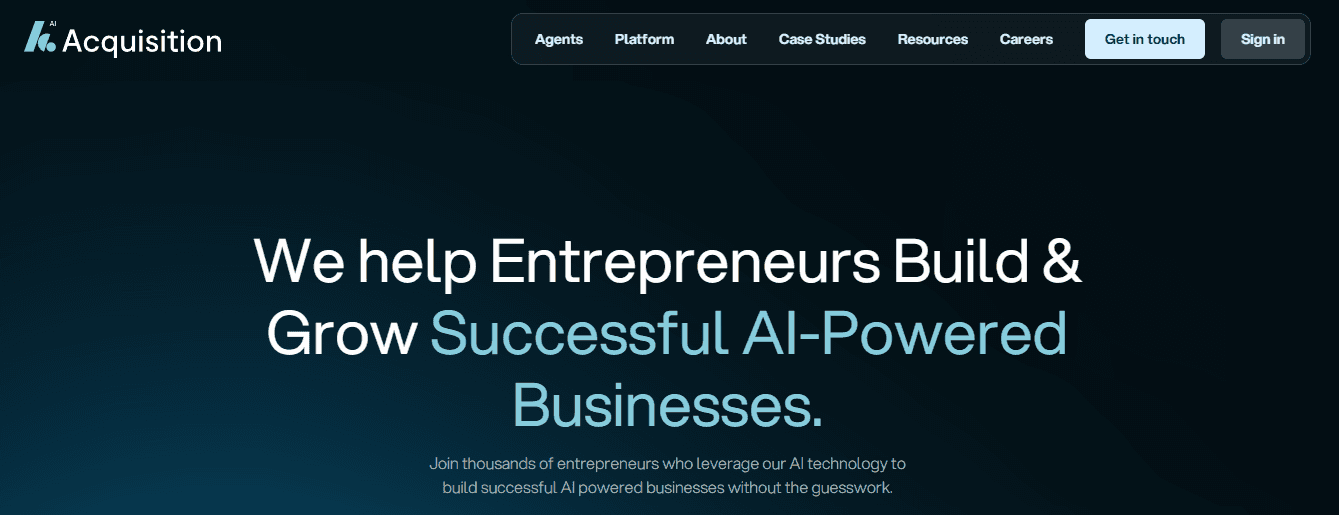
An all-in-one, agent-centric platform that runs multi-agent workflows to automate prospecting, outreach, and operations for small agencies and entrepreneurs.
Standout features:
Prebuilt agent templates (cold email, LinkedIn growth, account management)
Zero-code setup
Revenue-first analytics
Best use case / team size:
Solo founders
Two-to-ten person agencies that want 24/7 pipeline generation without hiring large teams.
Tip: Best for teams that want to replace fragmented tools with a single agentic OS and measure revenue outcomes fast.
2. LeadBeam.ai
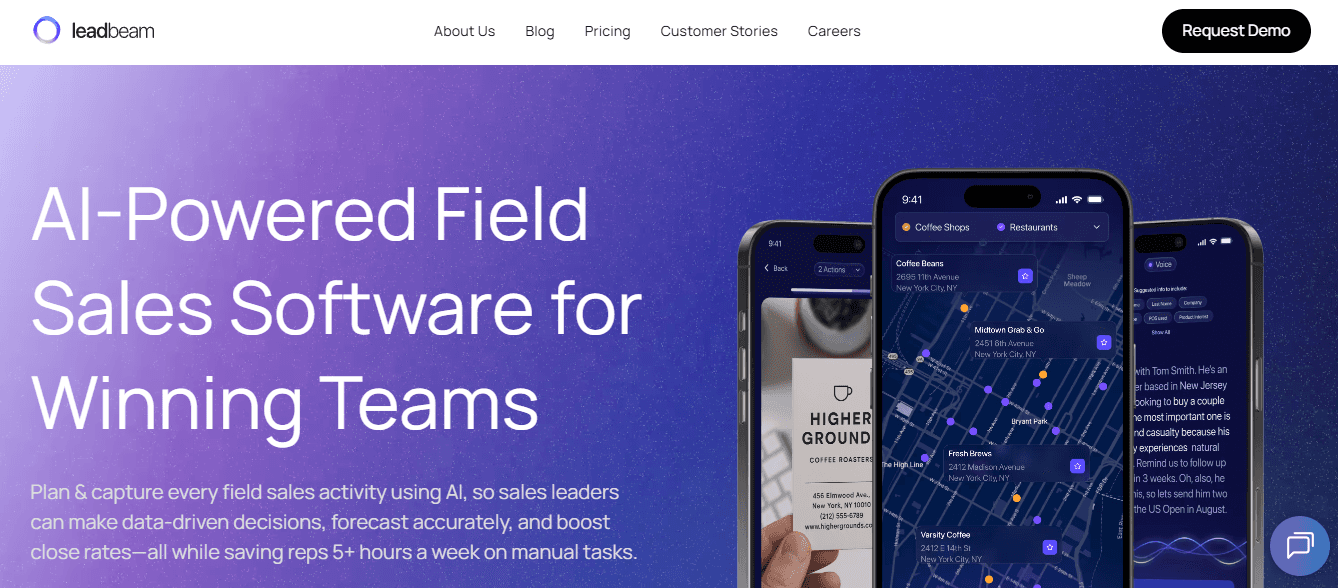
Real-time lead generation and enrichment focused on firmographic and technographic signals for B2B field sales.
Standout features:
Live technographic updates
Firmographic snapshots tied to location and role.
Best use case / team size:
Field sales teams of 10–100 reps that need current company tech stacks for contextual outreach.
Tip: Strongest when you need immediate, campaign-ready context about a prospect’s current tech.
3. Prospeo.io
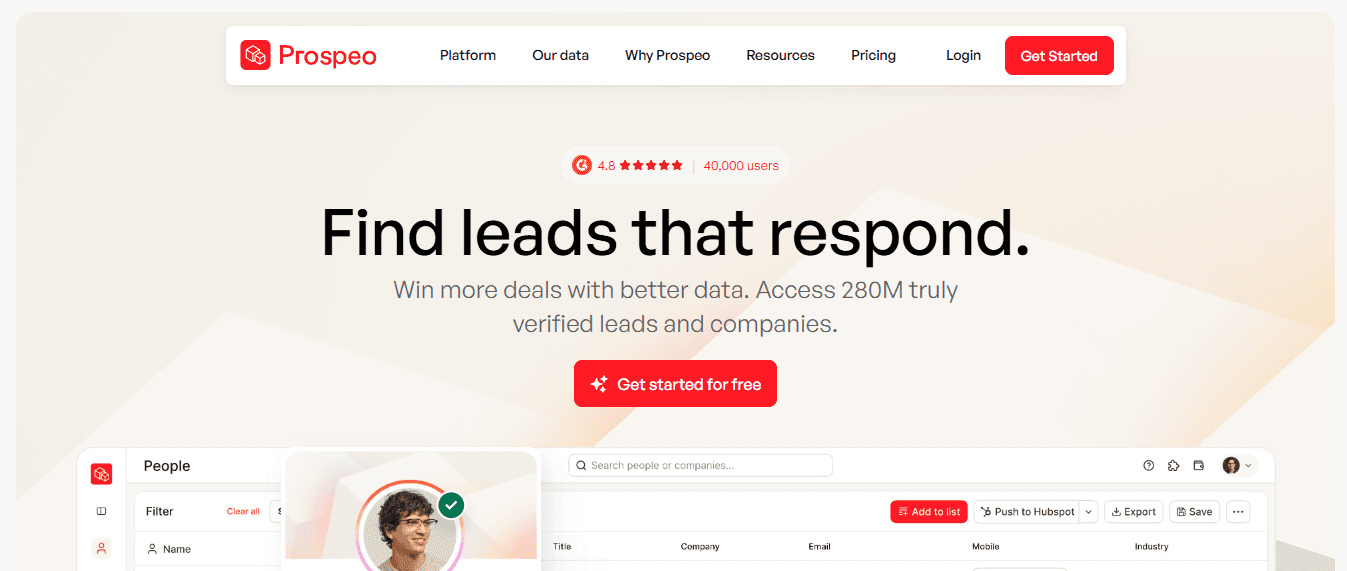
Migration and verification tool that extracts email addresses and phone numbers from LinkedIn and Sales Navigator, then validates them.
Standout features:
LinkedIn-native migration flows
Verification checks for phone and email
Best use case / team size: Small to mid sales teams using LinkedIn as a primary sourcing channel.
Tip: Use Prospeo.io when LinkedIn lists are your lead source, because verification prevents wasted sequences.
4. WarpLeads
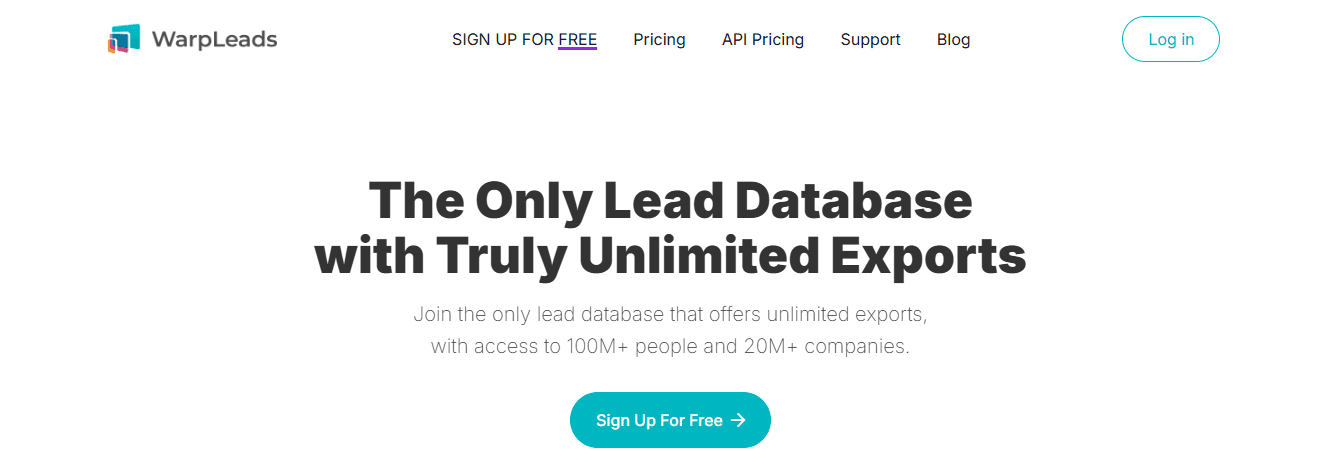
A regularly updated lead database with export to CRMs, enrichment, and de-duplication.
Standout features:
Bulk export formats
Dedupe utilities
Periodic refresh cadence
Best use case / team size: Teams that need volume, such as SDR squads of 5–30 people.
Tip: Treat WarpLeads as your bulk feed, then layer higher-quality signals before engaging.
5. Reoon YellowPages Scraper
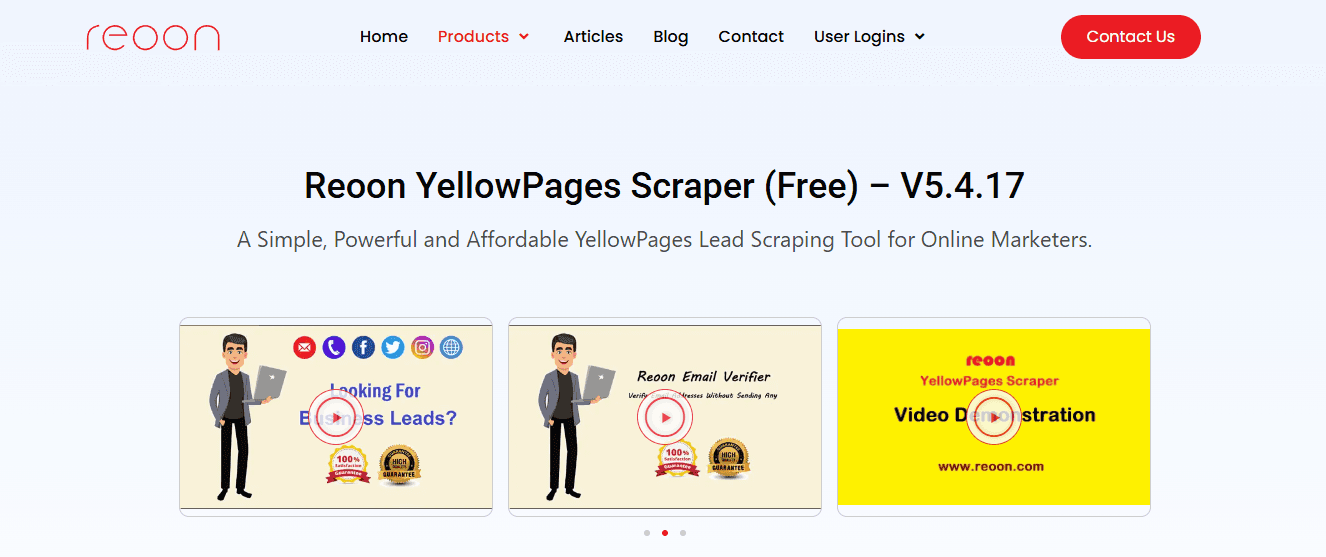
Scrapes structured business listings from Yellow Pages for localized B2B or B2C lists.
Standout features:
Structured export
Category filtering
Geo-targeted scraping
Best use case / team size: Local sales teams and agencies building regional outreach lists.
Tip: Use for neighborhood or small-business campaigns where public directory coverage is high.
6. ContactOut
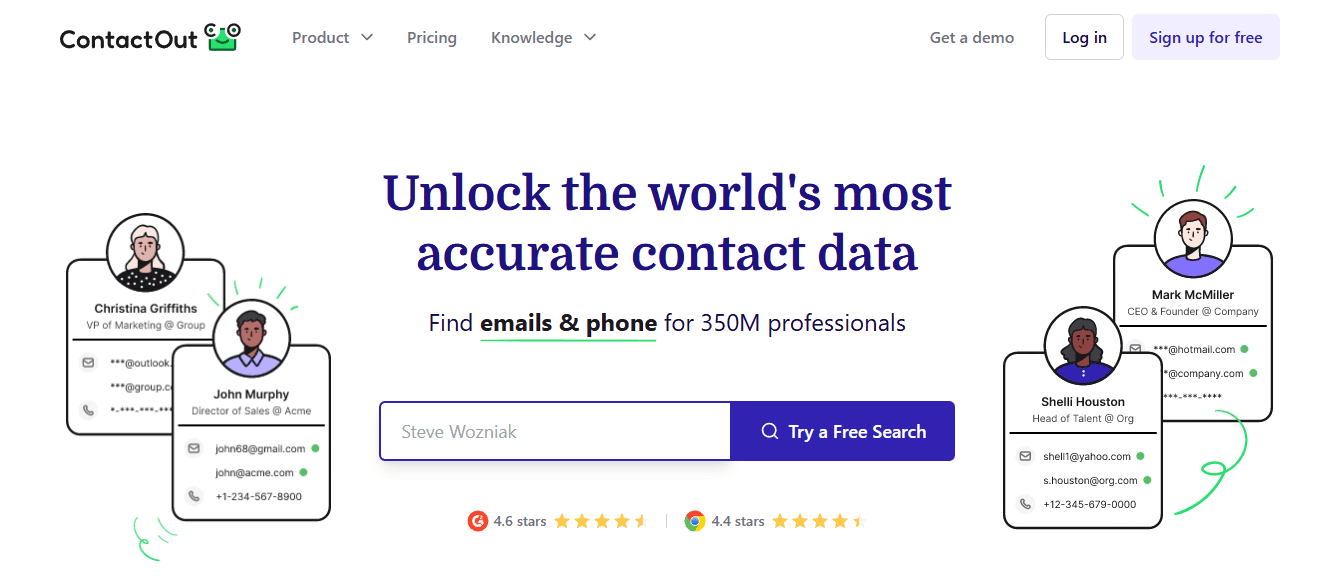
Chrome extension for finding professional emails and phone numbers on profiles.
Standout features:
Multiple contact method options per profile
Browser integration
Best use case / team size: Recruiters, solo closers, and small teams who prospect one profile at a time.
Tip: Strongest for LinkedIn-first sourcing; validate high-value contacts before mass outreach.
7. Winn.ai
An AI sales assistant that captures prospect answers from calls and imports structured notes into Salesforce or HubSpot.
Standout features:
Real-time call capture
Coaching nudges
One-click CRM import.
Best use case / team size: Customer-facing reps using Salesforce or HubSpot who need clean CRM data.
Tip: Use Winn.ai where CRM hygiene is painful, because it turns conversations into usable records.
8. Lindy.ai
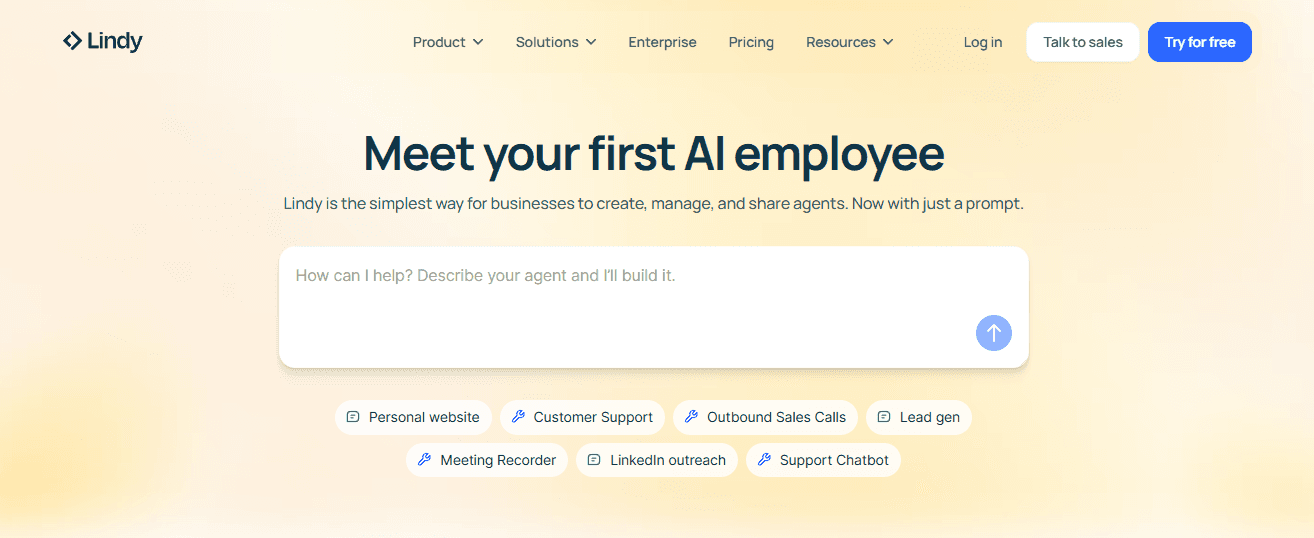
AI agent creator that triggers automated tasks inside your CRM based on events like incoming email.
Standout features:
Trigger-based agents
Hundreds of integrations
Task orchestration.
Best use case / team size: Ops-heavy teams that want rule-based automation without engineering.
Tip: Best when you need event-driven automation, such as auto-assigning follow-ups after a demo request.
9. Thoughtly
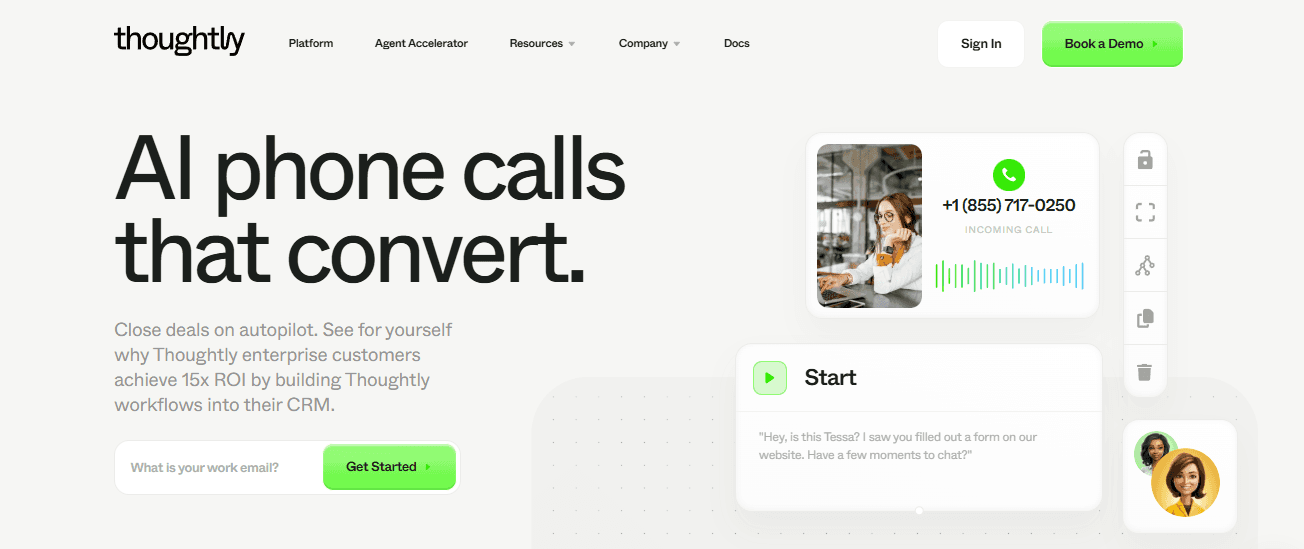
AI phone agents with brand-aligned personality, background noise control, and CRM integration.
Standout features:
Voice personality options
Live handoff paths
Voice quality controls
Best use case / team size: Customer support centers or sales teams that want scalable voice outreach.
Tip: Use Thoughtly to maintain brand tone at scale while reducing repetitive human calls.
10. SPOTIO
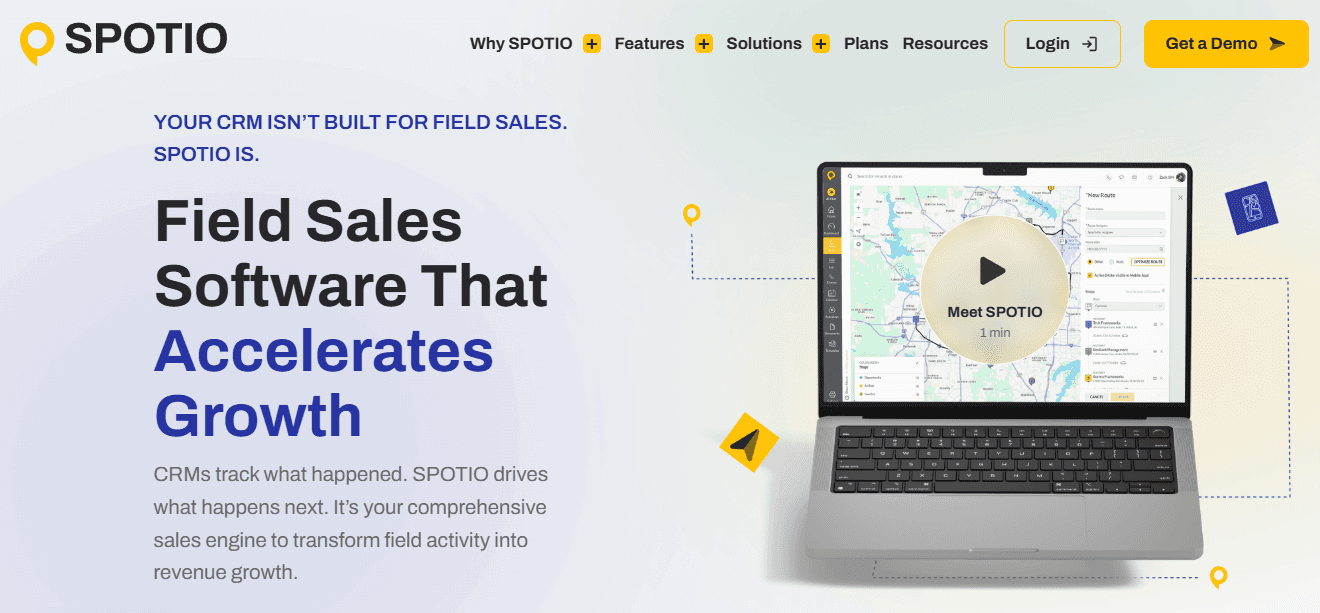
Field sales engagement platform built for reps on the move, combining territory management, route optimization, and an AI field assistant.
Standout features:
200+ prospect filters
Lasso territory tool
GPS-verified one-tap logging
Best use case / team size: Outside sales teams and door-to-door reps of 5–200 people.
Tip: Treat SPOTIO as your mobile hub; it’s like a GPS and CRM in one for field reps.
11. Salesforce Sales Cloud Einstein
Built-in AI layer inside Salesforce that scores leads, captures activities, and forecasts revenue.
Standout features:
Native CRM integration
Opportunity scoringAI forecasting models
Best use case / team size: Medium to large enterprises already committed to Salesforce.
Tip: Use Einstein when you need predictions embedded directly where sellers already work.
12. HubSpot Sales Hub
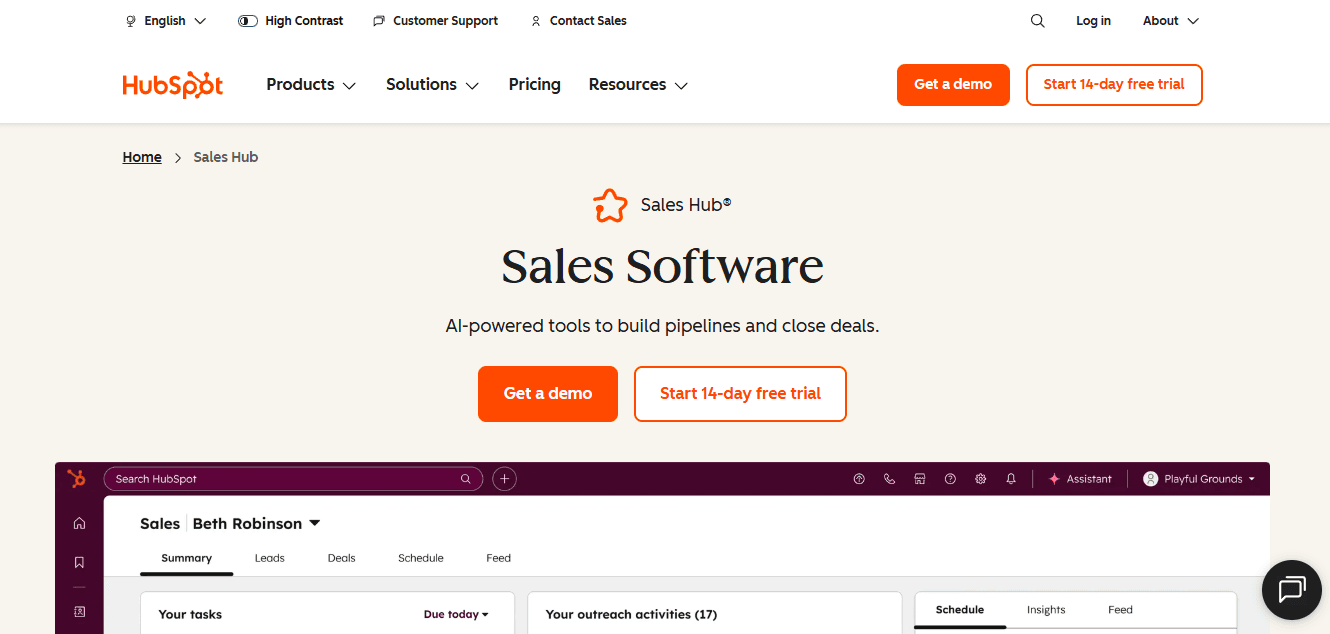
All-in-one sales platform with AI features for content, calls, and lead scoring.
Standout features:
AI writing assistants
Conversation intelligence
Predictive scoring
Best use case / team size: Growing teams that want a single platform with straightforward AI helpers.
Tip: Ideal for teams that want low-friction AI tools built into a single stack.
13. Cognism
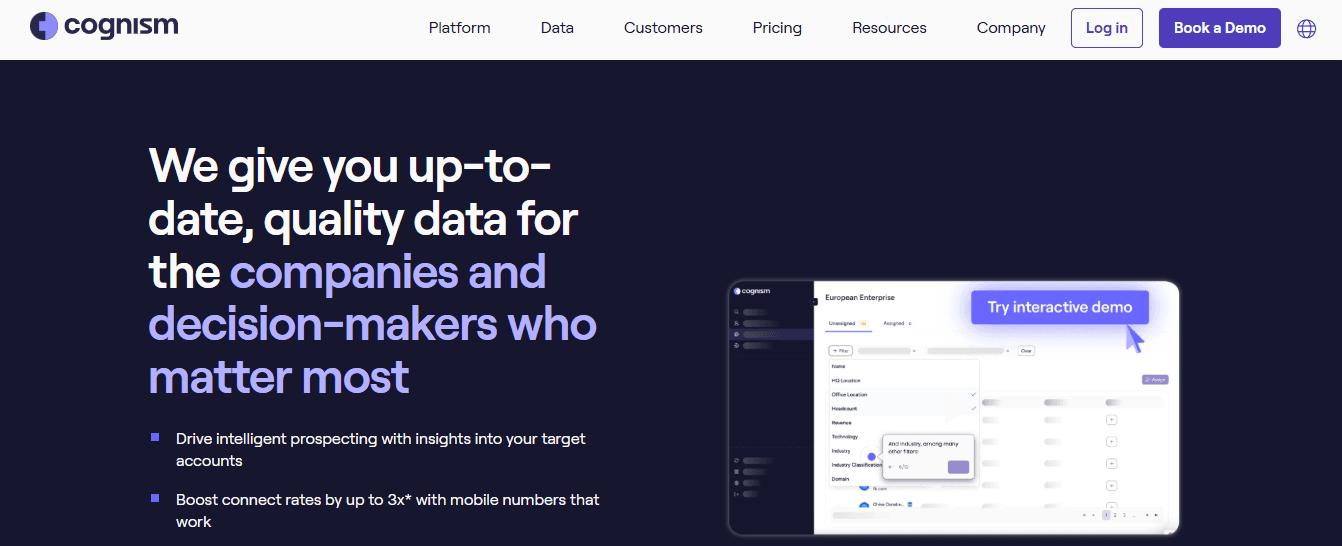
Global B2B sales intelligence with phone-verified mobile numbers and compliance controls.
Standout features:
Diamond Data phone verification
GDPR and CCPA compliance
Intent overlays
Best use case / team size: B2B outbound teams prioritizing compliance and international reach.
Tip: Use Cognism when you must balance scale with privacy and phone accuracy.
14. Apollo.io
A prospecting platform combining a 275M+ contact database with engagement sequencing and AI email assistants.
Standout features:
Large contact graph
Email assistant
Multichannel sequence builder
Best use case / team size: Outbound-heavy teams that need quantity plus automation.
Tip: Pair Apollo with human review for top-tier targets to avoid volume traps.
15. ZoomInfo
Deep B2B intelligence, buyer intent signals, org charts, and technographics.
Standout features:
Intent data layers
Technographic profiling
Enrichment at scale
Best use case / team size: Mid-market and enterprise teams running strategic ABM.
Tip: Use ZoomInfo for account-level research before high-touch outreach.
16. Outreach
A multi-channel sales engagement platform that automates sequences and uses AI to optimize messaging.
Standout features:
Automated cadences
Kaia real-time assistant
A/B testing for emails
Best use case / team size: Sales teams standardizing outreach across channels, 10+ reps.
Tip: Let Outreach analyze what works, then lock winning sequences into your playbook.
17. Salesloft
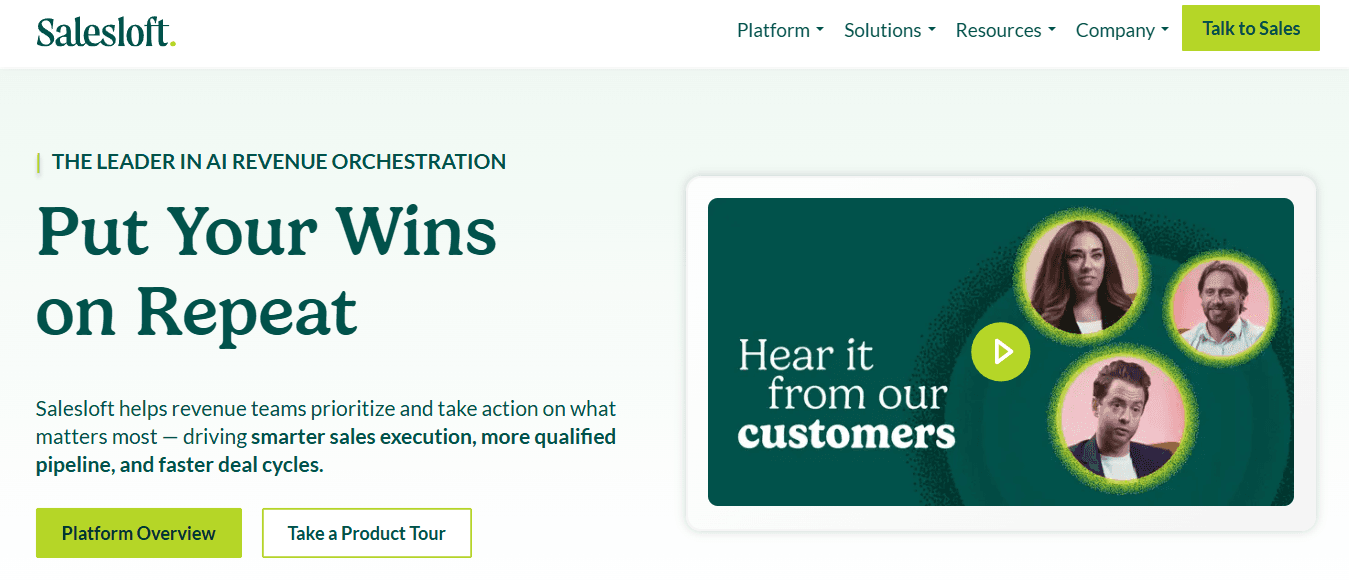
Digital selling platform with cadence automation, conversation intelligence, and an AI layer that prioritizes seller actions.
Standout features:
Rhythm AI
Call analytics
Forecasting
Best use case / team size: Enterprise sales organizations that want a unified seller workflow.
Tip: Use Salesloft to enforce repeatable motions and lift less-experienced reps faster.
18. Seismic
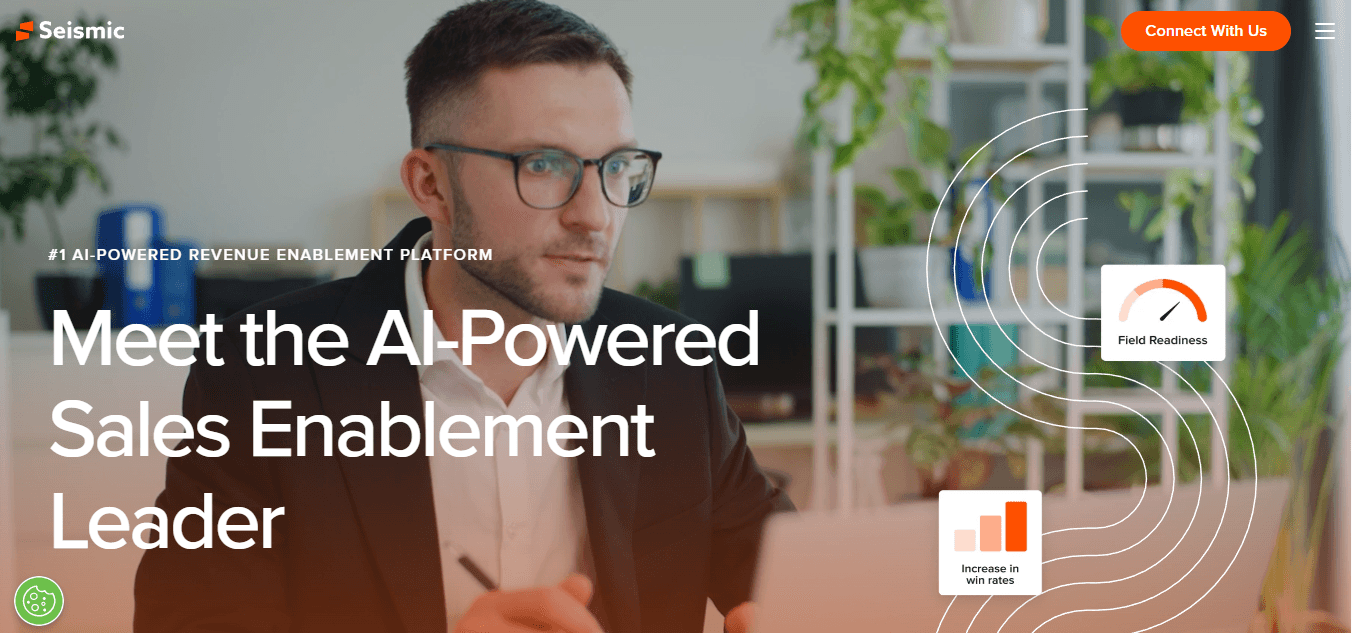
Content management and personalization platform that recommends the right assets to reps at the right time.
Standout features:
AI content recommendations
Personalization at scale
Engagement analytics
Best use case / team size: Enterprise B2B sales teams aligning marketing and sales.
Tip: Treat Seismic as the guardrail for compliant personalization.
19. Gong.io
Conversation intelligence that records, transcribes, and analyzes calls and meetings to surface coaching opportunities.
Standout features:
Deal intelligence
Talk pattern analysis
Competitor call mentions
Best use case / team size: Data-driven sales organizations focused on coaching and replication.
Tip: Use Gong to codify what top reps do so you can scale those behaviors.
20. Clari
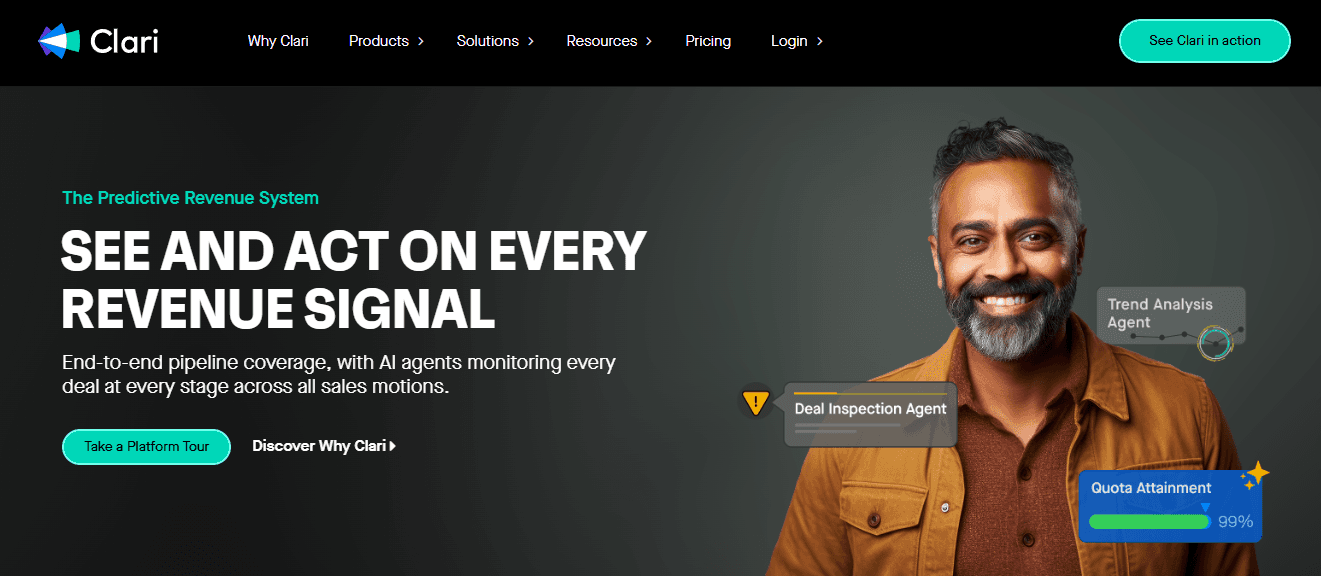
Revenue platform providing AI-driven forecasting, pipeline inspection, and activity automation.
Standout features:
Predictive forecasts
Deal risk flags
Activity capture
Best use case / team size: Revenue operations teams in mid-market to enterprise companies.
Tip: Use Clari when forecasting accuracy matters to the investor or leadership cadence.
21. Rilla

Conversation intelligence for in-person, face-to-face meetings, using a mobile app to record and analyze live conversations.
Standout features:
Virtual ride-alongs
In-person transcription
Custom markers for objections
Best use case / team size: Outside sales teams and franchise reps who meet in-person.
Tip: Rilla replaces physical shadowing with targeted coaching snippets.
22. Lavender
Real-time email assistant that scores emails and suggests improvements for clarity, tone, and personalization.
Standout features:
Real-time scoring
Recipient research-based openings
Mobile checks
Best use case / team size: Individual contributors and small teams focused on cold email quality.
Tip: Use Lavender to train new reps on effective email habits quickly.
23. Regie.ai
Generative AI platform for creating whole campaigns, including multi-step email sequences and call scripts.
Standout features:
Campaign templates
Content repository
A/B testing
Best use case / team size: Marketing-led teams running high-volume, persona-driven campaigns.
Tip: Use Regie to prototype sequences fast, then validate with small tests before scaling.
24. ActiveCampaign
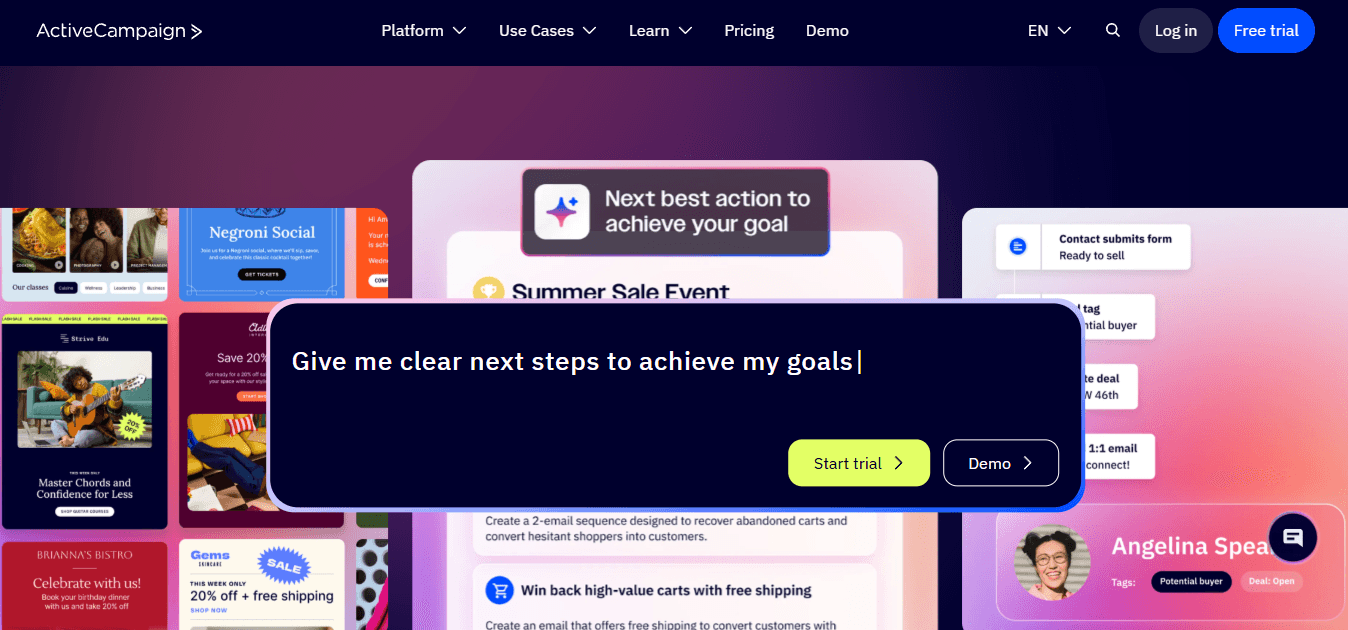
Campaign automation with predictive sending, deep behavioral segmentation, and CRM integration.
Standout features:
Behavioral scoring
Automation recipes
Deep CRM hooks
Best use case / team size: Mid-sized businesses that need sophisticated email journeys.
Tip: Use ActiveCampaign where lifecycle automation and segmentation drive conversions.
25. MailerLite
Simple, affordable email marketing and landing page builder for small organizations.
Standout features:
Easy editor
Landing pages
Budget pricing
Best use case / team size: Small businesses and solopreneurs on a budget.
Tip: Choose MailerLite for simplicity and quick campaign launches.
26. Lemlist
Cold email outreach tool that uses personalized images and GIFs to improve engagement.
Standout features:
Visual personalization
Deliverability tooling
Sequence controls
Best use case / team size: Small outbound teams prioritizing creative personalization.
Tip: Personalization is only effective when the target is high quality; paired with enrichment.
27. JustCall
VoIP platform with CRM integration, power dialers, and transcription for sales and support.
Standout features:
Power dialing
Call transcriptions
Omnichannel voice/SMS
Best use case / team size: Sales and support teams needing integrated voice tools.
Tip: Use JustCall to remove friction between calling and CRM logging.
28. OpenPhone
Modern business phone for startups, combining voice, fax, and messaging with CRM integration.
Standout features:
Team messaging
Shared numbers
Simple admin
Best use case / team size: Startups and small businesses wanting a clean phone layer.
Tip: Great for distributed teams needing a single business identity across channels.
29. KrispCall
Virtual phone system with SMS, IVR, and global numbers, built to integrate with 100+ CRMs.
Standout features:
Robust routing
Global number coverage
CRM plugins
Best use case / team size: Businesses requiring robust phone routing across multiple geographies.
Tip: Use KrispCall if call routing and global presence are priorities.
30. Respond.io
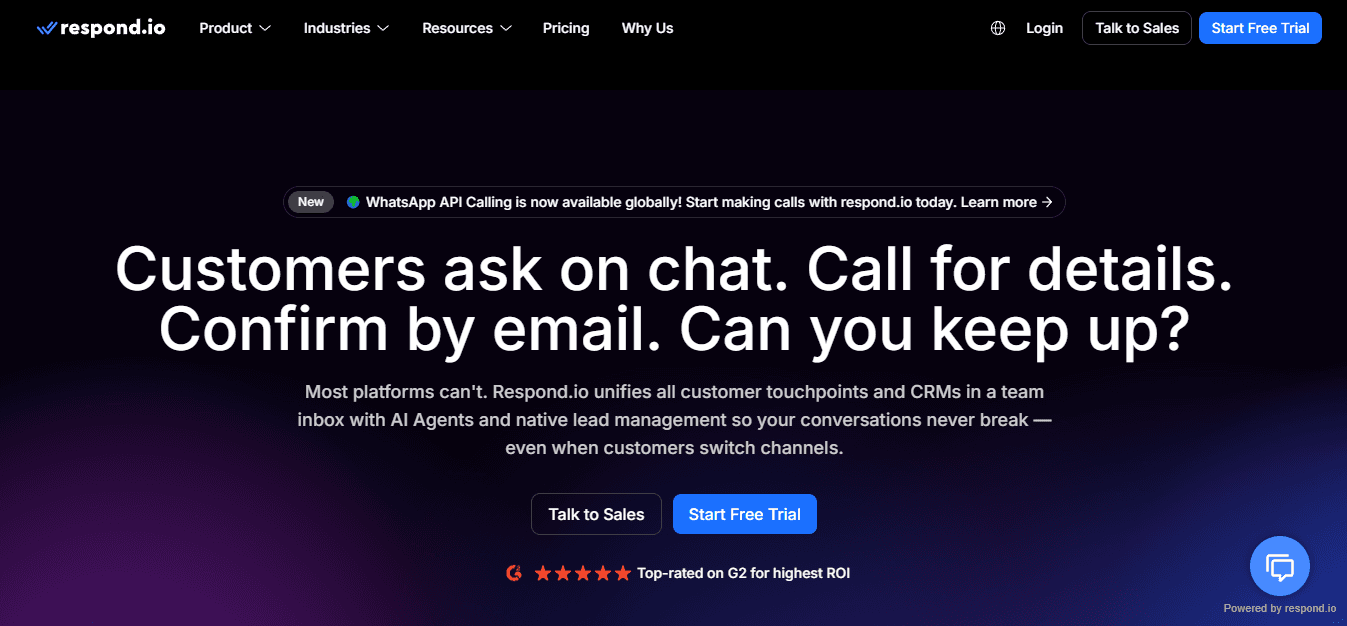
Unified messaging platform that centralizes web chats, WhatsApp, social DMs, and offline leads into one inbox.
Standout features:
Channel unification
Offline lead capture
CRM handoffs
Best use case / team size: Teams that engage prospects across many messaging channels.
Tip: Use Respond.io to stop switching tabs and to preserve conversational context.
31. Talkdesk
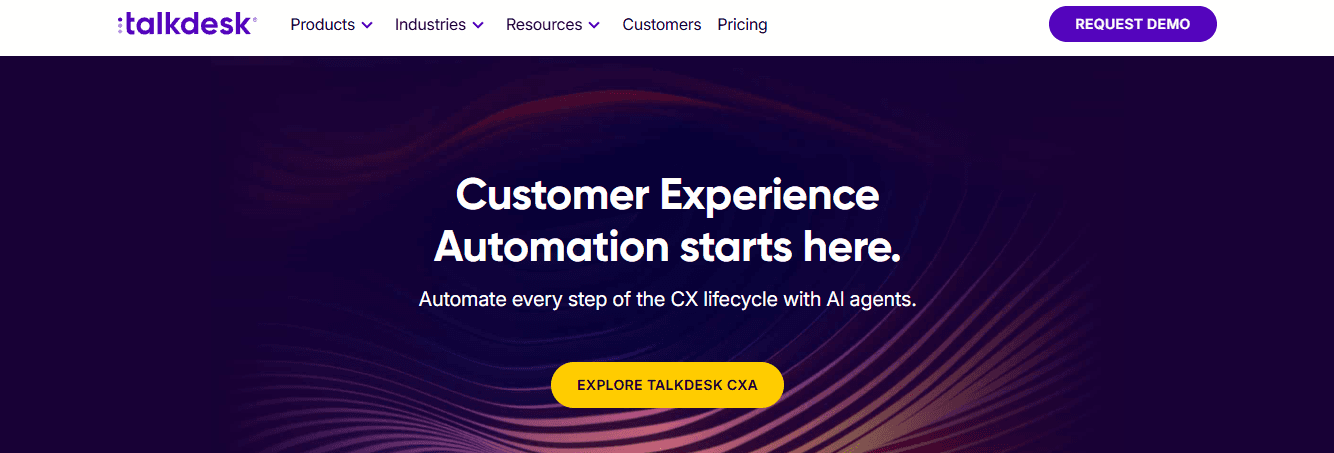
Customer service system with AI virtual agents, routing, biometric authentication, and agent assistants.
Standout features:
AI trainer for agents
Call evaluations
Outbound engagement
Best use case / team size: Contact centers and support teams scaling with AI assistance.
Tip: Talkdesk is practical when you need both automation and human oversight in support.
32. Cognigy
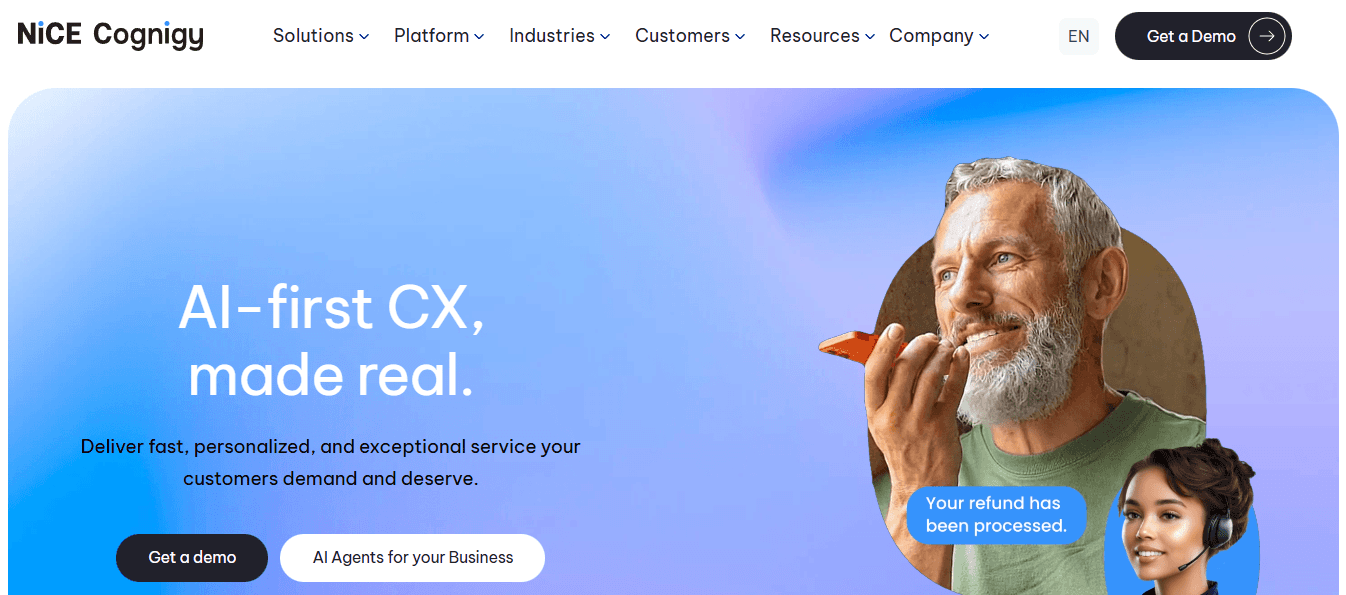
Enterprise conversational AI with a visual flow builder, live agent handoff, and multi-channel bots for sales and service.
Standout features:
Visual flow orchestration
Enterprise-grade security
Agent handoff
Best use case / team size: Large enterprises deploying complex conversational journeys.
Tip: Use Cognigy when you need a full conversational architecture, not a simple chatbot.
Defensibility vs. Overhead
Most teams stitch three or four point tools together because mixing best-of-breed feels defensible and familiar. That approach works early, but as sequences multiply and integrations fail, the overhead grows and measurement blurs. Teams find that platforms like AI Acquisition centralize agentic workflows, automating prospecting, enrichment, and booking, so follow-up compresses from days to hours while preserving audit trails and measurable revenue outcomes.
Quality Over Volume
Practical pattern I want you to hold: verification and integration beat volume. Lists alone do not create conversations; validated contact points, timely context, and reliable CRM handoffs do. That pattern appears across small agencies and bootstrapped founders who switch from a scattershot toolset to a connected stack, ultimately reclaiming seller time for real conversations.
The Lean Tech Stack
A quick analogy to make selection concrete:
Choose your tools like you would pack for a long trip, not a day hike.
Pick one reliable navigation tool, one communications tool, and one way to refresh data.
Everything else is extra weight you will regret later. That solution seems tidy, but the real test comes when you actually set these systems live. The one thing that changes everything next is how you start.
Related Reading
How to Get Started With AI Sales Prospecting

Start by picking a tight hypothesis: select one high-value segment, run a short pilot with a small group of reps, train them on the new AI workflow, then measure revenue signals and scale only what clearly moves the needle. Do those four steps in sequence and you turn abstract tool evaluation into measurable business experiments.
Which Segments or Territories Should You Target First?
Pick segments where wins are repeatable and observability is high, not where hope lives. I recommend three filters:
Predictability of buying signals
Short sales cycles that let you see impact inside a month
Concretely, choose one vertical, one company-size band, and one territory so your outreach templates and intent signals remain consistent. Frame a clear hypothesis for each segment, for example, “Using AI-assisted enrichment on mid-market product teams will produce more qualified calls per rep per week versus our current list.” That hypothesis is the experiment you will prove or disprove.
What Does a Practical Pilot Look Like?
Run the pilot with 2 to 5 reps for 4 to 6 weeks.
Create a control group and an AI-assisted group, define one primary metric (meetings booked, pipeline dollars, or conversion rate) and two secondary metrics (reply quality and CRM hygiene).
Seed the AI agent with one vetted persona, guardrails for language and compliance, and a human approval step for the first 50 messages.
Hold short daily check-ins during week one to fix prompts and cadence, then move to weekly metric reviews.
In one six-week pilot we ran with a small agency focused on mid-market SaaS, the team cut follow-up turnaround from multi-day drifts to regular same-day touchpoints, freeing reps to prioritize demos and deal work.
How Should You Train Reps So Adoption Isn’t a Grind?
Design role-specific, hands-on training, not a one-size slide deck.
Start with a two-day bootcamp that covers agent behavior, approval flows, and objection handling for AI-drafted outreach, then follow with twice-weekly 30-minute clinics for six to eight weeks.
Pair each rep with a “prompt partner” for real-time feedback and require two live approvals a day until confidence scores stabilize.
Bridging the Generational Gap
Harvard Business Review found a correlation between the age of workers and their lower AI adoption, so make the program tactile:
Sandboxes where reps can tweak templates
Peer review sessions that normalize mistakes
Measured ramp goals tied to activity and quality.
Track adoption as a metric in its own right: active use, approvals submitted, and percentage of AI suggestions accepted.
Most Teams Still Stitch Tools Together; Why That Breaks as You Scale
Most teams manage this with a handful of point tools because it feels controllable and familiar. That works early, but as playbooks multiply, handoffs fragment and response time slips into days, while measurement blurs. Platforms such as AI Acquisition centralize multi-agent workflows, provide zero-code agent templates and automated routing, and offer revenue-first dashboards, enabling teams to compress follow-up loops and maintain audit trails without adding headcount.
How Do You Monitor Performance and Iterate Fast?
Instrument the funnel end-to-end, not just the top.
Track AI-qualification leads to meeting conversion, reply intent quality, deliverability and bounce trends, and model confidence scores.
Set a cadence: daily alerts for deliverability or error spikes, weekly reviews of cadence performance, and monthly model retraining tied to closed-won outcomes.
Run A/B tests on subject lines, opening hooks, and send windows, and gate scale by two consecutive review cycles of stable or improving primary metrics.
That discipline matters because AI-driven prospecting can reduce lead qualification time by up to 50%, and those reclaimed hours fundamentally change how sales reps spend their day. In parallel, AI tools can increase sales team productivity by up to 40% by automating repetitive tasks, reinforcing that automation should be evaluated by what it frees humans to focus on—not by how many emails it generates.
When Should You Scale the Program?
Scale when the pilot shows consistent improvement across your chosen metrics for two full review cycles, deliverability is stable, and the confidence scoring keeps false positives low. Formalize the rollout:
Document the playbook
Lock winning templates into the agent
Create a phased training schedule for the remaining reps
Assign a single ops owner to manage connectors and audit logs.
Keep a human-in-the-loop approval gate on high-value accounts until model confidence and rep comfort exceed your thresholds.
A Few Tactical Guardrails That Save You Headaches
Require explicit consent rules and audit trails for any automated outreach. Use small, frequent model updates instead of large one-off retraining runs. Tag and review low-confidence lead batches weekly so models learn from human corrections. And measure seller sentiment: if reps feel disempowered, adoption will stall; if they feel freed from busywork, they will champion the system.
AI at the Edges
AI will change what you do at the edges, not who you need in the middle. We should be clear: automation increases capacity and consistency; it does not replace the judgment, persuasion, and relationship craft of human sellers. Treat AI as an assistant that drafts, prioritizes, and triages so your people can close with better context and more time. That sounds like progress, but the real test is whether the system you pick turns marginal gains into repeatable pipeline growth.
Automate Your Sales Prospecting with AI Acquisition’s Free Growth Consultant
Most teams default to familiar outreach rhythms because it feels manageable, but that friction quietly bleeds hours from selling and slows pipeline momentum. Manual prospecting is slow, inconsistent, and full of missed opportunities. AI Acquisition gives you an AI Growth Consultant that works like a 24/7 digital sales agent—identifying leads, scoring prospects, and booking meetings so you can focus on closing deals.
With our all-in-one platform, you can:
Automatically generate high-quality leads without hours of manual research
Score and prioritize prospects using real-time data and AI insights
Automate outreach and scheduling across email, LinkedIn, and more
Gain a human-quality digital assistant that scales with your growth
Over 1,200 entrepreneurs already use AI Acquisition to streamline sales, improve pipeline accuracy, and focus on growth instead of guesswork. Get your free AI growth consultant today and see how AI can transform your prospecting workflow.
Related Reading
AI Sales Prospecting Tools
AI Tools For B2B Marketing
AI For Sales Calls
Lead Qualification Strategies